Galatians 6:7-8: What “you reap what you sow” means
Galatians 6:7-8: What “you reap what you sow” means
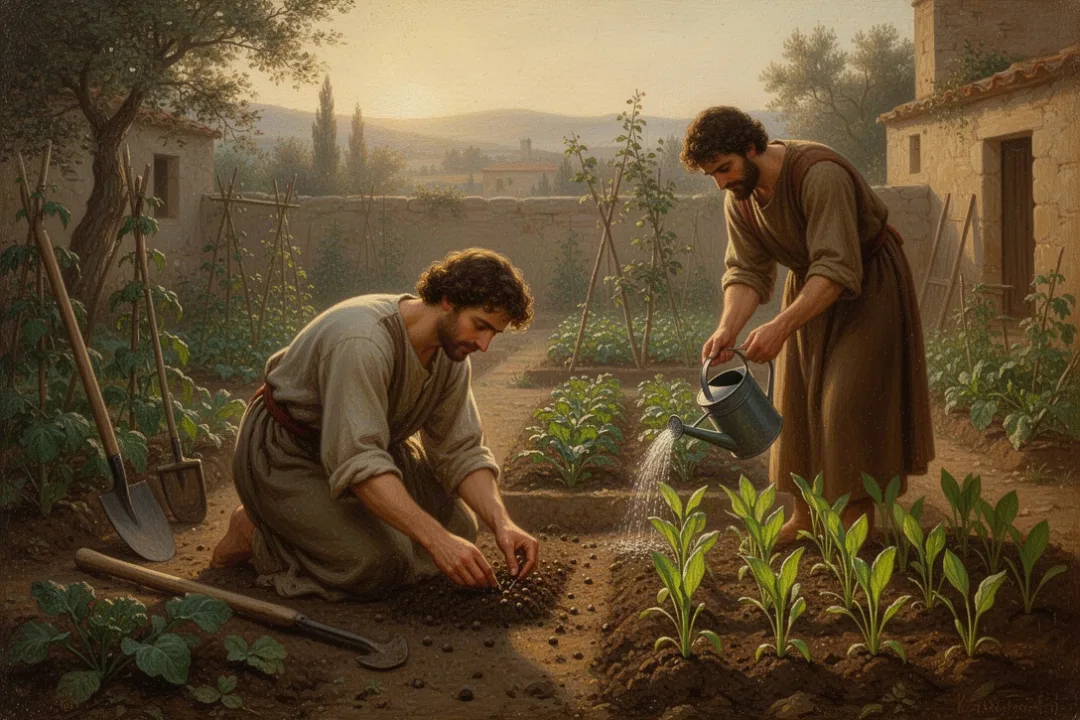
Galatians 6:7-8 teaches that your repeated choices have consequences before God. Paul uses the familiar image of farming to explain a spiritual reality: what you plant through your desires, habits, and loyalties will eventually produce a corresponding harvest.
The passage is not a promise that every good decision brings immediate comfort or that every hardship proves personal wrongdoing. It is a warning against self-deception and a call to take seriously the direction of your life. Paul contrasts two ways of sowing: living according to the flesh or living according to the Spirit.
Galatians 6:7-8 appears near the end of Paul’s letter to the churches in Galatia. Earlier, he argues that people are made right with God through faith in Christ, not by relying on circumcision or other works of the law as a basis for acceptance. The warning about sowing and reaping must be read within that larger message of grace.
Paul is not telling Christians to earn salvation by accumulating good behavior. Instead, he is showing that faith produces a real pattern of life. A person’s choices reveal what they are cultivating, and that cultivation has consequences. Grace does not make conduct irrelevant; it changes the source, purpose, and direction of conduct.
The surrounding verses make this setting especially clear. Galatians 6:1-5 discusses restoring someone who has sinned, carrying one another’s burdens, examining your own conduct, and refusing to compare yourself proudly with others. Galatians 6:6 encourages those who receive instruction in God’s word to share good things with their teachers.
After those practical instructions, Paul warns readers not to think they can disregard God’s moral order. The agricultural image connects personal spirituality with daily behavior. What you repeatedly give yourself to becomes a kind of seed, and time reveals what that seed is producing.
Central idea: Galatians 6:7-8 is about the direction and outcome of a person’s life, not a formula for getting everything you want. Paul calls you to examine what you are consistently cultivating.
What “sowing” means in Galatians 6:7-8
In this passage, sowing means investing yourself in a particular way of life. Farmers sow seeds through deliberate action, even though they do not control the entire growing process. In a similar way, people sow through their thoughts, choices, relationships, priorities, and responses to temptation.
Sowing usually happens gradually. One decision may seem small, but repeated decisions establish a pattern. Choosing honesty when it costs you, making time for prayer, forgiving someone, or serving a neighbor can all reflect a desire to live under the Spirit’s direction. Repeated resentment, deceit, exploitation, or self-indulgence can cultivate a very different direction.
Paul’s image also implies that intentions alone are not the same as seeds planted. Someone may want to become patient but continue feeding anger without taking steps toward change. Someone may value generosity while arranging every part of life around personal comfort. The harvest reflects what is actually practiced, not merely what is admired in theory.
That does not mean every action has equal significance or that a Christian never fails. Christian growth includes repentance, correction, and dependence on God’s mercy. The question is not whether you have ever made a wrong choice, but whether your life is turning toward the Spirit or repeatedly surrendering to the flesh.
What “the flesh” means in verse 8
The flesh in Galatians does not simply mean the physical body. Paul uses the term to describe human life organized apart from God’s Spirit. It includes self-centered desires, pride, rivalry, legalism, uncontrolled appetites, and attempts to establish identity or righteousness without trusting God.
Galatians 5 provides the immediate background. There, Paul contrasts the “acts” or works of the flesh with the fruit of the Spirit. The flesh produces behaviors such as hostility, jealousy, selfish ambition, division, envy, and other forms of disordered desire. The Spirit produces love, joy, peace, patience, kindness, goodness, faithfulness, gentleness, and self-control.
This contrast is broader than a list of isolated bad habits. A person can avoid obvious scandals while still sowing to the flesh through arrogance, contempt, manipulation, or religious pride. Conversely, a quiet act of patience or faithful service may be genuine evidence of the Spirit’s work even if it receives no public recognition.
Sowing to the flesh means feeding the part of life that resists God. It can happen through entertainment, conversation, ambition, resentment, secret behavior, or the way you treat vulnerable people. The activity itself may not always look dramatic. The deeper issue is what it strengthens in you.
What it means to sow to the Spirit
To sow to the Spirit means to order your life around the presence and work of the Holy Spirit. In Galatians, this includes trusting Christ, rejecting self-righteousness, loving others, serving rather than competing, and allowing the Spirit to shape your character.
Sowing to the Spirit is not a way to control God or purchase blessings. It is a response to the grace already given in Christ. The Spirit changes people over time by directing their desires toward what reflects God’s character.
Practical examples may include:
Praying honestly instead of hiding fear, anger, or guilt from God.
Studying Scripture with a willingness to receive correction rather than searching only for support for your existing opinions.
Confessing sin and accepting appropriate accountability.
Choosing forgiveness and truthful conversation instead of rehearsing resentment.
Using money, time, and abilities to serve people rather than making personal status the center of life.
Practicing self-control when an appetite, impulse, or emotion demands immediate satisfaction.
Encouraging other believers instead of turning spiritual life into a competition.
These practices do not make God love you more. They place you in patterns through which faith becomes visible and spiritual maturity can develop. As a farmer tends a field, you make repeated choices that create conditions for growth, while recognizing that God gives the growth.
What harvest follows sowing to the flesh
Paul says that sowing to the flesh produces corruption. The idea includes decay, ruin, and the breakdown that follows a life directed by sinful desire. Sin often promises immediate freedom or pleasure, but it gradually damages the person, relationships, community, and capacity to recognize what is good.
The effects may be visible in several areas. Persistent dishonesty can destroy trust. Unchecked envy can turn friendship into rivalry. Sexual exploitation can harm both the vulnerable person and the one who treats others as objects. Pride can make correction feel like an attack, leaving a person increasingly isolated.
Corruption is not always immediate. That delay is part of Paul’s warning. Seeds remain hidden for a time, and a harmful pattern may appear manageable before its consequences become obvious. A person can continue in bitterness, greed, or secret addiction while telling themselves that nothing serious is happening.
The harvest language also points beyond temporary consequences. Paul connects sowing to the flesh with ultimate spiritual ruin. Galatians 6:8 should therefore be read as a serious call to repentance, not merely as advice about improving habits. God sees what people conceal, and a life that persistently rejects God cannot be treated as spiritually harmless.
At the same time, the passage should not be used carelessly against people who are suffering. Not every illness, loss, poverty, or tragedy is a direct result of someone’s personal sin. Scripture itself rejects simplistic explanations of suffering, as seen in passages such as Job 1-2 and John 9:1-3. Galatians 6:7-8 concerns moral and spiritual direction, not a system for assigning blame for every hardship.
What harvest follows sowing to the Spirit
Paul describes the harvest of sowing to the Spirit as eternal life. This is more than endless existence. It refers to life in fellowship with God, shaped by the renewal that begins now and reaches its fullness in the age to come.
The phrase does not mean that people obtain eternal life by performing enough spiritual activities. Galatians consistently places salvation in God’s grace through faith in Christ. Rather, sowing to the Spirit describes the life that corresponds to genuine faith. The Spirit is not an optional improvement added to salvation; the Spirit is the presence of God who gives new life and produces transformation.
The harvest may begin with changes that seem ordinary. You may become quicker to admit wrong, less eager to win every argument, more willing to serve without praise, or more concerned about another person’s good. These changes do not make you perfect, but they show that the Spirit is forming a new kind of life.
Some results may remain unseen for years. A parent’s patient example, a caregiver’s faithfulness, a quiet act of generosity, or a refusal to participate in corruption may appear insignificant in the moment. Paul’s teaching encourages you to trust that faithful obedience is not wasted, even when its results are not immediate.
How Galatians 6:7-8 relates to grace and good works
Readers sometimes wonder whether this passage conflicts with salvation by grace. It does not. Paul rejects the idea that religious works can establish a person’s standing before God, but he does not reject the necessity of a transformed life.
A helpful distinction is between the basis of salvation and the evidence of salvation. Christ is the basis of salvation. Good works are not payment for grace. Yet a faith that remains entirely disconnected from love, repentance, and obedience is not the kind of faith Paul is describing.
Galatians 5:6 summarizes this connection by describing faith as active through love. Galatians 6 then applies that principle to practical behavior: restore people gently, carry burdens, share resources, do good, and serve others. These actions do not compete with grace. They are the fruit of grace at work in a person.
Legalism and license are both distortions. Legalism tries to secure acceptance through performance and comparison. License treats forgiveness as permission to continue in self-centered sin without repentance. Paul rejects both. The Spirit frees believers from condemnation so they can become people whose lives express love.
Common mistakes when interpreting Galatians 6:7-8
This passage is often quoted as a general proverb, but several interpretations miss Paul’s meaning. Avoiding these mistakes helps you apply the warning with both seriousness and compassion.
Reducing it to financial success: Sowing and reaping is not a guarantee that donations or positive thinking will produce wealth. Paul is addressing spiritual character, eternal life, and the consequences of living according to the flesh or Spirit.
Blaming every hardship on sin: The text does not authorize you to assume that illness, unemployment, grief, or disaster proves a person has sown badly.
Using it to earn God’s love: Good works are not a transaction that forces God to reward you. Christian obedience flows from grace and trust.
Focusing only on dramatic sins: Pride, envy, rivalry, contempt, and selfish ambition also belong to the works of the flesh.
Expecting instant results: A field does not produce a harvest the same day a seed is planted. Character formation and consequences often develop slowly.
Applying it only to other people: In the surrounding passage, Paul tells believers to examine their own work. The warning should produce humility rather than superiority.
Ignoring restoration: Galatians 6 begins with a call to restore someone caught in sin gently. Correction should aim at recovery, not humiliation.
Important warning: Do not turn Galatians 6:7-8 into a weapon against people who are suffering. Use it first as a mirror for your own direction, and pair its warning with Paul’s commands to restore gently and carry burdens.
How to apply Galatians 6:7-8 to daily decisions
Application begins with examining what your ordinary choices are strengthening. Instead of asking only, “Is this one action allowed?” ask, “What kind of person is this pattern making me?” That question moves beyond isolated rules and helps you recognize the direction of your life.
Name the seed. Identify a repeated thought, habit, desire, or decision that has been shaping you. Be specific: “I rehearse insults before difficult conversations” is more useful than “I have a bad attitude.”
Identify the harvest. Ask what this pattern is already producing in your relationships, worship, work, and inner life. Look for both immediate effects and likely long-term results.
Confess without excuses. Bring the pattern honestly to God. Confession is not vague self-condemnation; it is agreeing with God about what is wrong and turning toward change.
Replace the pattern. Do not stop at avoidance. Choose a Spirit-shaped practice that addresses the same area, such as truthful speech, patient listening, generosity, or accountability.
Accept steady growth. Give the new pattern time to become established. A setback calls for repentance and renewed dependence, not the conclusion that change is impossible.
For example, if you regularly sow resentment by replaying another person’s failure, the likely harvest includes suspicion and emotional distance. Sowing to the Spirit may involve praying for the person, speaking truthfully about the harm, seeking wise counsel, and refusing to nurture revenge.
If you sow anxiety by constantly seeking control, the alternative is not pretending that problems do not exist. You might bring specific concerns to God, make responsible plans, ask for help, and practice trust when you cannot guarantee the outcome. Spiritual sowing is concrete, but it is not simplistic.
How the passage speaks to Christian community
Although Galatians 6:7-8 addresses personal responsibility, its setting is also communal. Christians do not sow and reap in isolation. Families, churches, workplaces, and friendships are shaped by the habits their members reinforce.
A church sows to the flesh when it rewards status, tolerates favoritism, encourages rivalry, or treats struggling people as embarrassing problems. It sows to the Spirit when it restores the fallen with gentleness, shares burdens, honors faithful service, and makes room for honest repentance.
Paul’s command to carry one another’s burdens prevents a harsh reading of personal responsibility. You are responsible for your own direction, but you are not expected to carry every burden alone. Mature Christian community combines personal accountability with practical support.
This balance also affects how you respond when someone else is making destructive choices. Galatians 6 does not call you to enable harmful behavior. It calls for gentle restoration, humility about your own weakness, and a willingness to help carry what another person cannot bear alone.
Why patience matters when you are waiting for a harvest
Galatians 6:9, the verse immediately following this passage, urges believers not to grow tired of doing good because the harvest comes in due time. That connection helps explain verses 7-8: spiritual sowing requires perseverance because results are often delayed.
You may choose integrity and still face a short-term loss. You may forgive and still need boundaries. You may pray faithfully while the situation remains uncertain. You may serve others without seeing visible change. The delay does not prove that the seed is useless.
Patience, however, is not passive resignation. It means continuing to sow what belongs to the Spirit while remaining honest about pain and wise about action. Doing good does not require staying in an abusive situation, ignoring injustice, or refusing appropriate consequences.
The promise of harvest gives long-term perspective. God sees the hidden choices that other people overlook, and the final outcome is not determined only by immediate popularity, comfort, or success. Galatians 6:7-8 directs your attention toward faithful direction rather than quick results.
Questions for personal reflection
Use the passage as an invitation to honest examination rather than as a reason for fear-driven self-monitoring. The goal is not to inspect every action anxiously, but to recognize where your life is being formed.
What desire or habit receives most of my time and attention?
Where am I excusing conduct that I would quickly criticize in someone else?
Which relationships are being strengthened or damaged by my repeated choices?
Am I relying on religious performance, personal image, or comparison instead of Christ?
What fruit of the Spirit is becoming more visible in my life?
Where do I need confession, wise counsel, accountability, or practical help?
What small act of obedience can I practice consistently this week?
Galatians 6:7-8 gives a sober but hopeful way to understand spiritual growth. Your choices matter, but you are not left to transform yourself through willpower. The Holy Spirit leads you into a life of love, service, repentance, and endurance, and God remains the judge of the final harvest.
Frequently asked questions
Does Galatians 6:7-8 mean that everything bad happening to me is punishment for sin?
No. Paul is teaching that sinful patterns produce destructive consequences, not that every hardship has a directly identifiable personal cause. Scripture includes faithful people who suffer, and Jesus rejected simplistic blame in John 9:1-3. The passage calls you to examine your moral and spiritual direction while responding to suffering with compassion rather than accusation.
Is “sowing to the flesh” only about sexual sin?
No. Sexual sin can be included, but Paul’s wider discussion in Galatians also names jealousy, rivalry, anger, envy, selfish ambition, division, and pride. Sowing to the flesh means nurturing any pattern that places self-centered desire above God and love for others. It can appear in religious behavior, relationships, money, work, speech, or private habits.
How can someone begin sowing to the Spirit?
Begin with honest confession and trust in Christ rather than trying to earn God’s acceptance. Then establish specific practices that support spiritual growth: prayer, Scripture, fellowship, accountability, generous service, truthful speech, and repentance when you fail. Ask a mature Christian for help identifying one pattern to replace and take consistent steps rather than expecting instant change.
Does the harvest always happen during this life?
No. Some consequences and blessings appear in the present, but Galatians 6:8 points to eternal life and therefore includes the future completion of God’s work. Faithful choices may remain unnoticed or seem unsuccessful for a long time. Christians are encouraged to continue doing good because God sees the whole story, including what is hidden now.











Leave a Reply