When life seems unfair and God appears silent, you may wonder how to keep trusting him without pretending that everything is fine. Habakkuk 2:4 speaks directly to that tension. Its central message is that the person who is right with God does not survive by pride, control, or appearances, but by faithful trust in God.
The verse is not a promise that faithful people will avoid hardship. Habakkuk was facing violence, injustice, and the threat of national disaster. Instead, the passage teaches that faithfulness becomes a way of life when circumstances are confusing and God’s timing is difficult to understand.
Habakkuk begins by questioning God about the evil he sees around him. The prophet describes wrongdoing, oppression, conflict, and the apparent failure of justice. Rather than offering a quick answer, God reveals that he is raising up the Babylonians, a powerful and ruthless people, to bring judgment.
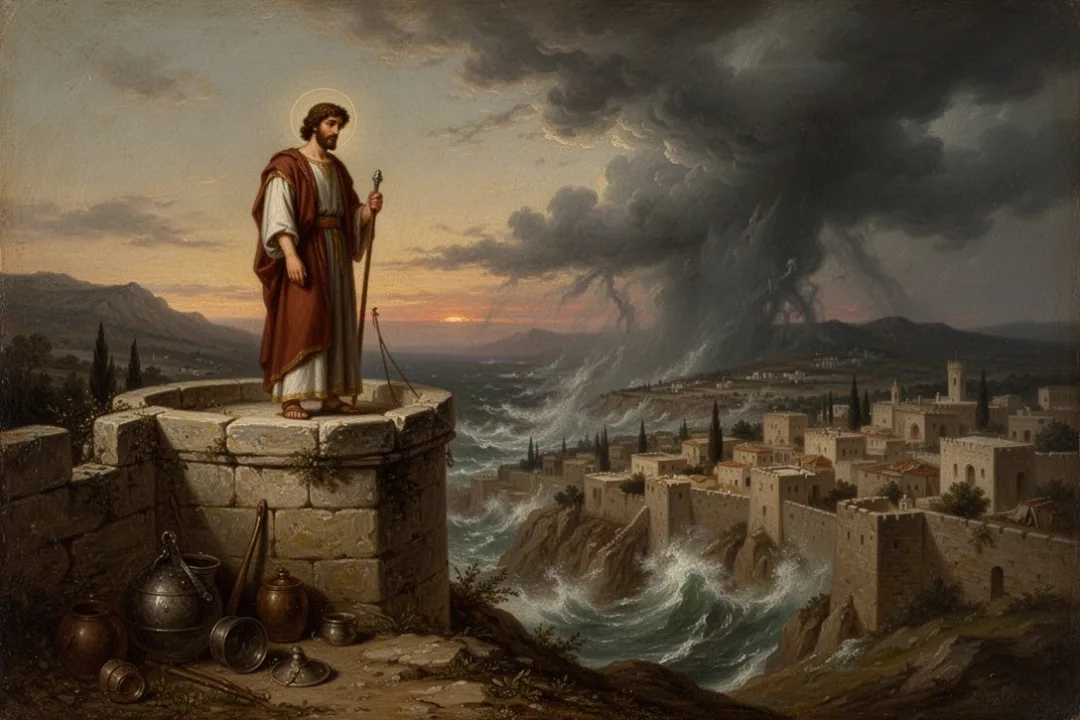
That answer creates an even harder question: How can God use a nation more wicked than Judah to judge Judah? Habakkuk takes his position as a watchman and waits for God’s response. In chapter 2, God tells him to record the vision clearly because its fulfillment has an appointed time, even if it seems delayed.
Habakkuk 2:4 appears within that response. The verse contrasts two kinds of people. One is inwardly proud, trusting personal strength and present power. The other is described as righteous and lives by faithfulness. The surrounding verses announce that arrogance and exploitation will eventually be judged.
Central idea: Habakkuk 2:4 calls you to remain loyal to God while waiting for his justice, not to measure his faithfulness by how quickly your circumstances improve.
How to understand the two people contrasted in the verse
The first person in Habakkuk 2:4 is characterized by a proud or swollen soul. This description points to an inflated inner life: self-importance, independence from God, and confidence in personal power. In Habakkuk’s setting, it especially describes the arrogant empire that conquers nations and treats human beings as resources.
The second person is called righteous, not because that person has never sinned or has solved every theological problem. The righteous person is one who remains oriented toward God. Their life is marked by trust, loyalty, humility, and perseverance rather than by domination or self-protection.
The contrast is therefore deeper than “good people versus bad people.” It is a contrast between two ways of living. Pride says, “I will secure my future through my own strength, influence, or possessions.” Faith says, “I will obey God and depend on him, even when I cannot see the whole outcome.”
The verse does not praise passivity. Faithful people in Scripture pray, work, resist evil, seek justice, and make wise decisions. What distinguishes them is the source and direction of their lives. They do not make personal control their final security.
A step-by-step way to read Habakkuk 2:4
A careful reading of the verse becomes clearer when you follow its movement from the surrounding problem to its lasting response.
Start with the injustice Habakkuk sees. The prophet is not discussing faith in a comfortable setting. He is trying to understand violence, political upheaval, and delayed justice.
Notice God’s promised timing. The vision has an appointed moment. It may appear slow, but the passage presents God’s purpose as certain rather than accidental.
Identify the proud person’s strategy. The arrogant person relies on power, appetite, conquest, and self-exaltation. That strategy can appear successful for a season.
Identify the righteous person’s response. The righteous person remains faithful to God instead of copying the methods of the powerful.
Read “live” as a whole pattern of life. The verse concerns more than surviving one crisis. It describes the source of lasting life, stability, and relationship with God.
Apply the message without removing the lament. Faith does not require you to deny grief, confusion, or honest questions. Habakkuk’s own prayers show that trust and complaint can exist together.
This sequence guards against a common mistake: taking the phrase about faith out of its setting and turning it into a slogan about getting whatever you want. Habakkuk 2:4 is about faithful endurance under pressure, especially when proud powers seem to win.
What “the righteous” means in Habakkuk 2:4
In the Bible, “righteous” can describe a person who stands in a right relationship with God and lives in a way that reflects that relationship. It does not mean moral perfection. Habakkuk himself brings difficult questions to God, yet he continues to seek God’s answer rather than abandoning him.
The righteous person in this passage is also connected to ethical conduct. The next section of Habakkuk pronounces several woes against those who gain wealth through exploitation, build security through injustice, shame their neighbors, and worship lifeless idols. Faith cannot be separated from the way a person treats other people.
That connection matters because religious language can sound sincere while a person’s conduct contradicts it. Habakkuk does not present faith as an internal opinion that leaves behavior unchanged. Genuine trust in God produces patience, integrity, restraint, and concern for the vulnerable.
The righteous person may still be afraid. They may experience loss, uncertainty, or disappointment. Their righteousness is seen not in the absence of distress, but in their continued refusal to replace God with violence, pride, manipulation, or despair.
What “live by faith” means in the original setting
The Hebrew word commonly associated with “faith” in Habakkuk 2:4 is emunah. Depending on the context, it can carry the sense of faithfulness, reliability, steadfastness, or firm trust. This range helps explain why translations sometimes use slightly different wording.
The phrase does not merely describe agreeing that God exists. Habakkuk is addressing people who must decide how to live while waiting for God’s word to unfold. To live by faith means to remain dependable toward God: to continue trusting, obeying, and refusing the proud path even when immediate evidence seems discouraging.
There is also a meaningful ambiguity in the phrase. It may emphasize the righteous person’s faithfulness, or it may point to living through trust in God’s faithfulness. These ideas belong together. Human faith is possible because God is trustworthy, and trust in God becomes visible through a steady life.
In practical terms, faith is not optimism about a preferred result. You may hope for healing, reconciliation, employment, or protection, but biblical faith does not give you certainty that every desired outcome will occur. It gives you a reason to remain anchored to God while the outcome is still unknown.
How the New Testament uses Habakkuk 2:4
Habakkuk 2:4 becomes especially important in the New Testament. Paul refers to it in Romans 1:17 and Galatians 3:11, while Hebrews 10:38 also draws on its language. Each passage uses the principle in a particular argument, so the references should not be treated as if they erase Habakkuk’s original setting.
In Romans, Paul explains that God’s saving righteousness is revealed through faith. His argument contrasts reliance on human achievement with trust in God’s saving work. Habakkuk’s line supports the claim that true life with God depends on faith rather than human boasting.
In Galatians, Paul uses the verse while arguing that people are not made right with God by relying on works of the law as a basis for acceptance. The point is not that obedience has no value. Rather, obedience cannot become a reason for boasting or a substitute for trust in God’s grace.
Hebrews uses the passage in a section that calls believers to endurance. The surrounding message encourages readers not to throw away their confidence, but to persevere while waiting for what God has promised. That use is particularly close to Habakkuk’s atmosphere of delay and expectation.
These New Testament references highlight different dimensions of the same truth:
Faith receives God’s saving grace rather than claiming credit through personal performance.
Faith produces endurance when fulfillment is delayed.
Faith rejects pride because it recognizes dependence on God.
Faith leads to faithful living rather than remaining a private belief.
Reading these passages together shows why Habakkuk 2:4 has had such a lasting influence on Christian theology. It speaks both to how a person is accepted by God and to how that person continues living after placing trust in him.
What Habakkuk 2:4 does not promise
People sometimes use “live by faith” to mean that faith guarantees health, wealth, success, or a particular answer to prayer. Habakkuk does not support that interpretation. The prophet’s faith develops while his nation faces severe danger, not while every visible circumstance turns favorable.
The verse also does not promise immediate explanations. God tells Habakkuk that the vision has a set time, but the prophet must still wait. Trust often exists before clarity. If you demand complete understanding before obeying God, you may remain stuck whenever life contains unanswered questions.
Nor does the verse tell you to tolerate abuse or ignore injustice. Habakkuk openly names wrongdoing, and God condemns the actions of violent and exploitative powers. Living by faith can include seeking help, setting boundaries, reporting wrongdoing, protecting others, and pursuing lawful justice.
Finally, faith is not emotional certainty. A person can trust God while feeling sorrow, anger, or fear. Habakkuk’s example gives you permission to bring serious questions to God without making cynicism your final position.
Important distinction: Biblical faith is not confidence that everything will happen exactly as you wish. It is confidence that God remains worthy of trust, even when the path and timing are unclear.
How to practice the message when life feels delayed
Habakkuk 2:4 becomes practical when you apply its contrast between pride and faith to ordinary decisions. Waiting is not a blank space between prayer and resolution. It is a period in which your character, priorities, and sources of security are revealed.
Name the problem honestly
Begin where Habakkuk begins. Describe what is wrong without exaggerating it and without pretending that it does not hurt. You might write down the situation, pray about the specific injustice, or speak with a trustworthy person who can listen without minimizing your experience.
Honest prayer is not a failure of faith. It can be an expression of relational trust, because you bring the real situation to God instead of hiding behind religious language. The goal is not to produce a polished emotion but to remain engaged with God.
Separate trust from control
Ask which parts of the situation belong to your responsibility and which parts do not. You may be able to apologize, gather information, seek counsel, make a safety plan, or take one necessary action. You may not be able to control another person’s response, a past event, or the timing of a larger outcome.
Pride often disguises itself as responsibility. It tells you that everything depends on your ability to anticipate, manage, and force results. Faith allows you to act diligently while admitting that you are not God.
Reject methods that contradict God’s character
Pressure can make dishonest or aggressive methods look attractive. You may be tempted to manipulate someone, retaliate, exaggerate facts, or pursue success at another person’s expense. Habakkuk’s contrast asks you to consider not only what result you want, but what kind of person your method is forming.
Faithful living may cost you an advantage in the short term. Yet the passage presents proud exploitation as unstable. The powerful may appear secure, but God sees the harm beneath their success and promises that arrogance will not have the final word.
Keep doing the next faithful thing
Faith is often expressed through ordinary consistency. Continue to tell the truth, fulfill your responsibilities, pray, worship, care for people, seek wise counsel, and make amends where needed. These actions may seem small compared with the problem, but they prevent despair from defining your life.
Faithfulness does not mean staying in every situation indefinitely. Sometimes the next faithful step is leaving danger, requesting professional help, changing an unhealthy pattern, or admitting that you need support. The specific action varies, but the guiding question remains: What response honors God and protects what is good?
How Habakkuk 2:4 speaks to suffering and injustice
Habakkuk is valuable because it does not offer a shallow answer to suffering. The prophet does not receive a promise that the crisis will be painless. He learns that God sees the violence, has a purpose beyond what Habakkuk can currently understand, and will hold arrogant powers accountable.
That message can strengthen people who face unfair treatment, social instability, financial uncertainty, or grief. It does not explain every individual tragedy. It does affirm that evil is not invisible to God and that present power is not the same as permanent authority.
At the same time, waiting for divine justice should not become an excuse for indifference. People who trust God are called to practice justice in the responsibilities available to them. That may mean defending someone who is being mistreated, refusing discriminatory behavior, supporting honest institutions, or giving practical help to a neighbor in need.
The prophet’s faith also leaves room for lament. If you are suffering, you do not have to force yourself to call the situation good. You can say that it is painful, confusing, and wrong while still asking God to sustain you. Lament keeps your grief connected to hope instead of allowing it to harden into isolation.
How to distinguish faith from self-reliance
Self-reliance and responsible action are not identical. Scripture does not condemn planning, work, education, saving, medical care, or wise preparation. The problem arises when these good activities become ultimate sources of security and leave no room for dependence on God or responsibility toward others.
Several questions can help you examine the difference:
Am I taking wise action, or am I trying to control every possible outcome?
Am I pursuing success without regard for who may be harmed?
Can I admit uncertainty, or do I need to appear completely confident?
When a plan fails, do I seek wisdom, or do I blame everyone around me?
Does my trust in God make me more honest and compassionate?
Am I using “faith” to avoid necessary action or difficult conversations?
These questions do not produce a mathematical test for spirituality. They simply expose the direction of your heart. Faith depends on God while acting responsibly; self-reliance acts as though God is unnecessary.
Why waiting can be part of faithful living
God’s response to Habakkuk includes a vision that must be awaited. The delay is not presented as proof that the vision is false. This distinction matters whenever you are tempted to interpret silence as abandonment or delay as failure.
Waiting can reveal motives that remain hidden during easy seasons. You may discover whether you want God himself or only the outcome you hope he will provide. You may also learn patience, receive counsel, develop compassion for others, or recognize that a former definition of success was too narrow.
Waiting does not always last for a clearly defined period, and it should not be romanticized. Long uncertainty can exhaust you. Seek support from trusted people, qualified professionals, and a healthy faith community when needed. Perseverance is not isolation.
Habakkuk eventually reaches a place of worship even though the external crisis has not disappeared. His later prayer expresses confidence that God is worthy of joy and trust despite barren fields, empty herds, and economic loss. That movement is not denial. It is a deeper confidence that rests on God rather than on visible abundance.
How Habakkuk 2:4 can shape daily decisions
The verse becomes especially meaningful when applied to choices that seem too ordinary for theological reflection. Your use of money, speech, authority, time, and attention can reveal whether you are living from pride or faith.
At work, faithful living may mean refusing dishonest reporting even if accuracy costs you recognition. In a relationship, it may mean telling the truth with humility rather than using silence or anger to control another person. In financial decisions, it may mean choosing contentment and generosity instead of allowing status to determine every purchase.
When you receive criticism, faith does not require accepting every accusation. It does invite you to examine yourself honestly rather than protecting your image at all costs. When you succeed, it reminds you that achievement is not permission to treat others as less valuable.
A simple daily practice can help:
Read the situation truthfully. Identify the fear, injustice, or desire influencing you.
Bring it to God. Pray plainly, including your questions and emotions.
Choose the faithful response. Select the action that reflects honesty, humility, courage, and love.
Release the outcome. Do what you can without pretending that you control everything.
Review the day. Notice where pride shaped you and where God helped you remain faithful.
This practice does not make life predictable. It does help you develop a stable center. Over time, living by faith means that your response to uncertainty is increasingly shaped by God’s character rather than by panic or the need to win.
The lasting message of Habakkuk 2:4
Habakkuk 2:4 answers a question that continues to trouble people: What should you do when evil appears stronger than goodness and God’s justice seems delayed? The passage directs you away from proud self-protection and toward steadfast trust in God.
To live by faith is to remain loyal when you do not have complete information. It is to seek justice without becoming consumed by revenge, to take wise action without worshiping control, and to wait for God without treating delay as proof of failure.
The verse also holds together two truths that should not be separated. God’s grace is the foundation of life with him, and genuine faith produces a changed way of living. Trust is inward, but it is never merely private. It appears in endurance, humility, truthfulness, compassion, and resistance to the proud patterns that Habakkuk condemns.
If your circumstances are unsettled, the passage does not ask you to manufacture certainty. It asks you to place your confidence in the God who sees what you cannot see, to continue in faithful obedience, and to remember that present appearances do not decide the final outcome.
Frequently asked questions
Does Habakkuk 2:4 mean that faith guarantees a good outcome?
No. Habakkuk’s own situation involved violence, national danger, and delayed justice. The verse does not promise that believers will receive every desired result or avoid suffering. It teaches that the righteous remain faithful to God while waiting for his purposes to unfold. Faith rests in God’s trustworthiness rather than in certainty about a particular outcome.
Is “faith” or “faithfulness” the better translation of Habakkuk 2:4?
Both words capture part of the Hebrew idea. The underlying term can refer to firmness, reliability, steadfastness, or trust. In context, the righteous person trusts God and demonstrates that trust through continued loyalty. The verse is therefore not limited to an intellectual belief; it describes a dependable way of living before God.
How is Habakkuk 2:4 related to salvation by faith?
Paul uses the verse in Romans and Galatians while explaining that people are made right with God through faith rather than by boasting in their own works. This New Testament use emphasizes reliance on God’s grace. It does not make obedience irrelevant. Instead, faithful obedience becomes the response of someone who depends on God rather than trying to earn acceptance.
Can I question God and still live by faith?
Yes. Habakkuk openly questions God about injustice and confusing events, yet he continues to seek God’s answer. Faith does not require pretending that pain is acceptable or that every circumstance makes sense. You can bring grief, anger, and uncertainty to God while continuing to trust him and pursue an honest, obedient response.








Leave a Reply