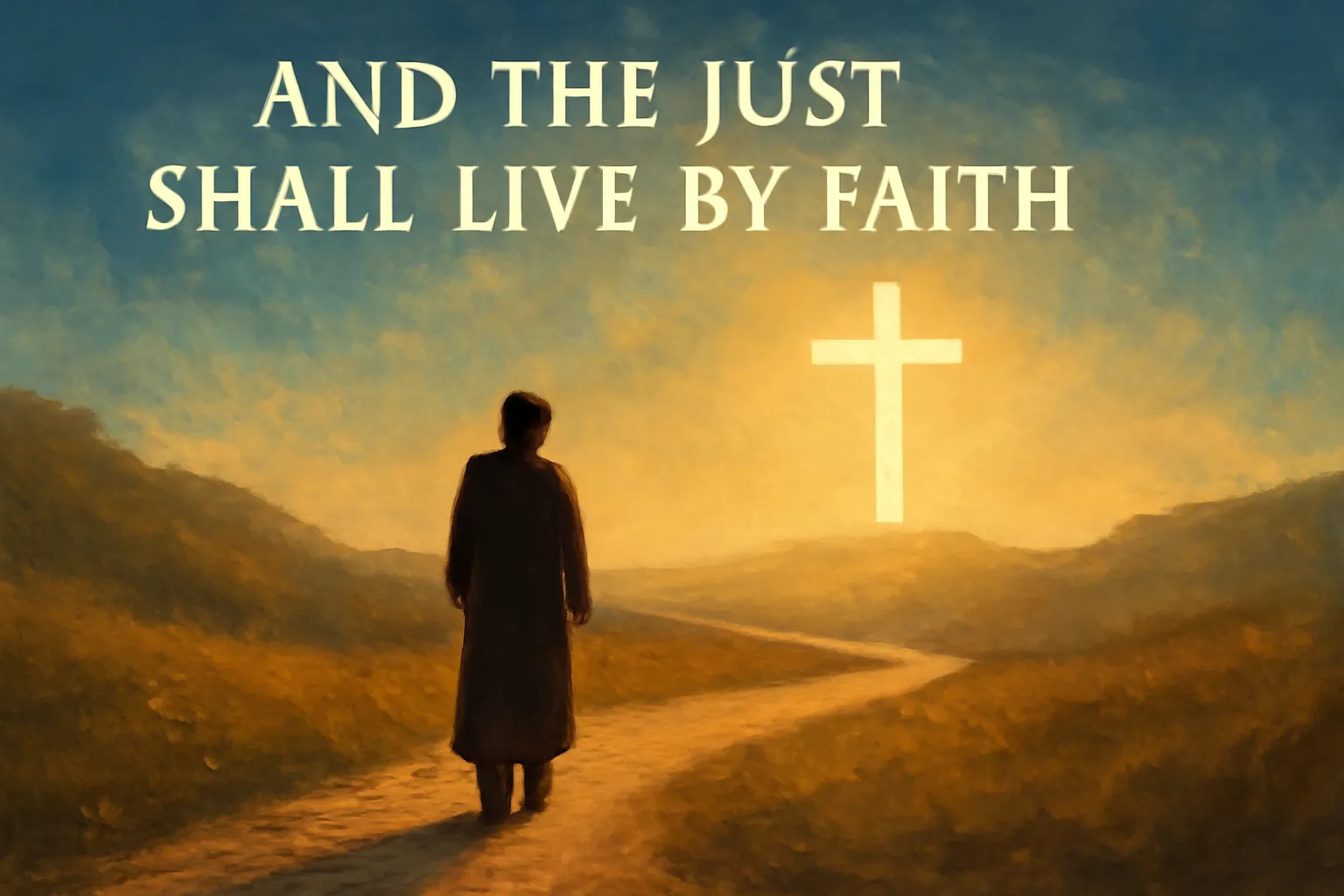
The phrase “the just shall live by faith” has long stood at a crossroads of biblical language, theological interpretation, and lived spirituality. It appears in a single line within the book of Habakkuk, but its resonance stretches across the New Testament and into the ethics of Christian living today. This article explores the meaning of the claim, the historical and literary context in which it arose, and a variety of practical applications for individuals and communities who seek to translate faith into daily life. Along the way, we will examine related phrases—such as “the righteous shall live by faith,”“living by faith,” and “trust-based living”—to broaden semantic breadth while staying grounded in the central claim: a life shaped and sustained by faith in the God who is faithful.
At its core, the statement asserts a fundamental orientation of life. To say that the just live by faith is to describe a way of being in which one’s daily choices, hopes, and endurance arise from trust in God rather than solely from personal strength, status, or cleverness. The term “just” here is a translation of a concept that can be read as righteous, genuine before God, or in right relationship with the divine. The emphasis is not primarily on a one-time act but on a continuing posture: a life sustained by a reliable source outside oneself.
Three interlocking ideas emerge when we ask what it means to live by faith:
Trust as the heart of living—believing that God is present, promises are trustworthy, and commitments to God shape daily decisions.
Reliance on divine provision rather than self-reliance—accepting that human effort has limits and that faith entails dependence on God’s grace and guidance.
Faith expressed in action—true faith does not remain abstract; it moves outward in obedience, mercy, integrity, and perseverance in hardship.
Historically, the Hebrew Bible (Old Testament) uses a similar language in places that invite readers to see righteousness as a life oriented toward trusting God’s character even in difficult times. In Habakkuk 2:4, the text contrasts the proud with the righteous and declares that “the righteous shall live by his faith”. This is not merely a statement about inward belief; it is a summons to a way of living that persists through social injustice, political turmoil, and personal hardship. When the phrase enters the New Testament, it takes on new dimensions as it is tied to the gospel of Jesus and the apostolic understanding of salvation, justification, and new life in Christ.
Context: Where does the phrase come from, and how has it been read historically?
The immediate context of Habakkuk 2:4 is a prophet’s dialogue with God in a time of collapse and confusion. Habakkuk laments violence, oppression, and moral ambiguity among his people. God answers with a paradox: the faithful life is rooted in faith, not in a humanly controlled national order. The verse thus becomes a theological claim about trust as a primary human stance before God, especially under pressure.
When Paul cites this phrase in Romans 1:17, Galatians 3:11, and Hebrews 10:38, he uses it to argue that justification before God is by faith, not by works of the law or human achievement. In these letters, faith is presented as relational trust in God’s promises and in the saving work of Christ. The claim is not that works are irrelevant to life, but that they are not the ground of one’s standing before God; rather, faith is the means by which one accepts and lives out God’s grace in daily existence.
Historically, these verses contributed to a broad stream of Christian thought commonly summarized as justification by faith. The Protestant Reformation popularized this concept, emphasizing that a person is made righteous by trusting God’s promise rather than by fulfilling the law’s demands. Yet the broader Christian tradition has always wrestled with how faith and works relate. The apostle James, for instance, stresses that “faith without works is dead” (James 2:17, 26). The contemporary conversation often centers on harmonizing Paul’s emphasis on faith as the means of justification with James’s insistence on faith that is lived out in concrete acts of love and obedience.
In Catholic and Orthodox thought, the phrase is sometimes understood within a framework where faith is inseparable from participation in the sacraments, grace received through the church, and the transformation of the whole person. In these traditions, righteous living—not simply belief in isolation but belief lived out through worship, service, and moral formation—is the horizon toward which faith points. Across traditions, the recurring emphasis is that faith is not a private, inert belief but a dynamic trust that moves a person toward a life aligned with God’s purposes.
Historical and theological development
To understand the just shall live by faith, it helps to trace a few strands of interpretation that have shaped Christian thought.
Old Testament roots and the Habakkuk motif
The Habakkuk text is primarily about trust under trial. It invites readers to see righteousness as a posture toward God that persists even when external circumstances are chaotic. This frame sets the stage for its reception in the New Testament and for how Christians understand “life” as something sustained by faith, rather than by social advantage or ritual compliance alone.
Pauline development in Romans and Galatians
In Romans and Galatians, Paul argues that people are made right with God through faith in Christ, not through adherence to the Mosaic law. He uses Habakkuk’s language to show that the means of receiving God’s grace is trust: faith in the crucified and risen Jesus is the decisive factor in salvation. For Paul, the life of faith is inherently tied to the discovery that God’s righteousness is revealed apart from the works of the law and is instead a gift received by faith.
Letter to Hebrews and the endurance motif
Hebrews emphasizes perseverance in faith as a defining feature of the Christian life. The author anchors endurance in the example of those who lived by faith, often citing Old Testament figures who trusted God despite uncertain and challenging circumstances. The call is to hold fast to faith and to endure with confident expectation of God’s faithfulness.
Ethical and ecclesial implications in early Christianity
As early Christians reflected on the claim that one is justified by faith, they also faced questions about how faith translates into community life. The New Testament letters repeatedly connect belief with practice: love for neighbor, hospitality, generosity, justice, and sharing the gospel. In this sense, faith and life are not separate categories. The life that faith generates becomes a witness to God’s reign in a broken world.
Practical applications: How to live out “the just shall live by faith” in daily life
Translating a theological statement into concrete living is not a simple task. Below are practical avenues by which individuals and communities can embody a faith-centered life that aligns with the idea that the righteous live by trust in God.
Prayer and meditation as moments of orientation: setting one’s heart and mind toward God, especially before making important decisions or facing fear.
Scripture engagement as a means of hearing God’s promises and aligning one’s desires with divine purposes.
Reflection on trials with an eye toward learning reliance on God’s faithfulness, not merely venting about circumstances.
Spiritual disciplines such as fasting, silence, and Sabbath rest that recalibrate one’s life toward trust rather than productivity alone.
Living faith in relationships and community
Hospitality and generosity as acts that demonstrate trust in God’s sufficiency and a commitment to others’ flourishing.
Truth-telling and integrity even when it costs status or comfort, reflecting a life that trusts God more than public approval.
Conflict resolution through patience, reconciliation, and mercy, embodying trust in God’s redemptive purposes.
Work, vocation, and public life
Ethical consistency in the workplace, including honesty, fair dealing, and concern for the vulnerable.
Hopeful perseverance in the face of setbacks, trusting that God can work through our ordinary labor for greater purposes.
Vocation as service—seeing one’s job not only as a source of income but as a field for love of neighbor and witness to divine care.
Faith in suffering and hardship
Another practical feature of the life of faith is how one responds to pain. The call to live by faith during hardship invites a posture of endurance, prayer, and receptivity to God’s care. It does not entail naive denial of pain; rather, it positions suffering within a larger story in which God’s presence and purposes can be trusted even when human outcomes are uncertain. In this sense, faith becomes steadiness that sustains hope and resilience.
Educational and intellectual dimensions
For many people, faith is not a blind leap but a reasoned response informed by history, experience, and reflection. A practical approach includes respectful dialogue with questions about meaning, morality, and the nature of God. Reading, studying, and discussing sacred texts with intellectual honesty helps someone grow in a trust that is not opposed to reason but enriched by it.
Faith within plural contexts
In a diverse world, the call to live by faith can take on a plural form of respect for others’ beliefs while maintaining one’s own commitments. The goal is not to coerce belief but to cultivate lives marked by honesty, charity, and service that witnesses to a trust in God’s overarching good purposes.
Common misunderstandings and how to navigate them
Like any powerful religious claim, the just shall live by faith is subject to misunderstandings. Here are a few frequent questions and clarifications that can help foster healthier interpretations.
Reality: Faith is more than intellectual agreement; it is trust in God that seeks realignment of one’s heart, choices, and loyalties. A living faith bears fruit—acts of love, patience, and moral courage—because belief has become trust in God’s promises and purposes.
Misunderstanding: justification by faith negates ethics
Reality: The New Testament consistently links genuine faith with ethical living. When Paul emphasizes faith as the means of justification, he does so while simultaneously arguing that faith grounds a life that is transformed in love and good works. The Church has long taught that grace awakens conscience and empowers moral discernment.
Misunderstanding: faith and works are opposed
Reality: The relationship between faith and works is better described as faith that works. Works are not the root of righteousness but the fruit of trust. James’s exhortation to “show me your faith by your works” invites believers to let their faith express itself in concrete, tangible acts of service and integrity.
Misunderstanding: “the just shall live by faith” only applies to individual salvation
Reality: While central to personal righteousness, the phrase also speaks to a broader social and communal ethic. Living by faith compels a community to pursue justice, mercy, and reconciliation, reflecting God’s reign in both private life and public spheres.
Alternatives and variations for broader semantic breadth
For readers seeking to connect the core idea with different contexts or traditions, consider these alternate expressions that preserve the thrust of the original claim:
“The righteous shall live by faith” — common in many English Bible translations and often used in academic or interfaith discussions.
“A life of faith” — emphasizes ongoing daily trust rather than a single moment of belief.
“Living by trust in God” — foregrounds the relational aspect of faith as trust in divine character and promises.
“Faith-driven living” — highlights how faith shapes decisions, priorities, and identity.
“Trust-based existence” — a broader phrasing that can apply beyond explicitly religious contexts while retaining the core insight about dependence on something greater than oneself.
Integrating the message into contemporary life
How might a modern reader or practitioner translate the timeless claim into a credible, livable rhythm? The answer will vary by tradition, culture, and personal temperament, but several common threads emerge across contexts:
Trust in communal resources—faith is not only a private disposition; it invites believers into shared practices, mutual accountability, and public witness.
Hope in God’s promises—even when outcomes are uncertain, faith rests in the fidelity of God, which provides a framework for hopeful action rather than despair.
Mercy as a daily practice—trust in divine mercy translates into acts of mercy toward others, particularly the marginalized and vulnerable.
Stewardship and integrity—faith shapes how one uses resources, time, and influence; it calls for honesty, generosity, and responsibility.
Humility in learning—living by faith includes recognizing one’s limits and seeking wisdom, guidance, and correction as needed.
Conclusion: The ongoing relevance of living by faith
The assertion that “the just live by faith” remains a compelling summons for individuals and communities to orient life around a trustworthy God. It invites a posture of trust that does not circumvent reason, ethics, or social responsibility but grounds these in a deeper confidence that God is at work in the world. By situating righteous living within a framework of faith, the phrase challenges both skepticism and complacency: it asks believers to examine how their beliefs translate into benevolent action, how patience in suffering can become a witness, and how hope can sustain courage in the face of danger, injustice, or uncertainty.
In its richest form, then, the just live by faith is not a static creed but a dynamic call. It bids readers to embrace trust as a constant habit, to seek justice with perseverance, and to articulate belief not merely in syllables but in tangible, daily actions that reflect a life shaped by divine faithfulness. Whether one speaks in the language of Christian tradition, interfaith dialogue, or secular ethics, the core idea remains the same: genuine life—vibrant, hopeful, compassionate, and resilient—opens up when a person anchors their days in trust toward something greater than themselves. In this sense, the biblical refrain about righteousness and life continues to offer a practical lens for evaluating how we live, how we love, and how we hope for the world to come.

 Por Laura Jara