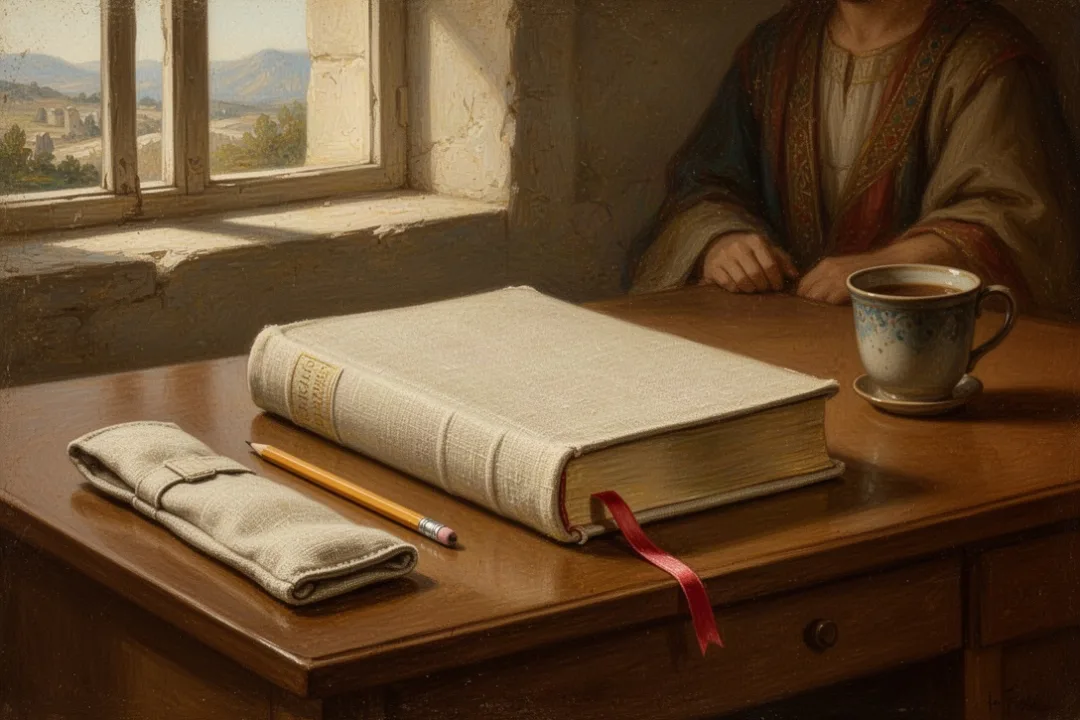
You may be choosing a Bible for daily reading, a wedding gift, or a keepsake and wondering whether a linen Bible will hold up beyond the first few months. Linen covers have a distinctive woven texture, a soft natural appearance, and a quieter look than glossy imitation leather. They can be beautiful and practical, but they also need more careful handling because fabric absorbs moisture and picks up marks more easily than smooth covers.
The best linen Bible for you depends on more than appearance. Consider the translation, font size, binding, paper, notes, and the type of cover material used. A Bible with a genuine linen exterior may feel different from one covered in linen-textured paper or a synthetic book cloth, so checking the product description closely matters.
A linen Bible has a cover made with, or finished to resemble, linen fabric. Linen is a textile made from flax fibers, while many modern Bible covers use a linen blend, coated fabric, paperboard wrapped in book cloth, or a synthetic material with a woven surface. The phrase “linen cover” does not always mean that the entire exterior is made from pure linen.
Most fabric-covered Bibles are built around a firm board or flexible cover base. The fabric is attached over that base, then finished around the edges. Some editions have a protective coating that helps resist light moisture; others have a more natural, untreated texture. The construction affects how the Bible feels in your hands and how well it handles frequent use.
Readers often choose linen for its tactile quality. The woven surface can make a Bible feel personal and gift-worthy without looking ornate. Neutral shades such as cream, natural flax, gray, sage, blue, and muted pink are common, although available colors depend on the publisher and edition.
Check the materials before buying: “Linen Bible” may describe genuine linen, a linen blend, book cloth, or a linen-look synthetic cover. The exact material should be listed in the product details rather than assumed from the title.
How to identify the right linen Bible before ordering
Start with the purpose of the Bible. A compact Bible for commuting has different requirements from a large-print Bible for home reading, and a journaling Bible needs wider margins and paper that can handle writing. A beautiful cover cannot compensate for a translation or format that makes reading uncomfortable.
Choose the translation first. Select the version you already understand or the one recommended by your church, study group, or intended recipient.
Decide how you will use it. Daily carrying, bedside reading, study, journaling, church services, and gifting each favor different features.
Compare the dimensions and weight. A linen cover may be light, but a large Bible with study notes can still be substantial.
Check the print size. Small type can make regular reading tiring, even when the cover and paper are excellent.
Review the binding. A sewn binding generally opens more comfortably and can be more durable than a simple glued binding, though construction varies by edition.
Confirm the actual cover material. Look for terms such as linen, linen blend, book cloth, fabric, imitation linen, or polyester.
Read the return policy. Fabric texture and color can be difficult to judge from photographs, and you may want to inspect the binding in person.
The product listing should also tell you whether the Bible has two ribbon markers, a presentation page, a thumb index, a clasp, a dust jacket, or a protective slipcase. These features are not essential, but they can affect how useful the edition is for your routine.
How linen compares with leather, imitation leather, and paper covers
Each cover material creates a different balance of appearance, durability, flexibility, and maintenance. Linen has a fabric feel that many readers prefer, but smooth covers are usually easier to wipe clean. A comparison helps you avoid choosing based on photographs alone.
Linen or fabric: Offers a soft woven texture and an understated appearance. It may show dust, oils, and spills more readily, especially when untreated.
Leather: Often develops a distinctive patina and can be highly durable, depending on the leather and construction. It is usually more expensive and may require material-specific care.
Imitation leather: Usually wipes clean more easily and is available in many colors. Its surface may eventually crack, peel, or become less supple with heavy use, depending on the material.
Paper or printed board: Can display detailed artwork and keep a Bible relatively affordable. It is more vulnerable to scuffs, bent corners, and moisture.
Cloth-covered board: Provides much of the linen look and feel, although the fabric may be a blend or synthetic textile rather than pure linen.
A linen Bible is often a good choice when you want something that feels special without being formal. It works well as a personal reading Bible, a baptism or confirmation gift, a wedding Bible, or a family keepsake. If the Bible will spend most of its time in a crowded bag, near food, or outdoors, a more easily washable cover may be more practical.
Which linen Bible features matter for everyday reading
The cover is the feature you notice first, but the interior determines whether you will continue using the Bible. Before buying, pay close attention to the page layout, paper opacity, and opening behavior. These details affect reading comfort every time you pick it up.
Print size and page design
Print size is especially important if you read for long periods or need a Bible that is easy to use in low light. A compact edition may save space but use a smaller typeface and tighter columns. A large-print or comfort-print edition may be wider and heavier, yet much easier on your eyes.
Look for a page design that suits your reading style. Single-column text can feel more like a regular book, while double-column text allows more content on each page. Red-letter text, cross-references, footnotes, maps, and study notes can be useful, but they also make pages busier.
Paper and show-through
Bible paper is usually thin so that a complete edition does not become excessively thick. Thin paper can produce some show-through, meaning you can see printing from the reverse side. This is normal, but the amount varies by paper quality, ink density, and page layout.
If you plan to underline or use colored pens, look for a journaling or wide-margin edition designed for those activities. Regular Bible paper may not tolerate wet ink well. Pencils, dry highlighters, and archival Bible pens are often safer, but test any product on an inconspicuous page first.
Binding and flexibility
A Bible that lies open without constant pressure is easier to read and mark. Sewn sections generally allow a book to flex naturally, while glued bindings can vary widely in how flat they open. A flexible cover may feel comfortable in your hands, but flexibility alone does not tell you how strong the binding is.
Inspect the spine, hinge, and corners if you can handle the Bible before buying. The fabric should appear securely attached, with no lifting along the edges. A small amount of texture variation is normal for cloth, but loose threads, bubbling, or uneven adhesive may indicate a finishing problem.
How to care for a linen Bible step by step
Care begins with preventing avoidable damage. Linen fibers can absorb liquid, and the board beneath the fabric can warp if it becomes wet. Regular, gentle handling is safer than trying to repair a heavily stained cover later.
Wash and dry your hands. Clean, dry hands reduce the transfer of oil, lotion, food residue, and moisture to the cover and pages.
Use a clean reading surface. Keep the Bible away from drinks, open pens, cosmetics, and greasy foods.
Carry it in a sleeve or pouch. A fabric or padded cover protects the linen from friction, dust, and contact with objects in your bag.
Support the spine when opening it. Let the binding open gradually instead of forcing the covers flat or bending the spine backward.
Use a bookmark. Do not fold page corners, place a pen inside the closed Bible, or leave bulky objects between the pages.
Store it flat or upright in a dry place. Avoid damp basements, hot cars, direct sunlight, and areas with major temperature changes.
Inspect it occasionally. Check the edges, ribbons, endpapers, and cover for loose threads, moisture, or signs of wear.
When you finish reading, close the Bible gently and make sure no ribbon, note card, or writing instrument is trapped inside. Store it with enough room around it that you do not have to pull on the fabric or bend the cover to remove it.
How to clean stains from a linen Bible safely
Cleaning depends on the cover’s actual finish. Before treating a visible mark, check the publisher’s care instructions or test your method on a hidden area. A solution that works on washable synthetic fabric may discolor natural linen or cause dye to spread.
For loose dust, use a dry, soft brush or a clean microfiber cloth. Move lightly across the surface rather than rubbing one spot repeatedly. Rubbing can push particles deeper into the weave and create a shiny or worn patch.
For a small fresh mark, lightly dampen a white cloth with plain water and blot the area. Do not soak the fabric, spray the cover directly, or scrub aggressively. Work from the outside of the mark toward the center so you do not spread it across a larger section.
Allow the Bible to air-dry completely at room temperature. Keep it open only as much as necessary and place it away from heaters, hair dryers, radiators, and direct sun. High heat can distort the cover, weaken adhesive, or change the appearance of the fabric.
Do not use household cleaners, bleach, alcohol, or disinfectant wipes unless the manufacturer specifically approves them for that cover. These products can remove color, leave rings, damage coatings, or transfer moisture into the binding.
Oil, ink, coffee, and mold require different responses, and some stains cannot be removed without risking permanent damage. For a valuable heirloom or a Bible with serious water damage, a conservator familiar with books and textiles is safer than repeated home treatments.
How to protect a linen Bible from moisture and wear
A linen Bible is most vulnerable when it is exposed to water and friction at the same time. A damp cover rubbing against a bag or another book can develop flattened areas, dye transfer, or staining. Use a waterproof outer pouch if you carry it during rainy weather, but do not seal a damp Bible inside one.
If the Bible becomes wet, remove it from the source of moisture and gently blot the exterior with a clean towel. Separate damp pages carefully, without pulling them apart. Let the book dry in a well-ventilated room, and avoid closing it tightly until the pages and cover are fully dry.
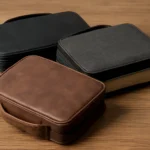
For regular travel, a properly sized book sleeve is one of the simplest protections. Choose one that does not compress the Bible too tightly or force the corners inward. A sleeve with a smooth interior reduces snagging, while a padded exterior can protect the cover from keys, chargers, and other hard objects.
Sunlight can gradually fade fabric, especially on richly colored covers. Keep the Bible out of a sunny window when it is not being used. If you display it, rotate its position occasionally and use a stand that supports the covers rather than sharply bending the spine.
How to use a linen Bible for journaling and study
Linen-covered editions are often chosen for reflective reading and personal notes. If your Bible has wide margins, you can record observations, cross-references, prayer topics, or dates connected with meaningful passages. Keep notes concise enough that the pages remain flexible and the cover can close without strain.
Choose writing tools with care. A pencil is usually the lowest-risk option, while some Bible-specific pens are designed to limit bleed-through. Test a pen on a page near the back before using it throughout the book, and allow ink to dry before closing the pages.
Sticky notes can be useful, but too many create pressure along the binding. Use thin tabs rather than thick flags, and avoid placing adhesive directly on the printed page if you want to preserve the paper. Do not attach decorations, charms, or heavy accessories to the ribbon markers because they can pull on the page block.
For study, a separate notebook may be better than writing every detail inside the Bible. This keeps the pages less crowded and lets you expand your thoughts without adding bulk. It also makes it easier to replace the notebook while preserving the Bible itself.
What makes a linen Bible a thoughtful gift
A linen Bible can feel personal because the cover has a warm, handmade-looking quality. It is suitable for occasions such as a wedding, baptism, confirmation, graduation, house blessing, or a new season of study. The right gift edition should reflect the recipient’s reading habits rather than only matching the event’s colors.
Before purchasing, find out which Bible translation the recipient prefers. If you cannot ask directly, check whether their church or study group commonly uses a particular version. A beautifully bound Bible may go unused if the reader finds the language unfamiliar or the print difficult to read.
Personalization can add meaning, but permanent engraving or printing is best reserved for a gift you know the recipient will keep. A handwritten note, presentation page, or removable bookplate offers a less permanent option. Keep any inscription respectful of the Bible’s intended use and avoid placing a message where it interferes with the text.
Include care guidance if the cover is delicate. A simple note recommending a sleeve, dry hands, and gentle spot cleaning can help the recipient preserve the fabric. If you are giving the Bible at a ceremony, a protective box or pouch also makes it easier to transport safely.
How to tell whether a linen Bible is worth the price
Price alone does not establish quality. Compare the features that affect long-term use: binding construction, paper quality, print size, cover finishing, and the accuracy of the product description. A less expensive Bible may be the better choice if it has a format you will actually read regularly.
Look at photographs of the spine, corners, inside cover, and page edges rather than relying only on a front-cover image. Reviews can reveal whether the fabric attracts lint, whether the Bible opens comfortably, and whether the color matches the listing. Pay particular attention to reviews from people who have used the edition for more than a few weeks.
Consider replacement and repair options as well. Some publishers provide editions with durable bindings and protective packaging, while others emphasize decorative covers. A Bible that can be handled, carried, and opened comfortably often gives better value than one purchased solely as a display piece.
For daily carrying: Prioritize a secure binding, manageable weight, and a protective sleeve.
For long reading sessions: Prioritize clear print, comfortable margins, and a binding that opens easily.
For journaling: Choose wide margins, suitable paper, and enough flexibility for frequent writing.
For gifting: Match the translation, print size, and cover color to the recipient’s preferences.
For display or heirloom use: Consider a slipcase, presentation box, and protection from sunlight and moisture.
When a linen Bible may not be the best choice
Linen may not suit you if your Bible will regularly be exposed to spills, muddy surfaces, or rough outdoor conditions. It may also be less convenient if you want to wipe the cover clean quickly after every use. In those situations, a coated synthetic cover or another smooth material may provide easier maintenance.
A fabric cover can also be a poor fit for someone who prefers a very flexible Bible that can be folded back while reading. Some linen-covered editions have firm boards or decorative construction that resists that kind of handling. Always treat the binding according to its design rather than assuming that a soft-looking cover can be bent freely.
Finally, do not choose linen at the expense of readability. The most attractive cover will not make up for tiny type, excessive show-through, a translation you do not understand, or a size that is uncomfortable to carry. A Bible earns its place in your routine through consistent use, and comfort is a major part of that choice.
How to make a final linen Bible choice
Before you place an order, picture how the Bible will be used during an ordinary week. Will it sit on a nightstand, travel to church, accompany you to a study group, or be written in several times a week? That answer will guide the balance between appearance, portability, readability, and durability.
Confirm the cover material, translation, dimensions, print size, binding, and return policy. Then plan for basic protection from the first day: clean hands, a suitable sleeve, a dry storage place, and gentle cleaning only when necessary.
A well-made linen Bible can become a familiar and meaningful part of your reading life. Its woven cover may show signs of use over time, but careful handling helps those marks remain ordinary wear rather than preventable damage.
Frequently asked questions
Is a linen Bible made from real linen?
Not always. The term can refer to genuine linen, a linen blend, cotton or synthetic book cloth, or a printed material designed to look like linen. Check the manufacturer’s specifications for the exact fiber content and finish. If the listing only says “linen cover” without details, contact the seller before purchasing, especially if natural materials matter to you.
Can I wash a linen Bible cover?
You generally should not machine-wash or saturate a Bible cover. The fabric is attached to board, paper, and binding materials that can warp or loosen when wet. Remove dust with a soft dry cloth and blot small marks with minimal water after testing an inconspicuous area. Seek professional book conservation advice for major stains or water damage.
Are linen Bibles durable enough for daily use?
Many are suitable for daily reading, but durability depends on the binding, fabric finish, and how you carry the Bible. A sleeve, dry hands, careful opening, and protection from spills will help. If your Bible will travel in a crowded bag or face harsh conditions, compare linen with a coated cover that is easier to wipe clean.
What should I write in a linen Bible gift?
A short, sincere message on the presentation page is usually appropriate. You might include the date, occasion, and a personal wish for the recipient’s reading and reflection. If you are unsure about permanent writing, place a note or removable bookplate inside instead. Confirm the recipient’s preferred translation and print size before adding personalization.







Leave a Reply