The Glory Be to the Father, commonly known in Latin as the Gloria Patri, is one of the oldest and most beloved doxologies in Christian devotion. A short prayer of praise and adoration, it is crafted to honor the Triune God—the Father, the Son, and the Holy Spirit. In English-speaking churches, this benediction of praise is often recited at the close of a prayer, after the singing of a psalm, or at the end of a decade in the Rosary. The concise form makes it accessible for personal prayer and for public liturgy alike.
The core purpose of the Glory Be is to join the heart of the believer to a timeless rhythm of worship: to remember that God is eternal, sovereign, and gracious, and to acknowledge that all time belongs to Him. While it is brief, the prayer carries a deep theological message: praise is due to the Father, through the Son, in the power of the Holy Spirit; God’s glory is not a momentary warmth but a perpetual reality that has endured since the beginning of creation.
In many churches, the Glory Be appears in a family of related prayers called doxologies. These short hymns of praise often serve to ground the praying person in the mystery of the Trinity and to orient every subsequent petition toward its ultimate source: the inexhaustible grace of God.Note: Variants exist in wording across languages and traditions, but the essential meaning remains constant: acknowledging God’s glory, forever and ever.
Theological meaning and significance
The theological significance of the Glory Be rests on its explicit confession of the Triune nature of God—the Father, the Son, and the Holy Spirit. It is a compact catechesis in prayer: it teaches who God is, what God has done, and how believers are to orient their lives with worship.
Three essential ideas surface in every recitation:
Praise to the Father, the source of all life and love.
Honor to the Son, through whom salvation is accomplished.
Sanctifying power of the Holy Spirit, who sustains the church and believers.
The phrase "as it was in the beginning, is now, and ever shall be, world without end" proclaims the timelessness of God. It expresses a confident trust that God’s purposes are immutable: what God began in creation and redemption continues unabated into all ages. This eternal perspective is especially helpful when life feels hurried, uncertain, or in need of steadiness; the Glory Be invites the heart to pause and align with God’s eternal rhythm.
In many devotional circles, the prayer also functions as a reminder of humility before the mystery of God. By naming the Father, Son, and Spirit, the believer acknowledges a mystery larger than oneself, and yet enters into intimate relationship with God through prayer. The Glory Be thus serves both a doctrinal purpose—confessing faith in God’s triune nature—and a pastoral one—cultivating trust, gratitude, and reverence.
The use of short doxologies to praise God appears very early in Christian liturgy. The Gloria Patri gained prominence in the Latin liturgical tradition, where it was repeated at the end of certain psalms and prayers. Over the centuries, it became a standard placeholder for a brief moment of liturgical orientation—an opportunity to bless the name of God and to recollect the Trinitarian faith before continuing with praise or petitions.
In the Catholic and Anglican traditions, the Glory Be is frequently used in the minutes after the recitation of a Psalm, after canticles, or at the end of a decade in the Rosary. The structure of many prayer offices, including the Liturgy of the Hours and various devotional sequences, provides a natural rhythm for the Glory Be to be spoken or sung. The simplicity of the form makes it adaptable for children, new believers, and seasoned theologians alike.
In Eastern Christian and Orthodox contexts, a closely related doxology is used with slightly different phrasing, often incorporating “now and ever, and unto ages of ages, Amen.” These variants reflect the rich diversity within the broader Christian family while preserving the core intention: to praise the Father through the Son and in the Holy Spirit.
While the essential intent remains the same, the exact words of the Glory Be differ by language and tradition. Below are representative forms you may encounter:
Latin and English Catholic usage
Latin classic form: “Gloria Patri, et Filio, et Spiritui Sancto. Sicut erat in principio, et nunc, et semper, et in saecula saeculorum. Amen.”
English contemporary form: “Glory be to the Father, and to the Son, and to the Holy Spirit; as it was in the beginning, is now, and ever shall be, world without end. Amen.”
Anglican and Protestant variations
Some Protestant hymnals and prayer books use a more concise English version: “Glory be to the Father, and to the Son, and to the Holy Spirit. As it was in the beginning, is now, and ever shall be, world without end. Amen.”
In Slavic and Greek liturgies, a common form is: “Glory be to the Father, and to the Son, and to the Holy Spirit, now and ever, and unto ages of ages. Amen.” This phrasing emphasizes the eternal nature of God in a cadence familiar to Orthodox worship.
Translations and paraphrases
Spanish: “Gloria al Padre, y al Hijo, y al Espíritu Santo, como era en un principio, ahora y siempre, por los siglos de los siglos. Amén.”
French: “Gloire au Père, et au Fils, et au Saint-Esprit, comme il était au commencement, et maintenant et toujours, et dans les siècles des siècles. Amen.”
German: “Ehre sei dem Vater, dem Sohn und dem Heiligen Geist, wie im Anfang, now und immer, und von Ewigkeit zu Ewigkeit. Amen.”
Regardless of the exact form, the essential themes are consistent: worship of the Triune God, a statement about God’s eternal nature, and a conclusion of praise with Amen.
A practical guide: how to pray the Glory Be
For many believers, the Glory Be is less a philosophical exercise and more a disciplined habit—an accessible entry into sustained prayer. The following guide offers practical steps to incorporate the Glory Be into daily life, whether in private devotion, family prayer, or corporate worship.
Prepare the heart — Sit or stand in a comfortable posture. Take a few slow breaths to center attention on God. A brief note of gratitude can open the prayer.
Recall the Trinity — Begin by naming the Father, the Son, and the Holy Spirit. Allow the cadence of the words to turn your mind toward the mystery of the Triune God.
Recite the doxology — Speak the chosen form of the Gloria Patri with clear diction and reverence. If you are in a group, assign voices or sing the words together.
Reflect briefly — After the words are spoken, pause to reflect on a specific aspect of God’s character: the Father’s love, the Son’s mercy, or the Spirit’s guidance.
Return to praise — End with a brief personal expression of worship or gratitude, such as, “Thank you, Lord, for your enduring grace.”
Suggestions for personal devotion
Couple with Scripture — Read a short verse about God’s faithfulness and then recite the Glory Be as a response of worship.
Use as a closing cadence — After a longer prayer or Bible reading, close with the Glory Be to seal the moment in praise.
Incorporate silence — Add a moment of silent listening for God’s voice before or after the doxology.
Devotional practices and disciplines associated with the Glory Be
The Glory Be is not merely a verbal formula but a discipline of worship that can shape character and devotion. Below are several devotional contexts where the doxology commonly appears and how it can enrich spiritual practice.
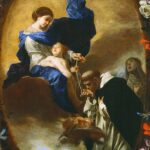
Rosary devotion — At the end of each decade, the Glory Be is recited to conclude the meditation on that mystery, followed by the Fatima prayer in some traditions.
Liturgy of the Hours — In monastic and parish settings, the doxology often follows psalms and canticles to bring the recitation to a worshipful close.
Daily office and morning/evening prayer — The Glory Be helps anchor daily routines in reverence for God’s eternal presence.
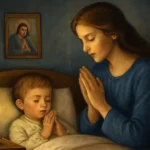
Family prayer — A simple way to introduce children to liturgical language and to cultivate a shared practice of faith in the home.
The Glory Be has inspired countless hymns, choral settings, and simple melodies. Singing or chanting the doxology can deepen the sense of communal worship, as voices rise together to praise the Father, Son, and Holy Spirit. For many, music is a particularly effective vehicle for dwelling with God in the mystery of the Trinity.
The Glory Be in liturgy and personal devotion
In liturgical settings, the Glory Be functions as a rhythm that punctuates prayer, psalms, and readings. It serves both a theological and pastoral function:
Theological function — It makes explicit the belief in the Trinity and the eternal nature of God.
Pastoral function — It invites quiet reflection after the words of Scripture or after a period of intercession, returning the heart to praise.
In personal devotion, the Glory Be can be a dependable anchor when emotions are high or when distractions threaten prayer. Its brevity makes it accessible in the busiest moments, while its doctrinal content invites the believer back to what truly matters: God’s glory, love, and grace.
Common questions and clarifications
Many readers have questions about the Glory Be and how best to approach it. Here are a few common queries with concise clarifications.
Is the Glory Be a form of worship of Mary or angels? No. The Glory Be is a doxology addressing the Triune God—the Father, the Son, and the Holy Spirit—and is a concrete expression of praise directed to God alone.
Can I use variations of the wording? Yes. Different traditions and languages preserve the core meaning even as the exact words vary. The essential parts are the Trinitarian focus, the sense of eternity, and the final Amen.
When is it appropriate to recite the Glory Be? It is appropriate in both private prayer and public worship, especially after psalms, canticles, or per decades of the Rosary. It can also be spoken at the end of a family prayer or church service as a unifying act of worship.
What should I meditate on while praying? Consider the attributes of the Father (harmony, care), the Son (salvation, mercy), and the Spirit (guidance, transformation). Let the words direct your heart toward gratitude and adoration, not merely recitation.
Guided reflections and further study
If you wish to deepen your understanding of the Glory Be, you can explore several avenues:
Scriptural reflections on God’s unity and roles within the Trinity, using passages such as Ephesians 4:4-6 or 2 Corinthians 13:14 as a backdrop to the doxology.
Historical theology exploring the development of doxologies in the early church and their role in shaping liturgical practice.
Liturgy and prayer resources—hymnals, the Liturgy of the Hours, and rosary guides often include precise forms of the Glory Be for study and practice.
For those who want structured study, consider a short devotional series on the roles of the Trinity in Christian life, using the Glory Be as a recurring anchor for reflection and prayer.
Practical reminders for pastors, catechists, and families
Whether you are leading a worship service, teaching children, or praying at home, the Glory Be offers practical advantages:
Clarity — A concise confession of faith that is easy to memorize and recite.
Unity — A shared practice that unites diverse ages and backgrounds in a common act of praise.
Depth — A gateway to deeper contemplation of the Trinity and of God’s eternal nature.
When teaching the Glory Be, it can be helpful to provide the classic forms in both Latin (for older students or traditional settings) and English (for contemporary use). You may also introduce the Eastern variations when teaching about global Christian traditions, noting the common core while highlighting the diversity of expression.
Closing thoughts: keeping the Glory Be vibrant in daily life
The Glory Be to the Father is more than a line of prayer; it is a discipline of worship that invites ongoing encounter with God. In a world filled with noise and distraction, a brief moment to lift the heart in praise can become a steady rhythm that reshapes priorities, anchors hope, and deepens trust in the Father’s faithfulness, the Son’s salvation, and the Spirit’s renewal.
Whether you are new to Christian prayer or have long cherished this doxology, you can cultivate a richer practice by:
Reciting regularly in daily or weekly routines to build familiarity and reverence.
Pairing with Scripture to tie praise to God’s revealed word.
Sharing with others in families, parishes, or study groups to experience the Glory Be as a communal act of worship.
May the simple words of Glory be to the Father lead you deeper into the mystery of God and a life lived in awe of the Triune God—Father, Son, and Holy Spirit—now and forever.




Leave a Reply