Introduction: The Bible as One Story — From the Old Testament to the New Testament
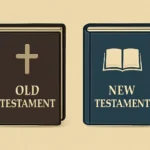
The relationship between the Old Testament and the New Testament is a central theme for readers who seek to understand how the Bible unfolds as one continuous story. Far from being two isolated halves, the scriptures form a cohesive narrative in which Old Testament verses point forward, finding their New Testament fulfillment in the person and work of Jesus Christ. This article surveys how readers can approach cross-references, tracing how key verses in the Old Testament illuminate the gospel message, the identity of Jesus, and the meaning of the Christian covenant in the New Testament.
By exploring cross-references and typology, you can gain a richer understanding of how the biblical authors viewed Scripture as one divine revelation. The goal is not to flatten differences in genre or context, but to recognize the through-line that runs from the creation and covenant themes of the Old Testament to the life, death, and resurrection narrated in the New Testament.
What Do We Mean by Old Testament Verses New Testament?
When scholars speak of Old Testament verses New Testament, they are describing several related ideas. Here are core concepts that guide sound study:
Prophecy and fulfillment — The New Testament writers often present events in Jesus’ life as the literal fulfillment of God’s promises spoken earlier in the Old Testament.
Typology — People, events, or institutions in the Old Testament serve as foreshadowings (types) of greater realities revealed in the New Testament.
Covenant continuity — The biblical authors frame the Old Testament covenants (Abrahamic, Mosaic, Davidic) as preparing the way for the new covenant inaugurated in Christ.
Character and motifs — Themes such as exile, sacrifice, mercy, justice, and righteousness recur as refrains that culminate in the gospel narrative.
Genres and contexts — Recognizing poetry, prophecy, law, and narrative in the Old Testament helps readers interpret how later passages in the New Testament draw on or reinterpret them.
In daily study, you will encounter phrases like Old Testament verses New Testament in discussion guides, study Bibles, and scholarly introductions. You will also see convenient pairings such as OT prophecy–NT fulfillment, Sinai law interpreted through Jesus’ teaching, or Judaism in relation to Christian faith. These cross-references are not merely about quoting a verse; they are about tracing a storyline that culminates in the person of Jesus Christ.
Below are major themes that commonly appear in cross-referencing Old Testament verses with the New Testament. Each theme includes representative verse pairs and a brief note on how the NT authors use the OT material to interpret the gospel.
Prophecy and Fulfillment: The Witness of Scripture
One of the most cited conversations in biblical study is how the Old Testament foretells the coming Messiah and how the New Testament interprets those predictions as fulfilled in Jesus. Consider these core pairings:
Isaiah 7:14 — the virgin birth prophecy; fulfilled in Matthew 1:23, where the gospel writer explicitly cites the verse to identify Jesus as Immanuel (“God with us”).
Micah 5:2 — the birthplace of the ruler in Bethlehem; echoed in Matthew 2:6 as the crowd cites the prophecy when seeking the Christ child.
Psalm 22 — expressions of suffering and abandonment; cross-referenced and reflected in Matthew 27, Mark 15, Luke 23, and John 19 as Jesus bears the crucifixion.
Psalm 110:1 — “The Lord says to my Lord, sit at my right hand”; cited in Hebrews 1:13 and Hebrews 10:12-13, where the author presents Jesus’ priesthood and authority as fulfillment.
Isaiah 53 — the Suffering Servant; the NT presents Jesus’ crucifixion and atonement as its fulfillment in 1 Peter 2:24, Romans 4:25, 2 Corinthians 5:21, and gospel narratives.
Hosea 11:1 — “out of Egypt I called my son”; cited in Matthew 2:15 to describe Jesus’ early years and the fulfillment motif of divine rescue.
Genesis 3:15 — the protoevangelium (the first gospel promise); readers see its echo in Romans 16:20 and Galatians 4:4-5 as the seed of the woman who crushes the serpent’s head.
Genesis 12:3 and Genesis 22:18 — blessing to all nations; cited in Galatians 3:8 and related passages to show how Abraham’s faith and offspring become a basis for inclusion of the Gentiles in the people of God.
Isaiah 40:3 — a voice crying in the wilderness; linked to Luke 3:4 and the ministry of John the Baptist, who prepares the way for Jesus.
These cross-references illustrate how the Old Testament verses are read in light of the New Testament events, often with explicit citations (as in Matthew and Hebrews) or with interpretive frameworks (as in Romans and Galatians) that show the Messiah as the central redemptive figure.
Law, Covenant, and Grace: From Sinai to the Spirit
Another prominent axis is the relationship between Law and Grace, and how the New Testament reinterprets the old framework without discarding it. Key cross-references include:
Deuteronomy 6:5 — love God with all your heart and soul; quoted in Matthew 22:37, Mark 12:30, and Luke 10:27 as the greatest commandment, showing how Jesus reframes OT law in terms of love and relationship.
Leviticus 19:18 — love your neighbor as yourself; linked with Matthew 22:39 and Romans 13:8-10, where Paul situates love as fulfilling the law’s intent.
Jeremiah 31:31-34 — the new covenant promised by God; explicably cited in Hebrews 8 and expanded in Hebrews 10, which casts Jesus as the mediator of a better covenant.
Romans 3:19-31 and Galatians 3:24-25 — the law as tutor leading to Christ; the NT authors argue for justification by faith apart from works of the law, while not discarding the law’s moral purpose.
The Old Testament verses about law are not negated; rather, they are fulfilled and reinterpreted through the lens of the grace and faith central to the New Testament message. This helps readers understand the continuity of God’s plan from Abraham to Christ.
Priesthood, Sacrifice, and Mercy
The old priesthood and sacrificial system find their completion in the once-for-all sacrifice of Christ. Relevant cross-references include:
Genesis 14:18-20 (Melchizedek) and Hebrews 7 — Jesus as the high priest in the order of Melchizedek, not merely a Levitical priest, bringing a superior priesthood.
Psalm 110:4 — “You are a priest forever after the order of Melchizedek”; cross-referenced in Hebrews 7, which develops the argument for Jesus’ eternal priesthood.
Leviticus 16 (Day of Atonement) and Hebrews 9 — the sacrificial system serves as a shadow of the heavenly reality fulfilled in Christ’s sacrifice.
John 1:29 — “Behold, the Lamb of God” as the fulfillment of sacrificial imagery; linked with Hebrews 9 and 1 Peter 1:19-20 about the precious blood of Christ.
Wisdom, Voice, and the Word of God
The wisdom literature and the broader idea of God’s Word in the OT illuminate the NT’s understanding of living wisdom and revelation:
Proverbs 3:34 (humility before God) and James 4:6 — both speak to God’s grace shaped in human weakness and dependence.
Psalm 19:7-11 (the law of the Lord is perfect) and 2 Timothy 3:16-17 — all Scripture is God-b breathed and useful for teaching, correction, and training in righteousness.
Psalm 1 (the way of the righteous) and Matthew 5:3-12 (the Beatitudes) — a thematic resonance between the wisdom tradition and Jesus’ teaching on the kingdom.
Isaiah 55:11 — God’s word does not return empty; cross-referenced or echoed in Romans 10:17 about faith coming from hearing the message about Christ.
Messianic Kingship and Davidic Promise
The Bible presents Jesus as the anticipated Davidic king whose reign inaugurates the kingdom of God. Helpful cross-references include:
Psalm 2:7 (you are my son) and Luke 1:32-33 — Jesus’ Davidic anointing and his royal designation acknowledged in the gospel narratives.
2 Samuel 7:14 (the promise of an eternal throne) and Hebrews 1:5, Hebrews 2:9 — the NT authorizes Jesus as the rightful heir of David’s throne and the fulfillment of the covenant blessing.
Isaiah 9:6-7 (Wonderful Counselor, Mighty God, Everlasting Father, Prince of Peace) and Luke 1:32-33 — the NT presents Jesus as the fulfillment of prophetic expectations about divine kingship.
How to Use Cross-References in Study: A Practical Guide
For readers who want to move from mere citation to meaningful understanding, here are practical steps to use cross-references in study. Each step helps you see OT verses New Testament connections with clarity and humility:
Identify context — Read the OT passage in its original context (historical setting, audience, genre) before comparing it with the NT passage. Context prevents misapplication of a verse to a situation for which it was never intended.
Note the literary genre — Prophecy, poetry, law, and narrative each require different interpretive approaches. The NT often uses prophecy in a fulfillment sense, but sometimes the fulfillment is nuanced rather than literal.
Compare wording and imagery — Look for shared symbols, images, and terms (e.g., “Lamb of God,” “seed,” “covenant,” “king,” “forever”).
Consider authorial intent — The NT writers often intend to show how Jesus redefines or completes Israel’s story; that requires attentive reading of both testaments.
Check multiple witnesses — If several NT passages reference the same OT text, note how they build a consistent theological claim rather than a single isolated use.
Use reliable resources — Study Bibles, commentaries, and concordances can help you identify the precise OT verses cited and their textual contexts.
Common Pitfalls and How to Interpret Cross-References
Cross-referencing is powerful, but missteps are common. Here are typical pitfalls and how to avoid them:
Proof-texting — Picking a single OT verse to prove a point without considering its context or whether the NT author intended a direct fulfillment.
Over-claiming — Saying one verse explains all aspects of Jesus’ life or salvation phenomena when the NT presents a more nuanced explanation.
Ignoring genre — Treating poetic or prophetic language as direct historical reporting or law-stance as purely moral principle without considering the NT’s interpretive layer.
Disregarding historical-cultural distance — Some OT commands address ancient Israel and may not translate as universal decrees; the NT often redefines how those principles apply in the gospel era.
Assuming one-to-one fulfillment — A single OT verse might foreshadow a broader NT reality; multiple OT passages can converge on a single NT truth, or vice versa.
Practical Examples: A Step-by-Step Walkthrough
To make the approach concrete, here are two walk-throughs that show how an informed reader handles Old Testament verses New Testament cross-references.
Step 1: Read Isaiah 53 in its prophetic context as a passage about the suffering servant. Step 2: Compare with the NT accounts of Jesus’ crucifixion in Matthew 27, Mark 15, Luke 23, and John 19. Step 3: Note additional NT commentary that connects the suffering servant with Jesus’ atonement in 1 Peter 2:24, Romans 4:25, and 2 Corinthians 5:21. Step 4: Understand that the NT uses Isaiah 53 to interpret Jesus’ death as the fulfillment of God’s redemptive plan, not simply as a parallel event. Step 5: Reflect on the theological significance: the cross is both a historical event and the culmination of the OT prophecy about sin, mercy, and substitution.
Example 2: The New Covenant in Jeremiah and Hebrews
Step 1: Read Jeremiah 31:31-34 as a promise of a new covenant written on the heart, where God will forgive sins and remember them no more. Step 2: Read Hebrews 8-10 to see how the author argues that Jesus fulfills this promise by becoming the mediator of a better covenant established on better promises. Step 3: Note the way the NT writer interprets the new covenant not simply as reform of the old system, but as a qualitatively new era enabled by Christ’s priesthood and sacrifice. Step 4: Consider implications for faith, obedience, and the indwelling of the Spirit as central features of the NT’s application of the Jeremiah text.
Case Studies: Selected Passages and Their OT–NT Connections
Isaiah 7:14 and Matthew 1:23 — The virgin birth motif is understood by Matthew as a direct fulfillment that identifies Jesus as Immanuel, “God with us.”
Psalm 22 and Matthew 27 / Mark 15 / Luke 23 / John 19 — The psalm’s language of suffering resonates with the crucifixion narrative, inviting readers to view Jesus’ crucifixion as the climactic fulfillment of the psalmist’s words.
Genesis 12:3 and Galatians 3:8 / Romans 4:3 — God’s plan to bless all nations is tied to Abraham’s faith and points forward to the inclusion of Gentiles in the people of God.
Genesis 22:18 and Galatians 3:8 — The promise that “in your offspring all nations shall be blessed” is read in the NT as fulfilled in Christ, the ultimate Seed of Abraham.
Psalm 110:1 and Hebrews 1:13 / Hebrews 10:12-13 — Jesus is exalted as king and as priest, a convergence of kingly and priestly functions anticipated in the OT and actualized in the NT.
Jeremiah 31:31-34 and Hebrews 8 — The new covenant language becomes the NT’s framework for explaining salvation, forgiveness, and the Spirit’s work in the believer’s life.
Leviticus 16 (Day of Atonement) and Hebrews 9 — The sacrificial system’s ritual foreshadowing is interpreted as pointing to Christ’s once-for-all sacrifice.
Conclusion: The Bible as One Story — Reading OT Verses in Light of NT Fulfillment
When readers approach the Bible with the aim of tracing Old Testament verses New Testament connections, they begin to see a grand narrative: God’s promises to humanity unfold through a covenantal arc that culminates in the life, death, and resurrection of Jesus. This is not merely about satisfying curiosity; it is about encountering the coherent shape of God’s redemptive work. The New Testament does not discard the Old Testament; it interprets it, fulfills its most profound promises, and reshapes its meaning for the church’s mission in every era.
As you study, let the cross-references guide your understanding of Scripture as one story, a story crafted by God to redeem and renew creation. Whether you are a student of theology, a pastor preparing a sermon, or a lay reader exploring the Bible for personal growth, recognizing these cross-references will deepen your appreciation for the Bible’s unity and its transformative power in faith and life.
Glossary ofKey Terms
Cross-reference — A citation or allusion that connects two or more passages across the Bible.
Fulfillment — The NT’s documentation of how OT prophecies or types find their realization in Christ.
Typology — A method of biblical interpretation that sees OT figures or events as foreshadowing NT realities.
Covenant — The binding promises God makes with humanity, integral to both the OT and NT narratives.
Prophecy — Messages from God about future events or divine purposes, often reinterpreted in the NT in light of Jesus’ life and work.
By embracing these principles and using the Old Testament verses New Testament connections as a guide, readers can cultivate a richer, more integrated understanding of the Bible. The journey from the Old Testament to the New Testament is not a transition between two eras; it is the unfolding of God’s single redemptive plan for the world.










Leave a Reply