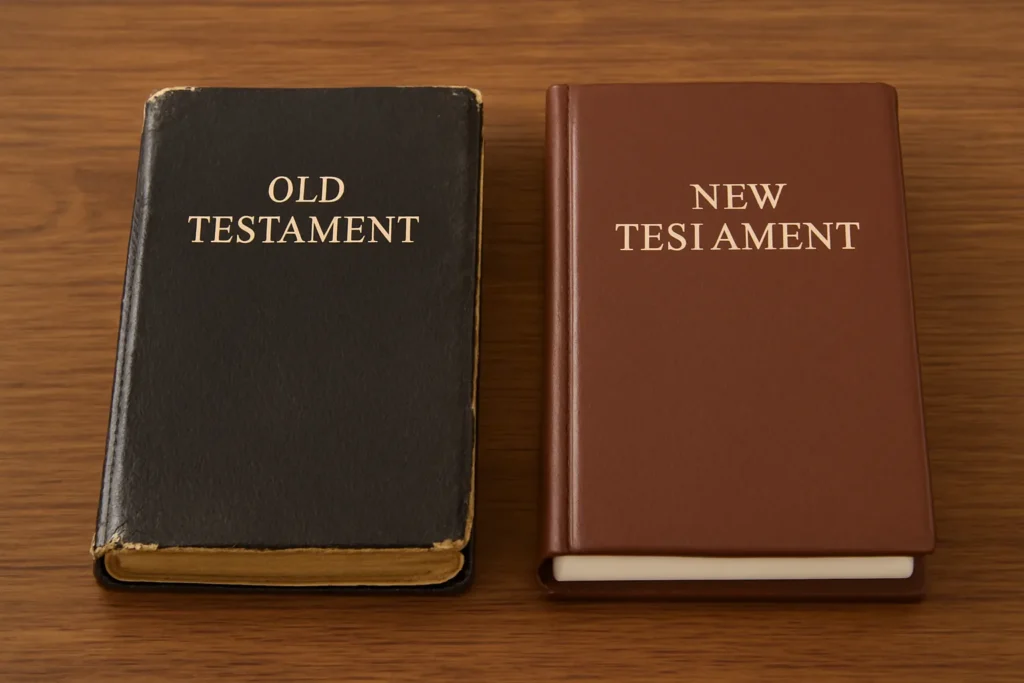
Understanding the Old Testament and the New Testament is essential for readers who want to grasp the full story, themes, and purpose of the Christian Bible. This comprehensive guide treats the two main sections as parts of a larger narrative, often referred to by variations such as the Hebrew Scriptures for the Old Testament and the Christian Scriptures for the New Testament. It also acknowledges that different traditions use different canons and naming conventions, including the First Testament, the Second Covenant, or the First Covenant and New Covenant. The aim is to equip you with clarity about structure, history, interpretation, and how these sacred texts have shaped faith, culture, and thought across centuries.
At a broad level, the Old Testament (often called the Hebrew Bible in academic contexts) is a collection of writings that reflects the religious history, law, poetry, and prophecy of the ancient people of Israel. The New Testament comprises writings about the life of Jesus, the early Christian movement, and the formation of communities of faith. In many traditions, these two testaments form a unified narrative of creation, fall, redemption, and restoration, culminating in the message of Jesus as the fulfillment of what began in the First Testament.
To honor different naming practices, you may also encounter terms such as the Hebrew Scriptures, the Christian Scriptures, or the Bible when referring to the combined collection. People who study theology, literature, or history often emphasize how the Old Testament sets the stage for the New Testament by presenting the promises, laws, covenants, and expectations that Jesus is described as fulfilling or reinterpreting.
Key ideas to anchor your understanding include:
Covenant as a defining pattern in both testaments
The Law and its fulfillment in grace in the New Covenant
The progression from Prophecy to Fulfillment in Christian interpretation
A wide range of literary styles that require careful reading and context
Structure, Contents, and How the Texts Are Organized
Old Testament: What it includes and how it is arranged
The canonical Old Testament, or Hebrew Bible, is traditionally divided into three major sections, though the order and naming can vary by tradition. A common Protestant arrangement uses:
Torah (Pentateuch) — the first five books traditionally attributed to Moses: Genesis, Exodus, Leviticus, Numbers, Deuteronomy.
Historical Books — narrative history from Joshua through Esther (in some canons, Ruth and 1–2 Chronicles are placed in a different order).
Wisdom and Poetry — includes Job, Psalms, Proverbs, Ecclesiastes, Song of Songs, and wisdom literature.
Prophetic W writings — the major prophets (Isaiah, Jeremiah, Ezekiel) and the twelve minor prophets (Hosea to Malachi, in a compact collection).
In the Catholic and Orthodox canons, additional books are included in the Prophetic Writings and Historical Books sections (often called the Deuterocanonical or Anagignoskomena books). These include Tobit, Judith, Wisdom, Sirach, Baruch, 1 & 2 Maccabees, and additions to Esther and Daniel, which broadens the scope of the Old Testament in those traditions.
The Hebrew Bible places the same material in a slightly different order, reflecting Jewish canonical arrangement, with a strong emphasis on the Torah as the core and on the Prophets and Writings as the two extensions. The differences in ordering, naming, and inclusion illustrate how communities valued certain texts and interpreted their divine authority differently over time.
New Testament: What it includes and how it is arranged
The New Testament gathers writings produced in the first centuries after the life of Jesus, reflecting early Christian belief, practice, and interpretation. It is typically organized into four genres:
Gospels — four narratives about Jesus: Matthew, Mark, Luke, and John. They present the story of Jesus from different angles and emphasize different aspects of his identity and mission.
Acts — a historical narrative about the early church and the spread of the gospel mostly through the ministry of Peter and Paul.
Epistles (Letters) — letters written by early Christian leaders addressing theology, ethics, church life, and practical matters; examples include Romans, 1 & 2 Corinthians, Galatians, Ephesians, and others.
Revelation (Apocalypse) — a highly symbolic book about judgment, hope, and the ultimate triumph of God's kingdom.
As with the Old Testament, there are variations in the arrangement and inclusion of certain books among traditions. Some churches include additional writings in the New Testament canon or place certain letters in a different order. Across traditions, though, the core collection remains recognizably the same and forms the basis for Christian faith and doctrine.
Canon refers to the list of books regarded as authoritative Scripture. The formation of the canons for both testaments was a long process shaped by use in worship, teaching, and community life. For the Old Testament, the process involved stages in the ancient Israelite communities and later rabbinic scholarship, with the Masoretic Text forming a stable Hebrew text by the first millennium CE. The Septuagint (a Greek translation of Hebrew scriptures completed in the centuries before Christ) played a crucial role in the Greek-speaking world and influenced early Christian usage.
For the New Testament, the formation of the canon occurred in the first few centuries of the Christian era. Early Christians recognized certain writings as authoritative because they reflected apostolic authority or close association with apostles, were widely read in communities, and bore consistent theological witness. By the end of the 4th century, most churches recognized a core set of four Gospels, a collection of Acts and letters, and the book of Revelation, with some regional variations still present for a time.
Languages and key textual witnesses
The original languages for the biblical books are:
Hebrew and a small amount of Aramaic in the Old Testament
Koine Greek in the New Testament
Important translations and textual witnesses include:
Septuagint (LXX) — Greek translation of the Hebrew Bible
Masoretic Text — the authoritative Hebrew text for Judaism and most Protestant translations
Vulgate — Latin translation used by the Catholic Church for many centuries
Early modern translations — Tyndale, Luther, King James Version (KJV), etc.
Modern translations — NIV, ESV, NRSV, NJPS, NET, and many others
The variety of textual witnesses and translations has enriched biblical interpretation but also required careful textual criticism to reconstruct possible original readings. Modern scholars use linguistic studies, manuscript comparisons, and archaeological context to understand how ancient readers would have interpreted the texts in their own time.
Core Themes: Covenant, Law, Prophecy, and Fulfillment
A unifying way to approach the Old Testament and the New Testament is to trace how the idea of covenant evolves from the formation of the people of Israel into the new Christian claim of the New Covenant in Christ.
Covenant in the Old Testament often centers on God’s commitments to Abraham, Moses, and the people of Israel, including promises, laws, and blessings tied to obedience and faithfulness.
The Law (Torah) outlines ethical, civil, and ceremonial guidelines. In Christian interpretation, the New Covenant through Jesus is seen as fulfilling, expanding, or transforming the old covenant's aims.
Prophecy in the Hebrew Bible looks forward to God’s plans for justice, restoration, and a promised Messiah. In the Christian framing, the Gospels and Epistles present these prophecies as being fulfilled in Jesus.
Messiah and Kingdom of God are central to the New Testament narrative, with Jesus depicted as the anticipated leader who inaugurates God’s reign in a new way.
Typology and foreshadowing are often used in Christian interpretation to see persons, events, and institutions in the Old Testament as types pointing forward to their anti-types in the New Testament.
Across genres, the two testaments together present a movement from creation and fall to redemption and restoration, a trajectory that has shaped Christian liturgy, ethics, and worldview for two millennia.
Literary Genres, Reading Strategies, and How to Approach the Text
The Bible is not a single literary form. It blends narrative, law, poetry, wisdom literature, prophecy, and apocalyptic writing. Understanding the genre helps readers interpret the meaning more accurately:
Narrative — stories of individuals, families, and nations; e.g., Genesis stories, Joshua, Ruth, Esther, Acts.
Law codes — constitutions for ancient communities; e.g., the Decalogue in Exodus 20 and related laws in Leviticus, Deuteronomy.
Poetry and wisdom — songs, prayers, parallelism, and philosophical reflections; e.g., Psalms, Proverbs, Job, Ecclesiastes.
Prophecy — messages from God delivered through prophets, often addressing social justice, covenant fidelity, and hope for future restoration.
Epistolary writing — letters addressing church life, doctrine, and practice; e.g., Romans, Corinthians, Galatians.
Apocalyptic literature — symbolic visions of cosmic struggle and divine judgment; e.g., Daniel (apocalyptic portions) and Revelation.
Approaches to reading
Readings can be approached in multiple ways, depending on goals:
Historical-critical analysis: seeks to understand the original context, authorship, and intended audience.
Literary and narrative analysis: emphasizes themes, character development, and plot architecture.
Theological interpretation: focuses on meaning for faith, doctrine, and worship.
Devotional and spiritual reading: aims to apply the text to personal life, prayer, and practice.
Comparative study: considers parallel passages across testaments and in biblical translations.
For study, many readers benefit from combining approaches: study the historical context to understand what the text meant, while also exploring its theological significance and practical implications today. Cross-referencing, note-taking, and consulting scholarly resources can deepen understanding without sacrificing personal relevance.
Major Figures, Books, and What They Contribute
Both testaments feature a wealth of characters, events, and literary works that have shaped religious meaning and cultural memory. Here are some key entries to know across the two testaments:
Genesis and the beginnings: creation, patriarchs, and the formation of a people bound by covenant.
Exodus and liberation: the liberation from Egypt, the giving of the Law, the desert journey.
Psalms and worship: a broad collection of prayers, hymns, and reflections on life with God.
Isaiah and the prophetic vision: themes of judgment, hope, and restoration.
Jeremiah and the call to fidelity in exile: personal voice amid communal crisis.
Daniel and apocalyptic imagination: visions of kingdoms and God’s ultimate sovereignty.
Gospels (Matthew, Mark, Luke, John): the life, teaching, crucifixion, and resurrection of Jesus.
Acts and the spread of the church: the Holy Spirit’s role in guiding early communities.
Pauline Epistles (Romans, Galatians, Corinthians, etc.): theology of faith, grace, and church practice.
Revelation and eschatology: ultimate victory of God and a new creation.
Reading selections from the two testaments in light of each other helps illuminate themes such as divine faithfulness, human failure, divine justice, mercy, and the call to live in hopeful fidelity.
Archaeology, History, and Context: Why Context Matters
Archaeology and historical study are not neutral disciplines; they inform how we understand the biblical narrative. Artifacts, inscriptions, and settlement patterns provide context for biblical events, laws, and customs. Chronologies help place events in a broader historical framework, enabling readers to distinguish between literary motifs and historical claims. While archaeology cannot prove every scriptural assertion, it offers important corroboration for certain places, practices, and timelines, and it sometimes reframes how readers interpret passages that otherwise seem opaque.
Context also includes the social and religious milieu of ancient Israel and the early Christian communities. For example, the near-eastern concept of oath-sworn covenants, temple-centered worship, and the role of prophets all shape how biblical writers present moral instruction and divine action.
Translation, Transmission, and How to Choose a Bible Translation
Choosing a Bible translation can affect how readers encounter the text. Translations range from word-for-word renderings (formal equivalence) to thought-for-thought (dynamic equivalence), with many translations attempting to balance accuracy and readability. Here are some general cases:
Formal equivalents (e.g., NASB, ESV) aim to closely reproduce the wording and structure of the original languages.
Dynamic equivalents (e.g., NIV, NLT) prioritize readability and meaning for contemporary readers.
Paraphrases (e.g., The Message) emphasize accessible language and fresh expression, often at the cost of close literal fidelity.
Study editions often include cross-references, footnotes, maps, and introductions to each book, which can be invaluable for learners.
When engaging with the text, you may consult multiple translations to compare how a passage is rendered. This practice, known as textual comparison, can illuminate nuances in word choices, idioms, and cultural references. For serious study, refer to editions with helpful footnotes and introductions that explain genre, dating, authorship, and canonical status.
Faith, Worship, and Public Reading: How the Bible Functions in the Life of Faith
Across traditions, the Old and New Testaments inform worship, doctrine, and daily living. The Torah and the prophets shape ethical norms, liturgical practices, and communal identity. In the New Testament, the Gospels and Epistles guide preaching, sacraments, and church governance. The Bible is often read in the church year, catechesis, and personal devotion, with certain passages becoming central to Christian confession and practice.
Different traditions emphasize various parts of the Bible in liturgy. For example, some churches place a strong focus on the Psalms in daily prayer, while others highlight the teachings of Jesus in the Gospels during worship. The narrative arc—from creation and covenant to fulfillment in Christ—often informs sermon topics, Christian education, and missionary calling.
Common Misconceptions and Clarifications
Old Testament vs New Testament are not rivals; they are viewed, in many faith traditions, as two parts of a single story with continuity and fulfillment.
The Law in the Old Testament is not simply a list of prohibitions; it reflects moral order, social responsibility, and ceremonial practices that illuminate human conditions and divine holiness.
The New Covenant does not negate every Old Testament instruction; rather, it reinterprets some aspects in light of Jesus’ life, death, and resurrection.
Translations vary, but there is a long tradition of careful scholarship aimed at preserving meaning while making the text accessible to readers today.
The combined body of work known as the Old Testament and the New Testament forms a foundational archive for faith, ethics, and culture. Across centuries and cultures, it has been read, interpreted, taught, memorized, and prayed. The interplay of covenant, law, prophecy, and fulfillment creates a dynamic narrative that continues to speak to contemporary readers in new ways. Whether you approach the corpus as the Hebrew Bible or the Christian Scriptures, the two-testament canon invites you to explore questions of identity, responsibility, justice, mercy, and hope. This comprehensive guide aims to help you navigate the structure, history, and interpretation so you can engage with the Bible thoughtfully, reverently, and responsibly.
Remember that the journey through these sacred writings is both an intellectual and spiritual practice. By reading with attention to language, context, and purpose—and by recognizing the diversity of tradition and interpretation—you can gain a richer appreciation for how the Old Testament and the New Testament inform faith, guide ethics, and shape communities to this day. This is not merely a historical anthology; it is a living document that continues to invite discovery, reflection, and dialogue.






Leave a Reply