New Testament vs Old Testament: Key Differences, Themes, and Historical Context
New Testament vs Old Testament: Key Differences, Themes, and Historical Context
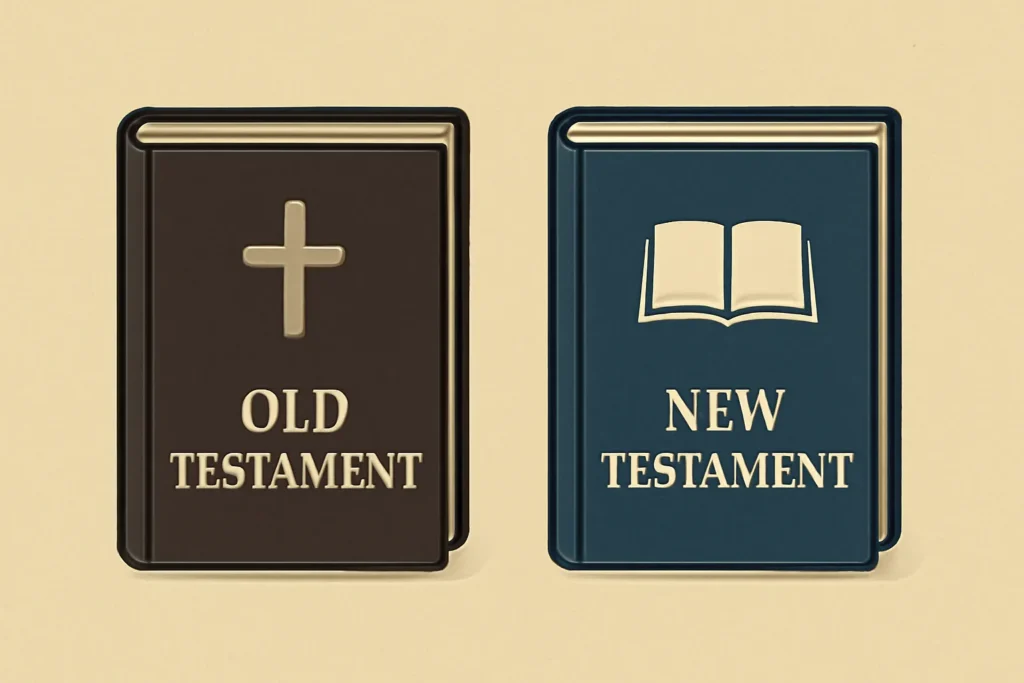
The topic of New Testament vs Old Testament touches on history, literature, faith, and how millions of people understand God’s revelation. These two parts of the Christian Bible are often referred to together as “Scripture,” yet they originate in different moments of history and speak with distinct voices. This article explores the key differences, shared themes, and historical contexts that shape how scholars, teachers, and believers read the two testaments today. It aims to give readers a clear map of what the New Testament covers, what the Old Testament encompasses, and how the two relate to one another in theory and in practice.
In broad terms, the Old Testament (often called the Hebrew Bible in Jewish traditions) presents the religious history, laws, poetry, and prophetic writings that circulated within ancient Israel and among early Jewish communities. It unfolds across centuries, tracing God’s dealings with people, their covenants, and their moral and communal life. The New Testament, written in the first century CE, centers on the life, teachings, death, and reported resurrection of Jesus of Nazareth, along with the early Christian movement that emerged from that proclamation.
Although Christians treat both collections as sacred, they differ in aims and audience. The Old Testament primarily documents the formation of a people and their relationship with God under the old covenant, including laws, sacred rituals, and prophecies pointing toward a future hope. The New Testament presents the new covenant inaugurated by Jesus, interpreted by communities of faith as fulfillment of many Old Testament promises, and accompanied by letters and apocalyptic literature addressing how to live in light of that fulfillment.
Key Differences between the New Testament and the Old Testament
Canonical scope: what is included
Old Testament books: The Pentateuch (the first five books), historical books, wisdom literature, and prophetic writings. In the Christian tradition the order and inclusions can vary, but common divisions include:
The Law (Torah)
The Prophets
The Writings
New Testament books: The Gospels (narratives about Jesus), the Acts of the Apostles, the Epistles (letters) to churches and individuals, and the Apocalypse (Revelation). These writings assume a faith community formed around Jesus’ message and mission.
Theological focus and covenantal framework
Old Testament centers on the covenantal relationship between God and Israel, often articulated through the Mosaic Covenant and the giving of law, with themes of holiness, obedience, sacrifice, and national identity.
New Testament reframes that relationship through the concept of a new or renewed covenant established through Jesus’ life, death, and resurrection, emphasizing grace, faith, and the universal reach of God’s promises beyond one ethnic or national group.
Historical setting and audience
The Old Testament emerges out of and for ancient Israel and surrounding communities, mostly within the ancient Near East and within Hebrew-speaking, Aramaic-speaking, and, later, Greek cultural spheres as the biblical texts were transmitted.
The New Testament is rooted in first-century Mediterranean world markets, cities, and synagogues under Roman rule, written in Koine Greek and shaped by early Christian communities that spoke many languages and engaged with Greco-Roman thought.
Literary genres and modes of communication
Old Testament includes narrative history, law codes, poetry, wisdom literature, and prophetic oracles. The literary voices range from priests and prophets to kings and sages.
New Testament features four Gospels, a historical account (Acts), a corpus of letters (epistles) addressing ethics, church governance, and theology, and an apocalyptic work that uses symbolic language to describe cosmic conflict and ultimate victory.
Law, moral instruction, and ritual obligations
The Old Testament contains extensive legal material, ritual codes, ceremonial sacrifices, and purity regulations meant to shape national identity and holiness as defined within ancient Israelite religion.
The New Testament often reframes the role of the legal code by emphasizing the spirit of the law, love, and moral formation through the example and teaching of Jesus and the early Christian communities, while continuing to discuss ethical living and community boundaries.
Fulfillment and continuity
In many Christian readings, the New Testament presents Jesus as the fulfillment of Old Testament expectations—prophecies, types, and promises find new resonance in the life, death, and resurrection of Christ.
Nevertheless, the two testaments also display discontinuities: some ceremonial laws are understood as fulfilled or abrogated in Christian theology, and the scope of God’s people expands from a single nation to a universal community of believers.
Themes Across the Testaments: Core Ideas and Their Development
Covenant and promise
Both testaments are deeply covenantal, but they narrate different forms of covenant. The Old Testament traces the making and keeping of multiple covenants with figures like Abraham, Moses, and David, emphasizing blessing, land, offspring, and obedience. The New Testament describes the new covenant, inaugurated through Jesus, in which the ultimate fulfillment of blessing comes not primarily through national prosperity or land, but through spiritual renewal, forgiveness of sins, and life in a renewed creation.
Law, obedience, and righteousness
The Law in the Old Testament functions as a moral, civil, and ceremonial framework for governing life in community and worship. The New Testament reinterprets the role of law through the lens of faith, love, and the power of the Holy Spirit, proposing righteousness as a gift received through faith and evidenced by transformation, not solely achieved by adherence to ritual guidelines.
In the Old Testament, many texts anticipate a coming king, an anointed one, or a suffering servant who would restore Israel. In the New Testament, Jesus is presented as that anticipated figure, with narratives, genealogies, and prophetic fulfillment that connect back to earlier scriptures. Different Christian traditions may interpret the scope and timing of this fulfillment in various ways, but the overarching claim is that Jesus embodies the promised hope of God’s kingdom.
The Old Testament depicts a people set apart in mission, called to trust, worship, and witness within a covenant community. The New Testament expands that vocation to include Gentiles and people from every nation, language, and culture, inviting all who believe in Christ to participate in a universal church and a global mission.
Literary Styles and Writing Traditions
Old Testament genres
Narrative history (books like Joshua, 1-2 Samuel, 1-2 Kings, Esther)
Law codes and covenant documents (Exodus, Leviticus, Deuteronomy)
Poetry and wisdom (Psalms, Proverbs, Job, Ecclesiastes, Song of Songs)
Prophetic literature (Isaiah, Jeremiah, Ezekiel, the minor prophets)
New Testament genres
Gospels (Matthew, Mark, Luke, John)—biographical narratives with theological aims
Historical narrative (Acts)—the early church’s growth and mission
Epistles or letters (Pauline, General)—instructional and theological correspondence
Apocalyptic literature (Revelation)—symbolic prophecy about cosmic drama and ultimate victory
Style and historical voice
The Old Testament often features covenantal speech, prophetic rhetoric, and poetry that expresses longing, lament, praise, and national identity. The New Testament features parables, sermons, exhortations, letters with concrete church-life issues, and apocalyptic imagery that emphasizes hope in the face of trial and persecution.
Historical Context and Canon Formation
A world shaped by the ancient Near East and Mediterranean
The Old Testament emerges from cultures that gave shape to law codes, temple-centered worship, and prophetic voices. The political geography includes kingdoms, empires, and neighboring peoples with shared religious concerns. The text preserves diverse voices—from priestly editors to prophetic reformers—reflecting a long arc of faith, critique, exile, and reformation.
The New Testament arises in a world influenced by Hellenistic culture, Roman governance, and vibrant early Christian communities that spread through urban centers like Antioch, Corinth, Ephesus, and Rome. The letters and gospels were written in a milieu where oral tradition, itinerant teaching, and communal worship shaped how belief was expressed and how communities organized themselves.
Canons, collections, and the formation of authority
The Old Testament collection was gradually settled in various Jewish communities, with some variation between the Hebrew Bible and the Septuagint (the Greek translation used widely in the early Christian world).
The New Testament collection was compiled over several decades. Early Christian leaders and communities debated which writings reliably handed on the teaching about Jesus, his identity, his death and resurrection, and how to guide faith and practice. By late antiquity, church councils and usage among churches helped establish a widely accepted canon.
Both testaments show that the process of canon formation is as much about community discernment as about individual authorship. The result is a unified but diverse set of texts that a faith community treats as authoritative for faith and life.
Interpretive Approaches and Theological Reflections
How readers interpret the relationship between testaments
Typology: The New Testament often reads Old Testament events, persons, and institutions as types or foreshadowings of Christ and the church.
Fulfillment: Many Christian interpreters view Jesus as the culmination or fulfillment of Old Testament prophecies and promises.
Progressive revelation: Some theologians argue that God’s plan is progressively revealed over time, with the New Testament providing new light on earlier texts.
Covenant continuity and discontinuity: Depending on tradition, some elements (moral law, justice, grace) are seen as continuing, while ceremonial laws and particular national rituals may be recast or fulfilled.
Different Christian traditions approach the Old Testament and its connection to the New Testament in varied ways. Some emphasize typology and prophecy, others focus on ethical instruction or wisdom literature. Jewish readers, who honor the Old Testament as the Hebrew Bible, often interpret these texts within a distinct religious framework that does not accept the New Testament as scripture. Interfaith dialogue frequently centers on shared themes—covenant, justice, mercy—while acknowledging divergent conclusions about messianic expectations and oral tradition.
Practical Implications for Faith, Worship, and Ethics
Reading the scriptures for faith formation
In Christian worship and study, the Old Testament is read in light of the New Testament revelation. This means recognizing typological connections, recognizing fulfilled prophecies, and appreciating the historical and cultural context of the earlier writings.
The New Testament provides interpretive keys for understanding the Old Testament, including Jesus’ teachings, apostolic interpretation, and early church practice.
The moral and ethical landscape
The Old Testament offers a rich array of ethical guidelines, proverbs, and narratives illustrating faithfulness, justice, mercy, and the consequences of disobedience.
The New Testament emphasizes grace, forgiveness, reconciliation, and transformation by the Spirit, while still upholding core moral principles that resonate across both testaments.
Liturgy, worship, and ritual practice
While ancient Israel’s worship centered on the temple, sacrifices, and sacred calendar, early Christians gathered in homes or public spaces, sharing table fellowship, teaching, and prayer. Christians read the Old Testament as part of their worship repertoire, but they interpret it through the lens of the gospel and the life of the church described in the New Testament.
Ethical and social implications
Both testaments engage with issues of justice, care for the vulnerable, and righteous living. The New Testament applies these concerns in a cross-cultural, missionary, and ecclesial context, inviting communities to embody the love of Christ in society, while the Old Testament grounds its voice in covenantal faithfulness and communal identity in a specific historical locale.
Common Misunderstandings and Clarifications
Myth: The Old Testament is obsolete for Christians. In most Christian traditions, the Old Testament remains foundational for theology, ethics, and worship. It is read in light of the New Testament as part of a continuous narrative rather than as a separate, outdated collection.
Myth: The New Testament negates the Law. Many theologians argue that Jesus fulfills and reinterprets the Law rather than abolishing it outright, preserving its moral core while reframing ceremonial aspects.
Myth: The Gospels are purely historical biographies. The Gospels are theological narratives that present Jesus’ identity and mission with faith claims; they are historical sources but not modern biographies in the conventional sense.
Myth: The Old Testament prophesies only about doom. While prophecy includes judgment, it also speaks of restoration, hope, and divine compassion, anticipating what Christians understand as fulfillment in the life of Jesus and the church.
Myth: All cultural practices from the Old Covenant apply today. Most traditions differentiate between ceremonial laws (often linked to temple worship and purity rites) and moral laws that reflect God’s character; not all ceremonial practices are binding for Christians today.
Historical Context: Why the Distinctions Matter
Understanding the historical development of the Old Testament and New Testament helps explain why Christians read the Bible the way they do today. The two testaments were produced in different centuries, among different communities, and in response to different questions. Recognizing this helps readers avoid anachronistic readings and appreciate how early believers interpreted sacred texts within their own contexts.
Languages of transmission: The Old Testament was primarily written in Hebrew, with portions in Aramaic, while the New Testament was written in Koine Greek. These language traditions shaped nuance, idioms, and theological emphasis.
Political power and cultural exchange: The ancient Near East and the Greco-Roman world provided different cultural matrices in which these texts were formed and later interpreted by communities with varied concerns—religious reform, political identity, and cross-cultural mission.
A growing early church: The New Testament letters address concrete situations—debates about circumcision, dietary laws, authority, persecution, and community life—creating a normative framework that later generations used to understand how to live as followers of Jesus in a diverse empire.
Conclusion: Why the Distinction Between Testaments Matters Today
The distinction between the Old Testament and the New Testament is not a simple divide between “before” and “after.” It reflects a complex conversation about covenant, revelation, and the trajectory of God’s redemptive work in history. For readers today, the two testaments offer complementary voices: one that recalls the roots of faith, law, and longing for justice in a particular historical people, and another that proclaims grace, transformation, and a broadened invitation to live out the gospel in a diverse world. The careful study of both testaments, and of how they relate to one another, helps believers cultivate a robust theology that honors the integrity of each text while discovering the unity of God’s purposes across the entirety of Scripture.
Further Reading and Ways to Engage with the Texts
For readers who want to deepen their understanding, here are practical avenues to explore the relationship between the two testaments:
Study aids that contrast Old Testament laws with New Testament ethics and show how Jesus interprets or reframes earlier commands.
Introductory courses in biblical theology or biblical hermeneutics that discuss methods of interpretation.
Guided reading plans that trace prophecies in the Old Testament and their New Testament fulfillments.
Commentaries and scholarly articles that explore the historical contexts of certain books (for example, Isaiah in light of exile, or Paul in the Greco-Roman world).
In summary, the New Testament and the Old Testament form a coherent, if multifaceted, witness to the God who acts in history. They invite readers to understand God’s character, human experience, and the possibilities of faithfulness in every generation. Whether one approaches them as a scholar, a student of faith, or a curious reader, recognizing both the differences and the connections between the two testaments can lead to a richer and more nuanced engagement with Scripture.







Leave a Reply