Overview of Genesis 1: A Guide to the Creation Narrative
Overview of Genesis 1: A Guide to the Creation Narrative
Overview of Genesis 1: A Guide to the Creation Narrative explores how the opening chapter of the Bible frames God’s creative work, the cosmos, and humanity. This article surveys the major features of Genesis 1, highlighting its literary design, thematic gravity, and practical implications for faith, ethics, and worship. By tracing the six-day sequence, the Sabbath pattern, and the distinctive language of this text, readers gain a clearer map of what the creation narrative intends to communicate about God, the world, and our place within it.
Genesis 1 serves as a charged proclamation of God’s sovereignty and purpose. Its core claims are not primarily concerned with scientific detail in the modern sense, but with the theological claim that God is the Creator and that creation is orderly, purposeful, and good. The opening lines establish a creator who speaks, a cosmos that comes into being through divine will, and a human scene positioned within a created order that bears moral and relational meaning. The text repeatedly emphasizes that creation is not random or haphazard; it unfolds according to a deliberate plan and culminates in an intentional pattern of rest on the seventh day.
Across generations, readers have approached Genesis 1 with various lenses—historical, literary, theological, and devotional. Regardless of interpretive stance, the passage invites readers to consider foundational questions about origin, purpose, and responsibility: Where does order come from?What is humanity’s vocation?What is the character of God as creator? The answers, though multifaceted, converge on a shared conviction: the world is a gift, a stage for moral life, and a scene of divine-human relationship that begins with a defining act of creation and a rhythm of rest.
Literary Form, Structure, and Design
Six Days of Creative Activity
The narrative unfolds in a structured sequence of six days of creation followed by a seventh day of rest. This pattern is more than a chronological catalog; it models a cosmic cadence—progression from illumination and organization to the crowning achievement: humanity, who bears the divine image. The days themselves provide a framework for understanding how creation is ordered, categorized, and ultimately inhabited.
Divine Speech and Creative Efficacy
A signature feature of Genesis 1 is the prominence of divine speech acts. The text repeatedly states, "And God said, 'Let there be ...' ", and creation comes into being by the mere utterance of God. This creative fiat emphasizes not only the power of God’s word but the trustworthiness of divine intention. Language is not decorative; it is the instrument through which reality takes shape.
Form, Function, and Repetition
Repetition in Genesis 1—phrases like evening and morning, it was so, and the refrain God saw that it was good—builds a liturgical cadence. The repetition serves several purposes: it helps the reader track the progression, it reinforces the idea that creation is intended to be understood as a single, coherent enterprise, and it invites contemplation about the meaning of goodness and order within the created world.
Symbolic Imagery and Cosmology
Genesis 1 employs concrete images—light, darkness, the sky, the seas, dry land, vegetation, celestial bodies, animals, and humans—to convey a cosmology that is accessible but not reducible to mere material description. The cosmic imagery frames a sacred geography: zones of separation (light from darkness, sky from waters, land from seas) that organize space for living beings and relational life with God.
Day-by-Day Creation: A Detailed Timeline
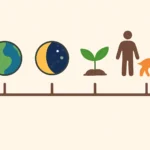
Below is a concise tour of each day, highlighting the essential acts and the intended outcomes. Each day contributes a layer to a comprehensive, ordered creation, culminating in humanity’s unique vocation and the institution of the Sabbath.
Day 1 — Light and Darkness
In the opening act, God creates light and separates it from darkness, introducing day and night. This initial act establishes the basic calendar of time and introduces the fundamental contrast that will recur throughout the narrative. The source of light is not the sun or stars at this stage but God’s own divine radiance, underscoring that light is a gracious gift ordered toward life and order.
Day 2 — Sky and Waters
The second day forms the firmament, separating waters above from waters below. The expanse or firmament creates a boundary between the heavens and the sea, enabling the atmosphere for weather, climate, and creatures suited to different realms. This act of separation demonstrates a purposefully structured cosmos rather than a chaotic void.
The land appears as dry ground, followed by the gathering of waters into seas. Then the earth brings forth vegetation—seed-bearing plants and fruit trees. Agriculture, nourishment, and ecological balance begin here. The land’s fertility points to a system in which living things not only exist but thrive under the benevolent design of their Creator.
Day 4 — Lights in the Heavens
In this day, the sun, moon, and stars are created to serve as markers for days, seasons, and years. These celestial bodies help govern temporal cycles and provide signs for the regulation of life on earth. The rhythm of cycles becomes a framework within which life, work, and worship are oriented.
Day 5 — Birds and Sea Creatures
The waters teem with living creatures, and the skies fill with birds. The animals of the sea and the birds of the air demonstrate the diversity of life within the created order. Each creature is blessed to multiply and fill their respective domains, illustrating a planetary ecology in which God’s provision sustains the variety of life.
Day 6 — Land Animals and Humans
On this pivotal day, God creates land animals and then humans in His own image, male and female. Humans receive a special designation and vocation: stewardship of creation, responsibility for naming and caring for living beings, and a relational commission that grounds moral and social life. The multiplication of humanity is paired with an explicit blessing and mandate to cultivate, fill, and steward the earth.
Day 7 — The Sabbath Rest
God rests, blessing and sanctifying the seventh day. The Sabbath is not mere cessation from labor but a divine invitation to relationship, reflection, and worship. This resting act sanctifies time itself and establishes a regular rhythm for life that points beyond mere productivity to a relational harmony with the Creator.
Humanity in the Image of God: Imago Dei
A central feature of Genesis 1 is the creation of humans in the image of God, often rendered as imago Dei. This designation is not primarily about looks or physical likeness but about role and capacity. Humans are endowed with distinctive capacities—rationality, relationality, stewardship, and moral agency—that reflect God’s own nature in a finite creature. The text presents humanity as a crowned creation tasked with dominion and stewardship over the earth, accompanied by a paradisiacal blessing to be fruitful and multiply. This framing has echoed through centuries of theological reflection, shaping understandings of human dignity, social responsibility, and ethical conduct.
Imago Dei implies dignity and worth for every person, regardless of status or ability.
Humanity’s vocation includes rulership with responsibility, stewarding resources, and fostering flourishing for all creatures.
Being made in God’s image is a call to relationality—with God, with others, and with creation itself.
Genesis 1:26–28 emphasizes both male and female bearing the divine image and sharing the created mandate. The text thus lays a groundwork for discussions about gender, community, and cooperative labor, suggesting that human flourishing arises in relationships defined by care, responsibility, and reciprocity rather than domination alone.
Theological Themes Embedded in Genesis 1
Monotheism and Sovereignty
The narrative foregrounds one God, whose word brings order out of chaos. This emphasis on monotheism asserts the sovereignty of the Creator over all things, large and small. Creation is not a collision of rival powers or a random accident; it is a deliberate act by a singular, holy, and benevolent God.
Order, Goodness, and Purpose
The repeated refrain that God saw that it was good frames the entire process as an evaluative, value-laden act. The cosmos is not morally neutral; it bears significance and direction. The order established on each day aligns with a teleology—an end toward which creation moves, culminating in human-divine relationship and rest.
Word, Breath, and Life
God’s word is the instrument of life, and God’s breath infuses vitality into creation. This emphasis on speech and spirit resonates across later biblical theology, where divine intention and the presence of God animate beings and institutions. Language and breath are not mere rhetorical devices; they are the means by which life is made and sustained.
Language, Imagery, and Cosmology
Genesis 1 uses concrete, sensory imagery to convey a divine-human drama. Light and darkness, waters, firmament, land, vegetation, and animal life paint a vivid picture of a world that is both practical and sacred. The act of naming, particularly the capacity of humans to name animals, signals a high level of discernment and relational agency within creation. The cosmology is structured, not chaotic; it demonstrates a cosmos designed for inhabitants who relate to God, themselves, and each other in meaningful ways.
Key linguistic moments include:
The deliberate sequence and repetition of creation acts that signal intentional progress toward a culminative peak.
The use of blanket blessings and commands that orient living beings toward flourishing and responsibility.
The creation of humanity with unique status and charge, placing people at the center of moral and relational life within the created order.
Historical Context and Interpretive Approaches
Ancient Near Eastern Background
Scholars often compare Genesis 1 with contemporary ancient Near Eastern literature to better understand its distinctive features. While other creation narratives describe gods wrestling with chaos and competing powers, Genesis 1 presents a singular, sovereign God who creates through utterance and design rather than combat. This contrast helps illuminate the text’s emphasis on order, blessing, and purpose rather than mythic conflict. The stylistic choices—structured days, liturgical rhythm, and the explicit pronouncement that creation is good—underscore a theological aim to present Yahweh as the true source of all life and order.
Jewish and Christian Readings
Within Jewish and Christian traditions, Genesis 1 has long served as a foundational source for discussions about creation, the nature of God, and the human vocation. Jewish commentary often highlights the Sabbath as a central ethical and liturgical practice, while Christian readers frequently connect the creation narrative to Christological and eschatological themes—seeing in creation a preliminary pattern of renewal that culminates in the new creation in God’s redemptive work.
Modern Scholarship and Critical Perspectives
Critical scholarship sometimes engages with textual history, source analysis, and genre considerations to understand how Genesis 1 relates to other biblical texts and to the broader history of reception. Some debates center on issues such as authorship, dating, and the relationship between Genesis 1 and Genesis 2. Regardless of methodological stance, many scholars appreciate Genesis 1 for its literary artistry, its ethical and theological emphases, and its ongoing relevance to conversation about science, faith, and how to live responsibly within the created order.
Ethical and Practical Implications for Faith and Life
Genesis 1 offers a framework for ethical living and communal practice. Its assertion of a single, sovereign Creator grounds a worldview that values human dignity, responsibility toward creation, and care for the vulnerable. The following implications emerge as enduring themes:
Stewardship: Humans are entrusted with responsibility for the earth, including its ecosystems, resources, and creatures. This invites a stance of stewardship that honors life and sustains future generations.
Rest and Worship: The Sabbath pattern elevates rest from mere inactivity to a sacred practice that honors God’s leadership and invites fellowship, reflection, and renewal.
Justice and Dignity: Made in the image of God, every person bears inherent worth. This principle informs ethical treatment, social justice, and the pursuit of peaceable communities.
Relational Life: The creation of humanity as male and female in relationship signals the importance of community, cooperation, and mutual respect in human life.
In everyday life, readers can translate these insights into concrete practices: responsible use of resources, care for the marginalized, and a rhythm of work and rest that honors God. The creation narrative thus becomes not only a theological statement about origin but a practical guide for living well within a world entrusted to human care.
Common Questions and Translation Notes
Genesis 1 contains phrases that have generated discussion across translation, theology, and scholarship. A few notable points:
Creation with words: The repeated formula “And God said …” invites readers to recognize the power of divine declaration to shape reality.
Let us make mankind vs. Let us make man: The opening of the creation of humanity uses a plural address, which has sparked interpretive engagement about the nature of God’s identity and the relationship among the divine persons in classical Christian theology.
Image of God: The phrase imago Dei is central to debates about personhood, ethics, and spirituality. Its implications are debated across traditions, but its core claim is that humans embody a divine likeness that grants inherent value and vocation.
Tohu and bohu (often translated as “formless and void”): This term describes the initial state before God’s ordering work. It signals a transformation through divine initiative, not an inherent emptiness in creation itself.
Day 7 and sanctification of time: The establishment of Sabbath provides a model for how humans relate to time, labor, and worship in a rhythm that honors the Creator.
Translations can influence nuance. Different English renderings may choose “formed” vs. “made,” “created” vs. “brought into existence,” or other variants that affect nuance. Yet across translations, the overarching message remains: a singular, wise Creator brings forth a cosmos ordered for life, relationality, and reverent trust.
Genesis 1 in Worship, Liturgical Use, and Education
Because of its clear emphasis on order, blessing, and rest, Genesis 1 has long functioned in liturgical and catechetical settings. For worship, the text offers a language of praise for divine sovereignty and benevolent care. For education, it furnishes a framework to teach about creation, ethics, and human dignity without sacrificing depth for simplicity. Communities and educators often use the six-day structure as a mnemonic aid to discuss responsibility toward creation, the meaning of work, and the value of rest as a spiritual discipline.
In sermons and curricula, educators might highlight:
The continuity between creation and blessing as the starting point for human vocation.
The link between order and harmony—how boundaries and systems enable life to flourish.
The integration of theology and ethics—how beliefs about God translate into concrete actions in family, work, ecology, and society.
Variations of the Overview: How People Talk About Genesis 1
Readers use a variety of terms to refer to this foundational chapter. Some common phrases that reflect similar ideas include Creation Week, Primeval Narrative, Genesis 1–2 Cosmology, and Creation Account. While these expressions emphasize different angles—chronology, literary scope, or theological focus—they all point to the same core: a coherent, purposeful act of God that introduces the world, humanity, and a rhythm of life centered on worship and stewardship.
To capture the breadth of interpretation without losing focus, it can be helpful to refer to Genesis 1 as the Creation Narrative in Six Days and a Sabbath, noting its dual emphasis on the act of creating and the pattern of rest. This broader phrasing helps bridge discussions among scholars, clergy, students, and lay readers who approach the text from different traditions and disciplines.
How Genesis 1 Connects to the Bigger Biblical Story
Genesis 1 does not exist in isolation; it frames the entire biblical narrative. Its portrayal of God’s sovereignty, the dignity of humanity, and the rhythm of creation and rest resonates with later texts that expand on providence, sin, redemption, and renewal. The creation narrative sets up motifs that recur throughout Scripture: the goodness of creation, the integrity of human vocation, the longing for shalom, and the expectation of a future restoration in which God’s purposes are fully realized.
As readers move from Genesis 1 into the rest of Genesis and beyond, the themes of covenant, presence, and renewal begin to unfold in more complex ways. The narrative’s opening invitation to relationship with God and responsibility toward creation remains a touchstone for theological reflection, ethical discernment, and spiritual aspiration across the biblical canon.
Taking Stock: A Synthesis of Genesis 1
In sum, Genesis 1 offers a compact yet profound account of the origins of the cosmos, humanity, and time itself. Its strengths lie in:
A clear assertion of one God whose will creates an ordered universe.
A methodical structure that models a healthy rhythm of work, order, and rest.
The creation of humans in the image of God, endowed with vocation and dignity.
A robust set of themes—sovereignty, blessing, responsibility, and rest—that shape later biblical interpretation and ethical reflection.
For readers today, this overview can serve as a practical compass: recognize the world as a gift, engage with creation with care, and cultivate a life oriented toward God, others, and the ongoing work of healing and renewal that biblical faith envisions.








Leave a Reply