Introducing the Prayer Mat with Name: Customizable and Personalized Islamic Prayer Rug
In a world where personal expression often meets sacred practice, the prayer mat with name stands out as a thoughtful fusion of devotion and design. A name-embroidered prayer mat or customized Islamic rug goes beyond utility, inviting the wearer to encounter daily rituals with a sense of ownership and meaning. This article offers a comprehensive guide to what a personalized prayer rug is, how it is made, why people choose it, and how to select, care for, and obtain the best prayer mat with name for home, mosques, or gifts.
What is a Prayer Mat with Name?
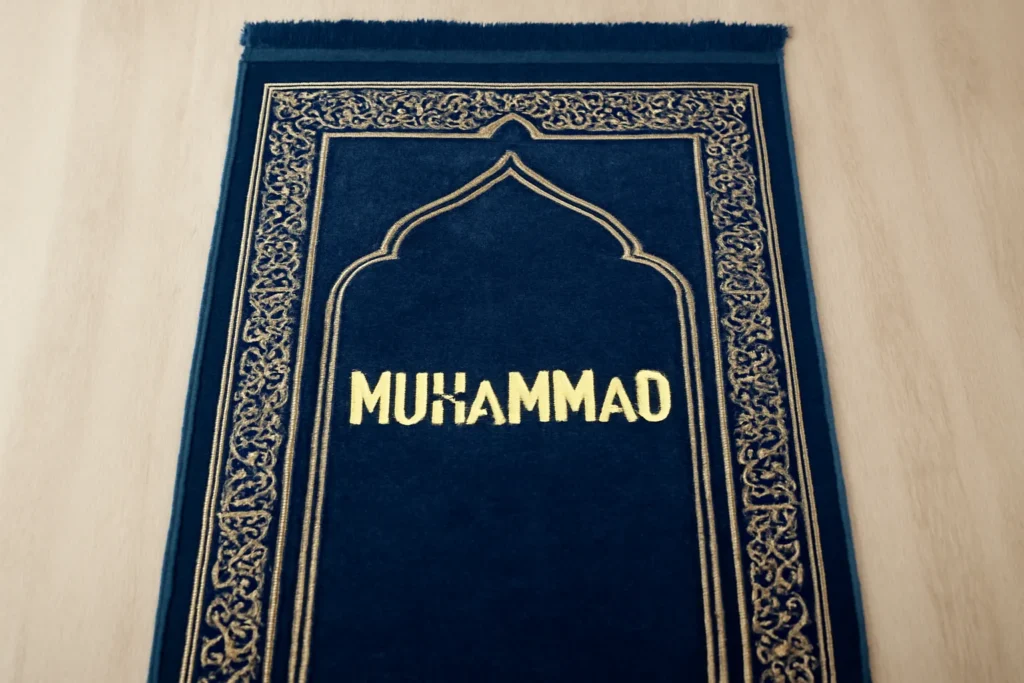
A prayer mat with name is a standard prayer rug that has been customized to include the recipient’s name or personalized inscriptions. This can be achieved through embroidery, weaving, printing, or applique techniques. The result is a functional piece of Islamic worship gear that also carries a personal signature. Common variations include:
Name-embroidered prayer mat — the most common form of personalization, where the name is carefully stitched into the fabric.
Personalized Islamic rug — broader customization that may include verses, dates, or unique motifs along with the name.
Customized prayer rug with name — often designed to align with a particular aesthetic, color scheme, or room decor.
Name-inscribed prayer mat — inscriptions may be affixed with high-quality printing or embroidery, depending on material and budget.
Engraved or printed options — for leather-backed or synthetic mats, the name can be printed or laser-engraved for durability.
Across cultures, a personalized prayer rug with name is treated as a respectful companion for daily salah (prayer). It can be a personal item, a family heirloom, or a curated gift that marks a milestone such as a first Ramadan, a graduation, or a wedding. While the core function remains the same—providing a clean, comfortable space for prayer—the added personalization can enhance mindfulness, focus, and a sense of belonging during worship.
Why People Choose a Personalized Prayer Rug
There are several compelling reasons to opt for a name-embroidered prayer mat or other forms of prayer rug with name.
Identity and connection: A name or meaningful inscription reinforces a sense of personal devotion and connection to faith.
Giftability: A personalized prayer rug makes a thoughtful, lasting gift that communicates care and respect.
Distinctiveness: In shared spaces, a customized prayer rug helps distinguish one’s own mat from others.
Motivation and routine: The presence of a name or chosen phrase can serve as a gentle reminder to maintain regular prayer.
Memorial and milestones: Names or dates can commemorate important life events, turning a practical item into a keepsake.
When considering a prayer mat with name, it’s helpful to think about the context in which it will be used—home, mosque, school, or as a special gift—and how the aesthetic aligns with the worshiper's personal preferences and space.
Materials, Craft, and Quality: What to Expect
Quality is central to the experience of using a name-inscribed prayer mat. Materials and construction influence durability, comfort, and the overall sense of reverence during salah. Here are the main considerations:
Materials
Cotton and polyester blends — common, affordable, durable, and easy to clean.
Wool or wool-blend fabrics — provide warmth and a plush feel; often used in more premium prayer mats with names.
Microfiber or synthetic fibers — offer stain resistance and quick drying, suitable for travel packs or rugged use.
Backing materials — non-slip latex or rubber backings help keep the mat in place on smooth floors.
Craft Techniques
Embroidery — the most traditional method for adding a name or verses; durable and visually refined.
Print or sublimation — allows for vibrant color and complex designs; often used for multi-color motifs with clear typography.
Appliqué — layers of fabric stitched onto the mat to form letters, symbols, or patterns.
Weaving or jacquard techniques — woven patterns that integrate the name into the fabric’s structure.
Durability and Care
Stitching quality matters for embroidery; reinforced edges help prevent fraying after washing.
Colorfast inks and threads ensure that names and motifs do not fade with regular use or washing.
Care instructions vary by material—read manufacturer guidelines to avoid shrinking, pilling, or damage to delicate embroidery.
For a prayer rug with name intended for daily use, balance aesthetics with practicality. A sturdy fabric, reinforced stitching, and a non-slip backing contribute to a safer and more dependable worship experience.
Design Considerations: What to Personalize
Customization options go beyond simply adding a name. When selecting a name-embroidered prayer mat, consider several design elements to achieve a harmonious blend of function and beauty.
Typography and Script
Arabic calligraphy for names or verses creates a traditional and elegant look.
Latin transliterations or bilingual inscriptions cater to multilingual households or gifts for diverse communities.
Font styles range from classic Naskh to Thuluth-inspired motifs; be mindful of legibility on the mat’s surface.
Color Schemes
Neutral bases (cream, beige, gray) pair well with vibrant embroidery.
Contrasting colors ensure the name stands out clearly against the mat’s background.
Size and Shape
Standard rectangular mats fit most home prayer spaces and are easy to store.
Compact travel mats prioritize portability and quick set-up.
Rectilinear vs. rounded shapes can influence aesthetics and how the rug sits on different floor types.
Inscriptions and Symbols
Names, dates, or short blessings are common inscriptions on a personalized prayer rug.
Some designs incorporate mihrab motifs or other Islamic architectural elements to echo sacred space.
Be mindful of cultural and religious sensitivities when choosing certain symbols or quotes.
The Religious and Cultural Context of a Name-Based Prayer Rug
In Islam, cleanliness, reverence, and intention are central to prayer. A prayer mat with name can reinforce these principles in several ways:
Respect for the space used for salah — personalizing a mat can encourage mindful use and careful care.
Intention and focus — having one’s name or a personal blessing present during prayer can support spiritual concentration.
Family and communal practices — in households with multiple worshipers, distinct name-inscribed prayer mats help minimize confusion and maintain personal dignity during collective worship.
However, it is important to maintain humility in practice. A personalized rug should complement, not replace, the core spirituality of salah. The most important aspect remains the sincerity of worship, the direction of prayer, and adherence to cleanliness and modesty during prayer, regardless of design choices.
Practical Guide to Ordering a Customized Prayer Mat with Name
If you’re considering acquiring a customized prayer rug with name, here is a practical, step-by-step guide to help you through the process:
Define your purpose — Is this for personal use, as a gift, or for a mosque display? Consider durability, travel suitability, and how often you’ll pray on it.
Choose material and size — Decide based on budget, climate, and storage space. Cotton blends are versatile; wool adds luxury; travel mats emphasize portability.
Determine personalization details — Decide the name, font, script style, and any additional inscriptions. Confirm whether the name is in Arabic, Roman script, or both.
Select color palette and design motifs — Ensure compatibility with the user’s decor or preferred aesthetic for a harmonious room.
Check care requirements — Confirm washing instructions, stain resistance, and whether the mat is machine washable or requires spot cleaning.
Review production timelines — Custom pieces take longer than standard mats; clarify lead times and delivery estimates.
Assess return and warranty policies — Look for guarantees on embroidery quality, colorfastness, and durability of the backing.
Place the order — Ensure all spelling, transliteration, and dimensions are correct before finalizing the order to avoid costly corrections.
When selecting a vendor, look for examples of name-embroidered prayer mats that demonstrate stitching quality, color accuracy, and long-lasting materials. Customer reviews and product photographs can provide insight into real-world performance.
Care and Maintenance for a Name-Enhanced Prayer Rug
Proper care extends the life of a prayer mat with name and keeps the embroidery vibrant. Here are care guidelines that apply to most fabrics and personalization methods:
Regular cleaning — light vacuuming or gentle dusting helps remove debris and maintain a fresh feel for daily use.
Spot cleaning — promptly treat stains with mild soap and cold water, testing a small hidden area first to avoid color bleeding.
Hand washing or machine washing — follow the manufacturer’s instructions. Use a gentle cycle and cold water when permitted; air dry to prevent heat damage to embroidery.
Storage — store in a clean, dry place. Avoid damp or humid environments to prevent mold or fiber degradation.
Protection from wear — rotate usage with other mats to avoid excessive wear on a single piece, especially if it’s a premium wool or embellished rug.
If the mat is designed for outdoor or travel use, protect the embroidery by using a carrying bag and avoiding exposure to direct sunlight for extended periods, which can fade colors over time.
Where to Buy: Online vs. In-Store Considerations
Both online retailers and brick-and-mortar shops offer name-inscribed prayer mats. Each channel has advantages:
Online shopping provides a wide selection of materials, colors, and personalization options. It is often easier to compare prayer mats with name and review customer feedback.
In-store experiences allow you to feel the fabric, judge the softness, assess the backing, and examine embroidery up close. This can be especially important for premium pieces.
Custom workshops or artisan studios offer bespoke services, enabling you to collaborate directly on design choices, ensuring a personalized prayer rug meets exact specifications.
Turnaround times — ready-made options are faster, while bespoke pieces require longer production times. Budget and urgency influence the choice.
Price ranges — expect a range from affordable, functional mats to premium name-embroidered prayer mats with high-grade materials and intricate embroidery.
Regardless of the purchase channel, verify product details such as material composition, backing type, care labels, and embroidery durability before finalizing an order.-requesting a sample swatch or a detailed photo can reduce surprises when the item arrives.
To ensure your prayer mat with name serves well for years, consider these practical tips:
Set a budget early — personalization adds cost, especially with high-end embroidery or custom fonts.
Match the space — pick colors and motifs that complement your prayer area or living space.
Prioritize comfort — the mat should be comfortable for prostration, with a thickness that suits the prayer surface (hard floors benefit from a slightly cushioned mat).
Consider longevity — choose materials and embroidery techniques known for resilience to frequent use and washing.
Plan for gifting — if it’s a gift, consider including a commemorative note or a small card that explains the significance of the personalization.
When selecting or using a personalized prayer rug, some communities appreciate modesty in design and legibility of the inscription. A few etiquette notes:
Ensure the name or inscription is accurate and respectfully transliterated.
Avoid overly ornate scripts that could hinder readability or become a distraction during prayer.
Respect personal preferences; some people prefer minimalist designs while others enjoy elaborate motifs that reflect heritage.
In shared religious spaces, it is common courtesy to keep personal items clearly identifiable while avoiding displays that could be perceived as boasting or vanity. The aim remains sacred focus, cleanliness, and humility in worship.
Embroidery and customization have long been a way to honor devotion. The practice of incorporating names, blessings, or verses on a prayer mat echoes centuries of textile art within Islamic cultures. Some historians note that such personalization aligns with broader traditions of calligraphy, ornamentation, and craftsmanship that elevate daily rituals into art forms. Contemporary artisans blend these traditions with modern materials and printing techniques, offering a bridge between heritage and contemporary living. The result is a customized prayer rug that is both visually striking and spiritually meaningful.
For many buyers, ethical sourcing and consumer safety are important. When purchasing a name-inscribed prayer mat, consider:
Non-toxic dyes and materials — especially important for items used in close contact with skin.
Non-slip backing for safety on hard floors.
Fair labor practices — supporting vendors who disclose manufacturing processes can align with personal values.
Product certifications — look for materials that meet textile safety standards where applicable.
Here are answers to common questions that often arise when people encounter a name-embroidered prayer mat or similar product:
Can I choose any name? In most cases, yes, as long as the inscription complies with local laws and community guidelines. Some vendors may restrict certain words or phrases.
Is the mat suitable for all prayer directions? Most standard mats are designed for use on the floor with the qibla direction in mind. If you require precise alignment guidance, check whether the rug includes directional markers or consult the vendor.
How durable is the personalization? Durable embroidery or high-quality printing will withstand frequent use and washing. Always follow care instructions to maximize longevity.
Can I customize more than just the name? Yes. Many customers add dates, short prayers, or verses. Some colors and motifs can also be customized to reflect personal or family heritage.
What is the typical turnaround time? It varies by vendor and the complexity of the design; simple name embroidery might ship in a few days, while elaborate inscriptions could take several weeks.
A prayer mat with name is more than just a utility item. It is a carefully crafted bridge between personal identity and spiritual discipline. Whether you call it a name-embroidered prayer mat, a personalized Islamic rug, or a customized prayer rug with name, the essence remains the same: to create a dedicated space for salah that reflects the worshiper’s values, preferences, and memories. It invites reflection, fosters a sense of belonging, and honors the daily act of worship with beauty and care. By understanding the materials, customization options, care requirements, and ethical considerations, you can choose a prayer mat with name that not only serves you faithfully but also resonates with your faith journey for years to come.





Leave a Reply