Proverbs 31:10 meaning: the woman of noble character
Proverbs 31:10 meaning: the woman of noble character
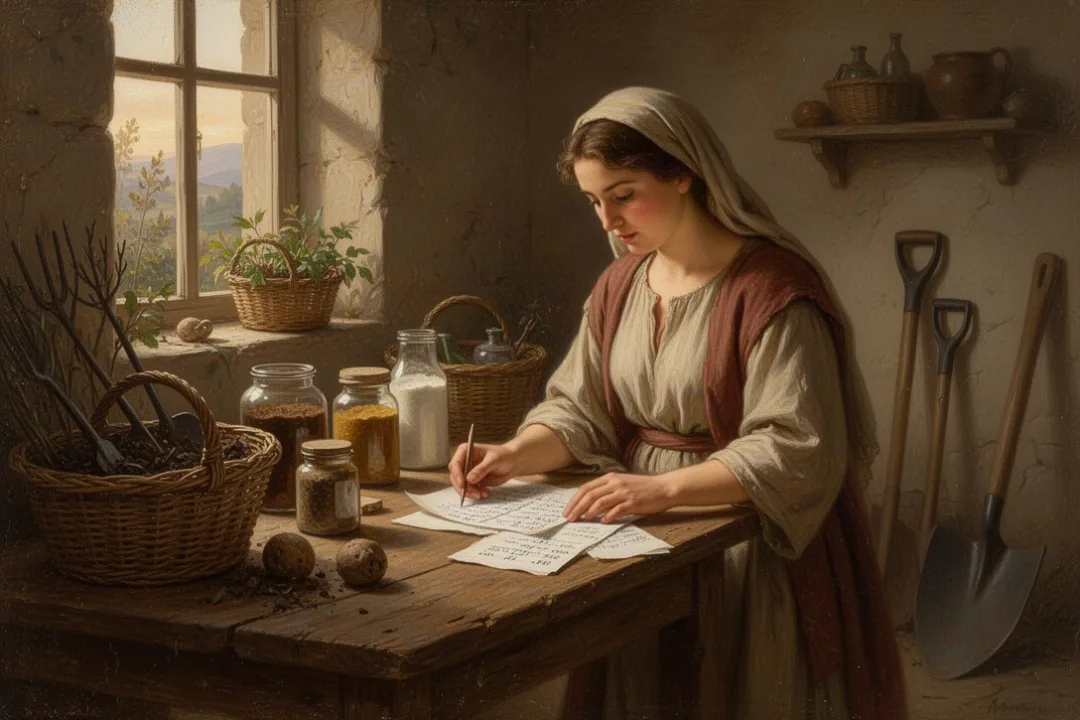
Proverbs 31:10 asks who can find a woman of noble character, then presents her value as greater than precious jewels. The verse is not mainly praising appearance, wealth, or domestic perfection; it points to strength, integrity, wisdom, and dependable character.
The Hebrew expression often translated “virtuous woman,” “excellent wife,” or “woman of noble character” is eshet chayil. It can describe a woman of strength and capability, not merely someone who follows a narrow list of duties. The surrounding poem shows that her character affects her household, work, community, and relationship with God.
What Proverbs 31:10 means in its immediate context
Proverbs 31:10 begins the well-known poem about a woman whose life demonstrates wisdom. The verse presents her as difficult to find, not because good women are rare in an absolute sense, but because genuine character is valuable and should not be treated casually.
The comparison with precious jewels communicates extraordinary worth. A jewel may be expensive, beautiful, and carefully protected, but the woman described in this passage possesses a value that cannot be reduced to a price. Her trustworthiness and moral strength make her a blessing to the people around her.
Verse 10 is also the opening of a larger portrait rather than a complete definition. The following verses describe a person who can be trusted, works diligently, manages resources, considers the needs of the poor, speaks with wisdom, and fears the Lord. Each quality gives more substance to the phrase “woman of noble character.”
Central idea: Proverbs 31:10 values a woman for the strength of her character and the good her life produces, not for physical beauty, social status, or flawless performance.
The passage uses poetic language, so it should not be read as a claim that one woman must perform every task every day. Wisdom poetry often gathers admirable qualities into an ideal portrait. Its purpose is to show what godly wisdom looks like in practice, especially through a person’s decisions and relationships.
What “virtuous woman” and “excellent wife” mean
English Bibles translate Proverbs 31:10 in different ways. Some say “virtuous woman,” some say “excellent wife,” and others use phrases such as “woman of noble character” or “woman of strength.” These translations emphasize different aspects of the Hebrew phrase, but they point toward the same broad idea: a capable woman whose character is honorable.
The word often rendered “wife” can refer to a married woman, and the poem clearly describes her role within a household. Still, the passage does not reduce her identity to marriage. It portrays her as a thinking, productive, discerning person who makes decisions, conducts business, gives instruction, and acts with compassion.
The word associated with virtue has a wider sense than sexual purity alone. It can carry ideas of strength, valor, competence, and worth. In other parts of the Old Testament, related language may describe strength or an army. That background helps explain why the woman in Proverbs 31 is active, courageous, and effective rather than passive or fragile.
“Excellent” also should not be understood as a demand for constant achievement. The passage praises the quality of her life, including her judgment, generosity, diligence, and reverence for God. A person can show these qualities in many forms of work and service, including roles that are not mentioned specifically in the poem.
Why the word “find” does not make marriage a competition
The wording about finding such a woman has sometimes been used to make women feel like they must prove themselves worthy of marriage. That is not the most helpful way to read the verse. Proverbs 31:10 is a statement about recognizing extraordinary character, not a formula for ranking women or securing a husband.
The same passage later praises the woman’s husband for trusting her and publicly recognizing her good work. Their relationship is marked by mutual benefit and respect. The husband is not presented as a supervisor inspecting her performance; he is someone who receives the good produced by her faithful character.
For unmarried readers, the verse can be read as wisdom about the kind of character to honor in a future spouse or in oneself. For married readers, it can encourage gratitude and respect. For every reader, the passage affirms that inner strength has lasting value.
How Proverbs 31:10 describes strength in daily life
The verses that follow show that noble character is visible through ordinary decisions. This woman does not appear admirable because of one dramatic achievement. Her worth becomes clear through a steady pattern of responsibility, wisdom, and care.
She can be trusted. Her husband has confidence in her because her choices are consistent and beneficial.
She works with purpose. She identifies useful tasks and carries them out with energy and judgment.
She manages resources. She evaluates opportunities, acquires property, plants a vineyard, and makes practical decisions.
She prepares for difficulty. Her household is not controlled by fear because she has planned wisely and acted responsibly.
She helps vulnerable people. Her concern reaches beyond her own household to those who are poor or in need.
She speaks wisely. Her instruction is shaped by kindness and sound judgment rather than harshness or empty talk.
These details show that strength in Proverbs 31:10 is relational. It is not power used to dominate other people. It is the capacity to make wise choices, endure responsibilities, and use one’s abilities for the good of others.
The poem also connects competence with compassion. The woman is productive, but productivity is not treated as her highest virtue. Her work matters because it supports people, creates stability, and allows her to respond generously. Achievement without love would miss the heart of the passage.
Her diligence does not mean she never rests or has no limitations. Scripture’s wisdom literature regularly teaches the importance of prudence, humility, and dependence on God. The poem offers a picture of mature responsibility, not permission to ignore health, relationships, or reasonable boundaries.
Character matters more than appearance
Near the end of the poem, physical charm and beauty are described as unreliable compared with reverence for the Lord. That perspective clarifies verse 10: the woman’s value does not come from her appearance, age, clothing, popularity, or ability to satisfy cultural expectations.
Character lasts longer than attractiveness because it shapes how a person treats others over time. Beauty may draw attention, but trustworthiness, kindness, courage, and wisdom determine whether relationships become safe and fruitful.
This does not mean the Bible treats beauty as evil. It means appearance is a poor foundation for measuring a person’s worth. Proverbs 31 directs attention toward what a person is becoming and how that inner life affects the people around her.
How the poem fits the book of Proverbs
Proverbs 31:10–31 is commonly understood as an acrostic poem in Hebrew, with successive lines following the order of the Hebrew alphabet. That literary structure gives the poem a carefully arranged, memorable form. It is not a random collection of household tips; it is a deliberate celebration of wisdom embodied in a woman’s life.
The poem also forms a fitting conclusion to the book of Proverbs. Earlier chapters personify wisdom as a woman who calls people to choose understanding, reject wickedness, and live in the fear of the Lord. The woman in Proverbs 31 shows what those teachings can look like in real life.
She is not merely someone who knows wise sayings. She turns wisdom into action. She buys and sells carefully, plans ahead, teaches others, protects her household, and extends kindness. Her faith is not presented as an abstract belief separated from work and relationships.
The chapter’s placement also helps guard against a shallow reading of the passage. Proverbs does not present wisdom as limited to a classroom, a religious building, or a male teacher. Its final portrait honors a woman whose intelligence, labor, leadership, and compassion are central to the flourishing of her household and community.
The poem is idealized, but idealized does not mean imaginary in every detail. It gathers recognizable activities into a literary portrait. The point is not to determine whether one woman can literally complete every task named; the point is to admire and pursue the wise qualities represented by the whole picture.
Proverbs 31:10 directs attention from what a woman possesses outwardly to the strength and faithfulness expressed through her life.
The passage also challenges readers who assume that godly femininity must be passive. This woman makes investments, engages in commerce, supervises work, teaches, plans, and speaks publicly through her reputation. Her strength operates within wisdom and love, but it is still genuine initiative and leadership.
How to apply Proverbs 31:10 without turning it into pressure
Proverbs 31:10 can encourage you when you read it as an invitation to cultivate character rather than a demand to imitate every detail literally. The woman’s setting involved ancient household and economic practices, while your responsibilities may look entirely different. The enduring principles are faithfulness, wisdom, courage, and care.
If you are a woman, you can ask how your decisions reflect strength and integrity in your actual circumstances. That might involve professional work, parenting, study, caregiving, community service, creative work, church responsibilities, or quiet acts of support that receive little public recognition.
If you are a husband or potential husband, the passage calls you to value a woman’s character rather than treating her labor as an entitlement. Trust, appreciation, and shared responsibility are more consistent with the poem than criticism based on an impossible standard.
If you are a parent, Proverbs 31:10 can shape the qualities you praise in girls. Instead of focusing only on appearance, obedience, or achievement, encourage honesty, discernment, perseverance, generosity, and compassion. Those qualities prepare a person for meaningful relationships and responsible choices.
If you are part of a church or community, apply the passage by making room for women’s wisdom and leadership. Do not praise women’s service while ignoring their needs, limiting their voices, or assuming they will carry unpaid work indefinitely. Respect for noble character includes fairness, gratitude, and practical support.
Identify one responsibility you can handle faithfully. Choose a concrete task rather than an abstract goal.
Make one wise decision with your resources. Consider your time, money, energy, and attention.
Speak words that strengthen someone. Proverbs 31 connects wisdom with kindness, not merely correct information.
Notice someone in need. Let compassion become a specific action instead of a general feeling.
Review your motives. Ask whether your work is driven by love and faithfulness or by fear of comparison.
For a balanced reading: Do not use Proverbs 31:10 to shame women who are exhausted, grieving, disabled, unemployed, single, childless, or unable to meet a particular cultural ideal. The passage praises faithful character, not a uniform life situation.
Application also requires discernment about limits. A person who says no to an unhealthy demand may be acting wisely, not selfishly. A woman who works outside the home, manages a home, remains single, receives help, or changes careers can still embody the passage’s central virtues. Faithfulness is not the same as constant availability.
What Proverbs 31:10 says about a woman’s worth
The verse places a woman’s worth beyond ordinary market comparisons. Precious jewels are valuable because people recognize their rarity and beauty, but the passage says that noble character is more precious still. This does not mean a woman must become exceptional before she deserves dignity. Her dignity is not earned by performance.
Instead, Proverbs 31:10 teaches readers to recognize and honor moral worth. The woman’s conduct reveals qualities that deserve respect, but the respect is not a reward for achieving perfection. The poem encourages a community to see the depth of a person’s contribution rather than taking it for granted.
Her worth is also shown through influence. Her husband trusts her, her household benefits from her decisions, the poor receive help, and her children recognize her blessedness. These outcomes are not presented as popularity or personal glory. They show how faithful character creates security and blessing for others.
The final emphasis on fearing the Lord keeps the poem centered on God rather than self-improvement. Wisdom begins with a humble recognition that life is accountable to God. The woman’s excellence is therefore not self-made perfection; it is strength directed by reverence, moral clarity, and dependence on God.
For Christians, the verse can also be read alongside the wider biblical teaching that every person bears God-given dignity. Proverbs 31 does not establish that women are valuable only when they marry, produce, manage a household, or achieve visible success. It gives one poetic picture of admirable character while leaving room for faithful lives shaped by different gifts and callings.
Proverbs 31:10 ultimately asks you to look past surface measures. The woman described is precious because she is trustworthy, strong, wise, generous, and reverent. Those qualities remain meaningful whether they appear in a home, workplace, congregation, neighborhood, or private act of faithfulness.
Frequently asked questions
Is Proverbs 31:10 only about a married woman?
The verse is often translated “excellent wife,” and the poem describes a woman within a marriage and household. However, its central emphasis is her strength, wisdom, trustworthiness, and reverence for God. Those qualities are not limited to married women. The passage can guide how people recognize character in women who are single, widowed, divorced, married, or serving in other circumstances.
What does “far more precious than jewels” mean in Proverbs 31:10?
This comparison expresses exceptional value. The woman’s worth is not measured by money, beauty, or social position, but by the durable character she demonstrates. Her reliability, wisdom, compassion, and strength benefit others in ways material possessions cannot. The phrase also encourages readers to honor such character instead of overlooking or taking it for granted.
Is Proverbs 31 a checklist women must complete?
No. Proverbs 31:10–31 is a poetic portrait that gathers many admirable qualities into one idealized figure. It is meant to celebrate wisdom in action, not create an impossible daily schedule. The passage should encourage faithfulness, discernment, diligence, and compassion while leaving room for different abilities, responsibilities, seasons of life, and legitimate personal limits.
What does “virtuous” mean in the original wording?
The Hebrew phrase can carry the sense of a woman who is strong, capable, honorable, and valuable. “Virtuous” is a valid traditional translation, but it should not be narrowed to sexual morality alone. The surrounding verses show a person with practical intelligence, courage, initiative, generosity, and wise speech whose character strengthens her household and community.








Leave a Reply