Psalms 91 KJV Bible: Full Text, Meaning, and Prayer Guide
Psalms 91 in the King James Version is a timeless declaration of divine protection, trust, and care. Its imagery—dwelling in the secret place of the Most High, abiding in the shadow of the Almighty, and the certainty of deliverance—has comforted readers for centuries. In this article, you will find the complete text of Psalm 91 in the KJV, followed by an in-depth exploration of its meaning, themes, and a practical prayer guide to help you apply its truths in daily life. We will also look at how variations in translation can enrich our understanding of the same verses.
Full Text (King James Version)
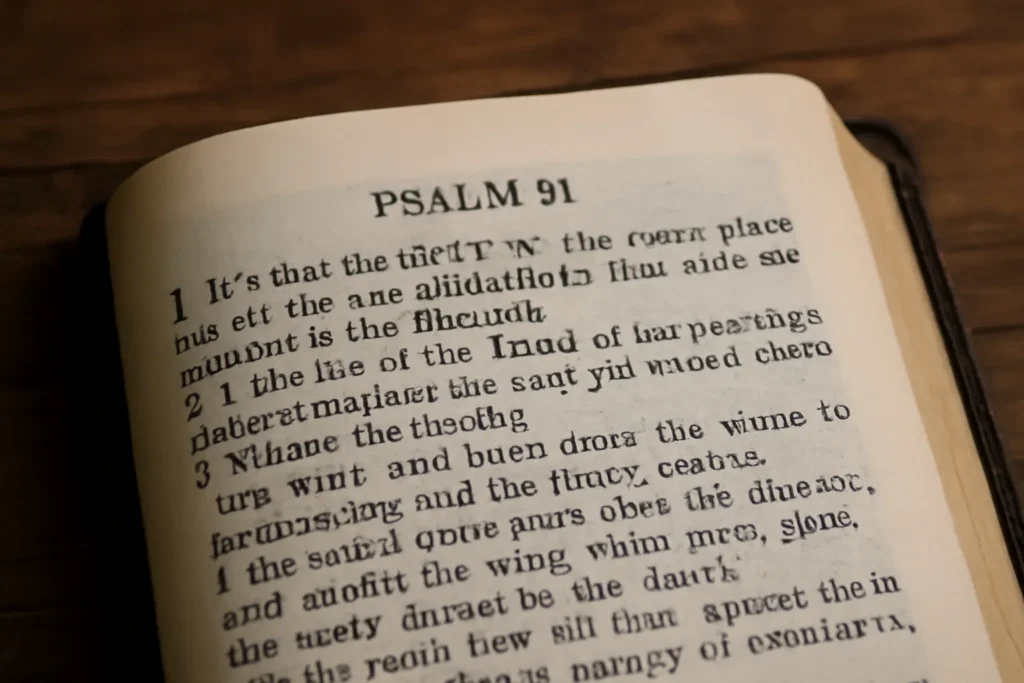
He that dwelleth in the secret place of the most High shall abide under the shadow of the Almighty.
I will say of the LORD, He is my refuge and my fortress: my God; in him will I trust.
Surely he shall deliver thee from the snare of the fowler, and from the noisome pestilence.
He shall cover thee with his feathers, and under his wings shalt thou trust: his truth shall be thy shield and buckler.
Thou shalt not be afraid for the terror by night; nor for the arrow that flieth by day;
Nor for the pestilence that walketh in darkness; nor for the destruction that wasteth at noonday.
A thousand shall fall at thy side, and ten thousand at thy right hand; but it shall not come nigh thee.
Only with thine eyes shalt thou behold and see the reward of the wicked.
Because thou hast made the LORD, which is my refuge, even the most High, thy habitation;
There shall no evil befall thee, neither shall any plague come nigh thy dwelling.
For he shall give his angels charge over thee, to keep thee in all thy ways.
They shall bear thee up in their hands, lest thou dash thy foot against a stone.
Thou shalt tread upon the lion and the young lion, the dragon shalt thou tread under feet.
Because he hath set his love upon me, therefore will I deliver him: I will set him on high, because he hath known my name.
He shall call upon me, and I will answer him: I will be with him in trouble; I will deliver him, and honour him.
With long life will I satisfy him, and shew him my salvation.
Meaning and Theological Themes
Psalm 91 communicates a number of interwoven ideas about the relationship between God and his people. Below are key themes and the implications they carry for faith, prayer, and daily life.
Divine Shelter and the Security of the Secret Place
The opening verse anchors the entire psalm in a confident posture: dwelling in the secret place of the Most High is an encounter with intimate safety. The imagery of abiding under the shadow of the Almighty suggests close proximity to God, not distant protection. For readers, this line invites a deliberate decision to seek closeness with God as the primary security in life’s uncertainties.
The second verse ties trust to a theological confession: the Lord is our refuge and fortress. The phrase “in him will I trust” is both a declaration and a habit—trust as a daily practice rather than a mere sentiment. In many translations and devotional traditions, the image remains anchored in God as a concrete protection system—a fortress against danger and fear.
Protection from Visible and Invisible Threats
The psalm lists a spectrum of dangers: snares, pestilence, terror by night, danger by day, and destructive forces at noon. Taken together, these lines present a holistic sense of safety that covers both physical and spiritual arenas. The call to trust extends to both communal crises and personal ordeals, assuring the faithful that God’s protective care extends beyond obvious threats to include the less visible perils of life.
A distinct feature of Psalm 91 is the promise of angels charged with protection: they bear believers up and guard them in all their ways. This imagery underscores the biblical belief in a divine civilizing force at work on behalf of God’s people. The psalm also affirms that these heavenly attendants act in response to God’s purposes, not merely human need.
Deliverance, Honor, and Lifelong Salvation
The culmination of the psalm affirms God’s commitment to deliver, exalt, and satisfy with long life and salvation. The reciprocity—because one loves and knows God’s name, God responds with deliverance and honor—highlights the covenant dynamic: trust invites divine response, sustenance, and blessing.
While our focus is Psalm 91 in the KJV, examining variations across translations expands our understanding of its meaning. Some shifts illuminate nuances in the same promises:
“Dwelleth in the secret place of the Most High” may appear as “dwells in the shelter of the Most High” in other translations, reinforcing the idea of secure proximity to God rather than a distant temple or shrine.
The phrase “shadow of the Almighty” can be rendered as “shadow of the Almighty” or “under the protection of the Almighty,” emphasizing that protection is an active presence rather than passive safety.
“Refuge and fortress” often appear in parallel in other versions, highlighting two facets of safety: refuge as shelter in danger and fortress as a defensive stronghold against onslaughts.
“Noisome pestilence” (KJV) is sometimes translated as “pestilence that destroys” or simply “pestilence” or “plague,” which can shift emphasis toward the severity of disease and judgment rather than mere nuisance.
The line about angels sometimes reads as “he will command his angels concerning you”, emphasizing sovereign initiative by God who assigns angelic guardians for your welfare, not merely a passive blessing.
In other versions, the imagery of walking in darkness or destruction at noonday may be rendered as “stalking in darkness” or “destruction that wastes at noon,” carrying similar meaning with slightly different cadence.
Practical Prayer Guide Based on Psalm 91
The following prayer guides translate the timeless promises of Psalm 91 into concrete, personal practice. Use these models for daily devotion, for moments of fear, or for family prayer times.
Prayer Guide A: Personal Refuge and Trust
Begin by confessing your trust: I will trust in you, O LORD, my refuge and fortress.
Invite God to lead you into the secret place where you feel safest in his presence.
Declare protection over your daily life, work, and relationships: the shadow of the Almighty covers you.
Ask for a renewed sense of God’s truth as your shield and buckler in every decision.
Prayer Guide B: Protection from Perils
Pray against real and unseen threats: “Deliver me from the snare of the fowler” and from any pestilence or illness that would seek to harm me or my loved ones.
Affirm that you are not afraid of fear or danger by night or by day.
Petition for divine shield to guard your home, health, and steps on every path you walk.
Prayer Guide C: Angels and Divine Escort
Thank God for angels who encamp around those who fear him and who guard us in all our ways.
Ask that these heavenly companions would bear you up, preserving you from stumbling and guiding your path toward safety and wisdom.
Commit your daily routes—whether travel, work, or study—to God, trusting that his purposes align with protective care.
Prayer Guide D: Deliverance, Honor, and Longevity
Pray for divine deliverance in times of trouble, including spiritual conflict and moments of crisis.
Ask God to honour you as you walk in faith, and to be with you in times of trial.
End with gratitude for the gift of life and for the revelation of God’s salvation—a salvation that includes peace, purpose, and eternal hope.
Interpretive Tips: How to Meditate on Psalm 91
To deepen understanding and application, consider these methods of meditation on the psalm:
Read slowly and aloud, letting each phrase sink into your imagination and heart.
Rephrase each verse in your own words to capture personal meaning while preserving the core message of protection and trust.
Reflect on how the imagery of shadow, refuge, and angels resonates with your present circumstances.
Use the psalm as a template for daily prayers—beginning with worship, moving to request, and closing with gratitude.
Historical and Liturgical Context
Psalm 91 has commonly served as a source of comfort in times of danger, illness, war, and upheaval. In Jewish and Christian history, its themes of divine protection intersect with the biblical picture of God as a fortress and a deliverer. Its language—bold claims of protection, the inclusion of angelic guardians, and the promise of long life—has made the psalm a staple in morning and evening devotional routines, in prayers of protection for families, and in moments of personal crisis.
Variations Across Translations: A Quick Guide
If you explore Psalm 91 in other translations, you may notice shifts in cadence but not in substance. Here are a few semantic variations that can broaden your understanding:
“Shelter” or “refuge” can appear in place of “secret place,” each emphasizing a different facet of safety—privacy with God versus a protected refuge.
The expression for God’s protection—“shadow of the Almighty” or “shadow of the Most High”—retains the image of close proximity rather than a distant blessing.
Angelic care is described with slightly different nuances: “angels will guard you” or “he will command his angels concerning you,” underscoring God’s sovereignty in dispatching help.
Descriptions of plague and pestilence may shift between “noisome pestilence,” “pestilence that stalks in darkness,” or “plague” depending on the version, each carrying weight for how danger is perceived.
A Short Study Guide for Personal Reflection
If you’re preparing a personal study or leading a small group, the following prompts may help you engage Psalm 91 more deeply:
Identify the sections of the psalm that speak most directly to your current fears and ask God to apply the promises there to your life.
Compare the KJV text with another translation. Note where words—such as refuge, fortress, or pestilence—vary and discuss how those choices shape understanding.
Journal about a time when you felt protected or delivered. How does Psalm 91 illuminate that experience?
Pray through the psalm in short portions: one verse at a time, reflecting on what the verse reveals about God’s character and your response.
Conclusion: Living Under God’s Protection
Psalm 91 in the KJV remains a poignant anthem of trust in God’s intimate care. By dwelling in the secret place of the Most High and abiding under the shadow of the Almighty, believers find a confident security that transcends circumstance. The psalm invites a lifestyle of trust in God’s refuge and fortress, a life guarded by angels and sustained by God’s faithful presence. Whether you seek comfort in times of trouble, courage for daily challenges, or inspiration for your personal devotion, Psalm 91 offers a robust scriptural framework for experiencing God’s protective love.
If you would like to download or print the full text for study, you can save this page or copy the verses into a personal notebook. Remember that the core message is not merely a promise of protection but an invitation to live in intimate relationship with God—trusting him, honoring his name, and acknowledging that his salvation is the ultimate horizon of safety.






Leave a Reply