The Passover Lamb: Meaning, Names, and Core Significance
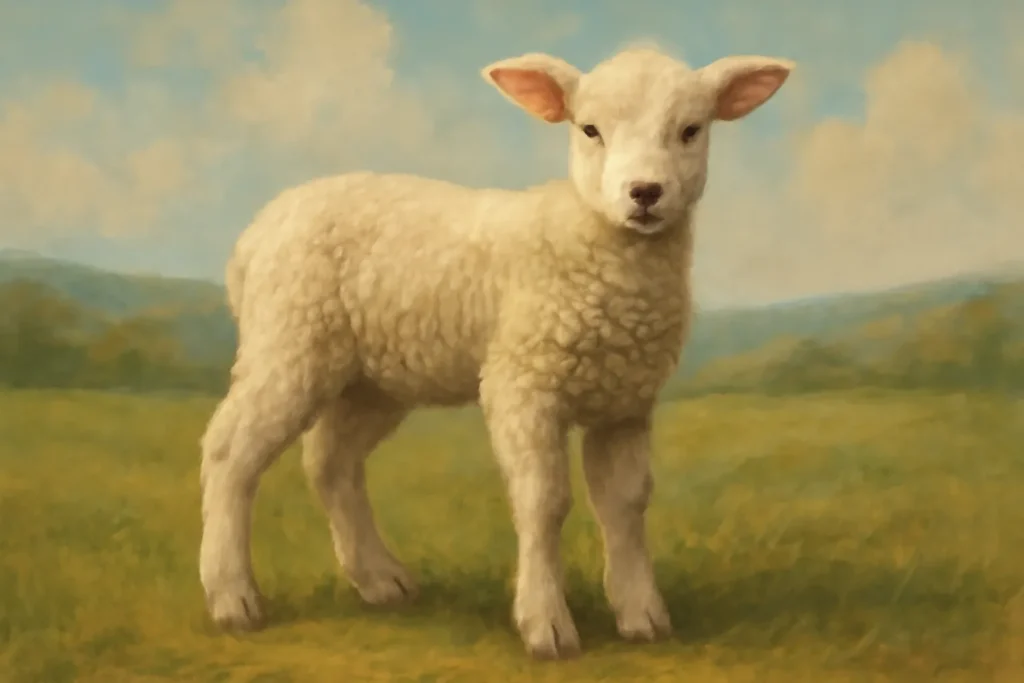
The Passover lamb, also known in its ancient form as the Pesach lamb or the Paschal lamb, stands at the center of one of Judaism’s oldest and most enduring narratives of freedom. In the Torah, this sacrificial animal is not merely meat; it is a symbol loaded with history, law, ritual practice, and spiritual memory. Across generations, the korban Pesach—the Hebrew term for the Passover sacrifice—has been understood as a concrete act of redemption performed at a particular historical moment, and its resonance continues in Jewish thought, liturgy, and communal life even after the Temple service ceased.
In modern usage, the phrase Passover lamb often encompasses both the ancient agricultural ritual described in biblical sources and the symbolic substitutions that give tangible meaning to the festival today. The image of the lamb or lamb bone on the Seder plate, together with unleavened bread and bitter herbs, keeps alive the memory of a time when a nation escaped bondage through a divine act of protection and mercy. This article traces the meaning, history, and significance of the Passover lamb within Jewish tradition, from its biblical roots to its rabbinic reinterpretations and contemporary observances.
Biblical Origins: The Pesach Story, Law, and the Lamb’s Role
The account of the Pesach sacrifice unfolds in the Book of Exodus, where the enslaved Israelites are instructed to prepare a particular animal as a key element of their liberation. The narrative presents several interwoven ideas: a historical deliverance from slavery, a ritual act that marks the boundary between life under oppression and life in freedom, and a communal meal that encodes the memory of that night for future generations.
In the biblical command, the lamb is to be a male, a one-year-old animal, without blemish, suitable for a holy purpose. It is to be roasted, not boiled, and eaten within a single night, with its flesh consumed along with unleavened bread and bitter herbs. The ritual also prescribes portions of the meat that must not be left until morning; what remains after the meal is to be burned. The blood of the lamb—significant in the Exodus text—serves as a sign to protect the households of the Israelites from the plague that would otherwise claim the firstborn in Egypt.
Several strands emerge from this foundational episode:
Identity through ritual memory: the Passover lamb becomes a living sign of the people’s redemption and their covenantal relationship with God.
Holiness and purity: the lamb’s procurement, handling, and roasting reflect a sacred mode of sacrifice appropriate to the relationship between the Israelites and the divine.
Communal solidarity: the instruction to share the meal with household neighbors emphasizes communal responsibility and unity.
Symbolic continuity: even as the meaning remains fixed, its expression evolves with changing historical circumstances (e.g., Temple service versus post-Temple practice).
In later Jewish tradition, the korban Pesach acquires additional layers of interpretation. The lamb’s blood becomes a sign of protection; the roasted animal becomes a memory trigger for the courage to pursue freedom; and the entire rite—when it took place in the Temple—frames a national liturgy of deliverance. In rabbinic literature, these elements are recast in terms of law, ritual, and moral exhortation, so that the Pesach lamb remains a living referent even when the original sacrificial system is no longer possible in the absence of the Temple.
The Temple Era: The Lamb, Sacrifice, and Sacred Space
The Passover sacrifice was originally conducted at the Temple in Jerusalem as a central rite of national worship. The priests performed the korban Pesach as part of a larger sacrificial calendar that included offerings tied to the pilgrimage festivals. In the biblical narrative, families and then the whole community would participate in eating the roasted animal with unleavened bread and bitter herbs—that combination forming a vivid liturgical tableau of liberation.
Several features of the Temple-era practice are worth noting:
The lamb or kid had to be a male and within a precise age range, carefully inspected for blemishes, as a sign of the ritual’s integrity.
The animal’s preparation involved roasting, with a strong preference for fire roasting rather than boiling, to preserve certain aspects of the meat’s aroma and texture that were linked to the rite’s intent.
The meal itself was a multifaceted rite that included not only the meat but also unleavened bread, bitter herbs, and a deliberate posture—belts girded, sandals on, staff in hand—symbolizing readiness for departure and the taste of liberty.
The blood on the doorposts and lintels in the Exodus scene carried forward into ritual significance within observant practice and commentary, signifying divine protection and the marking of a people set apart by covenant.
In the period after the destruction of the Second Temple in 70 CE, the binding ritual of the korban Pesach could no longer be performed in Jerusalem. Yet, the memory of the lamb's role persisted in rabbinic literature and in liturgical imagination. The lamb’s symbolism began to shift from a literal, house-to-house sacrifice to a program of narrative instruction and ritual emulation that could be carried out within each Jewish home or community, inside the framework of the Seder.
The Seder Plate and the Lamb: From Sacrifice to Symbol
Today, most Jewish households celebrate Passover with a Seder—a structured, qualitative reading of the Exodus story that combines ritual objects, songs, and debates about meaning. The presence of a living animal on the table is no longer required or customary in communities around the world because the Temple service has not been restored. Instead, symbols stand in for the Passover sacrifice, and the roasted lamb itself is often represented by a shank bone, known in Hebrew as the zeroa.
The shank bone on the Seder plate functions as a powerful reminder of the ritual animal sacrificed in ancient times. It is not meant to imply that the animal was actually eaten during the present generation’s Seder; rather, it anchors the memory of the Korban Pesach and the historical moment of liberation. Other elements on the plate—the karpas (vegetable, sometimes parsley), maror (bitter herbs), charoset (a sweet paste), and the beitzah (roasted egg)—also carry symbolic weight, each pointing to facets of freedom, sorrow, sweetness, and continuity.
Contemporary Practice and Symbolic Substitutes
In many communities, there is no actual lamb on the table. Instead, the symbolic Paschal lamb is represented by the zeroa and by the memory embedded in the liturgy and the family story. Some traditions include:
Serving an edible piece of roasted lamb if permissible and if a community has access to a symbolic offering; when not feasible, the bone remains the main reminder.
Using charoset to symbolize the mortar used by the Israelites in their earlier oppression, thereby linking sweetness with memory of hardship.
Reading and re-reading the Exodus narrative as a living document that informs current concerns about liberty, justice, and human dignity.
The way we talk about the Passover lamb today, in secular and religious contexts alike, reflects a bridge between historical ritual and ethical memory. The lamb’s signal role in antiquity as a sacrificial offering remains a central anchor, but its modern life is carried in story, ritual action, and communal remembrance rather than in a physical temple ceremony.
Historical Development: Rabbinic Reinterpretation and Liturgical Continuity
After the Temple era, Jewish communities faced a challenge: how to maintain the integrity of a Passover sacrifice-in-memory without a sacrificial altar. Rabbinic scholars answered with innovative interpretive strategies that preserved core ideas while adapting to new circumstances. The Pesach lamb thus becomes a doctrinal and devotional touchstone within a framework of prayer, law, and storytelling.
The evolution can be traced along several lines:
Legal reinterpretation: Rabbinic authorities reframed the requirements of the korban Pesach into a symbolic ritual that preserves the intended experience of redemption and communal solidarity.
Narrative emphasis: The Exodus story takes on a pedagogy of memory—how a community remembers past bondage and present freedom, and how that memory informs present action against oppression.
Aesthetic and liturgical shaping: The Seder itself becomes a curated performance of memory, designed to teach both children and adults the durable meanings of liberty, covenant, and responsibility toward others.
Variation across communities: Diverse minhagim (customs) developed as communities adapted the Pesach narrative to local cultures, languages, and musical traditions, while preserving the foundational framework of the Seder.
In medieval and early modern Jewish thought, commentators often highlighted the lamb’s symbolic value as a bridge between historic liberation and contemporary ethical commitments. For many scholars, the Passover lamb embodies a paradox: a powerful reminder of divine intervention and national destiny, and a call to imitate compassion, justice, and solidarity in daily life.
Theological Significance: Redemption, Covenant, and Ethical Memory
The Passover lamb has a layered theologic meaning that extends beyond payment for sins or ritual obligation. It sits at the intersection of mercy, justice, and communal destiny. Several themes repeatedly surface in Jewish thought when reflecting on the lamb’s role:
Redemption: The lamb is a sign of God’s deliverance of the Israelites from oppression and a model of how a people can be freed from bondage through a combination of faith, courage, and communal action.
Covenant: The Exodus event inaugurates a covenantal relationship between God and Israel, a relationship that is remembered and renewed each year at Passover with gratitude, humility, and a sense of obligation to care for others.
Memory and education: The liturgy and storytelling around the Passover lamb invite each generation to learn the moral and ethical lessons embedded in the story—lessons about oppression, liberty, and the responsibilities that accompany freedom.
Unity and compassion: The Seder’s structure—sharing the meal with family and community, inviting the stranger, and discussing the meaning of the story aloud—encourage a stance of hospitality and solidarity with the vulnerable.
Some Jewish thinkers have also explored how the image of the Passover lamb resonates in moral imagination. As a symbol of innocence and protection, the lamb’s memory invites reflection on ethical responsibility—toward those who lack freedom, toward justice within society, and toward the memory of one’s forebears who faced oppression. In this sense, the lamb is less a relic of ritual animal sacrifice than a catalyst for ethical action and communal renewal.
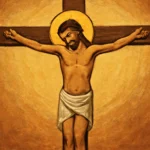
It is important to distinguish the Passover lamb’s symbolism from later religious interpretations found in other traditions. While Christian thought sometimes draws a typology between the Paschal Lamb and the crucifixion narrative, Jewish interpretation normally treats the Passover lamb as a historical and moral memory within a distinct theological framework. The emphasis remains on God’s act of salvation, the obligations of the community, and the ongoing work of justice in the world.
Jewish communities around the world have developed a broad array of customs associated with Passover. While the core narrative and the Seder’s structure remain common, the details of practice—especially around the lamb—show notable diversity.
Ashkenazi traditions: In several Ashkenazi communities, the Seder emphasizes the zeroa on the plate and a heavy focus on the Haggadah’s narrative, with some families adopting a symbolic use of the lamb bone rather than a roasted meat piece.
Sephardi and Mizrahi traditions: Some communities maintain a stronger connection to the historical memory of the Paschal sacrifice and integrate additional Psalms, piyutim (liturgical poems), and unique melodies into the Seder, while still using symbolic representations for the lamb.
Yemeni, Moroccan, and North African practices: A variety of festive foods and storytelling styles accompany the Passover rites, but all retain the central aim of memory, freedom, and covenant renewal.
Modern humane and ethical considerations: In many places, the practical sacrifice of a lamb is not feasible or desirable, and the bone on the plate becomes a particularly meaningful symbol that respects tradition while acknowledging present realities.
Across these traditions, a consistent thread is the commitment to teaching the younger generation about liberty, justice, and the responsibility that freedom entails. The Passover narrative becomes a source of moral conversation in households, schools, and synagogues, guiding discussions about human dignity, refugee experiences, and the ongoing quest for a just society.
The image of the lamb has inspired Jewish poets, artists, and scholars for centuries. The juxtaposition of innocence and endurance, of sacrifice and liberation, offers fertile ground for creative and ethical expression. In contemporary media and scholarship, the lamb appears as a symbol of resilience and a reminder of the fragility of freedom in the face of oppression.
A number of thinkers have emphasized how the Passover lamb’s memory helps communities confront ongoing forms of bondage in the modern world. Whether discussing immigrant rights, religious liberty, or social justice, the lamb’s story can function as a lens for evaluating how societies respond to pain, how they welcome strangers, and how they safeguard the vulnerable.
Beyond liturgy and policy debates, the lamb remains a potent emblem in books, plays, and visual arts. Some portrayals focus on the dramatic immediacy of the Exodus moment, while others highlight the long arc of memory that carries a people from slavery to nationhood, and onward toward ethical responsibility in an interconnected world.
Was the Passover lamb actually eaten during the original ritual? Yes. In the biblical narrative, the roasted lamb was consumed at the Seder-like meal in the households, along with unleavened bread and bitter herbs. The plan called for eating the entire portion within the night, with no leftovers to be kept for morning.
Why is there a bone on the Seder plate if no lamb is served? The zeroa serves as a symbolic reminder of the Passover sacrifice and the Temple service. It anchors memory and connects the modern Seder to its ancient roots.
Is it permissible to eat lamb during Passover today? In many communities, lamb meat is not part of the family’s Passover menu because the ancient sacrifice cannot be performed. However, some families may include a small amount of meat in a present-day, ritual-appropriate way, provided it aligns with local customs and regulations.
What is the role of unleavened bread in the Passover ritual? Unleavened bread, or matzah, symbolizes the haste with which the Israelites left Egypt, not allowing time for dough to rise. It is a central food in the Seder and a constant reminder of the moment of liberation.
How does the rabbinic view of the Passover lamb differ from the biblical account? The rabbis reframed the korban Pesach as a symbolic, educational, and communal ritual that can be practiced without the actual animal sacrifice. They emphasized memory, meaning, and ethical instruction while maintaining fidelity to the Exodus story.
What is the ethical significance of the Passover lamb for modern Jews? The lamb’s memory invites reflection on compassion for the vulnerable, the duties of freedom, hospitality, and justice. It acts as a moral compass for how communities treat the stranger and how societies shape policies affecting mobility and safety for all people.
For readers exploring the Passover lamb more deeply, a few terms recur in studies, prayers, and debates:
Pesach (Passover): The festival commemorating liberation from Egypt.
Korban Pesach (Paschal sacrifice): The original temple rite involving a roasted lamb or kid.
Zeroa (shank bone): A symbolic representation of the Passover sacrifice on the Seder plate.
Beitzah (roasted egg): A symbol of festival sacrifice and continuity.
Maror (bitter herbs): Remembrance of the bitterness of slavery.
Charoset (a sweet paste): Remembrance of the mortar used by the Israelites in Egypt, symbolizing sweetness alongside hardship.
Matzo (unleavened bread): A reminder of the haste of the Israelites’ departure and the purity of the festival.
The enduring vitality of the Passover lamb in Jewish tradition rests on two pillars: memory and meaning. The memory is not a static recollection of a distant event but a living conversation that recasts old stories for new contexts. The meaning, in turn, encompasses liberty, responsibility, and justice. Together, these aspects invite each generation to re-engage with the core question of Passover: what does freedom require of a people, and how should memory inspire action in the present day?
Because the Passover lamb has such a broad and durable resonance, it also offers a framework for dialogue across generations, across communities, and across cultures that share a concern for human dignity. The symbol invites us to consider how to protect the vulnerable, how to build communities that welcome strangers, and how to live with gratitude for shared deliverance while remaining vigilant about ongoing injustices.




Leave a Reply