Ruth: The Loyal Moabite Woman of Faith and Redemption
Ruth: The Loyal Moabite Woman of Faith and Redemption
Old Testament Women | Symbolic Figures
Ruth: The Loyal Moabite Woman of Faith and Redemption
📅 Approximately 11th to 10th century BCE, during the time of the Judges · 📜 The name Ruth means 'Friend' or 'Companion' in Hebrew, symbolizing loyalty and close fellowship.
RuthFaithLoyaltyRedemptionOld Testament
But Ruth said, 'Do not urge me to leave you or to turn back from following you; for where you go, I will go, and where you lodge, I will lodge. Your people shall be my people, and your God my God.'— Ruth 1:16
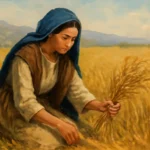
Ruth’s story begins during a time of widespread instability in Israel, following a famine. After the death of her Israelite husband, Ruth, a Moabite woman, loyally chooses to stay with her grieving mother-in-law Naomi, vowing to follow Naomi’s God and journey back to Bethlehem. She diligently collects grain in Boaz’s fields, demonstrating humility and faith. Boaz, moved by Ruth’s loyalty and character, shows kindness and eventually marries her, ensuring her protection and security. Ruth’s union with Boaz leads to the birth of Obed, the grandfather of King David, making Ruth an ancestor of Christ. Her story exemplifies loyalty, faithfulness, and God’s providence, highlighting how outsiders can become part of God's divine plan of salvation.
🏛️ Cultural & Historical Context
During Ruth’s time, ancient Israelite society was patriarchal, with women often dependent on male relatives for security. Women’s roles centered around family, agriculture, and preserving lineage, making Ruth’s independent action and loyalty notable. Moabites were often viewed with suspicion by Israelites, yet Ruth’s integration exemplifies themes of inclusion. Her willingness to adopt Naomi’s faith and her proactive role in securing her future challenged conventional expectations of women in her era, showcasing a rare blend of perseverance and faith in a male-dominated society.
👨👩👧 Family Connections
Ruth was the daughter-in-law of Naomi; she was married to Boaz and became the grandmother of King David. Her parents are not explicitly named in Scripture.
Ruth’s story exemplifies divine providence, loyalty, and God's inclusive grace extending beyond Israel. Her integration into the lineage of David, and ultimately Christ, underscores God’s plan to redeem all nations and people. Ruth’s faith and actions highlight that God uses unlikely individuals to fulfill His salvation history, illustrating that faithfulness and loyalty can lead to divine blessing and eternal legacy. Her narrative emphasizes God’s sovereignty in transforming suffering into greatness and inclusion into His covenant community.
📖 Lessons for Today
📖 Lesson 1
Loyalty and faithfulness during difficult times can lead to unexpected blessings and divine favor.
Ruth contrasts with women like Sarah and Hannah, who were pivotal figures of divine promise and prayer. Unlike Esther, who used her influence for her people, Ruth’s story highlights loyalty and integration into the broader salvation narrative, emphasizing that faithfulness in everyday actions can have eternal significance.
📜 Scripture References
Reference
Ruth 1:1-4:17
Ruth 4:13-17
❓ Frequently Asked Questions
Was Ruth the first Moabite woman in the Bible?
Yes, Ruth is the most prominent Moabite woman featured in Scripture, known for her loyalty and faith, and she stands as a key figure in biblical history.
Did Ruth become part of Israel’s lineage?
Indeed, Ruth became the great-grandmother of King David, making her an ancestor of Jesus Christ and emphasizing the universal reach of God's salvation plan.
What does Ruth teach about inclusion and outside faith?
Ruth's story demonstrates that faith and loyalty transcend cultural and national boundaries, showing that God’s grace extends to outsiders who seek Him sincerely.
✨ Did You Know?
Ruth is one of the few women given her own book in the Bible, highlighting her significant role in salvation history. Additionally, her name’s meaning as 'Friend' underscores her lasting legacy as a symbol of loyalty and divine favor.









Leave a Reply