Sackcloth and ashes: Meaning, history, and biblical use
Sackcloth and ashes: Meaning, history, and biblical use
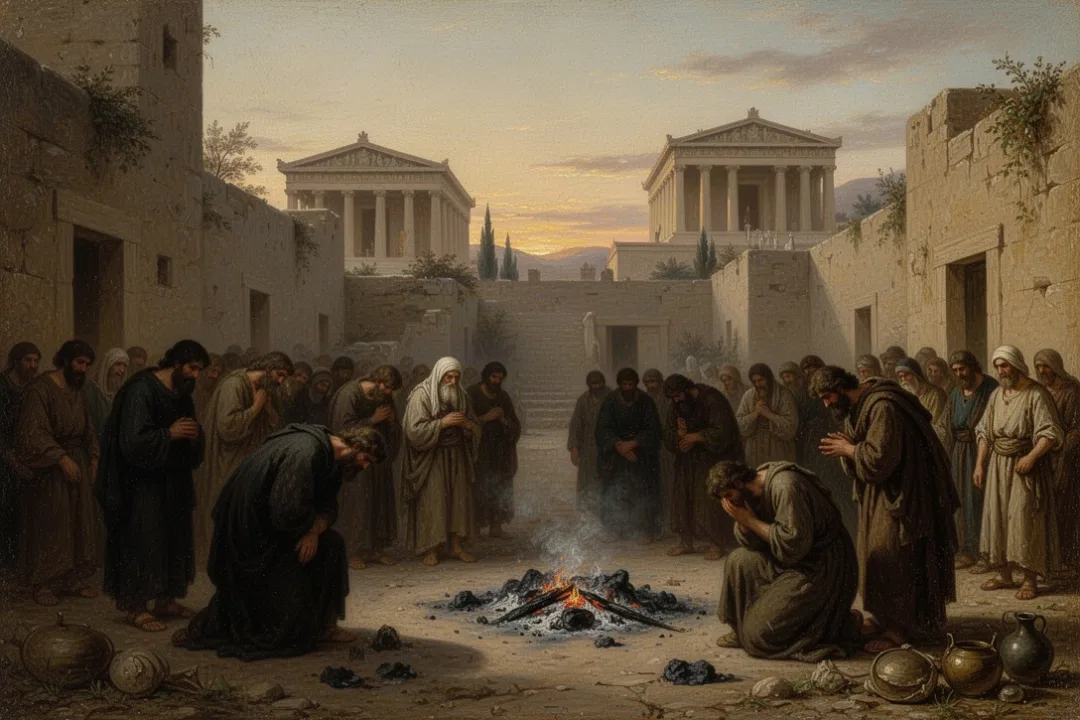
When someone says they are “in sackcloth and ashes,” they usually mean they are expressing deep grief, regret, or humiliation. The phrase comes from ancient biblical customs in which people wore rough cloth and sat or covered themselves with ashes as visible signs of mourning and repentance.
Sackcloth and ashes were outward expressions of an inward response. They could communicate sorrow over a death, national disaster, personal wrongdoing, or a community’s need to turn back to God. The practice was not valuable merely because the clothing was uncomfortable or the ashes were visible; its meaning depended on the person’s attitude and actions.
Sackcloth was a coarse, rough fabric, commonly associated with goat hair or other stiff fibers. It was uncomfortable compared with ordinary garments and was often worn as a simple covering around the body. The word is related to the rough material used for sacks, though biblical sackcloth was a garment of mourning rather than an ordinary shopping bag.
Ashes represented mortality, devastation, grief, and lowliness. People might sit in ashes, sprinkle them on their heads, or place them on their bodies. Dust and ashes reminded the person that human life is fragile and that pride has no lasting foundation.
Together, the two signs communicated a deliberate lowering of oneself. A person wearing sackcloth and sitting in ashes was saying, in effect, “I am grieving,” “I have no reason to boast,” or “I recognize the seriousness of what has happened.” The exact meaning depended on the biblical passage.
Core meaning: Sackcloth and ashes symbolize visible mourning, humility, or repentance. The physical signs matter less than the honest sorrow and changed behavior they are meant to express.
Why people used sackcloth and ashes in the Bible
The Bible presents several related uses for this practice. It was not limited to one emotion or one kind of event. A person could wear sackcloth after a death, during a public crisis, when facing judgment, or while seeking God with unusual seriousness.
Mourning: People wore rough clothing after the death of someone important or beloved.
Repentance: Individuals and whole communities used the signs to acknowledge sin and ask for mercy.
Humiliation: Sackcloth and ashes expressed the rejection of pride and self-importance.
Urgent prayer: The practice sometimes accompanied fasting and earnest appeals to God.
Public grief: Leaders and citizens could use the custom to show that a disaster affected the entire community.
These meanings often overlapped. A national threat could produce grief, fear, fasting, and repentance at the same time. The visible ritual helped a community share its response, but biblical writers repeatedly direct attention to the condition of the heart rather than the appearance alone.
A short biblical context for the phrase
Sackcloth and ashes belong to the cultural world of the ancient Near East. Clothing, posture, dust, tears, fasting, and other physical actions communicated emotions in ways that were publicly recognizable. Grief was not always private; it could be displayed through clothing and bodily posture.
Several biblical passages connect the custom with lament, especially after death or catastrophe. Other passages connect it with a plea for forgiveness or a warning that judgment is near. The practice also appears in stories where a ruler or city responds to a prophetic message.
The phrase is familiar to many readers because of the book of Jonah. When the people of Nineveh heard Jonah’s warning, they responded with fasting and sackcloth, and the king is described as leaving his throne, setting aside his royal clothing, and sitting in ashes. The scene emphasizes that repentance reached from the highest authority to ordinary citizens.
Jesus later referred to sackcloth and ashes when speaking about cities that had witnessed his works but had not repented. In Matthew 11:21 and Luke 10:13, the comparison shows that even a pagan city such as Nineveh understood the seriousness of a warning. Jesus’ point was not that ashes are a magical sign of repentance, but that people should respond appropriately when confronted with truth.
How to interpret sackcloth and ashes in a biblical passage
When you encounter the phrase in Scripture, its meaning becomes clearer if you read the surrounding scene rather than treating it as a fixed idiom. Use the following steps to identify what the action communicates.
Identify the event. Ask whether the passage describes a death, military threat, personal wrongdoing, national sin, or prophetic warning.
Observe the other actions. Look for fasting, prayer, tears, confession, silence, torn clothing, or a change in behavior.
Notice who participates. One grieving individual communicates something different from an entire city or nation responding together.
Look for the response that follows. Genuine repentance usually includes a decision to turn away from wrongdoing, not only a public display of sadness.
Read the passage’s evaluation. Some biblical texts praise humility, while others warn against external religion without sincere obedience.
This approach prevents a common mistake: assuming that every reference to sackcloth and ashes means exactly the same thing. In one passage the emphasis may be bereavement; in another, it may be contrition; in another, it may be an urgent response to danger.
Important biblical examples of sackcloth and ashes
Jacob mourns the reported death of Joseph
In Genesis 37:34, Jacob tears his clothes and puts on sackcloth after believing that his son Joseph has died. Here, sackcloth is primarily a sign of personal grief and bereavement. Jacob’s action expresses the depth of his loss and the way that sorrow has overtaken his ordinary life.
This episode also shows that sackcloth did not always indicate repentance. Jacob is not described as confessing a particular sin through the act. His clothing communicates mourning, and the surrounding narrative focuses on his prolonged sorrow over the loss of his child.
David and the nation mourn Abner
After Abner’s death, David commands his servants and the people to tear their clothes and put on sackcloth, as recorded in 2 Samuel 3:31. The king participates in public mourning and makes clear that the death is a national tragedy rather than a private political inconvenience.
In this setting, sackcloth helps establish shared grief and public solidarity. David’s response also communicates that Abner’s death should not be interpreted as a celebration or a simple victory. The community is called to mourn together.
Mordecai responds to the threat against the Jewish people
In Esther 4:1, Mordecai tears his clothes, puts on sackcloth and ashes, and cries out publicly after learning of the planned destruction of the Jewish people. His actions express alarm, grief, and a plea for help during a severe political crisis.
The passage shows how sackcloth and ashes could be associated with collective danger. Mordecai’s mourning also prompts Esther to recognize the seriousness of the situation and consider her responsibility. The physical sign is connected to courageous action, not separated from it.
Nineveh responds to Jonah’s warning
Jonah 3 describes the people of Nineveh believing God’s warning and responding with fasting and sackcloth. The king joins them by leaving his throne and sitting in ashes. The account stresses the breadth of the response: the city’s leaders and ordinary people acknowledge that they must change.
The book also defines repentance through conduct. The people are told to turn from violence and wrongdoing, and the passage presents their changed behavior as central. Sackcloth alone would not have been enough; the sign is meaningful because it accompanies turning away from harmful actions.
Daniel seeks God with fasting and confession
Daniel 9:3 describes Daniel turning to God with prayer, fasting, sackcloth, and ashes. He is responding to the spiritual and national condition of his people, confessing their disobedience and appealing to God’s mercy.
Daniel’s example combines several themes: humility, prayer, communal identification, and hope. He does not use the practice to claim moral superiority. Instead, he approaches God with a serious awareness of failure and dependence.
Job speaks of repentance in dust and ashes
Near the end of the book of Job, Job says that he repents in dust and ashes, as recorded in Job 42:6. The verse appears after a long struggle to understand suffering and God’s purposes. Its wording connects ashes with humility and a changed posture before God.
The book of Job requires care here because Job’s suffering is not presented as a simple punishment for hidden wrongdoing. The reference to dust and ashes should not be used to claim that every tragedy proves someone has sinned. In context, the expression concerns Job’s response to God’s majesty and his own limited understanding.
What sackcloth and ashes teach about repentance
Repentance in the Bible involves more than feeling embarrassed or experiencing regret. It means recognizing wrongdoing, turning away from it, and seeking a restored relationship with God and with people who have been harmed. Sackcloth and ashes can express that movement, but they cannot replace it.
The prophets often criticized religious behavior that remained external. Isaiah 58, for example, connects acceptable fasting with releasing people from oppression, feeding the hungry, and caring for those in need. The passage does not use sackcloth and ashes as its main image, but it makes the same principle clear: ritual without justice and mercy is empty.
Joel 2 also calls people to return to God with fasting, weeping, and mourning, while emphasizing the heart rather than clothing alone. The biblical pattern is consistent: outward signs may help express sorrow, but God is concerned with sincere devotion and changed conduct.
Practical test: If a religious expression makes you appear sorry but leaves your behavior unchanged, it has missed the biblical purpose of repentance.
How sackcloth and ashes differ from ordinary sadness
Everyone experiences grief, but sackcloth and ashes represent a deliberate public or personal acknowledgment of grief’s seriousness. The action gives sorrow a visible form. It can also signal that the person is setting aside comfort, status, and ordinary routines to focus on mourning or prayer.
That does not mean someone must perform visible suffering for grief to be genuine. Biblical examples describe a culture in which public mourning had established customs. A person today can experience real sorrow without imitating every ancient practice. The meaning lies in honest recognition, not in reproducing uncomfortable clothing.
The same distinction applies to repentance. Feeling bad about consequences is not always the same as grieving the wrong itself. Biblical repentance asks a person to face responsibility, seek forgiveness, repair damage when possible, and make a real change in direction.
How the phrase is used in modern English
In contemporary English, “sackcloth and ashes” is usually an idiom for extreme remorse or mourning. Someone might say that a person is “wearing sackcloth and ashes” when that person is making a very public display of regret. The expression is often figurative rather than a description of literal clothing and ashes.
The phrase can also describe an attitude of humility after failure. For example, a public figure who accepts responsibility and apologizes may be described as taking a sackcloth-and-ashes approach. However, the expression can carry a critical tone if the speaker believes the display is exaggerated, theatrical, or intended to gain sympathy.
Because the phrase is biblical and old-fashioned, it may sound formal in ordinary conversation. The standard spelling is generally sackcloth and ashes, written as two words in “sackcloth.” “Sack cloth” may appear as an informal or mistaken spacing, but it is not the usual form of the established expression.
What the phrase does not mean
Sackcloth and ashes do not automatically mean that a person has committed a specific sin. The Bible uses the imagery for mourning and crisis as well as repentance. Context determines whether the primary idea is grief, humility, confession, or a combination of these.
The phrase also does not teach that physical discomfort earns forgiveness. The rough garment and ashes were signs, not payment. Biblical forgiveness is connected with God’s mercy and sincere turning, not with how unpleasantly a person can punish or display themselves.
Nor does the expression require Christians or other readers to reproduce an ancient mourning ritual. Religious communities may use ashes, fasting, confession, or other practices in their own traditions, but those practices should not be confused with a universal command to wear sackcloth.
It is not a synonym for every kind of sadness. The phrase suggests serious grief, humility, or remorse.
It is not proof of genuine repentance. A visible sign can be sincere or merely performative.
It is not self-punishment that guarantees acceptance. Physical suffering does not substitute for moral change.
It is not limited to private wrongdoing. Biblical examples include personal loss, public disaster, and national crisis.
How to apply the idea without copying the ancient ritual
You can learn from the symbolism of sackcloth and ashes without treating the ancient custom as a required practice. The useful question is not, “How can I look remorseful?” but, “What honest response does this situation require from me?”
For grief, that response may include making space to mourn, asking trusted people for support, or honoring the person who died. For wrongdoing, it may include a direct apology, restitution, changed habits, professional help, or accountability. For a public crisis, it may involve prayer, practical service, advocacy, or care for people facing the consequences.
A thoughtful response often includes these elements:
Name what happened accurately. Avoid minimizing harm or using vague language to escape responsibility.
Acknowledge who was affected. Consider the people, community, or relationships that carry the consequences.
Express appropriate sorrow. Choose words and actions that fit the seriousness of the situation.
Make amends where possible. Repair may involve returning something, correcting misinformation, or accepting reasonable consequences.
Change the pattern. Set a practical boundary or habit that reduces the chance of repeating the harm.
Remain humble over time. Genuine change is usually demonstrated through consistency rather than one dramatic gesture.
These steps preserve the central biblical insight: visible sorrow has value when it points to truth, humility, mercy, and changed behavior. A dramatic display without responsibility is closer to performance than repentance.
How sackcloth and ashes relate to Ash Wednesday
People sometimes connect sackcloth and ashes with Ash Wednesday, a Christian observance that begins Lent in many Western churches. Ashes on the forehead or head can symbolize mortality, repentance, and the need to return to God. The practice draws on biblical images of dust and ashes, but it is not identical to the ancient use of sackcloth.
Most Christians who receive ashes on Ash Wednesday do not wear a rough garment. The ashes function as a liturgical sign within a particular church tradition, while sackcloth was an ancient material and mourning practice. Both can point toward humility and repentance, but the rituals belong to different historical settings.
The appropriate meaning of ashes depends on the community and the individual’s faith. As with the biblical examples, the sign should direct attention toward reflection, confession, reconciliation, and renewed conduct rather than becoming a badge of religious appearance.
Why the phrase remains meaningful
Sackcloth and ashes remain a powerful image because they unite emotion, body, community, and moral response. The phrase reminds readers that serious grief and wrongdoing should not be treated casually. It also challenges the tendency to substitute polished words for honest humility.
At the same time, the biblical stories keep the image grounded. Jacob’s sackcloth reveals personal loss. Mordecai’s reveals public danger. Nineveh’s reveals a community responding to warning. Daniel’s reveals prayerful confession. These examples prevent the phrase from becoming a vague synonym for sadness.
At its deepest level, sackcloth and ashes describe a person or community that has stopped pretending everything is fine. The rough clothing and dust say that comfort, status, and pride have been set aside for a moment of truth. The response that follows—prayer, mercy, repair, justice, or changed behavior—shows whether that humility is genuine.
Questions to ask when you hear “sackcloth and ashes”
When the phrase appears in a sermon, book, conversation, or news report, a few questions can clarify its use:
Is the speaker describing grief, repentance, or both?
Is the phrase being used literally, historically, or as a modern metaphor?
Does the surrounding context show changed behavior, or only a display of emotion?
Who is grieving or repenting: an individual, a family, a leader, or an entire community?
What practical response would match the seriousness of the situation?
Those questions capture the phrase’s full range. Sackcloth and ashes are signs of a person brought low by sorrow, failure, danger, or awareness of human limits. Their lasting lesson is that sincere humility should lead somewhere: toward truth, compassion, responsibility, and a different way of living.
Frequently asked questions
Is “sackcloth and ashes” in the Bible?
Yes. Related examples appear in Genesis 37:34, Esther 4:1, Jonah 3:5-6, Daniel 9:3, and Job 42:6. The practice appears in settings of mourning, public danger, prayer, and repentance. Jesus also refers to sackcloth and ashes in Matthew 11:21 and Luke 10:13 when describing how people should respond to divine warning.
What does it mean to sit in sackcloth and ashes?
It means to adopt a visible posture of mourning, humility, or repentance. Sitting in ashes and wearing rough fabric expressed that ordinary comfort and status had been set aside. The exact meaning depends on the passage: it may concern bereavement, national disaster, confession, or a serious appeal to God.
Is sackcloth the same as burlap?
Sackcloth was a rough, uncomfortable material associated with coarse fibers such as goat hair. Burlap is a modern rough fabric, often made from jute or similar plant fibers. They may look or feel comparable, but biblical sackcloth refers to an ancient mourning garment and should not be assumed to be identical to every modern burlap fabric.
Do people need to wear sackcloth today to show repentance?
No. The biblical practice is not a universal requirement for modern repentance. A sincere response is better shown through honest confession, making amends, accepting responsibility, and changing harmful behavior. Some religious traditions use ashes or fasting as symbolic practices, but physical discomfort or public display does not replace genuine moral and spiritual change.








Leave a Reply