Baptism in Old Testament Times: History, Significance, and Rituals
Baptism in Old Testament Times: History, Significance, and Rituals
Baptism in Old Testament Times is a topic that invites careful distinction and careful imagination. The term “baptism” itself is a Greek word that belongs to the later Christian vocabulary, but the water rites and purity practices that surround Israel’s religious life in the Hebrew Bible reveal a long-standing pattern: water as a symbol of cleansing, participation, and transition. In this article, we will survey the history of water-based purification in the Old Testament, the significance of these rites for the people of Israel, and the rituals associated with ritual washing, cleansing from impurity, and entry into new phases of covenant life. We will also consider how later Jewish and Christian interpreters understand these practices as foreshadowing what Christians later understand as baptism.
Historical context: water, purity, and covenant in the Hebrew Bible
In the biblical world, water is a source of life and ordering, but it is also a boundary that separates the clean from the unclean, the sacred from the ordinary, and the outside from the inner circle of the covenant people. The Old Testament presents several domains in which water operates as a divine instrument—often in judgment, salvation, or renewal:
Creation and chaos: Water is part of the primordial chaos that God brings into order, and the act of creation is recapitulated as the orderly use of water in forming the world.
Judgment and salvation: In the Flood narrative and the dramatic rescue at the Red Sea, water serves both as judgment against wickedness and as rescue for the righteous.
Covenant and identity: Through various cleansing and purification rites, the community delineates who belongs to the people of God and who may approach the sacred spaces and offerings.
Ritual boundary: Water is used to remove ritual impurity so that the individual or the community can participate in worship, sacrifice, or temple life.
A central biblical pattern is that water acts as a sign of transition: to be washed is to move from one status to another—outside to inside, impure to clean, ordinary life to ritual participation, or outsider to member of the covenant community. This transition is symbolic and practical at once: it expresses inner renewal and enables outward worship.
Ritual washings and purification practices in the Torah and the law
The biblical law contains extensive prescriptions about purity and purity washings designed to prepare individuals for worship, sacrifice, and contact with holy spaces and objects. While not all of these washings resemble what later generations would call “baptism” in the Christian sense, they share a foundational idea: immersion or cleansing by water as a prerequisite to holy participation.
Washing rites and ordination: cleansing before service
In the biblical material, washings are part of priestly ordination and the preparation of consecrated spaces. For example, the ordination of Aaron and his sons includes a ceremonial washing with water as part of their anointing, clothing, and consecration. This is not mere personal hygiene; it is a ritual enactment of purification that enables access to the presence of God and to the services of the sanctuary.
Such washings are described in the context of temple service and ordination, signifying that to approach God’s dwelling place requires a purified state.
These rituals emphasize that ritual purity—not moral perfection alone—is the basis for participation in worship and covenantal life.
Purification after contact with impurity: Leviticus and Numbers
The book of Leviticus gives many rules about purity and impurity—including bodily discharges, skin diseases, and contact with certain substances. Immersion or washing often accompanies these conditions, enabling a person to re-enter the ritual community after a period of separation. The aim is not punishment but restoration to rightful relationship with God and the community.
Bodily impurities (Leviticus 11–15) require ritual cleansing to rejoin communal worship or participate in temple life.
Purification after death is addressed more explicitly in Numbers 19, where the ashes of a red heifer are combined with water to produce a purification rite for those who have touched a corpse or come into contact with death. This is a water of purification meant to restore ritual cleanliness.
A key point to notice is that these washings do not necessarily symbolize individual moral transformation in the way baptism often does in Christian theology. Instead, they signify participation in the people of God through a process of ritual accountability and purity before approaching the sacred center of Israel’s life: the tabernacle (and later the temple).
Baptism-like events in salvation history: crossing waters and entering the land
In the Old Testament narrative, several major episodes involving water function in a way that modern readers or theologians sometimes describe as “baptism-like.” These episodes mark a transition from one phase of God’s redemptive work to another—often accompanied by a change in status for the people involved.
The Red Sea crossing: baptism into Moses and Israel’s deliverance
The exodus out of Egypt culminates in the dramatic passage through the Red Sea. In the New Testament, Paul explicitly interprets this event as a baptism: “They were all baptized into Moses in the cloud and in the sea” (1 Corinthians 10:1–2). While this is a Christian interpretive lens, the biblical narrative itself presents the Red Sea crossing as a decisive turning point: slavery is broken, covenant life is initiated, and the people are formed into a community bound to the God who delivered them.
The crossing is framed as a journey through water from death to life, from bondage to freedom, from the forces of chaos to the ordered life of a people under God.
Water as a sign of salvation and a rites of passage into a covenant community is evident in the narrative rhythm of deliverance and response.
Entering the land through the Jordan: a covenantal gateway
Later, when the Israelites are poised to enter Canaan, the Jordan River becomes a similarly symbolic threshold. The miraculous crossing under Joshua’s leadership—where the waters stand in a heap and the people pass over on dry ground—functions as a rite of passage into a new phase of national life. This event is often read as a baptism-like initiation into the life of the land and its covenant responsibilities.
The Jordan crossing inaugurates a new era of settlement, worship, and obedience to the terms of the covenant—paralleling how baptism in Christian theology marks entry into the life of discipleship.
Just as the Red Sea crossing signals deliverance, the Jordan crossing signals a shift from wilderness wandering to a settled covenant life in the land.
Converts, covenant inclusion, and the place of immersion
The question of how Gentiles or foreign-born individuals joined the people of Israel has motivated much scholarly discussion. In the canonical Hebrew Bible, the most explicit covenant signs center on circumcision for males and the acceptance into the community through obedience to the covenant. The New Testament later portrays baptism as the form that new converts took when joining the Christian community, but in the Old Testament period the matter is more nuanced.
Proselyte faith and the later practice of immersion
The idea that conversion to Judaism involved a formal act of immersion appears most explicitly in later rabbinic literature and the broader Second Temple period, rather than in the primary canonical texts of the Bible. Some scholars suggest that the phenomenon of immersion for purification as a gateway to full community life grows out of the biblical patterns of purification and acceptance. The canonical books do, however, reflect a consistent pattern: to belong to the people of God is to be bound to the covenant through certain rites, whether they are circumcision for males or ritual cleansing for purity or involvement in the life of the sanctuary.
In the biblical narrative, circumcision appears as the primary physical sign of inclusion for males joining the covenant community (e.g., Abraham’s descendants and the male children of the people after the Exodus).
Ritual purification by water, especially after impurity or contact with death, provides a regular means by which the community maintains ritual integrity and access to worship.
Symbolic meanings and theological emphases of water rites in the OT
Across the biblical material, several core symbolic themes emerge for baptism-like water rites:
Purification and renewal: Water functions as a medium of cleansing from ritual impurity so a person can re-enter worship and community life.
Identification with the people of God: Passing through water—whether the Red Sea, Jordan, or a purification pool—registers a change in status: from outsider to participant in the covenant community, or from polluted to prepared for holy service.
Transition and initiation: Water marks the transition from one stage of God’s work to another—deliverance through salvation history and the ongoing life of the community in a holy land and under the covenant terms.
Foreshadowing of New Testament baptism: Christian interpreters have read OT water events as anticipatory signs of baptism in the gospel narrative, particularly in the typology of crossing waters into life with God and into the life of the Spirit.
Purity, sacrifice, and the temple: practical dimensions of water in worship
The ritual washings and the water-based purification systems in the Old Testament are deeply tied to the temple sacrifices and the ritual calendar. The holiness of God requires a purified people to draw near; the tangible means to achieve purity is through ritual acts that often involve water.
Purity for sacrifice: Impurity barred participation in sacred acts. Cleansing opened access to offerings that symbolized communion with God.
Washing as preparation: Priestly duties and ritual acts require a state of purity that is expressed, guarded, and renewed through water.
Water and holiness: The tabernacle/temple ritual life is infused with cleanliness rituals that keep the space and the participants in a state appropriate for approaching the divine presence.
Continuities and distinctions with New Testament baptism
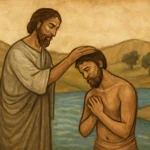
Readers and theologians often compare biblical water rites in the Old Testament with the Christian practice of baptism in the New Testament. While some parallels are illuminating, there are important differences in purpose and meaning:
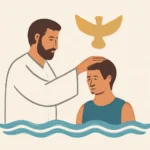
Purpose: OT washings primarily serve ritual purity and temple access; Christian baptism in the New Testament primarily signifies faith, repentance, and incorporation into the body of Christ.
Subject: OT purification is applied to the people within the covenant community; baptism in the NT is offered to individuals who profess faith in Christ, including Gentile believers.
Covenant orientation: OT rituals anchor the people’s relationship to the covenant through the law and temple worship; NT baptism points forward to a new covenant mediated by Christ and the Spirit.
Yet the continuity is meaningful. Both OT purification rites and NT baptism emphasize:
Entrance into God’s life: Water marks transition into a new phase of belonging and worship.
Renovation of status: A person’s status before God may change through cleansing rituals or through faith in the Messiah.
Community formation: Water acts as a sign of membership within a people called to live under God’s rule.
When we study baptismal patterns in the Old Testament, we are not claiming that ancient Israelites practiced “baptism” as defined in the church’s later creeds. Instead, we are tracing a continuum of water-based rites that symbolize purification, covenant inclusion, and passage from one stage of life to another. This helps illuminate how the biblical writers understood water as a divine instrument for shaping identity, worship, and faith.
For students of biblical theology, several practical approaches help illuminate the material:
Contextual reading: Always read purification rites in their ritual, cultic, and legal context rather than imposing modern categories on ancient practices.
Typology and fulfillment: Consider how OT events (Red Sea, Jordan, ashes of a red heifer) function as types that Christians interpret in light of the life and work of Jesus and the Spirit.
Holistic symbolism: Water as symbol carries multiple meanings simultaneously—cleansing, renewal, life, covenant membership, and divine presence.
In sum, while the canonical Hebrew Bible does not record a formal practice called “baptism” in the sense it is used in the later church, it presents a robust and coherent set of water-based rites that shape the people’s sense of purity, belonging, and divine encounter. The ritual washings in Levitical law, the purification from impurity in Numbers, and the dramatic water crossings at the Red Sea and in the Jordan narrative collectively reveal a worldview in which water is a powerful divine instrument for transition. This biblical pattern provides both historical depth and interpretive depth for readers who study how water, purity, and covenant life intersect in the Old Testament story and how those patterns illuminate the Christian understanding of baptism in the New Testament era.






Leave a Reply