St. Francis Peace Prayer: Meaning, History, and How to Pray
St. Francis Peace Prayer: Meaning, History, and How to Pray
St. Francis Peace Prayer: Meaning and Core Themes
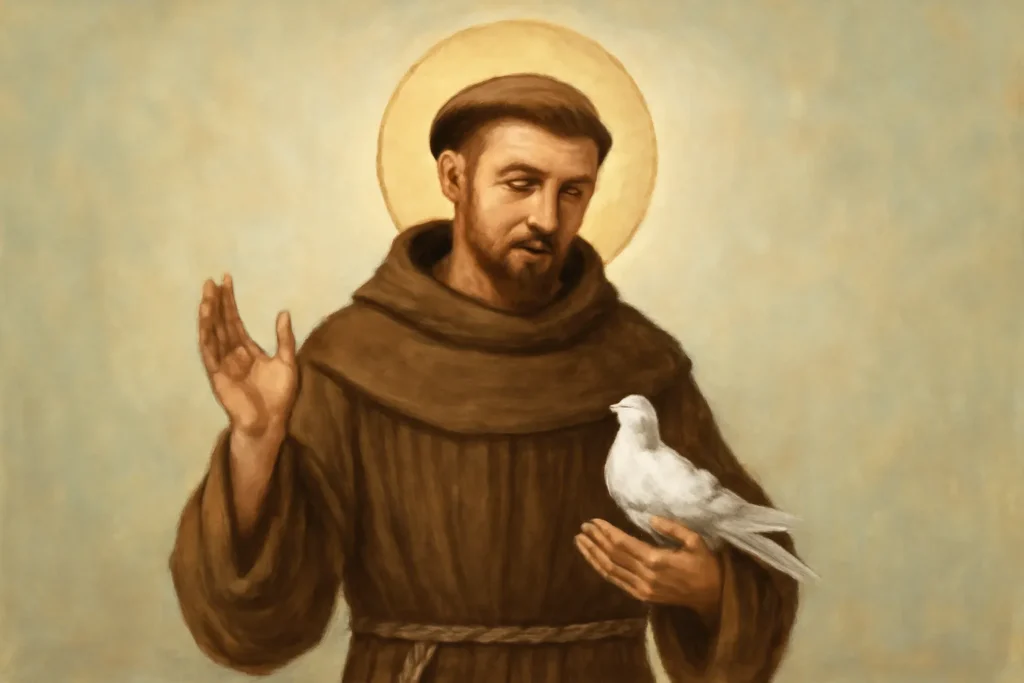
The Saint Francis Peace Prayer, often published as the St. Francis Prayer for Peace or the Prayer of Saint Francis, has become one of the most widely quoted prayers in Christian spirituality. Its simple cadence belies a profound depth of meaning that invites readers and listeners to examine what it truly means to live as a peacemaker in a conflicted world. At its heart, the prayer asks God to mold the speaker into an instrument of peace, transforming not only personal attitudes but also the relationships that surround them. The prayer sketches a sequence of conversions—moving from hatred to love, from injury to pardon, from discord to harmony, and from despair to hope—that mirrors the peacemaking Francis of Assisi himself embodied through his ministry of mercy, humility, and service.
To engage with the Prayer of Saint Francis is to encounter a set of spiritual disciplines wrapped in lyrical imagery. The lines that follow invite the practitioner to reframe every moment of life as an opportunity to practice peace. Each pair of opposites presents a practical challenge: hatred versus love, injury versus pardon, despair versus hope, darkness versus light, sadness versus joy. Rather than abstract ideals, the prayer offers concrete invitations: Let me choose what builds relationship over what wounds it. In this sense, the prayer is fundamentally practical—it concerns itself with small, daily choices that give public testimony to inner transformation. A person who prays these words is not simply asking for peace to come; they are volunteering themselves as a channel through which peace might flow into their community.
What makes this prayer particularly striking is its refusal to separate the spiritual from the ordinary. Whether you're navigating a conflict at work, addressing a family disagreement, or encountering a stranger in need, the prayer offers a framework for responding differently. Instead of returning harm for harm or withdrawal for rejection, it asks you to pause and ask: How might love respond here? What would pardon look like? The prayer assumes that peacemaking is not the work of diplomats alone but the daily labor of ordinary people willing to buck cultural instincts toward retaliation.
In addition to its explicit requests, the closing verses articulate a paradox that stands at the very center of Franciscan spirituality: in giving we receive, in pardoning we are pardoned, and in dying we are born to eternal life. These lines point to a logic of surrendered love—a way of thinking about human relationships that inverts conventional wisdom about gain and loss.
Most people navigate the world with a scarcity mindset: if I give, I lose; if I forgive, I let someone off the hook at my own expense; if I die (spiritually or literally), I cease to exist. The prayer suggests the opposite. It proposes that peace flows from generosity, not from hoarding. When you extend pardon, you release yourself from the burden of anger. When you give, you often discover that the act of giving fills you in ways material accumulation never could. When you surrender your need to win or control, you paradoxically find a freedom that victory never granted you.
For many readers, this is a countercultural invitation—one that echoes the gospel values of forgiveness, reconciliation, and hope even in the face of conflict. In a world that often glorifies winning at any cost and settling scores, Francis's prayer whispers a different possibility: that peace is not something earned by force or power but attained through a quiet, generous posture that places the good of others ahead of personal gain.
It would be easy to dismiss the prayer as merely sentimental if its history didn't demonstrate its power to move people toward genuine change. Throughout the twentieth and twenty-first centuries, peacemakers, activists, and spiritual seekers have drawn on this prayer to sustain their commitment to nonviolence and reconciliation. The prayer's brevity is part of its genius—it can be memorized, repeated, internalized, and allowed to reshape how someone moves through the world.
Consider how the prayer functions in practice. Someone recites the opening lines—"Lord, make me an instrument of your peace"—and immediately recognizes a gap between their aspiration and their behavior. That recognition is not meant to produce shame but clarity. It creates space for conversion, for change, for a different choice in the next moment of conflict or opportunity. Over time, repeated engagement with these lines can genuinely reshape a person's reflexive responses, their instincts, their way of being with others.
This is why the prayer has endured and spread far beyond Franciscan circles. It offers a portable, memorable framework for living differently. Whether you encounter it in a church, a meditation app, a protest march, or a grief support group, it speaks to a hunger many people carry: the desire to be part of building a more just and peaceful world, beginning with how they show up in their own relationships and communities.
Lord, make me an instrument of your peace. Where there is hatred, let me sow love; where there is injury, pardon; where there is doubt, faith; where there is despair, hope; where there is darkness, light; where there is sadness, joy.
The prayer's power lies not in its newness but in its timelessness. It asks something both simple and radical: to align your daily choices, your words, your presence, with the values you claim to hold dear. In doing so, it transforms prayer from a private devotion into a public commitment—a way of saying to the world around you, through action and attitude, that another way is possible.








Leave a Reply