The Gospel of John presents Jesus as the eternal Word who reveals God through his life, signs, teaching, death, and resurrection.
That central claim shapes every part of the book. John does not simply collect events from Jesus’ ministry; he selects and arranges them to lead readers toward faith in Jesus as the Messiah and Son of God. His Gospel combines narrative, dialogue, symbolic actions, theological reflection, and personal testimony.
What makes the Gospel of John different from the other Gospels
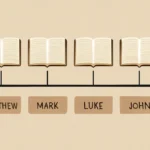
Matthew, Mark, Luke, and John all proclaim Jesus, but John has a distinctive voice and structure. The first three are often called the Synoptic Gospels because they share many events, sayings, and general patterns. John includes some familiar material, such as the feeding of the five thousand, Jesus’ death, and the empty tomb, while presenting many other episodes that do not appear in the Synoptic accounts.
John does not begin with Jesus’ birth or genealogy. Instead, the Gospel opens with a theological presentation of the Word, identifying Jesus with God’s eternal self-expression and describing his coming into the world. This opening prepares readers to understand the rest of the narrative as the revelation of who Jesus is, not merely a record of what he did.
Several differences are especially useful during study:
John’s timeline places Jesus in Jerusalem repeatedly, while the Synoptic Gospels focus more heavily on his ministry in Galilee before the final journey to Jerusalem.
John’s signs often carry a deeper symbolic meaning, pointing beyond the miracle itself to Jesus’ identity and mission.
John’s conversations frequently use extended dialogue, including discussions with Nicodemus, the Samaritan woman, the man born blind, and Jesus’ disciples.
John’s language repeatedly emphasizes themes such as life, light, truth, witness, glory, love, belief, and the world.
John’s account of Jesus’ death presents the crucifixion as the moment when Jesus is glorified and completes the work given to him by the Father.
These differences should not be treated as a competition between accounts. Each Gospel has its own theological purpose and narrative design. Reading John on its own first can help you hear its particular emphasis before comparing it with Matthew, Mark, and Luke.
Study principle: Ask two questions about every major scene: What does Jesus do or say, and what does the scene reveal about his identity and mission?
How the Gospel of John is organized
A clear outline makes the Gospel easier to follow. The book begins with a theological prologue, moves through Jesus’ public ministry, turns toward the final night with his disciples, and ends with his death, resurrection, and appearances. The structure is not merely chronological; it guides the reader from revelation to response.
The prologue: John 1:1–18
The opening section introduces the Word, creation, life, light, rejection, belief, and the Word becoming human. It also identifies John the Baptist as a witness rather than the light himself. The prologue functions like a doorway: it gives readers categories for interpreting Jesus’ signs, conflicts, teachings, and resurrection.
When studying this section, pay attention to the movement between God’s eternal purpose and Jesus’ historical appearance. John presents Jesus as truly connected with God and also genuinely present among human beings. The rest of the Gospel develops these claims through stories and conversations.
The Book of Signs: John 1:19–12:50
Many readers describe the first major division as the Book of Signs. John records selected signs, including water becoming wine, the healing of an official’s son, the healing at Bethesda, the feeding of the multitude, Jesus walking on the sea, the healing of a man born blind, and the raising of Lazarus.
John usually expects readers to look beyond the extraordinary event. The sign reveals something about Jesus and creates a point of decision. Some people move toward trust, while others resist, misunderstand, or attempt to control the situation. The same event can produce very different responses depending on how people interpret Jesus.
The public ministry section also contains major “I am” sayings. Jesus describes himself as the bread of life, the light of the world, the gate or shepherd, the resurrection and the life, the way, the truth, and the life, and the true vine. These images connect Jesus’ identity with nourishment, guidance, salvation, life, relationship, and dependence on God.
The Book of Glory: John 13–20
John 13 begins the extended account of Jesus’ final evening with his disciples. The foot washing establishes a pattern of humble service and gives the disciples a visible interpretation of Jesus’ love. The farewell discourse then addresses departure, grief, obedience, the Spirit, persecution, unity, and continuing mission.
The crucifixion is not presented only as a tragic ending. John portrays it as the hour when Jesus is lifted up, completes his work, and reveals divine love. His resurrection appearances to Mary Magdalene, the disciples, and Thomas show that belief is grounded in the risen Jesus’ presence and testimony.
The epilogue: John 21
John 21 describes an appearance by the Sea of Tiberias, a miraculous catch of fish, a meal, and a conversation between Jesus and Peter. The chapter highlights restoration, responsibility, and faithful discipleship. Peter’s past denial does not erase his calling, but following Jesus will still require endurance and sacrifice.
The chapter also clarifies that the Gospel’s testimony should not be reduced to speculation about another disciple’s future. John directs attention back to each disciple’s responsibility to follow Jesus rather than compare callings.
Major themes to trace during a study of John
Jesus as the revealer of God
The Gospel repeatedly presents Jesus as the one who makes the unseen God known. Jesus’ words and actions are not independent displays of power; they express the will and character of the Father. This is why John places so much weight on Jesus’ relationship with the Father and on his claim to have been sent.
To study this theme, mark statements about seeing, knowing, hearing, sending, and revealing. Notice how Jesus’ works correspond with his teaching. A healing, a meal, or a confrontation often becomes a visible sign of a larger truth about God’s generosity, judgment, mercy, or life-giving purpose.
Belief and unbelief as responses to revelation
John uses the language of belief frequently, but belief in this Gospel is more than agreement with a set of ideas. It involves receiving Jesus, trusting his testimony, coming to him, and remaining in his word. The Gospel’s stated purpose is connected with believing that Jesus is the Messiah and Son of God and receiving life through that faith.
Unbelief in John is also more complicated than simple lack of information. Characters often see a sign or hear an explanation but refuse its implication. Pride, fear, social pressure, attachment to status, and desire for control can all interfere with recognition. Ask what each character knows, what that person misunderstands, and what response the scene invites from the reader.
Life, light, and darkness
Life is one of John’s central words. Jesus gives life, possesses life, offers abundant life, and raises the dead. The Gospel connects this life with relationship to God rather than merely with continued physical existence.
Light and darkness describe revelation and resistance. Light exposes what is true and makes a path visible, while darkness represents ignorance, evil, fear, or rejection. These themes appear from the prologue through the nighttime meeting with Nicodemus and the actions surrounding Judas’ departure.
Do not treat these symbols as abstract decoration. They help explain why people respond differently to Jesus. A person may approach the light honestly, hide from it, or misunderstand what it reveals. The contrast gives moral and spiritual weight to the Gospel’s call to believe.
Witness and testimony
John builds its case through witnesses. John the Baptist points away from himself to Jesus. Jesus’ works testify about him, the Father bears witness, Scripture points toward him, and the disciples testify to what they have seen. The Spirit also functions as a continuing witness after Jesus’ departure.
This theme matters because the Gospel is concerned with reliable knowledge. John does not present faith as careless acceptance; it presents a testimony that calls for a response. When reading a passage, identify who is speaking, what that person has seen or heard, and whether the testimony is accepted or rejected.
Love, obedience, and abiding
In the farewell discourse, Jesus connects love with obedience and ongoing relationship. He commands his disciples to love one another in a way shaped by his own self-giving. Obedience is not portrayed as a technique for earning God’s love; it is the expression of belonging to Jesus.
The image of the vine and branches explains abiding. Fruitfulness depends on remaining connected to Jesus, listening to his words, and receiving life from him. This theme guards against two opposite errors: treating discipleship as self-powered achievement or treating love as a feeling without practical obedience.
Reading tip: When John repeats a word such as “life,” “glory,” “world,” “witness,” or “remain,” trace how its meaning develops instead of interpreting each occurrence in isolation.
Important passages and how to study them
A good study of John moves slowly through complete scenes rather than collecting isolated phrases. Read the surrounding conversation, observe the setting, and note how the scene contributes to the Gospel’s larger argument.
John 1:1–18: the Word and the light
Study the opening by watching its major contrasts: eternity and history, light and darkness, rejection and reception, grace and truth. The passage identifies the significance of Jesus before the narrative introduces his first disciples. It also prepares you to see Jesus as more than a teacher or miracle worker.
Ask how the prologue describes the world’s response to the light. Then compare those ideas with later scenes in which people encounter Jesus but respond with confusion or hostility. The opening is a lens through which the entire Gospel should be read.
John 3:1–21: Nicodemus and new birth
Nicodemus comes to Jesus at night, and the conversation explores new birth, the Spirit, heavenly things, and God’s saving purpose. His questions show the limits of approaching Jesus only through status, knowledge, or visible signs. The dialogue invites readers to consider the difference between recognizing that Jesus is a teacher and receiving the deeper revelation he brings.
When studying this passage, distinguish Jesus’ images from the character’s initial misunderstanding. John often uses this pattern: Jesus speaks at one level, a listener interprets his words literally, and the conversation exposes a deeper spiritual meaning.
John 4:1–42: the Samaritan woman
This scene brings together geography, ethnic tension, worship, water, testimony, and harvest. Jesus crosses expected social boundaries and speaks with a Samaritan woman whose conversation gradually moves from ordinary water to life-giving worship and recognition of the Messiah.
Notice the woman’s changing description of Jesus and the way her testimony affects her town. The passage also broadens the disciples’ understanding of mission. The harvest image shows that God’s work is already unfolding among people whom the disciples may not expect to include.
John 6: bread, belief, and life
The feeding sign leads to teaching about bread from heaven and life. The crowd’s interest in physical provision exposes the difference between seeking Jesus for benefits and receiving him as the one sent by God. The chapter includes difficult language, divided reactions, and a confession from Peter that the disciples recognize Jesus as the source of eternal life.
Read the entire sequence rather than treating the feeding as a stand-alone miracle. John shows how a sign can attract a crowd while failing to produce genuine understanding. The passage is especially useful for studying the relationship between physical signs and spiritual meaning.
John 9: the man born blind
The healing in John 9 becomes a conflict about sin, sight, authority, and testimony. The healed man’s understanding develops as religious leaders question him, while those who claim to see become increasingly resistant. John uses physical sight to explore spiritual perception.
Track the man’s descriptions of Jesus as the questioning continues. His testimony is limited but honest: he knows what happened to him. The chapter shows that a person can grow in understanding while speaking truthfully from experience, even before possessing a complete explanation.
John 11: Lazarus and resurrection life
The raising of Lazarus is the climactic public sign before Jesus’ final entry into Jerusalem. The event reveals Jesus as the resurrection and the life, but it also intensifies opposition from the authorities. John therefore connects life-giving power with the path toward Jesus’ death.
Observe the emotional texture of the chapter. Jesus shows compassion, shares in human grief, and acts with deliberate trust in the Father. The miracle does not remove all suffering from the story; instead, it points toward Jesus’ authority over death and the promise of life through him.
John 13–17: the farewell discourse
These chapters are best read as a connected conversation rather than a collection of disconnected sayings. Jesus prepares the disciples for his departure, teaches them to serve and love, promises the Spirit, warns of opposition, and prays for their unity and mission.
Look for repeated ideas: remaining in Jesus, keeping his commands, receiving peace, bearing witness, and sharing in his mission. The discourse does not promise an easy path. It prepares the disciples to remain faithful when Jesus is no longer physically present and when the surrounding world resists their testimony.
A practical method for studying the Gospel of John
Begin with a complete reading before consulting detailed commentaries. John’s repeated vocabulary and narrative patterns become clearer when you see the whole book. A first reading should focus on the story’s movement and on your overall impression of Jesus.
Read one complete section at a time. Choose a paragraph, scene, or discourse that has a clear beginning and ending.
Record the setting and participants. Note where the event occurs, who is present, and what problem or question drives the scene.
Observe Jesus’ actions and words. Mark commands, questions, promises, signs, claims, and explanations.
Identify misunderstanding. Ask whether a character interprets Jesus literally, morally, politically, or spiritually.
Trace the response. Look for belief, fear, confusion, hostility, worship, departure, or testimony.
Connect the scene to a major theme. Consider life, light, glory, witness, love, truth, judgment, or abiding.
Apply the passage carefully. Ask what it reveals about God, what it calls you to trust, and what kind of discipleship it describes.
A notebook with four columns can make the process manageable. Label them observation, interpretation, connection, and response. Observation records what the text says; interpretation explains what it means in context; connection relates it to other passages; response considers how it should shape belief and practice.
Pay attention to narrative details that seem small. A place, time of day, repeated question, reaction from the crowd, or change in a character’s description may support a larger theological point. John’s Gospel often communicates through these details rather than through direct explanation alone.
After studying a passage on its own, compare it with parallel material in the Synoptic Gospels when available. Ask what each writer emphasizes, not which account is more useful. Comparison can reveal John’s distinctive focus on extended dialogue, symbolic meaning, and Jesus’ relationship with the Father.
Questions that deepen personal or group study
What does this passage reveal about Jesus’ identity?
What does Jesus say or do that the other characters fail to understand?
How does the setting affect the meaning of the scene?
What kind of witness or evidence does the passage provide?
How does the passage portray belief, resistance, or misunderstanding?
Which repeated word or image links this passage with earlier material?
What does faithful discipleship look like in this scene?
How does the passage point toward Jesus’ death, resurrection, or continuing presence?
Historical questions about authorship, audience, and purpose
The Gospel itself does not name its author in a direct opening statement. Christian tradition has associated it with John, often understood as John the son of Zebedee, but scholars discuss the relationship between the beloved disciple, the Gospel’s final form, and the community or circle that preserved its testimony. A careful study can benefit from recognizing both the long-standing tradition and the limits of what the text explicitly states.
The Gospel reflects a setting in which followers of Jesus faced conflict over his identity and the meaning of belonging to God’s people. The exact historical circumstances are debated, so readers should avoid turning every reference to “the Jews” into a statement about all Jewish people. John’s story takes place within the Jewish world of Jesus and his first followers, and its conflicts often concern particular leaders, groups, or responses.
The purpose of the Gospel is stated near its end: the signs have been selected so that readers may believe that Jesus is the Messiah and Son of God and, through that belief, have life in his name. This purpose explains the book’s selectivity. John is not attempting to record every event; he is shaping a witness that calls for trust, allegiance, and life.
Historical study should serve close reading rather than replace it. Background about Jewish festivals, Samaritan relations, purification customs, shepherding, burial, and Roman execution can clarify a passage, but the Gospel’s theological claims remain central. Use background information to illuminate the text, then return to the narrative and ask how John uses that setting.
John’s Gospel is best studied as a unified testimony: a carefully shaped account of Jesus that invites readers to recognize his identity, understand the meaning of his signs, remain in his teaching, and respond with faith. Its symbols become clearer when read alongside its narrative, and its theology becomes more practical when connected with the patterns of love, witness, service, and endurance shown by Jesus and his disciples.
Frequently asked questions
Who wrote the Gospel of John?
The Gospel does not directly identify its author by name. Christian tradition has connected it with John, commonly understood as John the son of Zebedee, while many scholars discuss the role of the beloved disciple and a later Johannine community in preserving and shaping the testimony. The text’s authority rests on its witness to Jesus, even as questions about its composition remain debated.
What is the main message of the Gospel of John?
John presents Jesus as the Messiah, Son of God, and eternal Word who reveals the Father and gives life. The Gospel selects signs, conversations, and teachings to lead readers toward faith. Its central concern is not only identifying who Jesus is, but also showing how belief in him produces life, discipleship, love, witness, and endurance.
How long does it take to study the Gospel of John?
A first reading can be completed in several sittings, but a careful study usually takes several weeks or longer. Reading one chapter or major scene at a time allows you to trace repeated themes and character responses. A slower approach is especially helpful for the farewell discourse, the signs, and the extended conversations.
Should I read John before the other Gospels?
John can be read first because it presents a clear, concentrated witness to Jesus’ identity and mission. Reading Matthew, Mark, and Luke afterward provides helpful comparison, especially for events and teachings shared across the Gospels. If you have already read the Synoptic accounts, John offers a different narrative rhythm and a distinctive emphasis on signs, symbolism, and extended dialogue.





Leave a Reply