The Chronology of the Gospels: Why a Clear Timeline Helps Readers Across the Four Gospels
The four canonical gospels offer four distinct perspectives on the life of Jesus of Nazareth. When readers ask for a single, coherent timeline, they are really asking how to harmonize the gospel narrative order, the pace of events, and the reported dates of key milestones. This article surveys the chronology of the gospels, explaining how Matthew, Mark, Luke, and John present events in sequence, where they converge, where they diverge, and how scholars construct a unified timeline that respects each witness while acknowledging their theological aims. By tracing the major chapters of Jesus’ life—birth, baptism, ministry, passion, resurrection, and post‑resurrection appearances—we can cultivate a clearer, more informed reading of the fourfold gospel chronology.
Foundations of any gospel chronology: common ground and distinctive aims
All four gospels tell the story of Jesus from birth (or best-early signs) to a post-resurrection witness, but they do so with different emphases. A few foundational points recur in the chronology of the gospels:
They all situate the life of Jesus in space and time, using geographical anchors such as Capernaum, Jerusalem, and the Sea of Galilee.
They share a basic sequence: a period of early life or infancy narratives, a public ministry period centered in Galilee, a final journey to Jerusalem, a passion narrative, and post‑resurrection appearances.
They diverge on the length of Jesus’ public ministry, the timeline of the passion week, and the exact order of certain miracles and teachings.
Key phases in Jesus’ life across the gospels
Though each gospel writer emphasizes different moments, certain phases recur across the pages of the gospels and are essential for any chronological reading.
Birth narratives and infancy (where present): contrasts between Matthew, Luke, and others
Matthew foregrounds the connection to Israel’s story and places the birth within a royal framework, highlighting the visit of the Magi and the flight to Egypt. Luke emphasizes the marginal figures around the birth—Zachariah, Mary, shepherds—and provides a detailed infancy narrative, including the presentation in the Temple. Mark and John do not offer infancy stories; Mark starts with John the Baptist, and John begins with a high‑theology prologue about the Word becoming flesh.
Baptism and temptation: the turning point into public life
All traditions place the event of baptism (by John the Baptist) near the entrance into public ministry, followed by a season of testing in the wilderness. In the narrative arc of the synoptic gospels, this sequence marks the official beginning of Jesus’ public work. In John’s account, the baptism by John is still a pivotal moment, but the prologue works differently, situating Jesus’ identity through signs and discourse rather than a strict transitional moment of initiation.
Public ministry in Galilee: teaching, miracles, and growing opposition
Across the synoptic gospels (Matthew, Mark, Luke), Jesus travels through Galilee, teaches in synagogues, performs healings, and accumulates crowds. The order of events—parables, miracles, controversies, choice of disciples—forms a core part of the gospel chronology in these three accounts. In John, the ministry includes extended discourses, private conversations, and a sequence of signs around Jerusalem that differ from the synoptic timeline. This phase culminates in a journey toward Jerusalem that motivates the final acts.
Travel to Jerusalem and the passion week: convergence and divergence
Most scholars treat the passion week as the central hinge of the narrative. In the synoptics, the Last Supper functions as a Passover meal, with Jesus’ arrest, trials, crucifixion, and burial following in rapid succession. In John, the crucifixion occurs during the Passover week as well but with a different ordering of events and ceremonies, including an emphasis on the cleansing of the temple early in Jesus’ public ministry and a sequence that highlights the priestly and kingly motifs in distinct ways.
Chronology by gospel tradition: synoptic versus Johannine perspectives
To see how the pieces fit together, it helps to separate the synoptic gospel chronology from the Johannine chronology. Each tradition has theological priorities that shape the sequence of events as presented to readers.
The Synoptic Gospels (Matthew, Mark, Luke): a compact, year‑long or multi‑stage timeline
Scholars often describe the public ministry in the synoptic gospels as spanning roughly one to three years, with a strong focus on Galilee first, then Judea. The similarities among these three accounts—parallel pericopes, similar order of events, and overlapping sayings—allow readers to discuss a common chronology of the gospel events that emphasizes: a comparatively tight timeline for Jesus’ public work.
The Gospel of John: a longer, more layered chronology with extended discourses
John presents distinctive signs and long discourses that shape a different sense of pace and emphasis. John sometimes places the cleansing of the temple early in Jesus’ ministry and uses festivals as markers to structure the narrative. The Johannine timeline often reads as a sequence that unfolds over a period of approximately three years of ministry in some scholarly models, even though the exact year count is debated. The result is a different sense of chronology, one that foregrounds identity, revelation, and conflict with temple authorities rather than a single, high‑stakes Passover climax alone.
Constructing a clear timeline: a harmonized outline you can follow
For readers who want a practical, readable timeline, it helps to think in terms of anchored chapters and the major events. The following harmonized outline preserves the distinctive contributions of each gospel while offering a unified sequence of events.
A harmonized sequence of major milestones
Birth narratives and infancy stories (Matthew and Luke) set the stage for Jesus’ identity and mission. The precise dating remains uncertain, but many scholars place the birth in the late years of the reign of Herod the Great, making an approximate BCE dating plausible for the nativity narratives in Matthew and Luke.
Presentation and childhood narratives (Luke emphasizes the Temple visit; Matthew emphasizes fulfillment of prophecy). These moments establish Jesus’ pious heritage and his connection to Jewish expectation.
Baptism by John the Baptist, marking the transition to public ministry. This event is a pivotal turning point across the gospels, signaling the inauguration of Jesus’ mission in the sight of witnesses and the Spirit’s anointing.
Temptation in the wilderness and the beginning of public proclamation. Jesus’ teaching, miracles, and call to repentance unfold in Galilee, with an emphasis on the Kingdom of God.
Galilean ministry—preaching, parables, healings, and the selection of disciples. In the synoptic gospels, this phase is relatively condensed; in John, extended discourses and signs fill much of the public phase.
Move toward Judea and Jerusalem—confrontations with religious authorities, increasing opposition, and a growing sense of imminent conflict. The journey to Jerusalem culminates in the events of the passion week.
Passion week—the Last Supper (institution of communion, in most accounts), Jesus’ arrest, trials before authorities, crucifixion, death, and burial. The Last Supper is a focal point in the synoptic tradition; John places emphasis on the Temple, the cross, and Jesus’ words on the cross as revelation of salvation.
Resurrection appearances to the disciples and to other witnesses. Each gospel narrates post‑resurrection events with its own emphasis: discovery, proclamation, and commissioning in different settings.
Ascension and commission—the closing chapters in Luke and Mark and the final appearances in John provide a transition from public ministry to the ongoing mission of the church, rooted in the risen Christ and empowered by the Spirit.
Common points of convergence within the timeline
All four gospels affirm the essential events of Jesus’ birth or pre‑ministry signs, baptism, public ministry, death by crucifixion, resurrection, and post‑resurrection appearances.
All accounts recognize the Jerusalem passion as a central climax, though the ordering of related events varies.
All rely on eyewitness testimony and early church tradition as their foundation, yet each author selects and arranges material to address particular communities and theological themes.
Critical moments that require careful attention in the chronology
Readers who study the gospels closely encounter several moments where chronological questions matter for interpretation. Focusing on these helps in understanding the order of events and the implications for theology and liturgy.
Passover timing and the Last Supper
The synoptic gospels present the Last Supper as a Passover meal in which Jesus inaugurates the practice of communion. Some scholars argue that Mark 14:12–16 and Luke 22:7–14 imply a Passover meal that coincides with the festival in its timing, while others note that John places the cleansing of the temple at a different point, suggesting a nuanced or even alternate calendar. The Passover timing debate is a classic example of how gospel chronology can influence interpretation of Jesus’ actions and sayings during Holy Week.
Temple cleansing: early or late in the ministry?
In the synoptic gospels, the temple cleansing occurs relatively early, suggesting a decisive early public act against temple commerce (Matthew 21; Mark 11; Luke 19). In John, this event appears at the beginning of Jesus’ public ministry, but the surrounding chronology and the sequencing of other signs differ. This difference demonstrates how the same event can be placed differently to emphasize different theological claims, such as Jesus’ authority or the seriousness of temple systems.
The order of signs and miracles can vary across the gospels. For example, certain healings and exorcisms appear in different places in Luke, Mark, or John. In practical terms, this means a reader who wants a single timeline must decide which signs to group together under a unified ministry phase and which to treat as distinct episodes in a longer arc.
Variations and harmonization: how scholars navigate the differences
To render a plausible, integrated timeline, scholars rely on several methods and interpretive tools. These approaches help preserve what is essential in each gospel while presenting a coherent storyline for readers who want to follow the life of Jesus chronologically.
Two‑source and Farrer hypotheses in brief
The Two-Source Hypothesis is a classic solution to the synoptic problem, proposing that Mark was written first and used by Matthew and Luke, with Matthew and Luke drawing additional material from a hypothetical sayings source called Q. This model helps explain why Matthew and Luke share common material but also diverge in order and emphasis, shaping a plausible chronology across the synoptic gospels. The Farrer hypothesis adds another twist by suggesting Mark wrote first and that Matthew used Mark while Luke used both Mark and Matthew, eliminating the need for a separate Q source. Each approach yields a slightly different trajectory for the gospel chronology that scholars test against the text and tradition.
Harmonization does not require erasing distinct voices. Instead, it encourages readers to map points of convergence and divergence, then read each gospel in its own right. Helpful tactics include:
Creating a master timeline with acceptable ranges for events (e.g., birth in BCE 6–4; baptism around AD 25–29; ministry roughly AD 27–30; crucifixion around AD 30–33).
Noting the theological emphasis of each evangelist (fulfillment of prophecy in Matthew; eschatological signs in Luke; high‑Christology and temple imagery in John).
Using cross‑references to move between parallel passages (Mark and Luke often recount similar events in slightly different orders; John treats several episodes as signs rather than parables or healings).
Practical implications: what the chronology teaches about Jesus and early faith communities
The question of chronology is not merely technical. It informs how readers understand Jesus’ mission, the role of the kingdom of God, and the expectations of the early church. The following themes emerge when you view the gospel chronology through a scholarly and devotional lens:
Identity and mission—Chronology underlines how Jesus is presented as the fulfillment of Jewish expectation in Matthew, the authoritative Son of God in John, and the authoritative preacher of the Kingdom in Mark and Luke. The order of events helps readers grasp why each gospel highlights particular aspects of Jesus’ identity.
Authority and opposition—The sequence of temple actions, conflicts with religious leaders, and the eventual crucifixion reflects the escalating response to Jesus’ claims. Different gospels emphasize different turning points that shape the trajectory of his authority.
Liturgical and devotional impact—The Passion narratives, the Last Supper, and the Resurrection appearances influence how Christian communities remember and celebrate Holy Week, Easter, and the ongoing mission of the church. The chronology becomes a basis for ritual remembrance and proclamation.
A practical, reader-friendly timeline you can reference
Below is a concise, reader-ready outline that synthesizes the major milestones into a clear progression for study or teaching. Note that the dates are approximate and reflect common scholarly consensus rather than a single, fixed timetable.
Birth and infancy (Matthew and Luke; c. 4–6 BCE for the historical timeframe of Jesus’ birth). The infancy narratives set up Jesus’ mission by connecting him to Israel’s story and divine fulfillment.
Early life in Nazareth and the quiet years before ministry (Luke 2; Matthew 2–3 hints). This phase establishes Jesus’ human upbringing and obedience to God.
Baptism by John (early public ministry, likely in the late 20s AD). The Spirit descends, and a divine affirmation marks the beginning of his public mission.
Temptation and the launch of Galilean ministry (mid‑late 20s AD). Teaching, healings, exorcisms, and a growing following inaugurate the public phase in Galilee.
Parables, miracles, and conflict with authorities (late 20s AD). The pace varies by gospel, but the overall arc emphasizes the Kingdom of God and the challenges Jesus faces from leaders and crowds alike.
Journey to Jerusalem (late 20s to early 30s AD, according to most harmonized timelines). The narrative moves toward the capital, where the culminating events unfold.
Passion week—Last Supper, arrest, trials, crucifixion, and burial (around AD 30–33). This is the climactic conflict, interpreted in different lights by each gospel.
Resurrection appearances—the proclaimed vindication of Jesus’ claims and the formation of witness community (immediately after the tomb discovery and into the following days).
Ascension and commission—the risen Christ commissions his followers and returns to the Father, signaling the church’s mission and the ongoing work of the Spirit.
Using the chronology to deepen study and teaching
For teachers, pastors, and curious readers, a well‑structured approach to the chronology of the gospels can anchor sermons, Bible studies, and devotional reading. Here are practical tips to deploy in classrooms or personal study:
Begin with an overview of each gospel’s aim—Matthew’s emphasis on Jesus as the Messiah‑fulfillment, Mark’s brisk action, Luke’s universal breadth and care for the marginalized, and John’s Christology and symbolic signs.
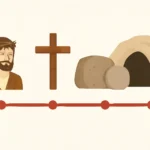
Use a shared timeline as a visual aid—a simple chart or timeline that marks birth narratives, baptism, Galilean ministry, travel to Jerusalem, Passion Week, resurrection, and appearances helps learners compare and contrast.
Highlight theological motifs in the chronology—fulfillment, kingdom, glory, cross, new creation—so students see that order often serves meaning as much as memory.
Engage with debated points respectfully—passover timing, temple actions, and the exact length of Jesus’ ministry are among the most debated elements in gospel chronology discussions.
Emphasizing semantic breadth: alternate phrasings for chronology in your writing
As you discuss this topic in articles, lectures, or sermons, you’ll find value in using variations of the phrase chronology of the gospels to expand semantic reach. Consider these alternatives as you draft headings or captions:
Gospel chronology and its narrative logic
The timeline of Jesus’ life in the four Gospels
The synoptic timeline versus the Johannine sequence
The order of events across Matthew, Mark, Luke, and John
Constructing a fourfold gospel chronology in harmony
Common questions and brief clarifications about gospel chronology
Readers frequently ask about dates, order, and harmonization. Here are concise clarifications that may ease confusion without oversimplifying the depth of the topic.
Are the gospels in chronological order? Not strictly. Each gospel has its own arrangement designed for its rhetorical and theological aims. A harmonized approach seeks to align the accounts where possible while respecting their distinctive voices.
Did Jesus’ ministry last one year or more? The synoptic tradition often implies a ministry of about a year or more within the pastoral circuits of Galilee, whereas John’s account often suggests a longer period with more festival cycles embedded in the narrative.
Why do the synoptics and John differ on the temple cleansing? The differences reflect different theological emphases and literary aims. The event is used to portray Jesus’ authority over religious structures, but the placement within the timeline varies to suit each author’s message.
In sum, the chronology of the gospels is not a single, rigid timetable but a rich conversation among four early Christian narratives. It invites readers to trace the arc from expectation through fulfillment, from proclamation to cross, and from death to life, as each gospel writer invites us to encounter Jesus Christ in a unique way while speaking to the same foundational events.
For those who want to dig deeper, a careful study of the harmonies, source‑criticism, and historical‑critical tools can yield a more precise sense of how these texts were composed. Yet even a straightforward reading—following key milestones in the order most readers encounter them—offers a powerful, coherent portrait of Christ’s life as told by the four evangelists. The result is a dependable, multi‑faceted timeline for Jesus’ life that honors both unity and variety in the gospel witness.








Leave a Reply