Definition and core meaning of tentmaking missionary
The term tentmaking missionary describes a model of cross‑cultural service in which a person
engages in regular, often professional work to support themselves and their mission while also sharing their
faith, building relationships, and contributing to the community where they live. This approach blends vocational work,
practical skills from everyday life, and evangelistic or ministry activity in ways that allow for sustainable
presence in a foreign or culturally distinct context. In broader terms, a tentmaker is someone who turns a
temporary or routine occupation into a vehicle for mission, rather than relying solely on traditional funding or
short‑term programs.
When people speak of the tentmaking missionary meaning, they often emphasize the innate harmony between
professional competence and cross‑cultural service. The concept is not simply about earning money abroad; it is about
using productive work to foster authentic relationships, model integrity, and reduce dependence on external support
structures. In its most recognized form, it embodies a bi‑vocational approach—where personal income
and spiritual or community goals reinforce one another—rather than a separation between money and mission.
Historical roots and biblical basis
The idea of tentmaking has deep historical resonance in Christian history, with the apostle Paul
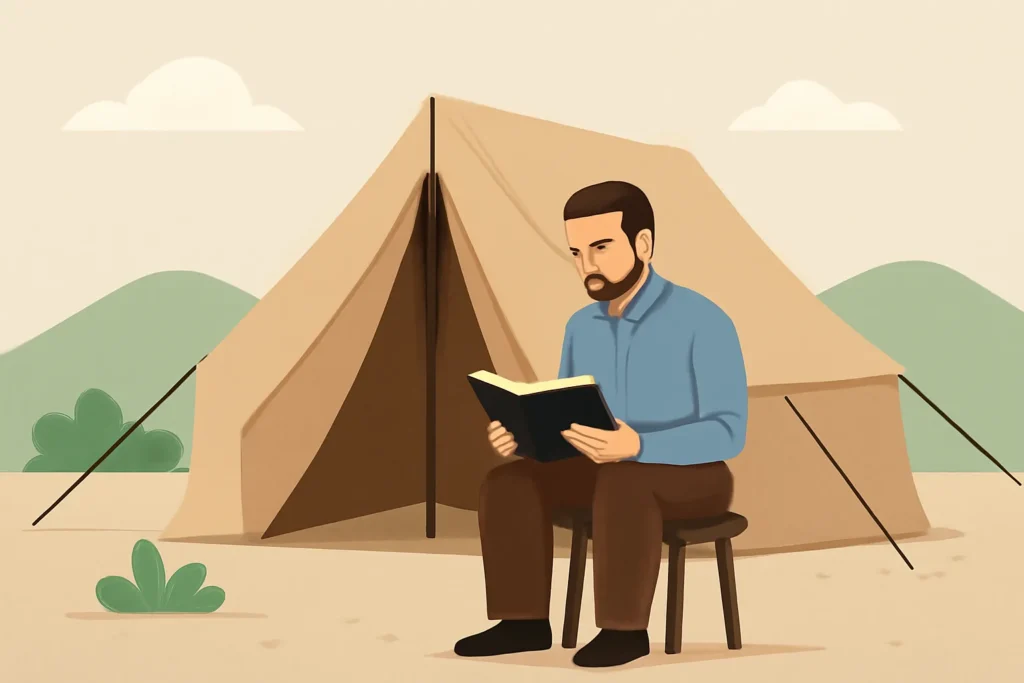
often cited as a foundational example. According to the narrative in the book of Acts, Paul worked as a tentmaker in the city of Corinth to support himself while preaching and teaching. This model
demonstrated that meaningful ministry could occur within a regular career, without creating a dependency on a
particular funding stream or mission board. The phrase tentmaking missionary has since evolved as a shorthand
for that blend of professional livelihood and global or local witness.
Beyond its biblical echo, the longer history of mission work shows repeated patterns of itinerant and local
workers who leveraged their trade, craft, or livelihood to establish trust, enter gatekeepers’ spaces, and reach
people who might otherwise be inaccessible. In many contexts, a tentmaking vocation is seen as a
prudent strategy for urban ministry, workplace evangelism, or unreached settings where traditional support
channels are unstable or culturally inappropriate.
Key distinctions within the model
Bi‑vocational mission — combining paid work with voluntary or relational ministry.
Co‑worker approach — a local or expatriate professional forms part of a team while maintaining primary employment.
Community integration — the job serves as a doorway to authentic cultural immersion.
Variations and synonyms: different flavors of the same idea
The language used to describe this model varies across regions and organizations. Writers and practitioners may use
terms such as tentmaking ministry, bi‑vocational mission work, tentmaking
approach, or vocational witness. While the labels differ, the underlying logic remains:
a worker who sustains life and mission through a regular occupation, while intentionally pursuing spiritual and social
outcomes in the host context.
Some circles differentiate between tentmaking mission workers (those who intentionally leverage a
job to advance mission) and tentmaking professionals (individuals who are primarily employed for
their trade but also carry a mission dimension in their workplace). Regardless of naming, the essential idea is the
alignment of economic activity with cultural engagement, discipleship, and compassion in everyday settings.
Common attributes across variations
Cultural adaptability and respect for local norms
Relational focus—building trust through repeated interaction over time
Sustainability—reducing reliance on external funding by generating personal income
Lead with service—ministry takes a backseat to character, integrity, and genuine presence
Purposes and benefits: why tentmaking matters
The tentmaking mission practice serves several strategic and ethical purposes. At the core, it enables
longer, more sustainable engagement with a community, whether the setting is a foreign culture or a domestic
neighborhood. The model can lower barriers to entry, reduce perception of foreign control, and foster reciprocity.
Contextualization — workers learn the local language, customs, and rhythms, enabling more relevant
ministry and more respectful relationship building.
Trust and credibility — sharing daily life through a regular job signals seriousness and
authenticity to a host community.
Economic resilience — income from a job decreases reliance on donors and mission boards, which
can improve long‑term continuity.
Network expansion — workplaces and professional communities become natural platforms for
conversation, mentoring, and social impact projects.
Skill transfer — professional skills often enhance local capacity-building efforts and create
value for host communities.
The practice also raises important questions about ethics, balance, and sacrifice. For many tentmakers, the aim is not to convert every interaction into a formal
evangelistic moment but to demonstrate visible character, contribute meaningfully, and allow relationships to
grow organically.
How the model works in practice: structures, roles, and workflows
A tentmaking missionary framework typically involves careful planning around vocation, ministry
goals, and cultural adaptation. The practical picture may include:
Career alignment: selecting employment that aligns with personal skills, legal work permissions, and local demand.
Time management: balancing work hours with outreach, discipleship, and language learning.
legally compliant support structures: understanding visa rules, taxation, and local employment law.
Discipleship and mentorship: establishing relationships that encourage spiritual growth in both the worker and peers.
Community impact: identifying service opportunities connected to the worker’s field (education, healthcare, trades, etc.).
Organizations that support tentmaking often provide:
Pre‑field training on cultural intelligence, safety, and cross‑cultural pedagogy
Legal guidance for visas, work authorization, and tax reporting
Networking opportunities with local businesses, churches, or NGOs
Mentorship from experienced practitioners who have maintained a dual focus on livelihood and mission
The ability to integrate into a host society is often enhanced by picking a field or trade that provides real utility
to the community (e.g., healthcare, technology, construction, education, or entrepreneurship). A well‑planned tentmaking strategy helps ensure that the individual’s presence is valued rather than perceived as a
temporary disruption.
Real‑world examples and case studies
Across regions, thousands of people practice a form of tentmaking ministry, often under the radar of
formal missionary programs. Real‑world examples highlight how this approach unfolds in diverse contexts.
Case study: urban business and hospitality in East Asia
In several East Asian cities, individuals with skills in hospitality, culinary arts, or small business
management establish themselves through a regular job while offering language exchange, mentorship, and small
community programs. The tentmaking approach here focuses on hospitality venues, coworking spaces,
and micro‑entrepreneurship to build bridges with local residents. Its success relies on trust, consistency, and a
long‑term presence, not on rapid conversion or high‑pressure outreach.
Case study: healthcare professionals in sub‑Saharan Africa
Medical workers who identify as bi‑vocational workers may partner with local clinics or
hospitals to provide services while modeling teamwork, ethics, and patient‑centered care. In such settings, the
mission dimension becomes a natural extension of professional service, with community health education and
capacity building as integral components.
Case study: tradespeople in South Asia
Skilled tradespeople—plumbers, electricians, builders—often find that their trade naturally intersects with
community needs and local entrepreneurship. A tentmaking vocation in this context can include
community workshops, apprenticeship programs, and faith‑based service projects that are rooted in shared work
environments and common goals.
Case study: educators in Latin America and the Caribbean
Teachers and English language professionals who work in local schools or language centers can extend their
influence through curriculum development, after‑school programs, and mentorship for youth. The dual‑purpose
model enables sustained presence in communities that value education as a pathway to opportunity.
Funding, sustainability, and ethical considerations
A central question for any aspiring tentmaker is how to achieve sustainable presence without compromising
integrity or inflating expectations. The tentmaking economy seeks to combine personal income with
mission aims in a way that respects local sovereignty, cultural norms, and legal requirements.
Funding models include personal employment, employer sponsorship, micro‑grants for community projects, and careful budgeting that avoids predatory debt.
Legal and tax compliance are essential, especially when income originates in foreign jurisdictions or mixed regulatory environments.
Ethical fundraising boundaries require transparency with supporters and hosts about the nature of work, income sources, and ministry plans.
Cultural humility means listening more than prescribing and prioritizing the needs and values of host communities.
Practitioners advocate for a pragmatic mindset: choose work that serves the community, align ministry goals with local
expectations, and maintain a long‑term view of impact. Bias toward relationship building over programmatic imposition helps
ensure that the tentmaking mission framework remains respectful and effective.
Skills, training, and preparation for aspiring tentmakers
Preparing for a tentmaking journey involves a combination of professional preparation, cultural learning,
and spiritual formation. Here are central elements that support successful practice.
Professional competence in a field with local demand and staying current with industry standards.
Cross‑cultural communication skills, including language learning and nonverbal awareness.
Language proficiency targeted to daily life and workplace contexts to facilitate trust and collaboration.
Safety planning and situational awareness for living and working in unfamiliar environments.
Discipleship and personal growth to maintain balance, integrity, and resilience under pressure.
Training ecosystems often involve a mix of theological education, practical job training, mentorship, and short‑term
field experiences. Prospective tentmakers benefit from talking with experienced practitioners, attending workshops
on sustainable mission practices, and engaging with local communities before making a long‑term commitment.
Ethics, risks, and cultural sensitivity in tentmaking ministries
Any model that bridges employment and mission must navigate ethical terrain carefully. The tentmaking
ethic emphasizes respect for host communities, avoidance of exploitation, and transparency about motives. Risks
can include tension between work responsibilities and ministry goals, potential conflicts of interest, and the burden
of constant mobility or relational demands.
Conflict of interest between workplace obligations and ministry responsibilities should be avoided through clear boundaries and honest communication.
Power dynamics must be approached with humility, ensuring that host communities retain agency and dignity.
Dependency risk is mitigated by diversified funding, skills development, and long‑term plans that empower local leadership.
Sustainability depends on building local capacity and avoiding a perpetual dynamic of the outsider who “does all the work.”
Success in a tentmaking context arises when professionals learn to listen deeply, serve where there is true need, and
labor with local partners in ways that promote dignity and ownership. The heart of the model is less about
spectacular milestones and more about steady, trustworthy witness and meaningful service embedded in everyday life.
Common myths and realities about tentmaking missionary meaning
Several misconceptions circulate around this topic. Addressing them helps clarify what the model can and cannot
accomplish.
Myth: Tentmaking is an easy, risk‑free alternative to traditional missions. Reality: It requires careful planning, personal risk assessment, and ongoing support to navigate legal, social, and emotional challenges.
Myth: It’s only for people with certain skilled trades. Reality: The mode is adaptable across various professions, including education, healthcare, technology, and service sectors, depending on local needs and personal gifts.
Myth: It replaces the church or mission organization. Reality: It often operates alongside or within partnering networks, leveraging local churches and communities for legitimacy and impact.
Myth: It guarantees instant trust. Reality: Trust develops over time as consistent presence, competence, and humility accumulate.
How to pursue a tentmaking path: practical steps for aspiring workers
For individuals who sense a calling to live in another context while maintaining a vocation, the following steps
outline a pragmatic route toward becoming a tentmaking missionary or safer equivalent in a given locale.
Clarify calling and gifts — reflect on vocational strengths, passion for cross‑cultural life, and readiness for long‑term commitment.
Research context — study the host country or community, including language, culture, economy, and legal requirements for work and residence.
Acquire relevant skills — deepen proficiency in the target trade or field, possibly pursuing formal certification if required.
Plan for sustainability — develop a realistic budget, social support network, and contingency plans for changes in funding or circumstances.
Engage mentors — connect with experienced tentmakers, church leaders, or mission organizations who can advise on strategy and ethics.
Pilot entry — begin with short‑term visits or pilot projects to build relationships and test the fit before a long‑term move.
Legal setup — secure the appropriate visa, work permit, tax registration, and any local business requirements if you intend to operate an enterprise.
Build partnerships — cultivate relationships with local churches, schools, NGOs, and community groups to multiply impact and ensure local ownership.
As you explore this path, keep in mind that humility, patience, and relational integrity are essential
pillars. A tentmaking journey is as much about people and character as it is about work and outcomes.
Looking ahead: future trends and the evolving meaning of tentmaking
The concept of tentmaking mission work continues to evolve as global mobility increases, the
needs of urban centers grow, and partnerships between churches, NGOs, and businesses strengthen. Several trends are
shaping how this model is practiced in the 21st century:
Digital and remote collaboration — leveraging technology to sustain relationships, coordinate projects,
and provide remote mentorship while maintaining a physical presence where possible.
Local leadership development — emphasizing the transfer of ownership to host communities,
with visiting workers supporting rather than directing local initiatives.
Ethical funding innovations — combining transparent funding, local resource mobilization, and
mutual accountability to reduce dependency and increase trust.
Cross‑sector partnerships — intertwining business, education, health, and faith community efforts to
address systemic challenges with a holistic approach.
For readers exploring the meaning of tentmaking missionary pathways, the core remains clear: sustainable
cross‑cultural presence that respects local autonomy, builds durable relationships, and serves people with
integrity. The tentmaking meaning is not merely about working abroad; it is about living out a
coherent call to serve through one’s everyday life, leveraging vocation as a bridge to compassion, learning, and
shared life.
Summary of key ideas: the essential takeaways about tentmaking meaning
Across definitions and contexts, the core concept of a tentmaking missionary or tentmaking
work remains stable: an individual integrates professional life with missionary aims, using
their job to build trust, serve others, and model a humane, collaborative way of living in a different culture.
Definition — a bi‑vocational or vocationally integrated approach to cross‑cultural service.
Purpose — sustainable presence, relational trust, local empowerment, and authentic witness.
Practice — alignment of work, ministry, ethics, and cultural sensitivity, supported by mentors and partners.
Real‑world impact — practical service, capacity building, and shared life that leads to lasting relationships.







Leave a Reply