You may picture a church as a building with a steeple, a Sunday service, or a particular denomination. The Bible uses the word differently. The church is the people who belong to Jesus Christ, gathered in faith and joined to one another as his body. A building can be used by the church, but it is not the church itself.
In the New Testament, the word translated church comes from the Greek term ekklesia, which refers to an assembly or gathering. In Christian use, it describes people called together by God through faith in Christ. That meaning includes both individual local congregations and the larger community of believers across places and generations.
What the word church means in its biblical context
The Bible does not present the church as a human club created to provide religious services. It presents the church as part of God’s work of redemption. God gathers people from different backgrounds into one community through Jesus, gives them new life, and teaches them to live as his people.
Jesus spoke about building his church in Matthew 16:18. His statement connects the church to himself rather than to a particular building, political institution, or cultural tradition. Christ is the church’s foundation and head, while Christians are members of the community that belongs to him.
The church also has roots in the Old Testament story. God called Israel to be his covenant people, worshiping him and displaying his character among the nations. The New Testament shows that, through Christ, God’s saving purpose reaches people from every nation, creating a united people that includes Jewish and Gentile believers.
Central idea: The church in the Bible is not primarily a place you go. It is a people God gathers to Jesus, forms into a community, and sends to represent him in the world.
How the biblical church is identified
The Bible gives several connected ways to understand the church. None should be isolated from the others. A congregation is not defined only by its meeting place, its music, its size, or its organizational structure. Its identity comes from its relationship with Christ and its faithfulness to his teaching.
A people gathered around Jesus: Christians confess Jesus as Lord and depend on him for salvation and spiritual life.
A community shaped by Scripture: The church listens to the apostles’ teaching and allows God’s Word to guide its beliefs and conduct.
A body with many members: Believers have different gifts and responsibilities but belong to one another.
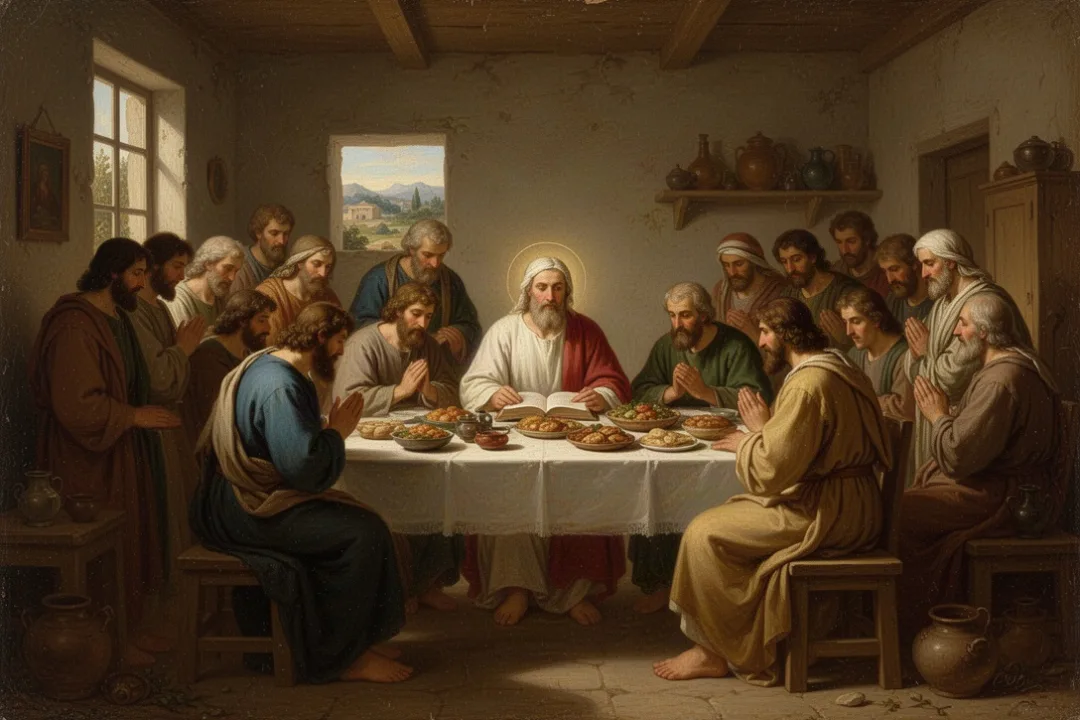
A worshiping family: The church praises God, prays, celebrates the Lord’s Supper, and shares life together.
A serving and witnessing people: Christians care for one another and announce the good news about Jesus.
A holy but imperfect community: The church is called to reflect Christ while still dealing honestly with sin, conflict, and weakness.
These descriptions help distinguish the biblical church from a crowd that merely shares an interest. People may attend the same event without having a spiritual relationship with one another. The church, by contrast, is meant to be a committed community marked by faith, love, truth, worship, and mutual care.
What Jesus taught about the church
Jesus did not leave a detailed building plan or a single cultural model for congregations. He taught principles that define the church’s life and purpose. His teaching points to a community that belongs to God, practices reconciliation, seeks the good of others, and remains accountable to his authority.
In Matthew 18, Jesus addressed conflict among his followers and described a process for pursuing restoration. The passage shows that church relationships are serious. Christians are not expected to ignore destructive behavior, but correction should aim at repentance and restored fellowship rather than humiliation or personal revenge.
Jesus also taught that greatness among his followers is shown through service. In the Gospels, he repeatedly challenged status-seeking and placed humble care for others at the center of discipleship. Church leadership, therefore, is not meant to be a way to gain prestige. It exists to serve people and help them follow Christ.
Jesus’ command to make disciples in Matthew 28:18-20 gives the church its outward mission. The church is to teach people to follow everything he commanded, welcome them into the community of faith, and rely on his continuing presence. This mission includes evangelism, but it also includes long-term formation, obedience, and spiritual maturity.
How the church began in Acts
The church’s public beginning is recorded in Acts 2, after Jesus’ resurrection, ascension, and the coming of the Holy Spirit at Pentecost. Peter proclaimed Jesus to a gathered crowd, and many people responded in faith. They were then incorporated into a new community rather than remaining isolated believers.
Acts 2:42-47 describes the early Christians as devoted to the apostles’ teaching, fellowship, shared meals, and prayer. The account also describes generosity, worship, public witness, and practical care for people in need. It presents church life as both spiritual and ordinary: believers learned together, ate together, prayed together, and shared resources.
The early church did not remain confined to Jerusalem. The message spread through Judea, Samaria, and beyond, despite opposition and hardship. Congregations appeared in cities such as Antioch, Corinth, Ephesus, Philippi, and Rome. These churches had different local circumstances, but they were connected by the same gospel and their allegiance to Jesus.
Acts also shows that the church faced real problems. There were disputes about food distribution, disagreements over the inclusion of Gentiles, moral failures, persecution, and tension among leaders. These events matter because they show that a biblical church is not a community without problems. It is a community that must respond to problems through truth, repentance, wisdom, prayer, and love.
The difference between the universal church and a local church
The Bible uses the idea of church in both a broad and a local sense. The universal church refers to all true believers united to Christ, including Christians in every nation and generation. The local church refers to a recognizable congregation that meets in a particular place and shares worship, teaching, fellowship, and responsibility.
First Corinthians 12 uses the image of one body with many members to explain this unity. The body is not made of identical parts, and believers are not expected to have identical gifts or personalities. Their differences are meant to serve the health of the whole community rather than create competition.
At the same time, the New Testament gives practical instructions to local congregations. Christians are told to gather, encourage one another, teach one another, care for widows and the poor, appoint qualified leaders, resolve disputes, and practice discipline when necessary. Those commands require an identifiable community, not only an invisible collection of private believers.
This means you can speak accurately about the church in two ways. A congregation in your town is a church, provided it is genuinely centered on Christ, and it is also part of the wider church made up of believers around the world.
Why the Bible calls the church Christ’s body
Paul repeatedly describes the church as the body of Christ, especially in 1 Corinthians 12, Romans 12, and Ephesians 4. The image says more than “Christians cooperate.” It describes a living relationship in which Christ gives life and direction to his people, while believers depend on one another.
The body image protects against two opposite mistakes. One is individualism: the idea that you can follow Jesus faithfully while having no meaningful connection to other Christians. The other is uniformity: the idea that every Christian must have the same role, personality, background, or spiritual gift.
According to 1 Corinthians 12, the Spirit gives different gifts for the common good. Some believers teach, encourage, lead, give, serve, show mercy, or perform other forms of ministry. These gifts are not signs of personal superiority. They are ways God equips the church to care for people and carry out its mission.
The body metaphor also teaches that suffering and honor should be shared. When one member suffers, others should not treat that pain as irrelevant. When one member is honored, others should not respond with jealousy. Healthy church life makes room for empathy, cooperation, correction, and mutual dependence.
What the church does according to the Bible
The Bible describes the church’s activities in several overlapping areas. No single program captures the whole purpose of a congregation. A church may use different methods in different settings, but its basic responsibilities remain recognizable.
Worship God: The church gathers to praise God, pray, hear Scripture, confess sin, give thanks, and respond to his grace.
Teach the faith: Leaders and members help one another understand the gospel, the Bible, and the practical meaning of following Jesus.
Make disciples: The church helps people move from initial faith toward mature obedience, wise decision-making, and Christlike character.
Share the Lord’s Supper and baptism: These practices visibly identify believers with Jesus and express participation in the Christian community.
Build up believers: Christians encourage, correct, comfort, pray for, and serve one another.
Care for people in need: The New Testament gives repeated attention to the poor, widows, strangers, the sick, and those facing hardship.
Proclaim the gospel: The church announces who Jesus is, what he has done, and the call to repent and believe.
Display God’s wisdom and character: A diverse community reconciled through Christ offers a visible witness to God’s grace.
These purposes are connected. Worship should shape conduct, teaching should produce obedience, fellowship should lead to practical care, and mission should flow from love for God and people. A congregation can be active and still lose its center if its activities are detached from Christ and the gospel.
Why gathering matters to the biblical church
Christian faith is personal, but the Bible does not treat it as private. Hebrews 10:24-25 urges believers to keep meeting together, encouraging one another toward love and good works. The reason for gathering is not simply to attend an event; it is to strengthen a people who need one another.
Meeting together gives Christians regular opportunities to hear Scripture, pray with others, share the Lord’s Supper, sing, receive encouragement, and respond to needs. It also creates relationships in which people can be known honestly rather than remaining anonymous observers.
Physical gatherings are especially significant because Christian love requires action. Encouragement involves words, but care may also involve meals, transportation, financial help, visits, hospitality, or patient companionship. A congregation can use online tools to communicate, but technology does not replace every form of embodied fellowship and service.
Attendance alone, however, does not automatically make someone an active participant in church life. The New Testament’s picture is more engaged. Believers are called to contribute, serve, listen, give, forgive, and accept responsibility for the good of others.
How baptism and the Lord’s Supper relate to the church
Baptism and the Lord’s Supper are central practices in most Christian traditions because Jesus gave them to his followers. They are not magic rituals that earn salvation. They are visible acts of faith and belonging that point to God’s grace and the believer’s union with Christ.
Baptism portrays identification with Jesus’ death and resurrection. Romans 6 explains its meaning by connecting the believer’s baptism with leaving an old way of life and beginning a new life under Christ. Christian traditions differ over the timing and mode of baptism, but they agree that it publicly relates a person to Jesus and his people.
The Lord’s Supper recalls Jesus’ death and expresses fellowship among believers. Paul’s teaching in 1 Corinthians 11 warns Christians not to treat the meal casually or use it while ignoring divisions and the needs of other members. The practice therefore includes remembrance, gratitude, self-examination, and renewed commitment to the community.
These practices do not make a building sacred. They help mark the church as a people shaped by Jesus’ saving work. Their meaning is strongest when the congregation understands both the gospel they represent and the responsibilities of belonging to one another.
Who leads the church in the Bible
Jesus is the church’s ultimate head. Ephesians 1 and Colossians 1 emphasize his authority and centrality, while Ephesians 5 presents his sacrificial love for the church. Human leaders serve under Christ; they do not own the church or replace its dependence on him.
The New Testament mentions several forms of ministry and leadership. Elders or overseers are expected to teach sound doctrine, care for people, manage their households responsibly, and demonstrate mature character. Deacons are associated with practical service and trustworthy responsibility. Pastors and teachers equip believers for ministry, rather than doing every ministry task themselves.
Different Christian traditions organize leadership in different ways, and the New Testament does not provide one modern denominational constitution. Still, its standards are clear. Leaders should be spiritually mature, humble, faithful, able to teach where required, and committed to protecting rather than exploiting the people in their care.
Church members also have responsibilities. They should test teaching against Scripture, pray for leaders, offer their gifts, pursue peace, and speak truthfully when serious concerns arise. Respect for leadership does not mean tolerating abuse, dishonesty, or conduct that contradicts the character required of Christian leaders.
Leadership warning: Biblical authority is never permission to manipulate or harm people. Jesus’ model of leadership is marked by truth, sacrifice, service, accountability, and concern for the vulnerable.
How the church handles unity and disagreement
The New Testament expects unity but does not pretend that Christians will agree on every secondary issue. Romans 14 addresses disagreements over food and special days, urging believers to avoid contempt and judgment when the disagreement does not overturn the gospel. Other passages insist firmly on core truths about Jesus, salvation, holiness, and the apostolic message.
Biblical unity is therefore more than having identical preferences. It is a shared loyalty to Christ that allows people with different cultures and personalities to practice patience and humility. Ephesians 4 connects unity with truthful speech, maturity, and love rather than with the erasure of all differences.
Some disagreements are serious enough to require separation or discipline, particularly when false teaching, exploitation, or unrepentant destructive conduct threatens the community. Even then, the goal should not be winning an argument or protecting an institution’s reputation. The goal is faithfulness to Christ, protection of people, and the possibility of repentance and restoration where appropriate.
Healthy unity does not hide problems. It creates a culture where people can confess sin, receive correction, ask questions, and seek reconciliation without turning every conflict into a personal attack. That kind of unity reflects the gospel more clearly than outward agreement maintained through fear.
What holiness means for the church
The church is called holy because it belongs to God and is set apart for him. This does not mean every Christian is already morally perfect. The New Testament addresses real sin inside local churches, including pride, sexual misconduct, favoritism, greed, division, and neglect of the poor.
Holiness means that the church’s beliefs and behavior should increasingly match the character of Jesus. It includes personal integrity, sexual faithfulness, truthful speech, forgiveness, generosity, care for enemies, and justice toward people who are vulnerable. It also includes turning away from practices that damage neighbors or dishonor God.
Church discipline appears in the New Testament as a serious response to persistent, unrepentant wrongdoing. Its purpose is not public shaming or control. Properly understood, it protects the congregation, calls the person to repentance, and preserves the truth that Christian membership involves a way of life.
Because every congregation contains imperfect people, you should evaluate a church by more than its polished appearance or public claims. Look for evidence of repentance, accountability, sound teaching, care for people, and a willingness to address wrongdoing honestly.
How the church serves its neighbors and the world
Jesus’ followers are sent beyond the church’s internal life. The Great Commission in Matthew 28 calls them to make disciples among all nations, while Acts 1:8 describes a widening witness empowered by the Holy Spirit. Evangelism is not merely promoting a religious organization; it is bearing witness to Jesus through words and a life that reflects his rule.
The church’s public witness also includes practical love. Jesus connected love for God with love for neighbor, and the New Testament repeatedly directs Christians to generosity and hospitality. Churches may help with food, housing, counseling, disaster response, education, adoption support, prison ministry, medical needs, or other forms of service, depending on their gifts and context.
Service does not replace the gospel, and preaching the gospel does not excuse indifference to suffering. The biblical pattern holds both together. Christians speak about Christ and demonstrate his compassion, avoiding both a message with no mercy and charitable activity with no clear spiritual center.
The church should also model reconciliation across divisions. In Ephesians 2, Paul describes Christ as creating peace between groups that had been separated by hostility. A congregation cannot eliminate every social difference, but it can show what happens when people receive their primary identity from Christ rather than ethnicity, class, nationality, political preference, or social status.
How to recognize a healthy local church
No congregation will be flawless, and a healthy church may be small, ordinary, or still growing. The question is not whether everything feels comfortable. It is whether the church is genuinely seeking faithfulness to Jesus in its teaching, relationships, worship, leadership, and mission.
Does the church clearly teach the biblical message about Jesus, sin, grace, repentance, faith, and new life?
Are Scripture and prayer central, rather than used only to support personalities or agendas?
Do leaders demonstrate humility, integrity, accountability, and care for people?
Are members encouraged to serve according to their gifts instead of treating ministry as the leaders’ job alone?
Does the congregation welcome people without compromising truth or ignoring harmful behavior?
Are the poor, lonely, elderly, disabled, grieving, and socially overlooked treated with dignity?
Can members ask sincere questions and raise concerns without intimidation?
Does the church pursue repentance and restoration when people sin?
Is there a meaningful concern for neighbors and people who do not yet follow Christ?
Pay attention to patterns rather than one impressive service or one disappointing interaction. Talk with several members, observe how leaders respond to criticism, and ask how the church handles finances, safeguarding, discipline, and conflicts. A congregation’s everyday conduct often reveals more than its public branding.
What it means to belong to the church
In the New Testament, belonging to the church begins with belonging to Christ. A person responds to the gospel with repentance and faith, receives baptism as a sign of identification with Jesus, and joins a community of believers. Christian traditions describe the details differently, but the basic pattern involves faith, public allegiance, and committed participation.
Membership should not be reduced to putting a name on a list. It means accepting responsibility for the good of other believers and allowing them to encourage and correct you. It also means receiving care from the community rather than insisting that Christian life can be managed entirely alone.
Church belonging is not a guarantee that every relationship will be easy. People bring different histories, expectations, wounds, and habits into the community. Faithful membership requires patience and wisdom, including the ability to distinguish ordinary imperfection from unsafe or abusive conduct.
If you are looking for a church, begin by learning what it believes and watching how it treats people. Pray for discernment, ask direct questions, and allow time to see whether its public teaching matches its ordinary life. The biblical goal is not to find a congregation that satisfies every preference but to join a community that helps you follow Jesus faithfully.
What the church is not
The biblical meaning becomes clearer by identifying several ideas it does not support. The church is not merely a property, a weekly performance, a political identity, or a social club. It is not defined by wealth, popularity, architectural beauty, or the personal charisma of a leader.
The church is also not a group of people who have achieved moral perfection. Christians are forgiven and called to holiness, but they still need correction and grace. A congregation that claims to have no serious weaknesses is not displaying biblical maturity; it may be avoiding honest self-examination.
Nor is the church simply an invisible spiritual idea with no concrete responsibilities. The New Testament calls believers to gather, give, serve, teach, forgive, practice hospitality, care for the vulnerable, and hold leaders accountable. Those commands require relationships that can be seen in ordinary life.
Finally, the church is not meant to be centered on one ethnicity, nation, political party, or social class. Christ gathers people into a community whose deepest loyalty is to him. Local churches may have distinct cultures, but their identity must remain open to the worldwide people of God and shaped by the gospel.
Why the church still matters to Christian faith
The church matters because God did not design discipleship as a solitary project. Through the church, believers receive teaching, encouragement, correction, friendship, opportunities to serve, and reminders of God’s grace. The community also gives visible expression to a faith that could otherwise remain only private belief.
The church’s importance does not depend on flawless members or impressive programs. It rests on Jesus, who gathers and sustains his people. When a congregation worships faithfully, teaches truth, cares for the vulnerable, practices repentance, and points beyond itself to Christ, it becomes a credible sign of what God is doing in the world.
So, when you ask, “What is the church in the Bible?” the clearest answer is this: the church is the community of people who belong to Jesus Christ. It is both a worldwide family and a local gathering, called to worship God, grow in holiness, love one another, serve neighbors, and make disciples in the name of Jesus.
Frequently asked questions
Does the Bible say a church building is necessary?
No. The earliest Christians often met in homes, public spaces, or other available locations. A building can provide a useful place for worship and ministry, but the Bible defines the church by its people and their relationship to Christ. Treating a building as the church can distract from the New Testament emphasis on community, service, and shared spiritual life.
Can someone be a Christian without attending a local church?
A person may face unusual circumstances that prevent regular attendance, but the New Testament presents Christian faith as connected to other believers. Christians are instructed to gather, encourage one another, serve, share communion, and receive pastoral care. Persistent isolation does not fit that pattern, even though choosing a safe and faithful congregation may require time and discernment.
Are all churches mentioned in the Bible part of one denomination?
No. The New Testament describes local congregations in different cities with distinct challenges and practices, but they shared faith in Jesus and the apostolic gospel. Modern denominations developed later and organize churches in various ways. Their labels do not automatically determine whether a congregation is faithful; its teaching, conduct, leadership, and treatment of people also matter.
What should I do if my church has serious problems?
Begin by documenting what you have observed and seeking wise counsel from mature, trustworthy Christians. If appropriate and safe, raise concerns through the church’s established leadership or accountability process. Abuse, threats, financial misconduct, and danger to children require special care and may warrant outside authorities. You do not have to remain in an unsafe environment to prove loyalty to Christ.











Leave a Reply