The Sabbath was not universally changed from Saturday to Sunday. Saturday remains the Jewish Sabbath, while most Christians gather on Sunday to honor Jesus’ resurrection and remember the beginning of the new creation.
The question often assumes that one institution was officially moved from one day to another. Christian history is more complicated. Some churches understand Sunday as the Christian Sabbath, others call it the Lord’s Day without treating it as the Old Testament Sabbath, and some Christians continue to observe Saturday as the Sabbath.
The word Sabbath comes from a Hebrew term associated with stopping or resting. In the creation account, God rests on the seventh day, and the Sabbath command later tells Israel to set apart that day for rest and worship. The weekly Sabbath runs from Friday evening to Saturday evening according to the biblical Jewish reckoning of days.
The Sabbath is included in the Ten Commandments in Exodus 20:8–11 and Deuteronomy 5:12–15. These passages connect the day with two ideas: God’s rest after creation and Israel’s deliverance from slavery in Egypt. The command was therefore both a pattern of worship and a sign of Israel’s covenant identity.
In the Hebrew Scriptures, the Sabbath is specifically the seventh day. There is no passage in the Old Testament that changes the weekly Sabbath to the first day of the week. That fact is central to the question: the biblical Saturday Sabbath and the later Christian Sunday gathering are related, but they are not automatically identical.
Key distinction: Saturday is the seventh day and the biblical Sabbath. Sunday is the first day of the week, traditionally chosen by Christians to celebrate Jesus’ resurrection and gather for worship.
Why Sunday became significant to Christians
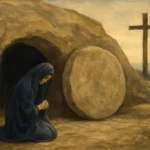
According to the New Testament, Jesus rose from the dead on the first day of the week. The resurrection is the central event of Christian faith, so the day associated with it gradually became especially meaningful for Christian worship. The four Gospels place the discovery of the empty tomb on that first day, although their accounts differ in details about the visitors and the timing.
Early Christians also remembered other appearances of the risen Jesus on the first day. John 20 describes an appearance to the disciples gathered together and another appearance a week later. These scenes helped give Sunday a recurring place in Christian memory and worship.
Sunday’s importance did not mean that every Christian immediately stopped observing the Sabbath. The earliest followers of Jesus were Jewish, and many continued participating in synagogue life while also meeting with fellow believers. As the church expanded among Gentiles, Sunday gatherings became increasingly common and eventually became the dominant Christian practice.
The first day also carried theological meaning beyond the resurrection. Christians came to associate it with new life, the new creation, and the beginning of a renewed relationship with God through Christ. For that reason, Sunday worship is sometimes described as a celebration of Easter each week.
What the New Testament says about Christian gatherings
The New Testament records Christians meeting on the first day of the week. Acts 20:7 describes believers gathering to break bread on that day. First Corinthians 16:2 refers to setting aside money on the first day of each week, apparently in connection with an organized collection for other believers.
These references show that Sunday meetings existed in the apostolic period. They do not, however, present a simple sentence saying, “The Sabbath has been transferred from Saturday to Sunday.” The New Testament gives evidence of first-day worship while also leaving room for different interpretations of how Christians should relate to the Sabbath command.
Revelation 1:10 uses the expression “the Lord’s Day,” a phrase that became associated with Sunday in early Christian tradition. The passage itself does not spell out every detail of the day’s calendar meaning, but later Christians widely understood the expression to refer to the day of Christ’s resurrection and Christian assembly.
The New Testament also emphasizes the significance of Christ over disputes about calendar observance. Romans 14:5–6 discusses differences over the esteem given to particular days, and Colossians 2:16–17 warns believers not to let others judge them over festivals, new moons, or Sabbaths. Christians who favor Sunday often see these passages as evidence that believers are not bound to the seventh-day Sabbath as a legal requirement.
Other Christians read those passages differently. They may understand them as addressing ceremonial festivals, ascetic practices, or disputes over how days were observed rather than canceling the weekly Sabbath. This is why sincere Christians reach different conclusions while appealing to the same New Testament texts.
How Jesus and the apostles treated the Sabbath
Jesus regularly attended synagogue and observed Jewish religious practice, including the Sabbath. The Gospels describe several disputes between Jesus and religious leaders about what was lawful on that day. These conflicts concerned healing, gathering food, and the purpose of Sabbath regulations.
Jesus did not present the Sabbath as meaningless. Instead, he challenged interpretations that placed technical restrictions above mercy, human need, and doing good. In Mark 2:27–28, his teaching presents the Sabbath as serving humanity and identifies the Son of Man as having authority over it. Christians disagree about whether this preserves, transforms, or fulfills the Sabbath command, but the passages clearly show Jesus disputing how the day was being applied.
The apostles continued ministering in synagogues on the Sabbath, especially during the early spread of the gospel. Acts frequently mentions Paul speaking in synagogues on the Sabbath. That pattern partly reflects the opportunity to address Jewish communities gathered on that day, so it does not by itself prove that all Christian congregations were required to meet on Saturday.
At the same time, the New Testament does not describe a formal apostolic ceremony in which the Sabbath command is transferred to Sunday. The change from a predominantly Jewish movement to a predominantly Gentile church happened over time. Practice developed alongside theology, rather than beginning with one universally recorded administrative decision.
Did the Roman emperor Constantine change the Sabbath?
Constantine is often named as the person who changed the Sabbath from Saturday to Sunday. That claim is too simple. In the early fourth century, Constantine issued a civil law giving Sunday a special status as a day when many forms of work were restricted. This law helped establish Sunday as an important public day in the Roman Empire, but Christians were already meeting on Sunday before Constantine.
Historical evidence from earlier Christian writings shows that Sunday worship existed for generations before imperial recognition. Constantine therefore did not invent Sunday worship or personally rewrite the biblical Sabbath command. His policy strengthened and standardized a practice that had already become widespread among many Christians.
The Roman government’s involvement did influence the relationship between Christianity, public life, and the calendar. As Christianity gained social and political influence, Sunday became more visible as a day of worship and rest. Later church leaders and councils also addressed how Christians should distinguish themselves from Jewish Sabbath observance.
That later history should be separated from the original question. Imperial legislation explains Sunday’s public prominence, not the beginning of Christian belief in Sunday worship. It also does not show that all Christians agreed that the seventh-day Sabbath had been biblically replaced.
How Jewish and Christian calendars differ
Jewish communities continue to observe Shabbat from Friday evening through Saturday evening. Shabbat includes rest, prayer, family meals, Scripture, and other practices shaped by Jewish law and tradition. It remains a defining part of Jewish religious life and should not be described as obsolete simply because most Christians worship on Sunday.
Most Christian churches meet on Sunday, but their practices vary. Some hold a primary worship service, others celebrate Communion or the Eucharist, and some treat Sunday as a day for rest and charitable activity. Many Christians also worship on other days, since church schedules are not limited to one weekly gathering.
Some Christian denominations teach that Sunday is the Christian Sabbath and should be treated as a day of worship and rest. Others distinguish carefully between the Jewish Sabbath and the Lord’s Day, arguing that Sunday is important because of the resurrection but is not a direct replacement under the same covenant command.
Seventh-day Christians, including Seventh-day Adventists and several other groups, continue to observe Saturday as the biblical Sabbath. They generally argue that the Ten Commandments do not authorize a change to Sunday and that the New Testament never explicitly commands Christians to transfer the Sabbath.
Why many Christians call Sunday the Lord’s Day
The phrase “Lord’s Day” became a common Christian designation for Sunday because of its connection with the risen Christ. It expresses the conviction that Sunday belongs especially to the Lord and is suitable for corporate worship. This language focuses on Christ’s resurrection rather than claiming that the day is simply a revised version of Saturday.
Over time, Sunday worship developed recognizable elements: reading Scripture, preaching, prayer, singing, giving, fellowship, and sharing Communion. Acts 2:42 describes early Christian devotion to teaching, fellowship, breaking bread, and prayer, although it does not limit those practices to one particular day.
The first day of the week also became a visible marker of Christian identity. As the church separated socially and institutionally from Judaism, Sunday helped distinguish Christian communities from Jewish communities that continued observing Saturday. That development had theological and cultural causes, not just a calendar calculation.
Some early Christian writers contrasted Saturday and Sunday in ways that reflected growing tension between church and synagogue. Those writings should be read carefully because they sometimes contain anti-Jewish arguments that do not represent a healthy or accurate understanding of Judaism. The history of Sunday cannot be separated from the complicated and sometimes damaging relationship between Christians and Jews.
Common mistakes when explaining the Saturday-to-Sunday question
Several popular explanations leave out important details. A careful answer should distinguish biblical teaching, early Christian practice, later church tradition, and civil legislation instead of treating them as one event.
Claiming Constantine invented Sunday worship: Christians were gathering on Sunday before Constantine’s reign.
Assuming every Christian agrees that Sunday replaced Saturday: Some churches call Sunday the Christian Sabbath, while others observe Saturday or use different theological language.
Ignoring the Jewish Sabbath: Saturday remains the Sabbath in Judaism, and Jewish observance should not be treated as an outdated Christian practice.
Using one New Testament verse as a complete answer: The relevant evidence includes the resurrection accounts, Acts, Paul’s letters, and the broader teaching about freedom and worship.
Confusing worship with a day off: Sunday gatherings, Sabbath rest, and government limits on labor are related but not identical subjects.
Assuming a Sunday service proves a transferred command: A church may worship on Sunday because of the resurrection without teaching that the fourth commandment was formally moved.
When comparing traditions, ask what each group means by the word Sabbath. One group may mean the seventh day under the Mosaic covenant. Another may mean a weekly Christian rest day. A third may use “Lord’s Day” for Sunday while rejecting the idea that Christians are bound to a particular calendar day.
Practical reading tip: Read the Sabbath command in Exodus 20 and Deuteronomy 5 alongside Acts 20:7, Romans 14:5–6, and Colossians 2:16–17. Comparing the passages prevents one tradition’s explanation from being mistaken for an explicit biblical sentence.
How different Christians answer the question today
There are three broad answers within Christianity. The first says that the Sabbath command continues on the seventh day, so Saturday remains the proper Sabbath. This view points to the wording of the Ten Commandments and the absence of an explicit biblical transfer to Sunday.
The second says that Christ’s work fulfills the Old Testament Sabbath in a way that frees Christians from observing a particular day. Those who hold this position may still worship on Sunday because it is the historic day of resurrection celebration, while emphasizing that worship is not legally restricted to Sunday.
The third says that Sunday is the Christian Sabbath. This view generally regards the church’s Sunday practice as a divinely guided continuation or transformation of the Sabbath principle. It emphasizes weekly worship, rest, and the resurrection while applying those themes to the first day.
These positions share some convictions. Most affirm the value of regular worship, rest, fellowship, and remembrance of God’s saving work. Their disagreement concerns which day is required, whether the Sabbath command was fulfilled or transferred, and how much authority should be given to church tradition.
What the change means for Christian practice
For most Christians, Sunday worship is a way to center the week on the resurrection of Jesus. A congregation may use the day for public worship, Communion, teaching, service, and fellowship. The practical goal is not merely selecting a calendar square but giving deliberate attention to God and the community of faith.
Christians who observe Saturday may follow similar practices from Friday evening to Saturday evening. They may avoid ordinary work, attend worship, study Scripture, share meals, and make space for rest. The difference is the day and the theological reason assigned to it.
Christians who do not believe a specific day is required can still benefit from a regular rhythm of worship and rest. Their position usually emphasizes that believers should not judge one another over calendar observance while continuing to honor God with their time and conduct.
A respectful conversation should therefore avoid treating one practice as proof that another believer does not care about Scripture. The central issue is not whether Christians value worship and rest, but how they interpret the relationship among creation, Israel’s covenant, Jesus’ resurrection, and the church.
What can be said with confidence
The biblical Sabbath is the seventh day, corresponding to Saturday in the modern weekly cycle. The New Testament does not record a formal decree that changes that command to Sunday. It does record Christians meeting on the first day, and Sunday became especially important because Jesus rose on that day.
Sunday’s prominence grew through early Christian practice, theological reflection, separation from synagogue life, and eventually public recognition under Christian emperors. Constantine supported Sunday through civil policy, but he did not originate the practice. Nor did his legislation settle the theological question for every Christian group.
The most accurate short answer is therefore: Sunday was not simply substituted for Saturday by one person or one event. Most Christians came to worship on Sunday to commemorate the resurrection, while Jewish communities continued observing Saturday and some Christians maintained Saturday observance. The debate remains a matter of biblical interpretation, church tradition, and Christian conscience.
Frequently asked questions
Is Sunday actually the Sabbath according to the Bible?
The Bible identifies the seventh day as the Sabbath, which corresponds to Saturday. It also records Christians gathering on the first day of the week. Whether Sunday should be called the Christian Sabbath depends on theological interpretation: some churches say yes, while others call it the Lord’s Day and distinguish it from the biblical Sabbath.
Did Jesus tell his followers to worship on Sunday?
The Gospels connect Sunday with Jesus’ resurrection, and the New Testament records Christian gatherings on the first day. However, Jesus does not give a plainly worded command saying that his followers must replace the seventh-day Sabbath with Sunday worship. Christian Sunday practice developed from resurrection belief and early church tradition.
Why do Seventh-day Adventists worship on Saturday?
Seventh-day Adventists observe Saturday because they believe the seventh-day Sabbath remains biblically valid. They point to the Ten Commandments and the lack of an explicit New Testament command transferring the Sabbath to Sunday. They also distinguish their position from the widespread historical practice of Sunday worship.
What did Constantine do regarding Sunday?
Constantine gave Sunday special recognition in Roman civil law during the fourth century, including restrictions on some kinds of work. He did not create Christian Sunday worship, which existed before his rule. His policy helped make Sunday a prominent public day and reinforced a practice already established in many Christian communities.











Leave a Reply