If you attend a neighborhood congregation, you may wonder whether that group is the whole church—or only one expression of something larger. The universal church means all people who genuinely belong to Jesus Christ, considered together across countries, denominations, cultures, generations, and history. It is also called the universal body of Christ or, in some Christian traditions, the “catholic” church in the sense of worldwide and comprehensive.
The term does not usually describe one specific building, denomination, or weekly meeting. A local Baptist congregation, Catholic parish, Orthodox parish, Pentecostal assembly, or independent Christian fellowship may be understood as a local church. The universal church includes believers in all such places, provided they share the essential Christian faith and allegiance to Christ.
What “universal church” means in Christian teaching
“Universal” describes the church’s worldwide scope. It points beyond one city, language, worship style, denomination, or historical period. A Christian worshiping in Nairobi, a congregation meeting in rural Ohio, and a believer praying alone in a restricted country may all belong to the same spiritual community, even though their circumstances and practices differ greatly.
The word also reaches across time. The universal church includes Christians living today as well as believers who came before them. In many Christian understandings, it includes the faithful who have died and are with God, although traditions describe that relationship in different ways. The central idea is that Christ’s people are not limited to the visible gathering you can see on a Sunday morning.
Some Christians use “universal church” as a theological description, while others more often say “the worldwide church” or “the body of Christ.” Roman Catholics commonly use “Catholic Church” as the name of their worldwide communion, but “catholic” in the historic creed also means universal. That word should not automatically be confused with the modern denominational label “Roman Catholic.”
Core idea: The universal church is the complete community of Christ’s people everywhere and throughout history; a local church is a particular congregation gathered in a specific place.
The concept is rooted in the New Testament picture of the church as a body with Christ as its head. Different Christians have different gifts, responsibilities, and cultural expressions, but they are connected through their relationship with Christ. The image emphasizes both unity and variety: the church is one body, yet it contains many members with distinct functions.
This definition also prevents two common misunderstandings. The universal church is not simply every person who identifies with Christianity, because Christian traditions generally connect church membership with faith in Christ. At the same time, it is not restricted to people who belong to one institution, worship style, ethnicity, or political group.
How the universal church differs from a local church
A local church is a visible, organized gathering of Christians in a particular place. It may have pastors, elders, priests, deacons, ministry leaders, membership records, a building, a budget, and regular services. It teaches, worships, practices baptism and Communion or the Eucharist according to its tradition, cares for people, and serves its surrounding community.
The universal church is broader and more difficult to observe directly. You can attend one local congregation, but you cannot attend a single service containing every Christian everywhere. The universal church is known through the many local churches and believers who share its faith, rather than through one complete weekly gathering.
These two meanings should not be treated as opposites. A local congregation can be a genuine expression of the universal church, and the universal church becomes visible in the lives and worship of local communities. Christian teaching often needs both ideas: believers have a worldwide spiritual connection, but they also need concrete communities where they can worship, receive care, and practice love.
Consider the difference this way:
Universal church: all genuine believers in Christ across the world, across cultures, and across generations.
Local church: a particular group of Christians who gather in a defined place or community.
Denomination: a network of churches sharing a theological tradition, governance structure, or history.
Church building: a physical location used by a congregation, not the full meaning of the word church.
A denomination and the universal church are also not identical. A denomination may include thousands of congregations, but the universal church includes Christians beyond its boundaries. No denomination should automatically assume that it contains every true Christian or that Christians outside it cannot belong to Christ.
There is a practical reason this distinction matters. If you confuse your congregation with the whole church, you may treat its customs as universal Christian requirements. Music, dress, leadership structures, preaching styles, service times, and local traditions can be meaningful, but many are not essential features shared by every Christian community.
What unites Christians in the universal church
Christian groups disagree about many teachings and practices, yet the idea of a universal church assumes that some center holds believers together. The most widely recognized center is Jesus Christ: his identity, his death and resurrection, his saving work, and his authority over the church. Christians may explain these truths with different terminology, but they see Christ as more fundamental than any denomination.
Faith in Christ is normally accompanied by commitment to the Christian story found in Scripture. Christians generally recognize the Bible as authoritative, though they differ over interpretation, canon details, translation, and the relationship between Scripture and church tradition. They also confess belief in God as Father, Son, and Holy Spirit, although different communities describe the Trinity and related doctrines with varying emphasis.
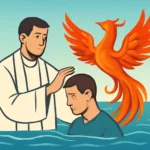
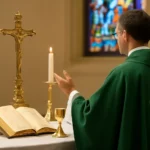
Baptism has historically served as a visible sign of entry into the Christian community. Churches disagree about who should be baptized, the appropriate method, and the meaning of the sacrament or ordinance. Even so, baptism commonly represents belonging to Christ and participation in his people. Communion, the Lord’s Supper, or the Eucharist likewise expresses fellowship with Christ and with other believers, though Christian traditions understand it in different ways.
Shared moral and spiritual commitments also help identify the universal church. Christians are called to worship God, love their neighbors, care for the vulnerable, pursue holiness, forgive others, and bear witness to the gospel. These goals can be lived out imperfectly, and the church has often failed to reflect them. The failures of Christians do not erase the ideal, but they do call for honesty, repentance, and correction.
The following features are commonly associated with belonging to the universal church:
Trust in Jesus Christ as Lord and Savior.
Connection to the Christian gospel of Christ’s death and resurrection.
Recognition of Christian Scripture as a foundational authority.
Participation in Christian worship and community in some form.
Growth in love, faith, repentance, and obedience, even when that growth is incomplete.
Spiritual unity with other believers that crosses cultural and institutional boundaries.
These points describe the broad center rather than every doctrine that Christians consider important. Some communities define the boundaries of Christian belief narrowly, while others use a broader definition. Questions about whether a particular group belongs within historic Christianity can involve major issues such as the identity of Christ, the resurrection, the Trinity, salvation, and the authority of Scripture.
Unity does not require complete agreement on every question. A church may have genuine unity while members disagree about baptism, spiritual gifts, church government, women in leadership, the timing of Christ’s return, or the relationship between faith and works. However, “universal church” does not mean that all religious beliefs are interchangeable. Its unity has a distinctly Christian center.
Why Christians believe the church is universal
The universal character of the church follows from the scope of the Christian message. Jesus commissioned his followers to make disciples among all nations, not only within one ethnic group or region. Christianity therefore understands itself as a faith intended for every people and culture, while allowing local communities to express that faith in language and customs suited to their context.
The New Testament repeatedly presents believers as members of one people despite differences in ethnicity, social position, gender, and geography. Passages such as 1 Corinthians 12 use the body metaphor to explain that one body contains many members. Ephesians 2 describes Christ as creating peace between divided groups, while Revelation 7 portrays people from every nation and language worshiping God.
These passages do not erase cultural identity. Universal Christianity does not require everyone to use one language, wear one style of clothing, sing the same music, or adopt the customs of a dominant culture. Instead, it claims that shared allegiance to Christ can create fellowship across real differences.
Historically, Christian communities have spread through migration, missionary work, translation, family life, and local leadership. As a result, the church has never been culturally uniform. Christianity has taken root in African, Asian, European, Middle Eastern, Latin American, Indigenous, and Pacific communities, among many others. Each setting has contributed its own prayers, music, theological questions, and ways of serving neighbors.
The universal church also includes Christians who are separated by geography or political borders. A believer may never meet most other Christians personally, but can still regard them as spiritual family. This understanding can encourage prayer for persecuted Christians, practical support for churches facing poverty or disaster, and humility when your own congregation’s customs seem normal or central.
Universal identity can also challenge nationalism. Christians may love their country and participate responsibly in civic life, but the church’s deepest loyalty is not meant to be defined by national power. A Christian from another country is not a spiritual outsider simply because that person speaks differently or has a different history. The church’s unity can provide a moral perspective that is larger than any nation.
Practical implication: Belonging to the universal church should expand your concern beyond your congregation. It invites you to pray for, learn from, and serve Christians whose cultures and circumstances differ from your own.
How denominations relate to the universal church
Denominations are organized Christian traditions with recognizable teachings, leadership, worship practices, and histories. Examples include Baptist, Lutheran, Methodist, Presbyterian, Anglican, Roman Catholic, Eastern Orthodox, Pentecostal, and many independent movements. Their differences can be substantial, but the existence of denominations does not necessarily disprove the idea of one universal church.
Some Christians see denominational diversity as a result of historical separation, human sin, or unresolved theological disputes. Others see it partly as a way different communities preserve convictions and serve people in different settings. Both perspectives recognize that division can cause real harm, especially when groups compete for power, misrepresent one another, or treat secondary issues as tests of Christian identity.
Christian traditions also disagree about what makes the church visibly one. Roman Catholic and Eastern Orthodox Christians place strong emphasis on historical continuity, bishops, sacraments, and church structures. Many Protestant traditions emphasize the proclamation of the gospel, faith in Christ, and the authority of Scripture, while differing among themselves about governance and sacraments.
These distinctions affect how each tradition defines the universal church. A Catholic understanding may connect the universal church closely with communion under the bishop of Rome. Eastern Orthodox teaching emphasizes the historic Orthodox communion. Many Protestants understand the universal church as the spiritual fellowship of all true believers, expressed through many churches that may not share one governing institution.
Because the term is used differently, it helps to ask what someone means when they say “the church.” They may mean:
The universal church: all believers united to Christ.
A local congregation: a specific community that gathers for worship and ministry.
A denomination or communion: a connected family of churches with shared structures and beliefs.
The institutional church: recognized leaders, offices, traditions, and systems of organization.
The invisible church: a theological term emphasizing believers known fully by God, including those whose genuine faith cannot be assessed perfectly by people.
The phrase “invisible church” overlaps with “universal church,” but the terms are not always exact synonyms. “Universal” emphasizes the church’s breadth across place and time. “Invisible” emphasizes that the full reality of the church is not completely identifiable through outward membership or institutional records. Some Christians use both terms; others prefer to avoid “invisible” because it can sound as if the church has no visible or organized form.
A balanced view recognizes that the universal church is spiritual but not imaginary. Christians express their shared life through real congregations, sacraments or ordinances, preaching, service, discipline, friendships, and public witness. At the same time, no human institution can perfectly measure the depth of every person’s faith or claim to represent every Christian everywhere.
What belonging to the universal church means for your faith
For an individual Christian, the universal church provides a larger sense of identity. Your faith is not dependent entirely on the size, reputation, or resources of your local congregation. You belong to a people that includes believers in many circumstances, including those who worship quietly, endure hardship, serve without recognition, or have gone before you.
This identity should not make local church involvement seem optional. Christianity is meant to be practiced with other people, not only held as a private belief. A local congregation gives you opportunities to worship with others, hear teaching, receive correction, use your gifts, share burdens, and take part in tangible acts of mercy.
If your local church is healthy, the universal church gives it perspective. It can learn from believers outside its tradition, recognize the gifts of other communities, and avoid assuming that its own preferences define Christianity. If your local church is small or struggling, connection to the universal church can remind you that Christ’s work is not limited to what you can see nearby.
The idea also affects how you evaluate other Christians. You do not need to agree with every doctrine or practice in another tradition, but you should distinguish between essential Christian convictions and matters of legitimate disagreement. Careful listening is more faithful than assuming that unfamiliar worship or terminology signals a lack of genuine faith.
At the same time, universal unity does not require you to ignore serious error or abuse. A church’s claim to represent Christ should be tested by its teaching, its treatment of people, its use of authority, and its willingness to repent. Belonging to the universal church is not a reason to remain in a dangerous congregation or submit to leaders who misuse spiritual power.
You can express your connection to the universal church in practical ways:
Participate faithfully in a local congregation where you can worship, grow, and serve in a healthy community.
Learn about Christians from other traditions and cultures without assuming your own customs are the only faithful ones.
Pray for believers worldwide, especially Christians facing persecution, displacement, poverty, or disaster.
Support trustworthy ministries and churches that serve people beyond your immediate community.
Hold unity and discernment together by honoring fellow Christians while taking doctrine, character, and safety seriously.
When Christians say they belong to the universal church, they are making a claim about shared belonging in Christ. They are not saying that every church is identical or that every disagreement is unimportant. They are saying that the people of God are larger than one congregation, institution, culture, or generation.
That understanding leaves room for local commitment and worldwide fellowship. You can worship in one congregation while caring about the whole church. You can value your denomination without treating it as the boundary of Christ’s people. And you can seek unity with Christians who differ from you while remaining responsible for truth, integrity, and love in the community where you actually live.
Frequently asked questions
Is the universal church the same as the Catholic Church?
The answer depends on how “Catholic Church” is being used. In historic Christian language, “catholic” means universal, so the phrase can describe the worldwide church. In modern conversation, “Catholic Church” usually means the Roman Catholic Church, a particular worldwide communion. The universal church, in the broader theological sense, includes all genuine believers in Christ, not only Roman Catholics.
Does the universal church have one leader on earth?
Christians answer this differently. Roman Catholics recognize the pope as the universal church’s chief earthly pastor, while Eastern Orthodox and Protestant traditions reject that specific authority. Many Christians understand Christ alone as the church’s supreme head and believe earthly leaders serve particular churches or communions. No single human leader is accepted as universal authority by all Christian traditions.
Can someone belong to the universal church without attending a local church?
Christians who are isolated by illness, persecution, imprisonment, geography, or other serious circumstances may still belong to Christ and his universal church. However, ordinary Christian practice treats local fellowship as important for worship, teaching, mutual care, and service. A person who can participate in a healthy congregation should not treat worldwide spiritual belonging as a substitute for meaningful Christian community.
Does the universal church include every denomination?
Not automatically. The term usually refers to believers and churches centered on historic Christian faith in Jesus Christ, not every group that uses Christian language. Traditions disagree about where boundaries fall, especially regarding doctrines about Christ, salvation, Scripture, and the Trinity. Denominational differences alone do not necessarily exclude a group from the universal church, but fundamental theological differences may be significant.







Leave a Reply