The King James Version was first published in 1611, roughly seven years after King James I authorized a new English Bible translation in 1604. Its first edition was printed in London by Robert Barker, the king’s printer.
The 1611 publication was not the final form most modern readers recognize. The text went through corrections, new editions, and spelling changes over the following centuries. The widely used standardized form is closely associated with the 1769 Oxford revision, although the translation itself originated in the 1611 edition.
Why the King James Version was commissioned in 1604
King James I approved the new translation project soon after becoming king of England. The decision followed religious and political tensions within the Church of England, including concerns raised by Puritan leaders about existing English Bible translations and church practices.
A meeting at Hampton Court Palace in January 1604 gave the project public momentum. Puritan minister John Rainolds proposed a new translation that would address perceived weaknesses in earlier versions. James supported the idea, partly because he wanted an English Bible that would be suitable for public worship and acceptable across competing religious groups.
The project was not intended to create an entirely new biblical tradition from nothing. The translators used earlier English Bibles, especially the Bishops’ Bible, which had been authorized for use in Church of England services. They also consulted the Geneva Bible, the Great Bible, and earlier translations associated with William Tyndale and other scholars.
The king’s instructions emphasized consistency, accuracy, and continuity with established church language. They also limited the use of marginal notes that might challenge the authority of monarchs or church leaders. These guidelines shaped the tone and presentation of the eventual version.
Important date distinction: 1604 marks the authorization of the translation project, while 1611 marks the first publication of the King James Version.
How the translation was produced before 1611
The work was carried out by committees of scholars rather than by one translator. Historians commonly refer to 47 translators as the principal participants, although the original plan involved a larger number of men and the exact count can vary depending on how assistants and contributors are included.
These scholars were divided into groups working in Westminster, Oxford, and Cambridge. Each group received portions of the Bible. The translators worked from Hebrew for most of the Old Testament, Aramaic for certain passages, and Greek for the New Testament. They also examined earlier translations and the scholarly resources available in their period.
The committee system created several layers of review. A group translated its assigned passage, members discussed difficult wording, and other scholars reviewed the work. The translation was then examined more broadly before it was prepared for publication. This process helped produce a consistent style while allowing experts to debate grammar, vocabulary, and interpretation.
The translators also followed a set of rules intended to preserve familiar church language. For example, they generally retained traditional ecclesiastical terms instead of replacing them with newer expressions. This helped the finished Bible sound recognizable to congregations already accustomed to earlier English versions.
The project required more than simply replacing words from one language with words from another. Biblical Hebrew and Greek often allow several reasonable interpretations, and sentence structures do not always transfer directly into English. The translators had to decide how to represent idioms, emphasis, poetic parallelism, technical terms, and distinctions in grammar.
Which earlier English Bibles influenced the translation
The King James Version belongs to a long sequence of English Bible translations. William Tyndale’s work had a particularly strong influence on the wording and rhythm of English biblical prose. Later translations, including the Matthew Bible, the Great Bible, and the Bishops’ Bible, also contributed language and editorial traditions.
The Geneva Bible was widely read among English-speaking Protestants, including many people who later settled in North America. Although the King James translators did not simply copy it, they consulted it and sometimes retained language that had already become familiar to readers.
The translators also relied on the Hebrew and Greek texts available to them. Their New Testament work was based largely on editions in the textual tradition later called the Textus Receptus. Their Old Testament work drew on the Masoretic Hebrew tradition, along with ancient-language resources and earlier scholarly study.
Because the King James Version grew out of earlier scholarship, its publication should not be described as the moment when the Bible first appeared in English. English biblical translation had already existed for centuries. The 1611 edition became especially influential because of its institutional support, literary style, and long use in churches and homes.
What was published in the first 1611 edition
The first edition appeared in 1611 under a lengthy title describing it as a new translation made from the original tongues and appointed to be read in churches. Modern readers usually call it the King James Version, but that name became common later. In its own period, it was often identified as the Authorized Version or the king’s Bible.
The first edition included the books of the Protestant Bible as well as the Apocrypha, placed between the Old and New Testaments. It also contained preliminary material, including a dedication to King James and a translators’ address explaining aspects of the project. These features were part of the original published presentation.
Some copies of the 1611 Bible contain differences that have become famous among collectors and historians. Two early printings are often identified by the wording in Ruth 3:15: one reads that a person “went into the city,” while another reads that a person “went into her city.” These are commonly called the Great He Bible and the Great She Bible.
Another early variation concerns Matthew 26:36. One printing contains the wording traditionally called the Great Bible or “Great She” issue, while another has a different form associated with the “Great He” designation. The labels can be confusing because they refer to small wording differences and bibliographic history, not to different translations.
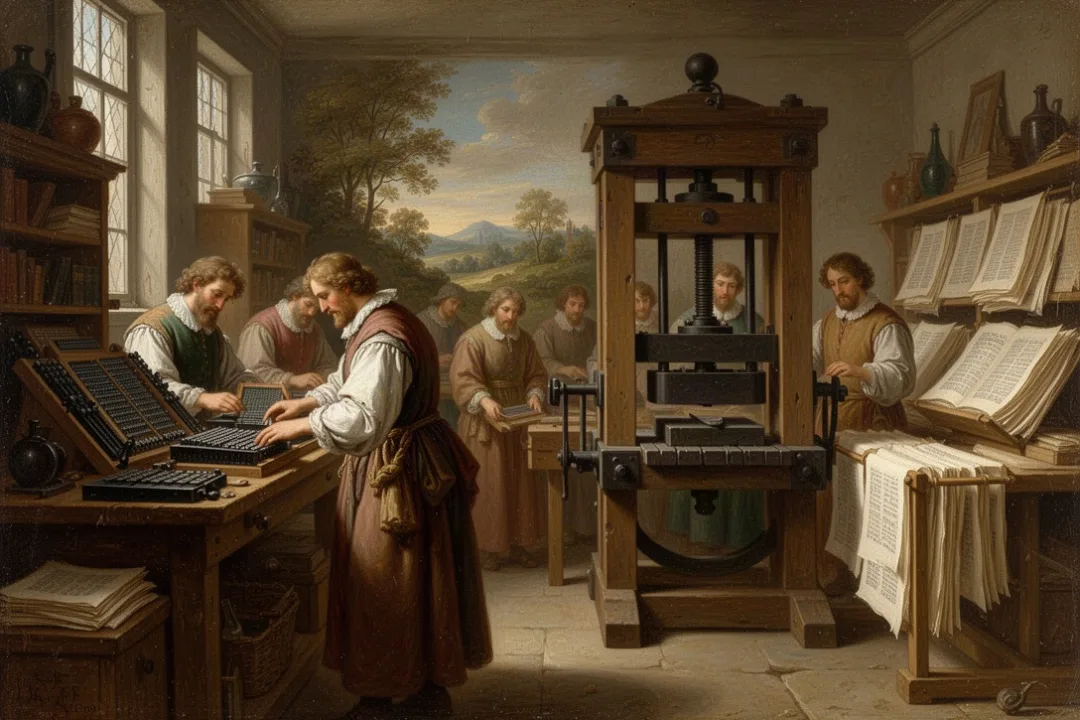
Early copies also contained typographical mistakes and inconsistencies in spelling, punctuation, capitalization, and page layout. Printing in the seventeenth century was done by hand-set type, so errors could occur during composition or correction. Printers issued corrected impressions and later editions as these problems were discovered.
1611: The first edition of the new English translation was published.
1612: An early revised printing appeared with some corrections.
1613: A major second edition helped replace and correct elements of the first printing.
Later centuries: Spelling, punctuation, type, and occasional wording were adjusted in successive editions.
Do not treat every 1611 KJV reproduction as identical: Modern editions may preserve the translation’s traditional wording while using later corrected text, updated spelling, or different formatting.
How the King James Version changed after its first publication
The 1611 publication was the starting point of the King James Version’s publishing history, not the end of it. Printers issued additional editions to correct errors and improve consistency. Some changes were accidental, while others reflected deliberate editorial decisions about spelling, punctuation, typefaces, and presentation.
The KJV also developed as English changed. Early modern English was still recognizable to later readers, but its spelling conventions were not fixed in the way they are today. Words could appear with different letters, capitalization, or endings without necessarily representing a change in meaning.
During the seventeenth and eighteenth centuries, editors made the text easier for contemporary readers to print and use. They standardized spelling, adjusted punctuation, corrected printing errors, and sometimes altered words that had become unfamiliar or obsolete. These revisions did not produce a single uninterrupted version that remained exactly identical to 1611.
The most significant edition for modern readers is often associated with Benjamin Blayney’s 1769 revision, published by the Clarendon Press at Oxford. Blayney did not create a new translation. He carefully edited an established text, making extensive adjustments to spelling, punctuation, capitalization, and some readings.
Many KJV editions sold today are based primarily on the 1769 standardized form rather than on the original 1611 printing. They may also reflect later editorial choices, modern page design, and publisher-specific decisions about headings, paragraphing, cross-references, and footnotes.
Why 1611 and 1769 are both mentioned
The answer to “When was the King James Version published?” is 1611 because that is when the translation first appeared in print. The year 1769 matters because the version most readers recognize today generally descends from the later standardized text.
This distinction is similar to the difference between a work’s original publication date and the date of a later revised edition. Calling the KJV a 1611 translation is accurate, but claiming that every modern KJV page reproduces the first printing exactly is not.
The two dates answer different questions:
When did the translation first appear? In 1611.
When was a major standardized form prepared? In 1769.
Why do modern copies differ from old scans? Later editors corrected printing errors and updated presentation.
Was 1769 a completely new translation? No. It was a major editorial revision of the established King James text.
Why the 1611 King James Version became so influential
The King James Version gained authority through its connection with the English monarchy and the Church of England. Its use in public worship gave it an institutional audience, while the growth of English-speaking Protestant communities carried it into homes, schools, and religious writing.
Its influence also came from its distinctive literary style. The translators used balanced clauses, repetition, parallel structures, and a formal vocabulary that worked well when read aloud. Biblical poetry, narrative, prophecy, and letters each received a carefully shaped English voice, even though the same broad translation principles applied throughout.
The KJV became especially important in English-speaking religious culture during the seventeenth, eighteenth, and nineteenth centuries. Writers, preachers, hymn authors, and political speakers drew on its language. Familiar phrases from the translation entered ordinary English, sometimes separated from their original biblical context.
Its popularity did not mean that it was accepted everywhere without debate. Roman Catholic communities used Catholic English translations, and some Protestant groups preferred the Geneva Bible or later versions. Questions also arose about the relationship between the translation and the authority claimed by the English crown.
The KJV’s influence expanded beyond England. It was brought to English-speaking settlements in North America and later circulated throughout the wider English-speaking world. Missionaries, schools, publishers, and churches helped make it one of the most recognizable English Bible translations.
Its endurance is therefore connected to several factors at once:
Royal sponsorship gave the project public status.
Church use placed the text in regular worship and communal reading.
Earlier translations supplied familiar language and established biblical phrasing.
Literary qualities made many passages memorable when heard aloud.
Printing and education helped distribute the text across generations.
How to identify a genuine 1611 edition or modern KJV
A Bible described as a 1611 King James Version may be an original early printing, a facsimile, or a modern edition that preserves the historic translation. The description alone does not prove that it is an original seventeenth-century book.
Original copies are identifiable through bibliographic details such as the title page, printer information, format, paper, type, binding, and the exact arrangement of pages. Condition and provenance also matter. A rare-book specialist or experienced bookseller can help distinguish an original printing from a later reproduction.
Modern readers who want the original appearance can find facsimiles and diplomatic reproductions. These may reproduce the old typefaces, spelling, page layout, and preliminary material. A standard modern KJV, by contrast, usually uses later standardized spelling and a more accessible design.
When comparing an early scan with a current KJV, look for differences in more than vocabulary. You may notice:
Long s characters that resemble the letter “f” in older type.
Different spelling, capitalization, and punctuation.
Changes in paragraph breaks and verse presentation.
Corrected typographical errors from early printings.
Differences in the inclusion, placement, or formatting of the Apocrypha.
The date on a title page can also be misleading if a publisher reproduces an older title page inside a modern edition. Check the publication information, copyright page, editorial notes, and description from the bookseller. A scan of the first edition and a modern Bible using the KJV text serve different purposes, and both can be useful when their relationship is clearly identified.
The central historical answer remains straightforward: the King James Version was first published in 1611. Its later editions, especially the standardized form associated with 1769, explain why the KJV encountered today may look and occasionally read differently from the original printed edition.
Frequently asked questions
Who ordered the King James Bible?
King James I authorized the project in 1604 after discussions about the need for a new English Bible. Scholars from the Church of England and related academic institutions carried out the translation. The king supported and sponsored the work, but he did not translate the Bible himself. Multiple committees handled the translation, review, and editorial comparison.
Was the King James Version the first English Bible?
No. Several English Bible translations existed before 1611, including versions associated with William Tyndale, the Great Bible, the Bishops’ Bible, and the Geneva Bible. The King James Version drew on this earlier tradition while producing a new translation intended for church use. Its later prominence made it seem foundational, but English Bible translation began centuries earlier.
Is the 1769 King James Version different from the 1611 version?
The 1769 form is a substantial editorial revision of the same translation rather than a wholly new Bible. Editors standardized spelling, punctuation, capitalization, typography, and some readings. Modern KJV editions usually follow the later standardized tradition. The original 1611 edition has an older appearance and includes printing variations that are normally absent from current copies.
Did the original King James Bible include the Apocrypha?
Yes. The first 1611 edition placed the Apocrypha between the Old and New Testaments. Many modern Protestant KJV editions omit those books, while some historical reproductions and editions designed to reflect the early format include them. Checking the contents page or publisher’s description will show whether a particular copy contains this section.









Leave a Reply