If you have ever wondered which King James wrote the Bible, the short answer is that no King James personally wrote it. The name refers to James I of England, who authorized a new English translation of the Bible in the early 1600s.
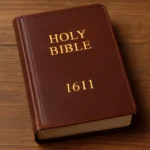
James was also James VI of Scotland. He became king of England in 1603, after already ruling Scotland. The translation associated with him is commonly called the King James Version, or KJV, and it was first published in 1611.
The Bible itself is a collection of writings produced over many centuries by numerous human authors in different historical settings. King James neither composed those books nor translated the text himself. His role was to support and approve a major English translation project.
The king connected with the translation was James VI of Scotland and James I of England. These are not two different men. He used the Scottish numbering when he was king of Scotland and the English numbering after he inherited the English throne.
James became king of Scotland as an infant in 1567. In 1603, he succeeded Elizabeth I as king of England and Ireland. His reign brought the crowns of Scotland and England under one monarch, although the two countries remained separate kingdoms with their own laws and institutions.
Because the translation was produced for English-speaking subjects under his rule, it became associated with his English royal title: King James Version. In Britain, it is also called the Authorized Version, although the surviving historical evidence does not show a single formal authorization document using that exact title in the way people sometimes assume.
The central distinction: King James commissioned and supported the translation, but scholars, not the king, translated the biblical books.
Why did King James request a new English Bible?
When James became king of England, religious disagreements were dividing the Church of England. Some Puritan leaders objected to parts of the church’s organization and worship, while bishops and other officials defended the existing system. These disputes surfaced at the Hampton Court Conference in 1604.
The conference was called to discuss religious concerns. During the meeting, John Rainolds, a Puritan scholar and president of Corpus Christi College, Oxford, reportedly proposed a new English translation. Several existing translations were already in circulation, but different groups preferred different editions and sometimes criticized their wording or notes.
James supported the idea of a new translation for several reasons. He wanted a version that could be used across the English church, and he disliked the strongly partisan notes found in some earlier editions. He also wanted the project to reflect the Church of England’s preferred structure and terminology.
The king’s personal religious views shaped the project in limited but significant ways. For example, he favored wording that preserved the authority of bishops, and the translators were instructed to use terms consistent with the church’s established practices. That does not mean James dictated the translation line by line. The detailed work belonged to the scholars assigned to the project.
Who actually translated the King James Version?
The translation was completed by teams of English scholars, often described as 47 translators, working in groups based in Westminster, Oxford, and Cambridge. The project involved learned clergy and academics with expertise in biblical languages, theology, and earlier English translations.
These translators worked primarily with the Hebrew and Aramaic texts of the Old Testament and the Greek text of the New Testament. They also consulted Latin, Greek, and earlier English sources. The result was not a fresh composition by one person but a carefully reviewed group translation.
The translators were organized into committees, sometimes called companies. Each group worked on assigned portions of Scripture. Their drafts were reviewed and compared, and the project included further stages of revision so that differences between the committees could be considered.
The exact membership and working process were not documented in every detail, so modern descriptions sometimes differ about how many individuals participated at each stage. The important point is that many translators and revisers contributed to the final wording, rather than King James or a single royal editor.
Several translators were known for their language skills and scholarship. Lancelot Andrewes, John Overall, Miles Smith, and John Bois are among the figures commonly associated with the project. They were not the only contributors, and the published Bible presented the work as a collective effort rather than naming a single author.
What sources did the translators use?
The King James translators did not have access to the full range of ancient biblical manuscripts available to modern translators. They used the Hebrew textual tradition available to them for the Old Testament and printed Greek editions available in the early seventeenth century for the New Testament.
For the New Testament, the translators relied heavily on the Greek text commonly known as the Textus Receptus. That printed tradition was based on a relatively limited selection of Greek manuscripts available during the Renaissance. Modern Bible translations often use a larger and more diverse body of manuscripts discovered, studied, or published later.
For the Old Testament, the translators worked from the Hebrew tradition that became associated with the Masoretic Text, while also consulting other linguistic and historical resources. They compared earlier translations and drew on the work of scholars who had studied Hebrew, Greek, Latin, Syriac, and other languages.
The KJV was also influenced by earlier English Bibles. These included William Tyndale’s New Testament and portions of his Old Testament work, the Coverdale Bible, the Great Bible, the Geneva Bible, and the Bishops’ Bible. The Bishops’ Bible served as the main starting point for revision, although the translators changed its wording wherever they believed another rendering was better.
This history explains why the KJV often sounds familiar to readers who have encountered older English Bible translations. Much of its phrasing reflects a long development of English biblical language rather than a style invented from scratch in 1611.
Was the King James Bible published in 1611?
Yes. The first edition was published in 1611, although the translation process had begun several years earlier. The first edition was a large folio volume intended primarily for use in churches, not a small personal Bible of the type many people carry today.
The title page described the work as a new translation made from the original tongues and compared with earlier translations. This wording emphasized that the project was a revision and translation based on existing scholarship, not a Bible written by the king.
The first edition contained features that differ from many modern KJV copies. It included the Apocrypha, a collection of books placed between the Old and New Testaments in many early Protestant English Bibles. It also included extensive marginal notes, cross-references, and introductory material.
Later editions corrected printing errors and changed some spelling and punctuation. The version commonly sold today is therefore not a perfect visual reproduction of the first 1611 printing. Its text reflects later standardized editions, especially revisions that helped establish the form familiar to modern readers.
Did King James personally translate any part of the Bible?
There is no good historical basis for saying that King James personally translated biblical books for the KJV. He was educated and interested in theology, religious debate, and biblical interpretation, but he was not one of the translation committees.
James wrote and sponsored other religious works, including a defense of the monarchy’s authority in church government. He also participated in discussions about doctrine and translation policy. Those activities show intellectual involvement, but they do not make him the Bible’s translator.
His role was closer to that of a royal patron and approving authority. He helped launch the project, established expectations, and supported the work politically. The translators made the detailed decisions about grammar, vocabulary, textual readings, and style.
That distinction matters because “wrote the Bible” can mean several different things. It might refer to the original biblical authors, the people who translated the text into English, or the monarch whose name appears in the title. These are separate roles:
Biblical authors: the human writers whose books make up the Old and New Testaments.
Ancient copyists and editors: people who preserved and transmitted the biblical texts through handwritten manuscripts.
English translators: scholars who rendered the biblical languages into English.
King James: the monarch who authorized and supported the translation project.
Printers and publishers: workers who prepared, printed, and distributed the finished editions.
How is the King James Version different from the original Bible?
The KJV is an English translation, not the original Bible in its ancient languages. Most of the Old Testament was written in Hebrew, with some passages in Aramaic. The New Testament was written in Greek. English readers encounter those writings through translation.
The original biblical books were also produced at different times and in different settings. The Pentateuch, historical books, poetry, prophetic writings, Gospels, letters, and other works have distinct genres and historical backgrounds. The KJV brings them together in one traditional English style, but that style should not be mistaken for the language or writing environment of the ancient authors.
Like every translation, the KJV includes choices about meaning. A Hebrew or Greek word may have several possible English equivalents, and sentence structure can require interpretation. The translators sought to preserve the meaning and dignity of the source texts, but their work reflects the vocabulary and grammar of early seventeenth-century English.
Some KJV words have changed meaning since 1611. Terms such as “conversation,” “prevent,” “charity,” and “suffer” can carry different meanings in modern American English than they did in older English usage. Readers can misunderstand a passage if they assume every word has its current meaning.
The KJV also uses a style that can sound formal or unfamiliar. Its use of “thou,” “thee,” and verb endings such as “-eth” follows historical English conventions. Those features do not make it a different kind of Bible; they identify the period and tradition of the translation.
Why is the King James Version still widely read?
The KJV has had a major influence on English-speaking Christianity, literature, public speech, and popular culture. Its cadences and expressions became familiar through church services, memorization, hymns, literature, and family reading. Many readers value its traditional wording and distinctive literary rhythm.
Its influence also comes from its long use in English-speaking churches. For generations, people heard the KJV read aloud and learned its passages by heart. Familiarity can make the wording meaningful even when some expressions are no longer natural in everyday speech.
Some readers choose the KJV because they belong to a church that uses it regularly. Others prefer it for historical reasons, literary beauty, or continuity with relatives and earlier generations. Still others compare it with newer translations to understand difficult passages more clearly.
At the same time, the KJV was not the first English Bible, and it was not the only important English translation after 1611. English Bible translation continued through later centuries. Modern translations may use more recently studied manuscripts and contemporary English, which can help readers understand passages whose older wording is difficult.
Common mistakes about King James and the Bible
Questions about the KJV often contain one of several understandable misconceptions. Keeping the historical roles separate makes the answer much clearer.
Mistake: King James wrote the Bible. The Bible’s books existed long before James’s reign. He authorized an English translation.
Mistake: King James translated the text alone. Committees of scholars translated and revised the work.
Mistake: 1611 was the year the Bible was first written. It was the publication year of the first edition of the King James Version.
Mistake: the KJV was the first English Bible. Several English translations existed before it, including the Tyndale, Geneva, and Bishops’ Bibles.
Mistake: every KJV copy is identical to the first edition. Later printings corrected errors and standardized spelling, punctuation, and wording.
Mistake: “authorized” means James personally approved every sentence. His royal support launched the project, while the translators handled the textual work.
Mistake: the KJV and the Bible are the same thing. The KJV is one English translation of the Bible among many.
How to identify what someone means by “the King James Bible”
When someone says “the King James Bible,” they usually mean the King James Version of the Bible, not a Bible written by James. The abbreviation KJV is common in the United States, while AV, meaning Authorized Version, is also used, especially in British contexts.
It can help to ask whether the person means the first 1611 edition or the standardized KJV text found in most modern printings. In ordinary conversation, they almost always mean the familiar later form, not an original folio with early spelling and printing conventions.
You can also distinguish between the translation’s history and the Bible’s broader history. The KJV has a specific origin in seventeenth-century England, while the biblical books, manuscripts, canons, and earlier translations have much older and more complicated histories.
If you are studying a passage, check the edition you are using and pay attention to headings, footnotes, and marginal references. These features can vary between printings. A modernized KJV may preserve traditional wording while updating spelling and punctuation, but it is still useful to confirm exactly which edition is in your hands.
What the simplest accurate answer sounds like
A concise answer is: James I of England, who was also James VI of Scotland, did not write the Bible. He commissioned the English translation published in 1611, now known as the King James Version.
A fuller answer adds that the translation was produced by teams of English scholars who worked from Hebrew, Aramaic, and Greek texts and compared earlier English versions. The project reflected the religious and political setting of James’s reign, but the king was a patron and sponsor rather than an author or translator.
That wording answers both parts of the question: which King James and what he actually did. The man was James I of England, also James VI of Scotland; his contribution was commissioning and supporting the translation, not writing the biblical books.
How to read the King James Version with historical context
If you read the KJV, treat it as a historically important translation shaped by early modern English. Its language can communicate the biblical message powerfully, but unfamiliar words and sentence structures sometimes require explanation.
A practical approach is to read the passage in context, check the meaning of older terms, and compare a difficult verse with a reputable modern translation. Comparison does not require abandoning the KJV. It can show where a traditional phrase represents a broader range of meaning in Hebrew or Greek.
Study Bibles, Bible dictionaries, and scholarly commentaries can also explain cultural references, literary forms, and manuscript questions. The best resource depends on your purpose: devotional reading, church use, literary study, historical research, or comparison of translations.
For a precise one-sentence answer: James I commissioned the King James Version, but teams of translators produced it, and the Bible’s original books were written centuries before his reign.
Frequently asked questions
Was King James a biblical author?
No. King James was not one of the human authors of the biblical books, and he did not translate the King James Version himself. He was a monarch who supported and authorized the English translation project. The Bible’s books were written in much earlier historical periods by numerous authors, while the KJV was produced by scholarly committees and published in 1611.
Why is the Bible called the King James Bible?
It is named for James I of England, also known as James VI of Scotland. The name identifies the king who commissioned and supported the translation. It does not claim that he wrote the biblical books. The full name, King James Version, refers to the English version associated with his reign.
Was the King James Version the first English Bible?
No. English translations existed before 1611, including translations connected with William Tyndale, the Geneva Bible, and the Bishops’ Bible. The King James translators consulted these earlier works, especially the Bishops’ Bible, while revising the language and comparing the text with Hebrew and Greek sources available at the time.
Is the 1611 King James Bible the same as modern KJV copies?
Not exactly. Later editions corrected printing mistakes and standardized spelling, punctuation, and some wording. Modern copies usually preserve the traditional KJV translation but do not reproduce every feature of the first 1611 printing. They may also differ in notes, cross-references, formatting, and whether or how the Apocrypha is included.







Leave a Reply