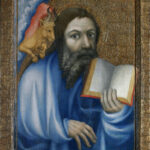
If you have ever wondered who wrote the Gospel of Luke, or why the New Testament names Luke as one of Paul’s companions, the short answer is this: Luke was an early Christian associated with the apostle Paul and traditionally recognized as the author of the Gospel of Luke and the Acts of the Apostles.
Luke was not one of the twelve apostles, and the New Testament gives us only a few direct details about his life. Most of what Christians know about him comes from brief references in Paul’s letters, the style and content of Luke-Acts, and early Christian tradition. That evidence presents him as a careful writer, a traveling coworker, and a person deeply concerned with how the good news about Jesus reached people from many backgrounds.
Paul refers to a man named Luke as a beloved physician in Colossians 4:14. The letter also mentions Luke alongside other coworkers, which places him within Paul’s circle of ministry. This is the clearest biblical description of Luke’s occupation.
Luke appears again in Philemon 24, where Paul lists him among his fellow workers. Near the end of Paul’s life, 2 Timothy 4:11 says that Luke is the only companion still with him at that point. These references suggest a person who remained connected to Paul over time, including during difficult periods.
The New Testament does not explain where Luke was born, where he practiced medicine, or when he became a Christian. Later traditions sometimes describe him as a Gentile from Antioch, but the Bible does not directly establish every detail of that account. It is best to distinguish between what Scripture says and what later Christian writers inferred or preserved.
The most secure facts: Luke was a physician, a coworker of Paul, and a Christian remembered by name in several Pauline letters. The traditional connection between Luke and the two-volume work of Luke-Acts is ancient, but the Gospel itself does not name its author inside the text.
Luke was not one of Jesus’ twelve apostles
Luke’s name does not appear among the twelve apostles chosen by Jesus. He was also not one of the most prominent eyewitnesses in the Gospel accounts, such as Peter, John, or Mary Magdalene. That distinction matters because Luke presents himself as someone who investigated reports handed down by people connected to the events.
At the beginning of his Gospel, the author explains that many accounts already circulated about Jesus. He says that he examined the available testimony and arranged an orderly account for a reader named Theophilus. Rather than reproducing that wording as a quotation, the basic point is that the author wanted to provide a reliable and coherent presentation based on earlier witnesses and sources.
Luke therefore should not be described as an apostle who personally followed Jesus throughout his earthly ministry. A more accurate description is a later Christian writer and missionary coworker who gathered testimony and wrote for the benefit of a wider audience.
Luke and the authorship of Luke-Acts
Christian tradition identifies Luke as the author of two New Testament books: the Gospel according to Luke and Acts. The books form a connected two-part work. Luke tells the story of Jesus from his birth through his death, resurrection, and ascension, while Acts continues with the growth of the Christian movement through the work of the apostles and the Holy Spirit.
Neither book names its author directly. The titles “according to Luke” were attached to the Gospels in the early church, and early Christian writers associated the third Gospel with the Luke mentioned by Paul. Many Christian readers accept this traditional attribution. Modern scholars commonly discuss the evidence more cautiously, often referring to the writer as the author of Luke-Acts while acknowledging the longstanding identification with Luke.
Several features make the traditional identification plausible to many readers. The author shows interest in travel, geography, public events, healing, and medical conditions. The work also contains sections in Acts that shift from “they” to “we,” suggesting that the writer may have participated in some of Paul’s journeys or used a source written by a traveling companion.
Those “we” passages do not prove the author’s identity by themselves. A writer could have used a travel diary, adapted an eyewitness source, or adopted a narrative style for another reason. The evidence is meaningful, but it should not be presented as more conclusive than it is.
What Luke-Acts says about Luke’s writing style
Luke-Acts is longer than any other single New Testament contribution when the two volumes are considered together. The author writes in polished Greek and uses a broad narrative structure, linking local events to the larger story of God’s work through Jesus and the church.
The Gospel begins with an account of Jesus’ birth and childhood that includes stories not found in Mark and only partly paralleled elsewhere. It then follows Jesus through Galilee and toward Jerusalem. Acts begins after Jesus’ resurrection and traces the message from Jerusalem outward through Judea, Samaria, Asia Minor, Greece, and finally Rome.
Luke does not write like a modern newspaper reporter. He selects, arranges, and emphasizes material to communicate theological meaning. His Gospel includes historical settings and named rulers, but it is also a carefully shaped account of who Jesus is and what his mission means.
The author addresses Theophilus, whose name can refer to a particular person and can also be understood as “friend of God.” The text does not tell us enough to determine with certainty whether Theophilus was a government official, a wealthy patron, a recent convert, or another reader known to the author. The opening does show that Luke expected his work to strengthen the reader’s confidence in the Christian message.
Luke’s emphasis on Jesus’ welcome to outsiders
One of Luke’s strongest themes is the breadth of Jesus’ mission. Luke repeatedly shows Jesus welcoming people who were overlooked, distrusted, or excluded by parts of society. These include the poor, Samaritans, sinners, women, foreigners, people with illnesses, and others who occupied uncertain social positions.
Luke does not present compassion as a vague virtue. Jesus’ welcome leads to specific actions: healing, forgiveness, shared meals, restored dignity, and a renewed place within the community. The famous parables of the Good Samaritan and the Prodigal Son appear in Luke, as does the account of Zacchaeus, a wealthy tax collector who responds to Jesus by changing how he handles money.
The Gospel also gives unusual attention to women. Mary, Elizabeth, Anna, the women who support Jesus’ ministry, and the women who witness the crucifixion and empty tomb all have significant roles. Luke does not treat them as background figures; their faithfulness and testimony contribute to the movement of the story.
Luke’s concern for the poor is equally prominent. In the song traditionally called the Magnificat, Mary praises God for lifting the humble and challenging human pride. Jesus’ teaching addresses wealth, generosity, debt, possessions, and responsibility toward people in need. The message is not that every poor person is morally superior or every wealthy person is automatically condemned. It is a warning against self-sufficiency and indifference.
Outsiders: Samaritans, Gentiles, tax collectors, and people regarded as morally unclean receive serious attention.
Women: Women appear as disciples, supporters, witnesses, and recipients of God’s favor.
The poor: Luke connects discipleship with generosity and concern for vulnerable people.
Sinners: Repentance is presented as a path to restoration rather than a reason to avoid people permanently.
People with illness or disability: Jesus’ healing restores both physical well-being and social belonging.
Luke highlights prayer and the Holy Spirit
Luke frequently shows Jesus praying at major moments in his ministry. He prays at his baptism, before choosing the twelve, before Peter’s confession, at the transfiguration, and during the hours surrounding his death. These scenes present prayer as central to Jesus’ relationship with the Father, not as a private detail with little relevance to the story.
The Gospel also contains several teachings about persistence and trust in prayer. Luke includes the Lord’s Prayer, the parable of the persistent friend, and the parable of the persistent widow. The exact lesson differs in each setting, but together they encourage faithful dependence on God rather than prayer as a technique for controlling outcomes.
The Holy Spirit is another major theme. The Spirit’s work appears in the announcements surrounding Jesus’ birth, in Jesus’ baptism and ministry, and in the commissioning of his followers. Acts continues this emphasis as the Spirit empowers preaching, guides decisions, crosses ethnic boundaries, and gives courage during opposition.
This emphasis helps explain the connection between the two books. Luke does not portray Christianity as a movement that depends only on the memory or determination of its human leaders. The story advances because God acts through the Spirit in Jesus’ followers.
Luke’s account of Jesus’ life and ministry
Luke’s Gospel presents Jesus as the promised Savior whose work fulfills Israel’s Scriptures and reaches beyond Israel to the nations. The birth narratives place Jesus within Israel’s story, while later episodes show the message moving toward Gentiles and the wider world.
Several passages distinctive to Luke shape this portrait:
The announcements to Mary and Zechariah: These scenes connect Jesus’ birth with God’s promises and show the importance of John the Baptist.
The birth of Jesus and the shepherds: Luke places humble people near the center of the birth narrative.
Jesus at Nazareth: Jesus describes a mission involving good news for the poor, release, healing, and God’s favor; see Luke 4:16-30.
The Good Samaritan: The story challenges narrow definitions of neighbor and makes compassionate action central.
The Prodigal Son: The parable explores repentance, mercy, resentment, and the joy of restoration.
Zacchaeus: Jesus’ welcome produces a practical response involving money and restitution.
The criminal who turns to Jesus: Luke emphasizes mercy even during the crucifixion; see Luke 23:39-43.
The road to Emmaus: The risen Jesus helps his followers understand his death and resurrection within the larger scriptural story.
Luke’s presentation of the crucifixion also emphasizes Jesus’ innocence, mercy, and trust in God. The resurrection account leads naturally into Acts, where the disciples become witnesses and the message begins to spread.
How Acts completes Luke’s story
Acts is not simply a collection of biographies about Peter and Paul. It is the second volume of Luke’s larger account of how Jesus’ mission continues through the Holy Spirit and the church. The opening chapters focus especially on Jerusalem, the apostles, the coming of the Spirit at Pentecost, and the community’s early life.
Peter receives considerable attention in the first half of Acts. The story then broadens through the ministry of Stephen, Philip, Barnabas, Paul, and many other believers. A major turning point comes when Gentiles are welcomed into the Christian community without first becoming Jews. Acts 10-15 explores this transition through visions, conversions, debates, and the gathering commonly called the Jerusalem Council.
Paul becomes the central human figure in the later chapters, but Luke presents his work as part of a larger movement. The Gospel travels through preaching, hospitality, debate, suffering, miracles, and ordinary acts of service. The book ends with Paul in Rome, teaching and announcing the kingdom of God. It does not provide a full account of Paul’s later life or death.
The ending leaves the movement open-ended. The message has reached the imperial capital, but the mission is not portrayed as finished. Readers are left with the sense that the witness begun in Jerusalem continues through the church in every place.
What Luke may have contributed as Paul’s companion
If the traditional identification is correct, Luke would have contributed more than writing skill to Paul’s ministry. As a physician, he may have cared for sick coworkers and travelers. As a companion, he may have observed communities, journeys, trials, and debates that later informed Acts.
Paul’s references show that Luke belonged to a network of coworkers rather than operating as an isolated author. Early Christian mission depended on many people who traveled, hosted congregations, carried letters, taught converts, supported leaders, and endured danger. Luke’s named presence reminds readers that the spread of Christianity involved a team.
At the same time, the Bible never says that Luke personally witnessed every event described in the Gospel or Acts. The author’s own opening indicates reliance on earlier testimony. That makes Luke’s work a combination of research, theological interpretation, and narrative composition, rather than a personal diary of everything he saw.
Common mistakes when identifying Luke
Luke is a familiar name, which makes it easy to fill gaps in the biblical record with assumptions. A careful reading avoids several common errors.
Calling Luke one of the twelve apostles: The New Testament does not place him among the twelve.
Assuming the Gospel names its author directly: The text itself does not say, “I, Luke, wrote this.” The attribution comes from early church tradition and related evidence.
Treating every tradition as equally certain: Details about Luke’s birthplace, conversion, and later life are not all established by Scripture.
Assuming “physician” proves every medical detail: Colossians identifies Luke as a physician, but it does not explain his medical training or exactly how that shaped his writing.
Reading Acts as a complete biography of Paul: Acts focuses on the progress of the Christian message, not on every event in Paul’s life.
Reducing Luke’s message to kindness alone: Compassion is central, but Luke also stresses repentance, discipleship, prayer, judgment, the cross, resurrection, and the Holy Spirit.
Ignoring the connection between Luke and Acts: Reading only the Gospel can hide how strongly Luke connects Jesus’ ministry with the church’s mission.
Practical ways to read Luke’s Gospel
A useful way to read Luke is to follow both the story and the repeated themes. Pay attention to who receives Jesus’ attention, how people respond to him, and what changes after an encounter with him. Luke often places a parable, healing, meal, or controversy in a setting that reveals something about status, money, mercy, or belonging.
You can also read Luke beside Acts. Notice how ideas introduced in the Gospel continue in the second volume: the Holy Spirit, prayer, witness, the movement from Jerusalem to the nations, and God’s concern for people outside the expected boundaries.
Read Luke in sections rather than treating every scene as an isolated story.
Mark repeated references to prayer, joy, the Holy Spirit, wealth, and the poor.
Compare the reactions of religious leaders, disciples, crowds, outsiders, and people who are healed.
Read Acts after Luke to follow the transition from Jesus’ ministry to the church’s witness.
Separate the text’s clear claims from later traditions about Luke’s biography.
Use cross-references for parallel Gospel passages, while remembering that each Gospel has its own emphasis.
Luke’s identity matters because it helps readers understand the kind of witness behind the Gospel: a Christian connected with Paul, trained to observe and communicate, and concerned with presenting an orderly account of Jesus and the movement that followed him. The limited information about his personal life does not make him unimportant. Instead, his work directs attention away from his own biography and toward the people, events, and message he carefully recorded.
Why Luke remains important to Christian readers
Luke gives Christians one of the clearest biblical portraits of a Savior who welcomes people across social, ethnic, economic, and moral boundaries. He shows that Jesus’ concern for outsiders is not separate from the central Christian message; it is part of what that message means.
Luke also connects faith with concrete life. Prayer shapes decisions, generosity reveals priorities, repentance produces changed behavior, and the Holy Spirit gives power for witness. These themes continue into Acts, where ordinary believers participate in a mission that reaches far beyond its original setting.
Luke himself appears only briefly by name, but his influence is extensive. Through the Gospel and Acts, he preserves a sweeping account of Jesus’ ministry, death, and resurrection and then traces how that message moved from Jerusalem toward the wider world.
Frequently asked questions
Was Luke one of Jesus’ disciples?
Luke was a Christian disciple, but the Bible does not identify him as one of Jesus’ twelve apostles. He appears to have joined the Christian movement after Jesus’ earthly ministry and later worked with Paul. His Gospel says that he investigated testimony from earlier witnesses rather than claiming to have personally observed every event in Jesus’ life.
Did Luke actually write the Gospel of Luke?
Early Christian tradition consistently associates the third Gospel with Luke, Paul’s physician and coworker. The Gospel itself does not name its author, so many scholars describe the attribution as traditional rather than directly stated. The same author is traditionally linked with Acts, which forms the second part of the work.
What was Luke’s occupation?
Colossians 4:14 identifies Luke as a physician. The New Testament gives no detailed account of his medical practice, education, or patients. His profession may help explain why Paul valued his companionship, but the Bible does not claim that every healing account in Luke was based on Luke’s own medical observation.
Why are Luke and Acts important together?
Luke presents Jesus’ ministry, death, resurrection, and ascension, while Acts follows the Spirit-empowered witness of Jesus’ followers afterward. Together, the books show continuity between Jesus’ work and the church’s mission. They also trace the message from its beginnings in Jerusalem toward Gentile communities and the city of Rome.









Leave a Reply