Disciple Thaddeus: An Introduction to the Apostle’s Life
The figure commonly known as the disciple Thaddeus occupies a distinctive place in the tapestry of early Christian history. Often identified with the apostle referred to as Jude Thaddeus or Judas the Apostle (but not to be confused with Judas Iscariot), this companion of Jesus is one of the Twelve Apostles who witness the nascent church’s beginnings and spread the gospel beyond Galilee. While the canonical texts provide only hints about his life, the centuries of early Christian tradition and regional legends offer a picture of a devoted missionary who helped anchor the church in the East. This article explores the life, legacy, and significance of the Apostle commonly called Thaddeus, as well as the varied ways in which the church has remembered him.
Biblical Identity and Nomenclature
Understanding the identity of Thaddeus requires navigating a constellation of names that can be confusing in translation and tradition. In the New Testament lists of the Twelve Apostles, he appears under several guises:
Thaddaeus (a form often rendered as Thaddeus or Thaddaeus) appears in Mark 3:18 as one of the Apostles who accompany Jesus.
In Matthew 10:3, he is listed as "Lebbaeus, whose surname was Thaddaeus," indicating that Thaddeus is a surname or epithet attached to another given name—an example of the way names varied in ancient lists.
In Luke 6:16, the same group is given with the name Judas, the son of James—a reference that some scholars associate with Judas Thaddeus.
Because of these variations, many scholars and traditional namings identify the same figure as Jude Thaddeus, the disciple named in the Twelve who is distinct from Judas Iscariot. The result is a cluster of identifiers—Thaddaeus, Lebbaeus, Judas the son of James, and Saint Jude Thaddeus in certain liturgical calendars—through which Christian communities have recognized him across generations.
The name Thaddeus itself carries significance in early tradition; some forms suggest meanings such as “heart” or “beloved,” contributing to a sense that this apostle carried a witness of affection and fidelity to the mission entrusted by Jesus.
Life in the New Testament: What the Scriptures Reveal
The canonical New Testament offers only a fragmentary portrait of the Apostle Jude Thaddeus as a member of the Twelve. He is present in the lists that identify the original companions of Jesus, but the text itself does not record his specific sayings or deeds in the same way as Peter, James, or John. This relative silence has encouraged later communities to seek a fuller sense of the life and mission of Thaddeus through tradition.
In the Gospels and Acts: A Sparse but Persistent Presence
The disciple Thaddeus is counted among the apostles who accompany Jesus in the early ministry. His presence signals the inclusion of a broader circle that would carry the message after the Resurrection.
In the broader lists of the Twelve Apostles, the figure Thaddeus sits alongside figures such as James, Simon, and Judas, underscoring the diverse makeup of the early mission community.
Scholars note that because the New Testament does not narrate a specific mission for this disciple, later traditions often fill the gaps with narrative material about where he preached and how he died.
The outcome is a tension common to many early Christian figures: scriptural minimalism in the canon that invites pious tradition and hagiographical elaboration in later centuries. For readers today, this tension invites a careful approach to both the biblical witness and the living memory of the apostle in the church’s life.
Traditions of the Apostle: Where the Stories Go
Beyond the biblical lists, late antique and medieval sources began to weave elaborate stories about the apostle Jude Thaddeus, portraying him as a tireless preacher who carried the gospel to the far eastern edge of the Mediterranean world. These stories belong to the category of hagiography—texts that seek to honor a saint by recounting miraculous events, steadfast faith, and the courage of witnesses to the gospel.
It is important to distinguish canonical material from these later traditions, but also to recognize that the devotional life of communities—the way people prayed, remembered, and sought intercession from the apostles—has always drawn on both. Some traditions emphasize the apostolic witness of Thaddeus in the East, while others highlight his role in establishing Christian communities in challenging environments.
Missionary Journeys and Regions Attributed to Thaddeus
Traditional accounts and local legends connect the disciple Thaddeus with a number of regions where early Christians sought to spread the gospel. While not all of these narratives are verifiable by modern historical methods, they reveal the enduring hope that the apostles carried the gospel to distant lands. Common regional associations include:
Edessa (in the region of Upper Mesopotamia) — a center of early Christian learning and missionary activity often linked with the broader spread of apostolic witness in the East.
Syriac-speaking regions where Greek, Aramaic, and later Syriac Christian communities took root and formed enduring churches.
Mesopotamia and the surrounding areas, where early Christians claimed continuity with the apostolic commission and claimed their own local saints as successors of the Twelve.
Armenia and nearby territories, where Christian memory often merges with a broader narrative of apostolic mission.
Persia (Sassanian Empire territories) in legends that speak of Gospel proclamation among diverse peoples and the endurance of faith under persecution.
These places reflect a broader pattern in early Christian memory: the apostolic mission was not limited to one geography but tended to become a global witness in the wake of the Resurrection. For the Apostle Jude Thaddeus, the East often serves as a symbolic home in tradition, representing the church’s expansion into diverse languages and cultures.
Martyrdom and Commemoration
Like many of the cherished apostles, the exact historical details of Thaddeus’s martyrdom are not contained in the New Testament and vary across traditions. Medieval and later writings frequently announce that he suffered martyrdom as a faithful witness to Christ, often paired with the belief that he preached with zeal in the East and faced persecution for the gospel.
In the liturgical memory of various Christian communities, the apostle’s life is remembered through feast days, prayers, and icons. While the precise date and locale may differ among traditions, the core message remains: a life given to mission, a faith tested under hardship, and a witness that shaped the church’s early expansion.
Legacy in Christian Tradition: Devotion, Patronage, and Communion
The legacy of Thaddeus—the Apostle Jude Thaddeus in some traditions—extends beyond biography into the realm of devotion, iconography, and spiritual reflection. Across centuries, Christian communities have found in this apostle a model for certain facets of discipleship: humility before God, fidelity in mission, and a steadfast witness to the risen Christ.
The devotional life surrounding Thaddeus has included prayers for guidance in difficult situations, as well as a sense of intercession for those who seek help in seemingly impossible circumstances. This devotional current is closely linked to the broader tradition of venerating the Twelve, whose witness is seen as a source of grace for believers today.
Feast Days and Liturgical Recognition
Different Christian traditions assign different days to honor the apostle Jude Thaddeus. Some of the widely observed patterns include:
Roman Catholic tradition often commemorates Saint Jude Thaddeus on October 28, sometimes jointly with Saint Simon the Zealot, reflecting a paired recognition of two Jerusalem-era apostles.
Eastern Orthodox and several Eastern churches celebrate related commemorations that honor the apostolic witness in a manner consistent with their liturgical calendars.
Other Christian communities revere this apostle in local calendars or liturgies, reflecting regional devotion and the enduring sense of a missionary apostle whose life became a source of inspiration for generations.
Theological Significance: What Thaddeus Teaches Today
The Apostle Thaddeus may not be as prominent in the canonical texts as some of his companions, yet his memory offers several important theological lessons that remain relevant for readers today.
Faith in Mission: The apostle’s example helps Christians understand that the mission to proclaim the gospel extends to all people and places—across cultures, languages, and borders.
Humility and Discretion: The way the Twelve lived and witnessed without always seeking the limelight invites believers to value humility, perseverance, and patient testimony.
Unity in Diversity: The multiplicity of names and regional stories about Thaddeus underscores the unity of the church despite diversity of tradition, language, and culture.
Intercession and Communion: In popular piety, the memory of the apostles fosters a sense of communion with those who have gone before—the “cloud of witnesses” who accompany the church’s pilgrimage.
Thaddeus in Art, Iconography, and Literature
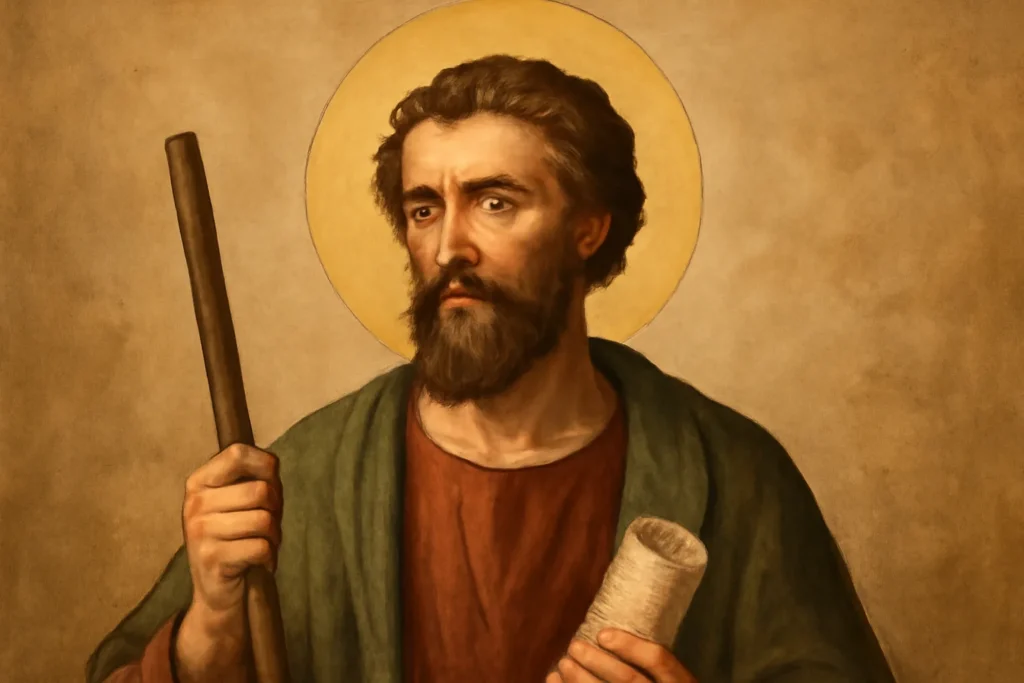
Throughout Christian art and literature, the disciple Thaddeus appears in a variety of forms, reflecting the diversity of tradition and the enduring fascination with the apostolic witness. Iconographers may symbolize him with attributes that identify him as a member of the Twelve, even when details of his life lie beyond the precise biblical record.
In literature, the Apostle Jude Thaddeus surfaces in hagiographies, liturgical poems, and regional legends that celebrate his courage, wisdom, and faithfulness. Such texts—though not canonical—play a role in shaping how communities remember the apostolic age and how they interpret the mission the apostles entrusted to the church.
Comparing Thaddeus with Other Apostles: Distinctions and Parallels
A helpful way to understand the disciple Thaddeus is to compare him with other members of the Twelve. While some apostles are highlighted in widely known events—Peter’s leadership, Paul’s post-Resurrection mission (though Paul is not one of the Twelve Apostles in the strict sense)—the place of Thaddeus is that of quiet but essential fidelity. The parallels and contrasts illuminate several themes:
Distinct Identity: The combination of names (Thaddeus, Lebbaeus, Jude) underscores how early Christian communities navigated identity while remaining cohesive within one apostolic witness.
Local versus Global Witness: Like others among the Twelve, Thaddeus is presented as a figure whose life contributed to both a locally rooted church and the broader, global expansion of Christianity.
Legacy through Martyrology: The tradition of martyrdom, even when its precise historical details are uncertain, demonstrates how the church venerates those who faced persecution for the faith.
Conclusion: Why the Apostle Thaddeus Remains Relevant
The disciple Thaddeus—whether identified as Jude Thaddeus, Lebbaeus, or simply the Apostle Thaddeus—embodies a witness that complements the more prominent narratives of the early church. His sparse but persistent presence in the biblical lists reminds believers that the economy of the Twelve included a diversity of temperaments and geographies, all bearing witness to Christ. The legacy of Thaddeus in tradition—especially in the East and in communities that treasure apostolic succession—illuminates the way faith travels, takes root in different cultures, and endures under trial.
For contemporary readers, the life of the Apostle Jude Thaddeus offers a template for faithful living in the modern world: a call to missionary imagination, endurance in hardship, and reverence for the unity of the church across cultures. While the historical details may remain debated and the canonical record relatively sparse, the significance of Thaddeus’s witness endures in the way Christians remember, pray, and strive to carry the gospel to the farthest corners of the earth.
Further Reading and Resources
For readers who wish to explore the topic more deeply, here are some avenues that illuminate the discussion while respecting the distinction between canonical text and later tradition:
Canonical lists of the Twelve Apostles in Matthew, Mark, and Luke for the basic biblical identity of Thaddeus.
Introductory works on early Christian tradition and hagiography to understand how apostolic memory developed in later centuries.
Studies on the Eastern Churches and their commemoration of the apostles, including the veneration of Jude Thaddeus in regional calendars.
Iconographic guides that explain how artists represent the apostolic witness and what attributes are used to differentiate among the Twelve.
In sum, the disciple Thaddeus stands as a testament to the patience, breadth, and courage of the earliest church—an apostolic life that, though not exhaustively documented in the canonical record, continues to shape the imagination of believers who seek to understand the mission of the church in history and today.









Leave a Reply