10 Facts About the Sermon on the Mount: History, Teachings, and Significance
The Sermon on the Mount is one of the most influential passages in the Christian tradition. Attributed to Jesus and found in Matthew 5–7, it is celebrated for its holistic vision of character, piety, and social ethics. In this article, we explore ten factual angles—covering historical context, literary structure, pivotal teachings, and enduring impact—so readers can appreciate why this sermon continues to resonate across denominations and eras. Each section highlights a distinct facet, supported by references to the text, scholarship, and practical implications for readers today.
Fact 1 — Historical setting and audience: where, when, and to whom the sermon was delivered
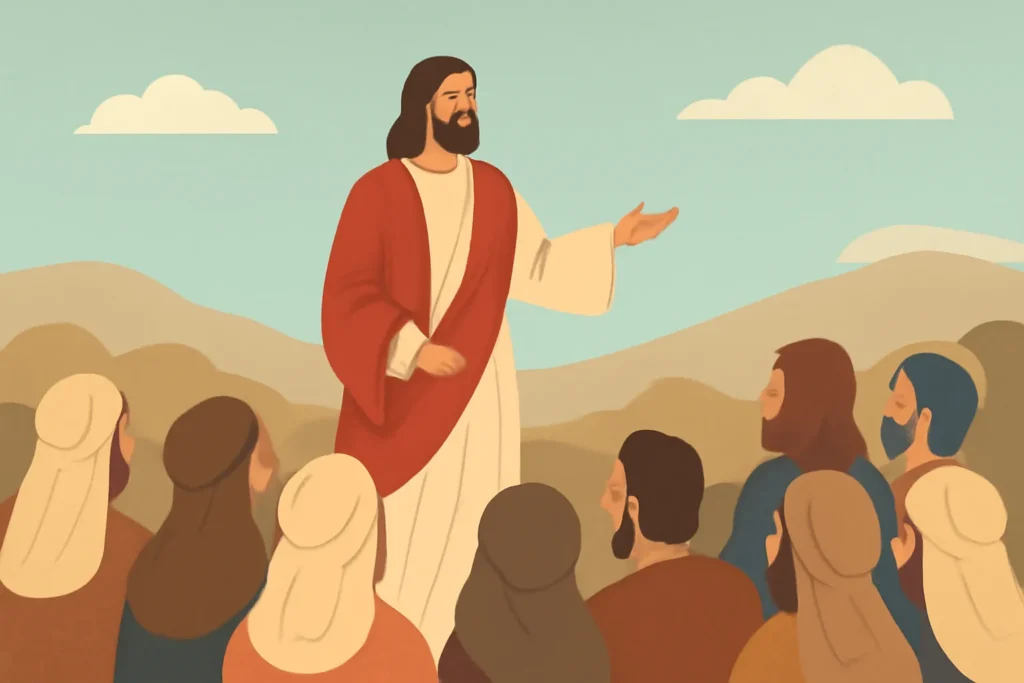
The traditional setting places Jesus on a mountainside near the Sea of Galilee, addressing a mixed assembly of disciples and a broader crowd. This scene signals a close teacher–follower dynamic while inviting wider listening. Scholars emphasize that the Gospel of Matthew presents the sermon as part of Jesus’ early Galilean ministry, rather than a later, more formal theological address. The exact date remains debated, but most scholars place it within the first century CE, likely within a period when Jesus’ followers were forming a distinct community and trying to articulate a coherent ethical vision in light of Israel’s scriptures and surrounding cultures.
Key considerations about the historical setting include:
Audience composition: The sermon targets both disciples and crowds, indicating an instructional purposes that transcends a single classroom of learners.
Geography and landscape: The phrase “mount of Beatitudes” evokes a public, scenic locale that amplifies the sermon’s memorable sayings—yet the precise topography is less important than the symbolic framing of proclaiming a new ethical order.
Historical origins vs. literary construction: Some scholars view the text as a historically grounded sermon delivered by Jesus; others see it as a carefully crafted literary unit—an arrangement by the author of Matthew to present Jesus as a faithful interpreter of the Torah and a founder of a kingdom ethic.
In studying this fact, readers encounter a core question: is the Sermon on the Mount a record of a single event, or is it a deliberately composed collection designed to communicate a broad program for community life? Most scholars treat it as a blend—rooted in traditions about Jesus’ teaching and shaped by Matthew’s Gospel to articulate a distinctive identity for the early Christian movement.
Fact 2 — Structure and literary design: how the sermon is organized and why that matters
The Sermon on the Mount spans Matthew 5–7, forming a compact, carefully arranged block within the Gospel. Its literary architecture weaves five major blocks of teaching, each paired with a small set of ethical exhortations and refrains. The Gospel writer appears to have crafted a cohesive sermon that functions as a manifesto for life in the kingdom of God.
Scholarly observations about the structure include:
Beatitudes (5:3–12): A declaration of blessedness that reframes social values—comforting the poor in spirit, the meek, and those who hunger for righteousness.
Salt and light (5:13–16): A commissioning image, calling followers to influence the world while maintaining integrity.
Antitheses (5:17–48): “You have heard that it was said... but I say to you” passages that deepen the ethics by addressing internal intent, not merely external action.
Piety practices (6:1–18): Instructions on generosity, prayer, and fasting—each framed to avoid performative religiosity and cultivate authentic devotion.
Closest resolves and conclusions (6:19–7:27): Guidance on wealth, worry, discernment, and the practice of truth, culminating in a call to choose the wise, life-giving path.
Within these sections, readers encounter repeated motifs—private virtue over public display, inward righteousness over outward conformity, and trust in divine provision over worldly anxiety—that together form a consistent ethical program. The arrangement helps readers see how spiritual disciplines, social behavior, and communal life interlock in the Christian moral imagination.
To aid navigation, many modern readers use sublists with key verses that anchor the sections in the biblical text. This helps in study, preaching, or personal reflection, whether one is reading for academic purposes or devotional growth.
Fact 3 — The Beatitudes: a radical redefinition of blessedness and social status
The opening block of the sermon presents the Beatitudes, a set of paradoxical blessings that invert conventional values. The phrases—such as “Blessed are the poor in spirit” and “Blessed are the meek”—announce a radical reordering of human well-being, grounded in God’s gracious reign rather than in worldly success. This shift foregrounds the Kingdom of God as a present and future reality in which divine justice, mercy, and humility reconfigure power and status.
Economy of reversal: Those who are marginalized in social hierarchies receive hope and recognition in the divine economy.
Spiritual center: The blessings focus on inner dispositions—humility, mercy, pure-heartedness—before external achievement.
Ethical call: Blessedness is linked to ethical action—such as mercy to others, peacemaking, and a longing for righteousness.
Texts and scholarship highlight that the Beatitudes anticipate core themes of Jesus’ teaching across the Gospel. While Luke offers a parallel beatitude list in a slightly different setting (often called the Sermon on the Plain), Matthew’s version emphasizes communal formation and a collective experience of blessing tied to the eschatological hope of God’s kingdom.
Fact 4 — The Antitheses: intensifying the commandments by redefining intent and heart
One of the sermon’s most influential features is the Antitheses (5:21–48), a series of statements that begin with “You have heard that it was said... but I say to you”.
In these lines, Jesus deepens the ethical expectations beyond mere legal compliance. He reframes concrete actions—anger, lust, divorce, oaths, retaliation, and even love for enemies—by calling for an interior transformation of motive and desire. This approach has shaped debates about moral psychology in Western thought for centuries.
Key dimensions of the Antitheses include:
Anger and reconciliation: He equates anger with murder in its potential to destroy relationships, urging reconciliation before worship.
Lust and fidelity: He connects lust with adultery of the heart, underscoring the seriousness of sexual ethics.
Non-retaliation and enemy love: He promotes radical responses to harm, favoring forgiveness and mercy over punitive retaliation.
Honesty and integrity: The antitheses sharpen the standard of truth-telling and faithfulness in speech and oath-taking.
These teachings have inspired centuries of monastic practice, social ethics, and movements for social justice, as readers have understood them as a call to a holistic, honest, and generous way of life—one that resists coercive power while affirming human dignity.
Fact 5 — Piety and prayer: almsgiving, the Lord’s Prayer, and fasting as spiritual disciplines
The Sermon on the Mount treats spiritual renewal as inseparable from public action and private devotion. In three interconnected sections, Jesus addresses almsgiving, prayer, and fasting, warning against showiness while inviting sincere devotion.
Almsgiving: Practice that should occur in secret, with the motive of genuine generosity rather than social recognition.
The Lord’s Prayer (6:9–13): A model prayer that centers on the name of God, the kingdom, daily needs, forgiveness, and moral perseverance.
Fasting: Framed similarly to almsgiving and prayer—an act meant to cultivate dependence on God rather than impress others.
Scholars often highlight that Matthew’s version of prayer emphasizes stances of humility and trust. The prayer’s structure guides believers toward a rhythm of daily dependence on God, ethical forgiveness, and a longing for divine guidance. The broader point is that religious life is not measured by public rituals alone but by the sincerity of private devotion and the fruit those practices bear in daily conduct.
Fact 6 — Wealth, worry, and the call to seek first the kingdom
Another central theme of the sermon concerns wealth, anxiety, and priorities. In the famous exhortation to “not lay up treasures on earth” and to seek first the kingdom of God, Jesus reframes how followers should relate to material security and the future. The text links possessions with spiritual risk and invites a proactive reordering of priorities toward God’s reign.
Treasures in heaven: A call to invest in eternal values rather than ephemeral wealth.
Do not worry: A directive to entrust daily needs to God while living responsibly in the present world.
Priority shift: A clear command to order life around God’s purposes, with practical implications for work, generosity, and community support.
This fact has made the Sermon on the Mount relevant in debates about wealth, poverty, and social justice across centuries. It shapes how Christians interpret economic life, social responsibility, and personal anxiety in a world of scarcity and abundance. The passage invites readers to assess how their choices reflect allegiance to God’s kingdom rather than simply aligning with contemporary economic pressures.
Fact 7 — Law, righteousness, and the path to true obedience
Matthew presents Jesus as giving a decisive statement about the law and the prophets with the claim that he has come not to abolish but to fulfill them (5:17). This framing situates Jesus within the Jewish scriptural tradition while redefining what obedience means in light of the kingdom’s ethics. The sermon insists that external compliance is not sufficient without internal transformation.
Scholarly highlights include:
Fulfillment as interpretive fulfillment: Jesus interprets, deepens, and completes the meaning of the law, pointing toward the heart of God’s intention in the Torah.
Righteousness that exceeds the scribes and Pharisees: The standard for righteousness is not mere legal accuracy but a life marked by mercy, humility, and integrity.
Ethical scope: The sermon expands the horizon of moral obligation from ceremonial purity to everyday mercy, truth-telling, and love of neighbor and enemy alike.
For readers and theologians, this fact invites ongoing reflection on how religious communities interpret tradition, authority, and the call to holistic obedience that blends belief, action, and character.
Fact 8 — The Lord’s Prayer and the shape of Christian prayer
The Lord’s Prayer in Matthew 6:9–13 stands as a monumental model for Christian prayer, shaping generations of liturgy, private devotion, and ecumenical practice. Its compact structure encapsulates theological priorities—the reverence of God’s name, the anticipation of God’s kingdom, daily provision, forgiveness, and spiritual testing.
Addressing God as Father: A relational image that models intimacy with the divine while maintaining reverence.
Provisional dependence: The petition for daily bread grounds trust in God’s care for practical needs.
Forgiveness and moral testing: Requests for forgiveness and protection from moral peril reflect a communal ethic that assumes mutual responsibility.
Across centuries, theologians and pastors have drawn lessons from the prayer’s cadence, language, and emphasis on God’s will (“your will be done”) as a guide for communal prayer and personal devotion. The Lord’s Prayer thus becomes a lens through which believers approach God, others, and the world’s needs with humility and boldness.
Fact 9 — Luke’s parallel version and the question of textual variation
While Matthew’s Sermon on the Mount has a distinctive intensity and arrangement, a parallel tradition appears in Luke 6:17–49, often called the Sermon on the Plain. This raises important questions about how early Christian communities transmitted and adapted Jesus’ teachings. The Luke version contains some overlapping material (including Beatitudes and ethical exhortations) but situates them on a level place and emphasizes slightly different blessings and woes.
Key points about Luke’s parallel include:
Geographic and audience differences: Luke’s setting emphasizes a different audience (a broader, more universal crowd) and a different physical setting.
Variations in content: Some Beatitudes in Luke resemble Matthew’s but are tuned for poverty and hunger specifically, and Luke includes “Woes” that balance the blessings in a distinctive way.
Literary purpose: Some scholars argue Luke preserves a related teaching tradition, while others view it as a separate source that was later harmonized in transmission.
Scholars who study these parallels note that differences do not undermine the authenticity of the core message—namely, a radical reorientation toward God’s rule, compassion for the poor, and a disciplined life. Instead, the differences illuminate how early Christian communities adapted Jesus’ teachings to different contexts while preserving central ethical themes.
Fact 10 — Significance for interpretation, ethics, and modern life
Beyond its historical and literary dimensions, the Sermon on the Mount wields substantial theological and ethical significance for Christians and interested readers today. Its call to humility, mercy, and right living transcends time and culture, inviting a reflective engagement with questions about wealth, violence, reconciliation, and human flourishing.
Areas of ongoing relevance include:
Personal virtue: The sermon’s insistence on interior motive and external action offers a robust model for character formation, including humility, integrity, and sincerity in prayer and worship.
Social ethics: Teachings about loving enemies, giving generously to the poor, and pursuing justice have inspired countless movements for peace, reconciliation, and social service.
Interfaith and intercultural dialogue: The universal dimensions of mercy, care for the marginalized, and dependence on God’s provision provide common ground for dialogue across faiths.
Pastoral and homiletic use: The Sermon on the Mount remains a frequent source for preaching, catechesis, and spiritual formation, offering a coherent arc from blessing to behavior to discernment.
Readers today often approach the sermon with varied interpretive lenses—historical-critical, canonical-theological, ethical-practical, or devotional. Regardless of approach, the core message invites a transformative posture: to live as people whose words, actions, and loves align with God’s kingdom and who respond to human need with generosity, mercy, and hope.










Leave a Reply