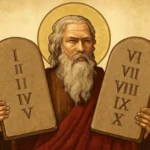
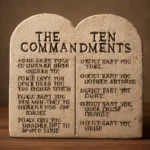
The New King James Version (NKJV) preserves the classic structure and intent of the original Mosaic law while presenting it in readable, modern English. Central to both Jewish and Christian traditions, the Ten Commandments, also known as the Decalogue, function as a foundational moral framework. In the NKJV, these commands are typically presented in two parallel renderings: the Exodus version (Exodus 20:3–17) and the Deuteronomy version (Deuteronomy 5:7–21). While they share core prohibitions and prerequisites for a righteous life, each version also reflects distinctive emphases suited to its historical context. This complete guide explores both renderings, explains their meaning, and offers practical guidance for readers today.
This article uses a variety of phrases to refer to the same core idea, including “the Ten Commandments in the NKJV,” “the NKJV Ten Commandments,” “the Ten Words in the NKJV,” and “the Decalogue in the NKJV.” Regardless of the phrasing, the content remains a succinct map of what it means to live in fidelity to God and to honor one’s neighbor. The NKJV’s word choice emphasizes clarity, reverence, and continuity with the traditional King James style, while updating spellings and grammar for contemporary readers.
Exodus 20:3–17 — The primary listing
In the NKJV, the exodus version of the Ten Commandments begins with a sovereign claim and moves into explicit duties. The order and language are commonly used in both liturgical settings and personal study. The following list reproduces the basic order of commandments as they appear in the NKJV text of Exodus 20:3–17, with emphasis on notable phrases that capture the heart of each command.
You shall have no other gods before Me.
You shall not make for yourself a carved image, or any likeness of anything that is in heaven above, or that is on the earth beneath, or that is in the water under the earth; you shall not bow down to them nor serve them.
You shall not take the name of the Lord your God in vain, for the Lord will not hold guiltless anyone who takes His name in vain.
Remember the Sabbath day, to keep it holy; six days you shall labor and do all your work, but the seventh day is the Sabbath of the Lord your God.
Honor your father and your mother, that your days may be long in the land which the Lord your God is giving you.
You shall not murder.
You shall not commit adultery.
You shall not steal.
You shall not bear false witness against your neighbor.
You shall not covet your neighbor’s house, you shall not covet your neighbor’s wife, nor his male servant, nor his female servant, nor his ox, nor his donkey, nor anything that is your neighbor’s.
The wording of the NKJV keeps the cadence and reverence of the traditional text, while making each command accessible to modern readers. The first four commandments describe right relationship with God, and the remaining six describe right relationship with other people. Together, they form a cohesive ethical system that has influenced moral discourse across generations.
Deuteronomy 5:7–21 — The restatement
The Deuteronomy version of the Ten Commandments presents a restatement that mirrors the Exodus list but often emphasizes the covenantal memory of Israel as they prepared to enter the promised land. In the NKJV, Deuteronomy 5:7–21 recasts the same fundamental prohibitions and duties in a style that reinforces obedience within the context of history, memory, and communal responsibility. The following items reflect the NKJV rendering of Deuteronomy’s ten-laws recounting.
You shall have no other gods before Me.
You shall not make for yourself a carved image, or any likeness of anything that is in heaven above or that is on the earth beneath or that is in the water under the earth; you shall not bow down to them nor serve them.
You shall not take the name of the Lord your God in vain, for the Lord will not hold guiltless the one who takes His name in vain.
Observe the Sabbath day, to keep it holy, as the Lord your God commanded you.
Honor your father and your mother, as the Lord your God has commanded you, that your days may be long and that it may go well with you in the land which the Lord your God is giving you.
You shall not murder.
You shall not commit adultery.
You shall not steal.
You shall not bear false witness against your neighbor.
You shall not covet your neighbor’s wife; you shall not desire your neighbor’s house, his field, his male servant, his female servant, his ox, his donkey, or anything that is your neighbor’s.
While these two accounts are nearly identical in content, the Deuteronomy version highlights the memory of Israel’s journey and its implications for covenant life. For learners of the NKJV, examining both lists side by side clarifies how the same moral principles were preserved across generations, even as the contexts of worship, land, and leadership evolved.
Key differences and how to read them in the NKJV
Although the Exodus and Deuteronomy renditions share nine of the ten core prohibitions and duties, some readers notice stylistic and contextual distinctions. The NKJV presents these variations with careful wording, preserving the cadence of the ancient text while offering modern readability. The following notes illuminate how to read these differences well:
The order and emphasis: Both versions present the same essential commandments, but Deuteronomy emphasizes memory, gratitude, and obedience within the covenant community as they prepare to enter a new land.
The Sabbath framing: Exodus grounds Sabbath observance in creation and divine rest, whereas Deuteronomy links it to Israel’s deliverance from Egypt, tying the command to covenant history.
The language of coveting: The NKJV keeps the focus on transgressions of desire toward a neighbor’s spouse and property, reinforcing boundaries within social life.
You shall not take the Lord’s name in vain as a measure of reverence and proper usage of God’s name in worship and daily speech.
For readers, the practical takeaway is not only what to avoid, but how life within God’s law shapes daily decisions, relationships, and worship. The NKJV’s careful phrasing helps bridge traditional reverence with contemporary understanding.
Thematic reflections: how the NKJV frames the moral law
Across both the Exodus and Deuteronomy renderings, the Ten Commandments in the NKJV function as a compact summary of divine will. They establish two overarching themes:
Love of God as the first and greatest obligation, expressed through exclusive devotion, proper reverence, and holy worship.
Love of neighbor as the practical outworking of God’s rule, expressed through honesty, faithfulness, and respect for others’ life, property, and dignity.
In the NKJV language, these themes are not merely rules but a way of life that shapes households, communities, and broader culture. This emphasizes that the moral law is not antiquated but continues to offer guidance for personal integrity, social justice, and spiritual fidelity.
Modern readers often connect the Decalogue to Jesus’ greatest commands in the Gospels, which the NKJV renders with clarity. The two are frequently read together: the Ten Commandments provide the shape of ethical life, while Jesus’ summary—“Love the Lord your God with all your heart, soul, and mind,” and “Love your neighbor as yourself”—offers a holistic principle that illuminates how the commandments are to be lived out.
Practical applications of the NKJV Ten Commandments today
Translators and pastors alike encourage readers to move from abstract principle to concrete practice. The following guidelines present a practical pathway for applying the NKJV Ten Commandments in everyday life, whether in family life, work, or church communities.
Worship and devotion
First four commandments guide how we worship God: exclusive devotion, reverence for God’s name, and regular, holy rest that centers the soul on God’s presence.
Practice includes personal prayer, communal worship, and the use of sacred time as a space to encounter the divine, not merely a box to check off.
Family and community life
Honor your father and mother translates into intergenerational respect, care for aging parents, and teaching children the values that sustain a healthy society.
Truth-telling, fair dealing, and respect for others’ property (the latter commands) undergird trustworthy neighborhoods and workplaces.
Ethics in daily conduct
Avoid lies and false testimony; integrity in speech matters in courts, classrooms, media, and personal relationships.
Guard your heart and actions to avoid deceit, exploitation, or harm toward others in matters of marriage, friendship, and commerce.
Social justice and 21st-century life
While the language is ancient, the underlying principles address issues such as idolatry in modern forms (trusting wealth, status, or technology more than God) and honesty in business and digital life (misrepresentation, plagiarism, or fraud).
Balancing freedom and responsibility is a recurring theme: individuals are free, but their freedom is bounded by love for God and respect for neighbor.
Historical and theological context
The NKJV presents the Ten Commandments within a long tradition of biblical interpretation. The commandments arose within a covenantal relationship between God and Israel, intended to guide a people who had experienced deliverance from oppression. The NKJV’s language preserves the dignity of the Decalogue while inviting contemporary readers to reflect on its relevance.
The broader Christian tradition often views these commandments as moral principles that persist beyond a single historical moment. Jesus’ teaching in the NKJV hammers home the idea that love for God and neighbor fulfills the law, transforming the commandments from external rules into a way of life shaped by love. This synthesis—moral law plus Christ’s emphasis on love—helps believers understand how to obey God in a world that continually redefines values.
Frequently asked questions about the NKJV Ten Commandments
Are the Ten Commandments the same in Exodus and Deuteronomy?
They express the same core moral principles, but the Deuteronomy version adds a covenant memory emphasis as Israel prepared to enter the land. In the NKJV, both renderings are authoritative and complementary.
Does the NKJV distinguish between the moral, civil, and ceremonial laws?
The NKJV, like many Bible translations, presents the Decalogue as timeless moral law. Other parts of Exodus and Leviticus include ceremonial and civil regulations that were specific to ancient Israel. The commandments themselves, however, are typically treated as universal moral guidance within Christian tradition.
How should modern readers apply the commandment to “remember the Sabbath day”?
Different Christian traditions interpret Sabbath observance in varied ways. Some honor a specific weekly day of rest and worship (often Sunday), while others focus on the broader principle of regular worship, rest, and dependence on God. The NKJV preserves the original commandment’s emphasis on holy time but leaves room for thoughtful application in contemporary life.
What is the significance of “You shall not take the name of the Lord your God in vain”?
This commandment emphasizes reverence for God’s name and careful speech about God. It invites believers to honor God through truthful talk, honest worship, and responsible naming of God in everyday life.
Conclusion: The NKJV’s complete guide to the Ten Commandments
The NKJV Ten Commandments offer more than a historical list of prohibitions. They present a living framework for worship, community, and character. By engaging both the Exodus 20 and Deuteronomy 5 renderings, readers can appreciate how these commands were given, remembered, and applied across generations. The NKJV’s careful balance of traditional diction and accessible language helps today’s readers encounter the moral truths at the heart of the Decalogue and consider how those truths shape their daily choices, relationships, and spiritual life.
Whether you refer to them as the Ten Commandments in the NKJV, the Decalogue, the Ten Words, or the Ten Commandments of Moses, the core message remains clear: a life oriented toward God and toward neighbor reflects a faith that endures. This complete guide has walked through the two primary renderings, highlighted the meaningful differences, and offered practical paths for living out these ancient words in a modern world.

 Por Laura Jara