Teachings of Jesus Timeline: A Comprehensive Overview of His Core Messages Across the Gospels
Teachings of Jesus Timeline: A Comprehensive Overview of His Core Messages Across the Gospels
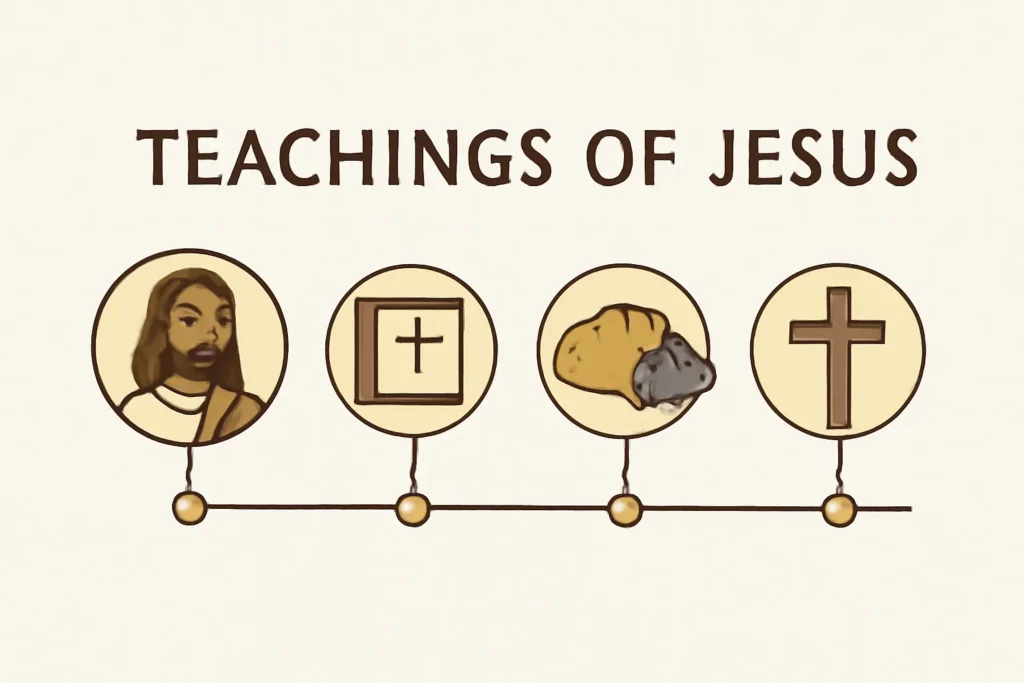
The Teachings of Jesus Timeline offers a detailed, chronological walk through the core messages Jesus conveyed across the Gospels. While the Gospel writers arrange material in various ways—by theme, by audience, by narrative—the throughline remains consistent: the proclamation of the Kingdom of God, a call to repentance and faith, and a transformative ethics for daily living. This article traces how his sayings and parables unfold from early Galilean encounters to final instructions in Jerusalem, highlighting how each moment contributes to a cohesive vision for life under divine rule.
From Galilee to Jerusalem: A chronological overview of core messages
Galilean beginnings: Proclaiming the Kingdom and inviting response
In the earliest phase of public ministry, Jesus traveled through villages around the Sea of Galilee, preaching a compact, urgent message: the Kingdom of God is at hand. This shorthand phrase encapsulated both a present invitation and a future hope. The call to repent and believe was not merely internal conviction; it required a visible reorientation of life toward God’s reign. Jesus invited people—peoples of varied backgrounds, including fishermen, farmers, tax collectors, and layleaders—to trust him and to join the movement he was inaugurating.
Key theme: the nearness and accessibility of God’s rule
Call to action: anticipate, align, and eagerly participate in the work God is doing
Ethical horizon: love of God and neighbor, justice, mercy, and humility as signs of the coming age
The Sermon on the Mount and related discourses: A ethical blueprint for disciples
One of the most influential clusters of Jesus’ teaching occurs in the Sermon on the Mount (and its parallel in Luke’s Sermon on the Plain). This collection may be thought of as the charter of life in the Kingdom. It moves from personal posture to social ethics, from inward righteousness to outward actions, and from ritual correctness to heart transformation. The Sermon on the Mount is not merely a set of rules; it is a vision for the dispositions that reflect living under God’s reign.
Beatitudes—blessings pronounced on the poor in spirit, the meek, those who mourn, the pure in heart, and the peacemakers
Salt and light imagery—calling disciples to influence society through integrity and visible goodness
Righteousness that exceeds the scribes and Pharisees—inner motives as decisive as external actions
Ethical summaries: anti-vengeance, love for enemies, and turning the other cheek
Teaching on piety—private devotion, fasting, and generous almsgiving without a show of piety
Prayer in service to the heart of worship—the Our Father as a model for reverent, relational connection with God
Ethical maxims like the Golden Rule—treat others as you wish to be treated
Parables as keys to the Kingdom: How Jesus explains mysteries through stories
Parables form another essential layer of teaching in this timeline. Jesus frequently used short, vivid stories to reveal truths about the Kingdom of God in memorable, sometimes provocative ways. Parables challenge listeners to listen deeply, to interpret rightly, and to test their loyalties to the reign of God.
The Parable of the Sower—receptivity to God’s message varies with the condition of the heart
The Parable of the Mustard Seed and the Yeast—small beginnings yield expansive, transformative growth
The Parables of the Hidden Treasure and the Pearl—worthiness of the Kingdom outweighs every other possession
The Parable of the Prodigal Son and the Lost Sheep—emphasis on mercy, repentance, and God’s seeking love
The Parable of the Good Samaritan—ethics of neighbor-love beyond ethnic and social boundaries
Prayer, worship, and the posture of dependence
Across the timeline, Jesus repeatedly centers prayer and authentic worship as the fuel and the filter of life in God’s era. He invites his followers to approach God as Father, to seek daily provision, forgiveness, and protection, and to worship in spirit and truth rather than mere ritual performance. The practice of prayer is not a private distraction but a communal formation that aligns desires with God’s purposes.
Model prayer in the Lord’s Prayer—a concise framework for devotion, dependence, and reconciliation
Critique of performative religiosity—public displays should not replace sincere devotion
Focus on forgiveness as a two-way street—God’s mercy toward us should shape our mercy toward others
Ethics from the heart: Mercy, humility, and nonretaliation
Mercy and justice in concrete relationships
A steady throughline in Jesus’ teaching is mercy expressed in daily life. This is most visible in parables that reframe social norms around compassion and generosity, and in sayings that instruct followers to care for the vulnerable, share resources, and pursue reconciliation rather than revenge. The call to humility runs through every moment—clothing followers in the posture of a learner who depends on God.
Mercy over ritualism—the compassionate act honors God more than outward conformity
Command to humble oneself as a prerequisite for divine exaltation
Encouragement to forgive freely, mirroring God’s own mercy toward humanity
Nonretaliation, reconciliation, and turning the other cheek
The ethic of nonretaliation stands out as countercultural within the social worlds Jesus inhabited. Rather than retributive justice, Jesus promotes reconciliation, restitution, and a radiant trust in God’s justice. This theme recurs in teachings about forgiving brothers and sisters and seeking reconciliation before offering worship at the altar.
“Turn the other cheek” as a radical approach to harm and offense
Encouragement to pursue reconciliation with others, even at personal cost
Stressing integrity before God over personal vindication
Fulfillment of the Law and the reinterpretation of righteousness
The law, the prophets, and the authority of Jesus
A central claim in Jesus’ teachings is that he did not come to abolish the Jewish Law but to fulfill it. This statement frames the rest of his ethical instruction: righteousness in the Kingdom exceeds mere external compliance; it embodies the intention of the Law and the prophetic tradition. In this section of the timeline, Jesus reframes certain expectations about ritual purity, Sabbath observance, and ritual purity, offering a more interior, transformative standard.
The call to fulfill obedience in light of God’s overarching plan
Reinterpretations that shift focus from outward signs to inward devotion
Warning against the risk of legalistic self-satisfaction that misses mercy
Inclusion and the widening circle: whom Jesus teaches and heals
Outsiders as protagonists in the Kingdom
The timeline consistently expands the circle of who can belong to the Kingdom. Jesus interacts with and affirms those marginalized by society—sinners, tax collectors, Gentiles in some narratives, women, and people afflicted with physical and social burdens. His teachings challenge prevailing boundary markers and invite listeners to see those outside the conventional circles as recipients of divine grace and opportunity for faith.
Parables and encounters that place outsiders within the story of God’s mercy
Teachings about neighbor-love that transcend ethnic and religious boundaries
Affirmation of women and other overlooked voices within the community of faith
Mission and instruction: sending out the earliest followers
Commissioning the Twelve: a blueprint for mission
A decisive moment in the timeline is the commissioning of the Twelve. Jesus equips a small band to proclaim the Kingdom, heal the sick, cast out demons, and bear witness to their experiences of God’s reign. This moment makes explicit the outward dimension of Jesus’ teaching: the message cannot be contained within a single encounter; it must be proclaimed, shared, and multiplied through communities of disciples.
Invitation to evangelize with power and compassion
Instruction in practical mission: how to present the message and how to respond to rejection
Authority given to the apostles to extend the Kingdom’s reach
Conditions for discipleship: practical ethics in mission work
The timeline includes practical guidance for those who would follow Jesus into the mission field. The emphasis is not only on what to say but on how to embody the message in relationships, leadership, humility, and service. Disciples are invited to depend on God’s provision, to exercise discernment, and to cultivate trust in God even when the path is uncertain.
Dependence on God for provision and safety
Discernment in service and use of resources
Emphasis on servant leadership and communal humility
Endurance and eschatology: teachings that prepare for Jerusalem and beyond
The Olivet Discourse: readiness for disruption and fulfillment
In the final phase of his public teaching, Jesus addresses broader eschatological questions—the destruction of the Temple, the end of an era, and the coming of the Son of Man. The Olivet Discourse emphasizes watchfulness, faithful living, and steadfast trust in God’s sovereignty. While these passages can be challenging, they are best understood as invitations to embrace living today in light of God’s decisive future action.
Watchfulness over the times and seasons
Parables about faithful stewardship, wise participation, and readiness
Ethical implications: avoidance of deceit, vigilance against false teachers, and ongoing devotion
Jerusalem teachings, Last Supper, and the forming of a New Covenant
The culmination of the teaching timeline centers on Jerusalem, where the Last Supper frames the new covenant in Jesus' blood, and where final exhortations speak to community identity, sacramental memory, and hope in a future restoration. This phase highlights a shift from public teaching to communal practice, interpretation of Jesus’ death, and the transference of authority to the church as the bearer of his continuing mission.
The institution of a new covenant centered on Jesus’ sacrificial act
Instructions on remembrance and participation in the ongoing life of the church
Affirmation of the mission’s continuity through subsequent generations
Great Commission and the enduring reach of Jesus’ teachings
Going and teaching: the command to make disciples of all nations
The chronology concludes with a clear, directive summary of the mission: go into the world, make disciples of all nations, baptize, and teach obedience to Jesus’ commands. This final act anchors the timeline of Jesus’ teachings in a living, ongoing project—one that invites communities across time to be formed by the same core messages.
Global scope: discipleship is not limited to a single locale
Comprehensive mission: preaching, baptism, and teaching obedience
Continuity: Jesus remains with his followers through the Holy Spirit, empowering ongoing witness
Key themes that recur across the Gospel timeline
Although arranged along a rough chronological path, the Teachings of Jesus Timeline reveals a consistent architecture of themes that recur in various settings. Kingdom ethics shape personal character; love and mercy reform social relations; humility counters pride; forgiveness breaks cycles of retaliation; and prayer anchors life in dependence on God. The timeline also demonstrates how Jesus reinterprets tradition—fulfilling the Law while expanding the circle of who belongs to God’s people—and how his words are designed to be carried forward by disciples who continue to teach, enact, and embody his message.
Central aim: forming a community living under God’s rule
Method: teaching through speeches, stories, and encounters that invite response
Legacy: a movement that preserves Jesus’ teachings as a living, adaptable, and transformative force in communities around the world
How to read the teachings as a unified whole
Readers often encounter Jesus’ sayings in isolation, yet the strength of the timeline emerges when one tracks how ideas echo across settings. When you study the Teachings of Jesus Timeline, watch for:
How a single theme appears in different contexts—parables in one chapter, a prayer in another, a directive to a disciple community elsewhere
Progression from inward dispositions to outward actions
Growth of the movement from a regional proclamation to a global mission
For students of the Bible, a chronological approach clarifies how Jesus’ core messages were tested, refined, and clarified as he spoke to diverse audiences. The continuity across settings—Galilean villages, mountainside sermons, bustling towns, and the halls of Jerusalem—suggests a deliberate pedagogy: to teach less as a codified system and more as a living rhythm of life with God.
Variations on the phrase: the broader stay and reach of the message
In writing about the Teachings of Jesus Timeline, scholars and readers often use varied expressions to capture the same essential ideas. Phrases such as teachings of Jesus over time, chronology of Jesus’ core messages, Jesus’ timeline of sayings, and Jesus’ gospel-centered pedagogy point to the same phenomenon: a coherent, storied set of instructions that reveal what it means to follow him.
Why this timeline matters for understanding the Gospels
A timeline-based approach helps when comparing Gospel accounts. It clarifies how Jesus’ teachings were shaped by audience and setting, how they address immediate needs while carrying long-term implications, and how they culminate in a mission that continues beyond the first century. It also highlights the balance Jesus seeks between personal change and social transformation, between inner devotion and outward justice, between reverence for God and love for neighbor.
Practical takeaways for readers and learners
Embed kingdom-centered ethics in daily life: let humility, mercy, and forgiveness guide decisions in work, family, and community
Study the Sermon on the Mount as a foundational template for personal conduct and communal life
Engage with parables as tools for deeper listening, not just as stories
Cultivate prayer as a regular, transforming practice that aligns desires with God’s will
Extend mercy to outsiders and pursue reconciliation in broken relationships
Recognize fulfillment and continuity in Jesus’ teaching—fulfilling the Law while inviting a larger, more inclusive community
Embrace mission as an ongoing calling to testify to God’s reign by word and deed
If you are exploring the Teachings of Jesus Timeline as a study project, consider constructing your own chronological map. Start with the Galilean proclamations, follow through the Sermon on the Mount and its parallel discourses, note the major parables that illuminate the Kingdom, observe how prayer and worship are woven into the fabric of everyday life, and finally trace the commissioning, Olivet teachings, and the Great Commission that carry Jesus’ message forward. Each layer adds depth to the overall portrait: a teacher who invites kinship with God, a ethicist who reveals the shape of righteous living, and a mover who commissions his followers to participate in God’s ongoing work in the world.
The Teachings of Jesus Timeline remains one of the most durable maps for understanding how the Gospel writers understood Jesus’ message, how it was heard in diverse contexts, and how it continues to challenge and bless readers today. By attending to the progression and the recurring motifs, readers gain not only historical insight but practical wisdom for life that is grounded in one who spoke as one having authority and who invites all to live under God’s gracious reign.










Leave a Reply