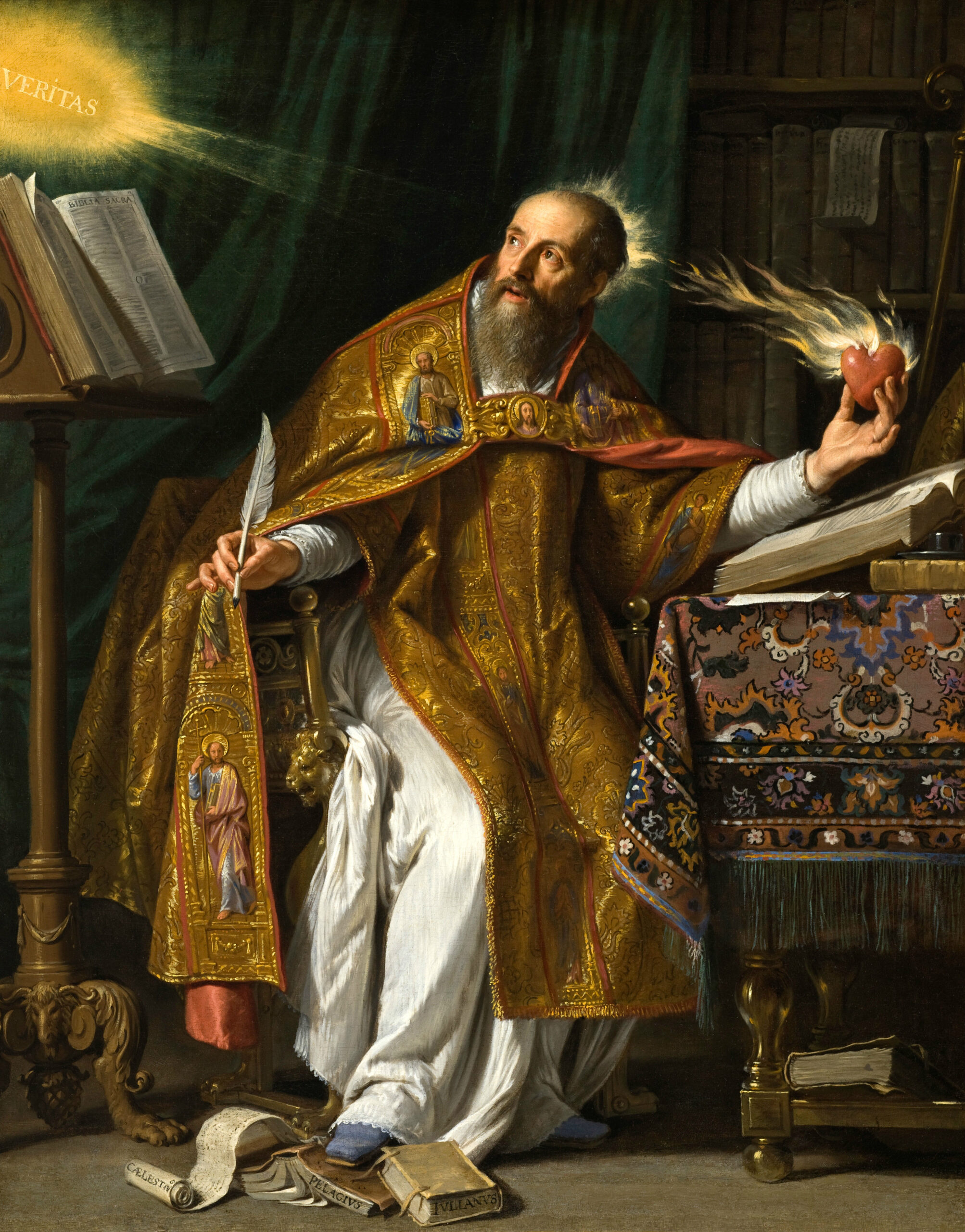
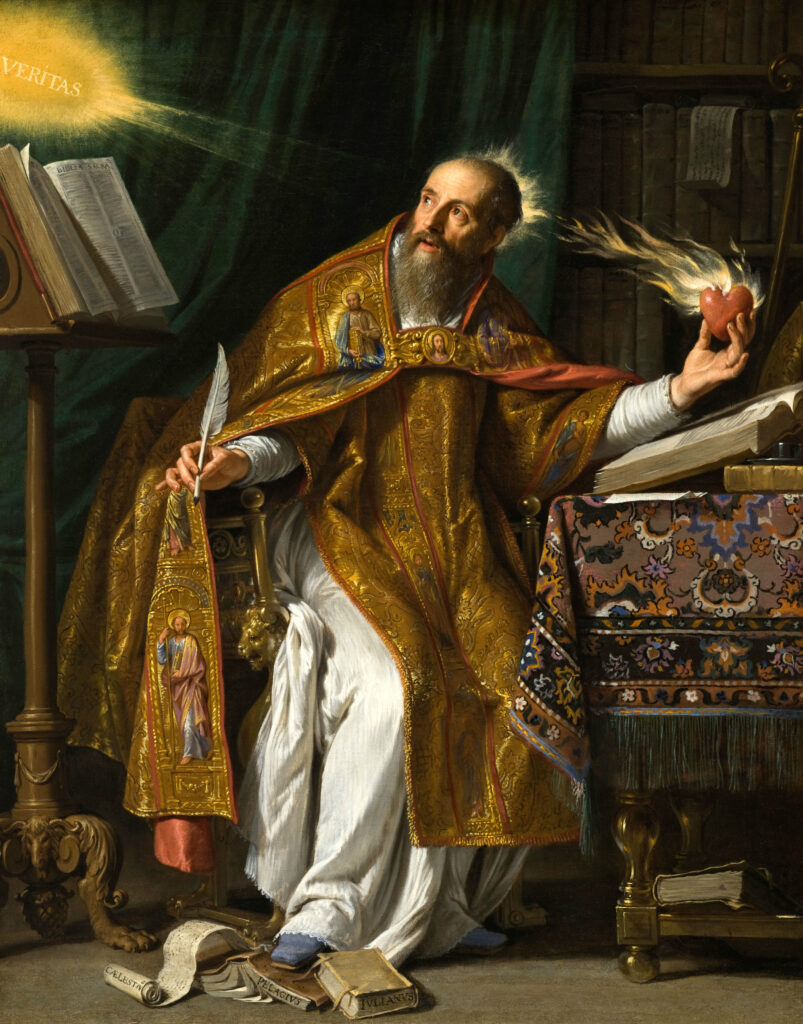
Saint Augustine of Hippo was born on November 13, 354, in Thagaste, present-day Algeria. His early life was marked by a search for truth, first through the Manichaean faith and later influenced by Neoplatonism. Despite his initial resistance, Augustine experienced a profound conversion to Christianity in 386, which led to his baptism and a lifelong dedication to the faith. As a bishop of Hippo Regius, Augustine played a pivotal role in the early Church. His writings, especially The City of God and Confessions, addressed key theological issues and provided a framework for understanding the relationship between faith and reason. He emphasized the necessity of divine grace for salvation and articulated the doctrine of original sin, which has had a lasting impact on Christian theology. During a tumultuous period for the Western Roman Empire, Augustine envisioned the Church as a spiritual City of God, distinct from the material world. This concept underscored his belief in the eternal significance of faith amidst societal decline. His thoughts on the Trinity, as outlined in On the Trinity, became foundational for later Christian doctrine. Augustine’s legacy continues to resonate today, influencing countless theologians, philosophers, and scholars. His ability to articulate complex spiritual truths in relatable terms has made his works timeless. Augustine’s journey from a seeker of truth to a revered Church Father exemplifies the transformative power of faith.
One notable miracle attributed to Saint Augustine is his ability to heal a blind man in Hippo. The man, who had lost his sight for many years, was restored to vision through Augustine’s prayers and intercession. Another remarkable event involved Augustine calming a violent storm at sea. As he prayed, the tempest subsided, demonstrating his deep connection to God and the power of faith in times of crisis.
Legacy and influence
Saint Augustine’s influence on Western thought is profound and far-reaching. His writings laid the groundwork for many theological discussions that continue to this day, particularly concerning grace, free will, and the nature of God. Augustine’s ideas have permeated various fields, including philosophy, ethics, and political theory. In the realm of Christianity, Augustine’s teachings helped shape the doctrines of the Catholic Church and Protestant traditions alike. His insights into the human condition and the divine have inspired countless believers to seek a deeper understanding of their faith.
💡 Did you know?Did you know that Augustine’s mother, Monica, was a pivotal influence in his conversion? Her persistent prayers played a significant role in his journey to Christianity.
Prayer to Saint Augustine of Hippo
O glorious Saint Augustine, through your intercession, may we find the truth that leads us closer to God. Help us to understand the mysteries of faith and to live according to His will. Amen.
Novena to Saint Augustine of Hippo
Day 1
Day 1: As we begin this novena, let us reflect on Augustine’s early life and his search for truth. May we seek the light of Christ in our own lives.
Day 2: Today, we contemplate Augustine’s conversion. May we be inspired to turn towards God and embrace His grace in our hearts.
Day 3
Day 3: Reflect on the significance of divine grace in Augustine’s teachings. Let us pray for an openness to God’s grace in our daily lives.
Day 4
Day 4: We remember Augustine’s role as a bishop. May we be guided by his example of leadership and service within the Church.
Day 5
Day 5: Consider Augustine’s writings and their impact on Christian thought. May we be inspired to deepen our understanding of our faith.
Day 6
Day 6: Today, we focus on Augustine’s vision of the City of God. Let us pray for our community to reflect this spiritual city on Earth.
Day 7
Day 7: Reflect on Augustine’s teachings on the Trinity. May we grow in our understanding of this profound mystery of our faith.
Day 8
Day 8: We remember the many miracles attributed to Augustine. Let us pray for faith that can move mountains and trust in God’s power.
Day 9
Day 9: As we conclude this novena, let us ask for Saint Augustine’s intercession in our lives. May his wisdom guide us as we strive to live out our faith. Amen.
Frequently asked questions about Saint Augustine of Hippo
What is Saint Augustine known for?
Saint Augustine is known for his influential writings on theology and philosophy, particularly his works on grace and original sin.
When is Saint Augustine’s feast day?
Saint Augustine’s feast day is celebrated on August 28.

 Por Mario Acevedo