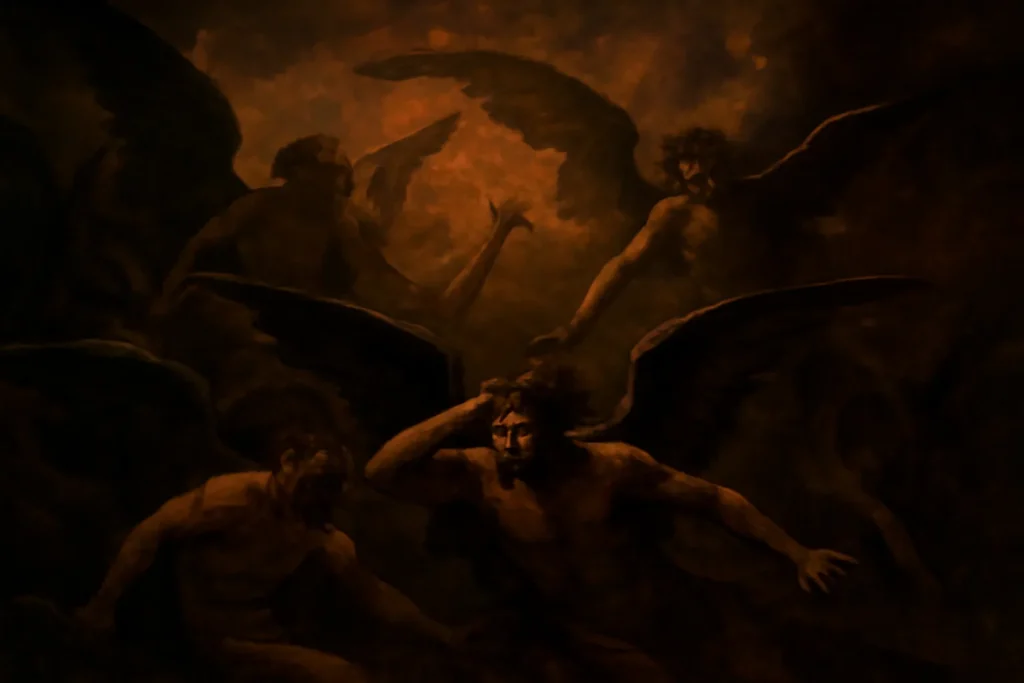
Across centuries and traditions, the idea of angels who fell with Lucifer has shaped how believers conceive
evil, rebellion, and the human struggle between light and darkness. The story is not a single, simple narrative confined to one
book; rather, it is a mosaic drawn from canonical scripture, expansive apocrypha, apocalyptic visions, and a long
heritage of interpretation. In the widest sense, these are the fallen angels, heavenly beings who chose
a path of disobedience, were cast out, and left a lasting imprint on theology, art, and popular culture.
This article surveys the main strands of the story—the biblical core about Lucifer and the uprising,
the popular and scholarly distinctions between canonical and non-canonical sources, and the enduring legacy
of the fall in religious thought, ethics, and imagination. We will also explore the diverse names used for these beings,
the roles they are said to have played, and the ways in which different traditions have understood their impact on the
world and on human beings.
Lucifer, Satan, and the Rebellion
The figure often identified as the leader of the fallen is Lucifer, a name that appears in Isaiah 14:12 in some
Vulgate and later Christian traditions as the shining morning star who fell from heaven. In the biblical text itself, the passage is
a lament against a human ruler—a king of Babylon—yet generations of interpreters have read it as typifying a cosmic fall of pride.
Over time, Lucifer became tangled in the broader figure of Satan, the adversary, and the one who leads
other rebellions in the heavenly realm.
A second strand comes from the visionary imagery in the New Testament, especially the book of Revelation, which
speaks of a war in heaven and the expulsion of the dragon and his angels. Revelation 12:7–9 describes a battle between the archangel
Michael and his forces and the dragon, who is identified as the devil and Satan, and who is defeated and hurled
down to the earth. This compact scene has been read by many as the climactic moment when the heavenly host breaks with rebellion and
is cast out, leaving behind a cosmos in which evil then operates through rebellious beings and demons.
Beyond the canonical texts, the tradition has often drawn a more explicit portrait of the rebellion as a cosmic coup.
In this larger frame, a number of angels who refused to submit to divine order join Lucifer in defiance, prompting
their expulsion from the heavenly realm. The core idea—rebellion against divine will—provides the seed for later
speculation about the nature of evil, the moral responsibility of created beings, and the possibility that even beings of
great light can fall through pride, envy, or corruption.
Canonical and Noncanonical Sources: Where the Fall Is Told
The bulk of the traditional narrative about fallen angels rests on a combination of canonical scripture and a broader
body of noncanonical or apocryphal literature. In the Bible, explicit, comprehensive stories of angels “falling” are not laid out with
the level of detail seen in later sources; rather, readers encounter fragments that have been woven together by interpreters.
Canonical scriptures: The main touchstones are Revelation 12:7–9, which depicts war in heaven and the expulsion
of the dragon and his angels, and a set of verses that have historically been linked—often through tradition—to the idea of a cosmic
fall. Other passages (e.g., 2 Peter 2:4, Jude 1:6) speak of angels who sinned and were reserved for judgment, but they do not give a
full narrative of the fall.
Book of Enoch and related literature: The most developed account of rebel angels appears in 1 Enoch (also called the Ethiopic
Enoch), a collection of Jewish apocalyptic writings that circulated in antiquity and were widely influential in the early Christian
era. In this corpus, a group of angels led by Semjaza (often identified as the chief among the watchers) descends to teach
humanity and transgress the heavenly boundaries, resulting in divine judgment and the birth of the Nephilim.
Other apocrypha: Various rabbinic and Christian pseudepigrapha, along with later patristic writings, expand on the
idea of rebellious angels and their consequences, sometimes naming other leaders, oaths, and the punishments that follow.
Key figures in the noncanonical panorama
Semjaza (also spelled Samyaza): Often depicted as the leader or prime instigator among the fallen angels in 1 Enoch.
Azazel (or Azaziel): Frequently associated with the chief malevolent figure responsible for teaching forbidden arts and corrupting humanity; some traditions pair him with wilderness or scapegoat imagery.
Other named watchers in 1 Enoch include Armaros, Kokabiel, Ezeqeel, Baraqijal, Chazaqiel, Shamsiel, and more, often presented as leaders or subordinates in a broader cohort of rebellious angels.
The Watchers: The Best-Known Subgroup of the Fallen
Within the apocryphal world, the Watchers (or Grigori in some traditions) are the most fully described
panoply of angels who sin by descending to earth and imparting knowledge—sometimes understood as forbidden wisdom.
The narrative presents these beings as bound to a divine judgment that echoes through history: their transgression introduces
humanity to new technologies, arts, and knowledge, while also inviting divine punishment against the people and the angels themselves.
The ethical tension embedded in the Watchers’ tale is meaningful. The angels’ gift of knowledge leads to cultural and technological
flourishing but also to moral complexity and violence. This tension invites readers to reflect on how knowledge can be
both a blessing and a danger when detached from wisdom or aligned with pride and harm.
Semjaza: The archleader who allegedly swore an oath with the others to descend and take human wives.
Azazel: The most provocative figure in some versions, blamed for teaching men to make weapons of war and for releasing the arts of metalworking and cosmetics, depending on the tradition.
Auxiliary members: Names like Armaros, Kokabiel, Chazaqiel, Ezeqeel, and several others—each associated with a domain of knowledge or skill that came into human life through their instruction.
Names, Nature, and Theological Implications
The lexicon around the fallen angels is rich and varied. The terms fall, rebellion, and disobedience describe the act that separates these beings from their rightful place in the heavenly order. Theologically,
this raises enduring questions:
How is moral responsibility possible if a being begins in a state of grace or power?
What constitutes freedom for a created being: to obey, to choose, or to disobey?
What is the relationship between heavenly punishment and human suffering?
In many Christian theological contexts, the fall of the angels serves as a cautionary tale about pride,
ambition, and the dangers of seeking autonomy apart from divine order. It also frames the origin of evil as a personal, purposeful
rebellion rather than a mere impersonal force.
Legacy: The Fall in Theology, Literature, and Culture
The story of the fallen angels has left a durable legacy across multiple spheres of human culture. It informs
ethical reflection, shapes imaginations of spiritual warfare, and provides a framework for understanding both the origin of evil and the
resilience of good in human life. Here are several facets of the legacy.
Theology and demonology: The fall becomes a narrative lens through which theologians discuss evil and the
existence of demons, as well as the moral responsibility of angels who chose rebellion. It also helps explain why
the cosmos is not perfectly harmonized in the present age and why human beings face temptations that seem to have roots beyond mere
human choice.
Ethics and moral psychology: The tale invites reflection on free will, obedience, and the
consequences of disobedience—not only for the rebellious beings themselves but for the created order and for humanity’s fate.
Literature and art: The archetype of the Beelzebub-like rival, the bright but dangerous rebel, and the exile of heavenly
beings has fueled works from medieval sermons to modern fantasy. The fall has become a powerful symbol in poetry, visual art, and
narrative fiction, used to explore themes of pride, temptation, exile, and the search for knowledge.
Imprint on religious practice and devotion
In some devotional traditions, the memory of the fall informs prayers for protection against deception and pride. The imagery of
angels who once shone in glory now encountering judgment emphasizes the value of humility, faithfulness, and fidelity to divine will.
Historical and Cultural Context: How Different Traditions Read the Fall
The way the fall is understood has shifted over time and varies among religious communities. Three broad strands can be highlighted:
Classical and medieval Christian exegesis: Early Christian writers and medieval theologians often treated the fall as a single,
universe-spanning event associated with pride, free will, and divine justice. The figure of Lucifer becomes a model of
rebellion that explains the presence of evil in the world and the ongoing spiritual conflict between God and rebellious powers.
Jewish and rabbinic perspectives: In Jewish thought, the direct story of fallen angels is less central in canonical
scripture, but apocryphal and midrashic interpretations explore the idea that spiritual beings can act in ways that influence human
history, sometimes representing dangerous precision or caution about overreaching human and divine boundaries.
Modern theology and popular culture: In contemporary discourse, the fall is often discussed in terms of moral psychology,
existential risk, and the interpretation of evil. In literature and media, fallen angels become complex characters who wrestle with
identity, purpose, and the consequences of their choices.
Theological Debates: Free Will, Sovereignty, and the Nature of Evil
The fall raises perennial questions that theologians continue to debate. A few central issues recur in discussions about the rebellion of
angels and its impact on creation.
Coercion versus consent: Did the rebellion occur under compulsion or as a consequence of deliberate, voluntary choice?
Divine sovereignty and creaturely freedom: How can God be sovereign if some of the heavenly beings freely
choose disobedience? How does divine justice accommodate or address such rebellion?
Origins of evil: If evil is a perverse choice by beings who have knowledge of good, what does this imply about the nature
of evil as a personal will rather than a force inherent in creation?
The Legacy in Everyday Thought: Implications for Belief and Life
The narrative of the fallen angels continues to shape how believers think about temptation, disobedience, and the
importance of aligning with the good order of creation. It also serves as a metaphor for the dangers of pride, ambition, and an excessive
craving for power or knowledge devoid of wisdom. In this sense, the fall is not only a history lesson about heavenly beings but a moral
mirror for human conduct.
Varieties of Names: A Lexicon of the Fallen
In exploring the topic, it helps to recognize the variety of terms used to describe these beings. The same entities are named in different
traditions and languages, and some titles emphasize role, others emphasize origin, and still others emphasize function.
Angels who fell or fallen angels: A general descriptor for heavenly beings who transgressed their intended order.
Watchers or Grigori: A specific group of rebellious angels described in 1 Enoch, often characterized by their
attempt to oversee and instruct humanity in forbidden knowledge.
Demons or evil spirits: In many traditions, fallen beings are understood to continue as malevolent agents
in the world, influencing people and causing harm or temptation.
Satan or the devil: The archetype who leads or embodies the rebellion and serves as the central adversary in many theological systems.
The story of angels that fell with Lucifer remains one of the most enduring and contested narratives in religious memory.
It offers a dramatic illustration of the fragility of the heavenly order and the consequences of disobedience, while also prompting
reflection on the nature of knowledge, power, and redemption. Across scriptures, apocrypha, and centuries of interpretation, the fall
continues to challenge readers to discern truth, cultivate wisdom, and pursue humility in the presence of mystery.







Leave a Reply