Bible Verses Lucifer: Key Passages About Lucifer in Scripture
Bible Verses Lucifer: Key Passages About Lucifer in Scripture
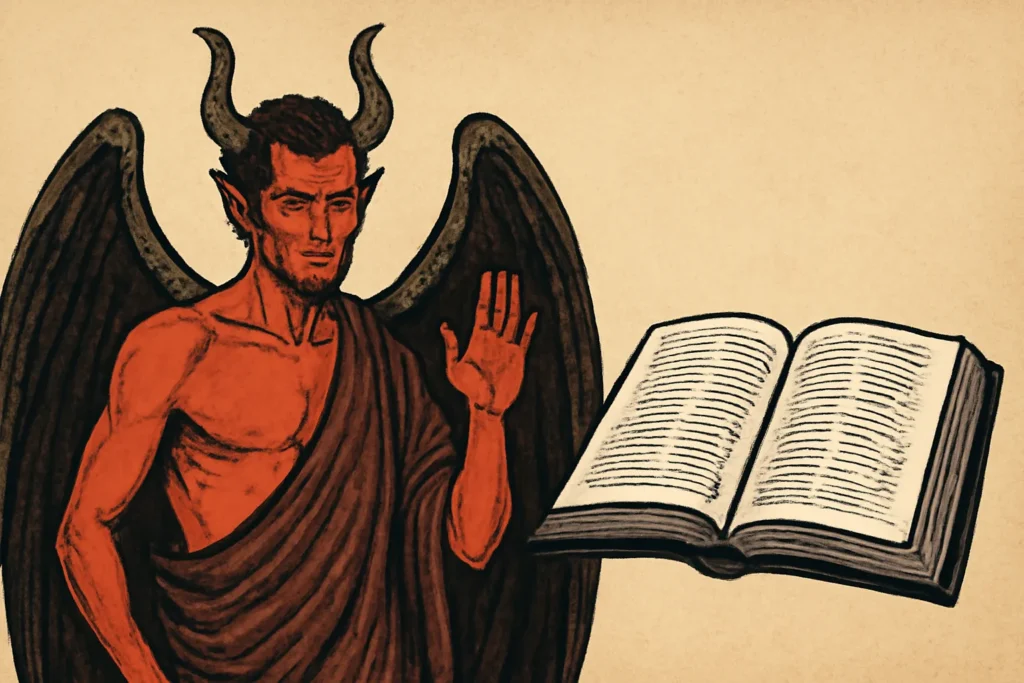
Among the many threads woven through the Bible, the figure commonly called Lucifer emerges in a small cluster of passages, blending linguistic history, translation choices, and theological interpretation. This article surveys the major bible verses related to Lucifer and related concepts, explains how translators have rendered key terms, and considers how scholars and readers understand these passages in their original contexts. The result is a map of the scriptural landscape where the name Lucifer appears in older translations, and where the broader figure of Satan, the adversary, and the cosmic foe appears across both Testaments.
Isaiah 14:12 and the name Lucifer: fallen from heaven
One of the most famous verses associated with Lucifer is found in Isaiah, often cited in Christian tradition as the moment of Satan’s fall. In the King James Version (KJV), the verse reads, “How art thou fallen from heaven, O Lucifer, son of the morning! ...” This line sits at the opening of a taunt against the king of Babylon, but over the centuries it has been interpreted more broadly as a symbolic account of a prideful being cast down from heaven. In many modern translations, the name Lucifer is not retained; instead you will see renderings such as “daystar,” “morning star,” or “star of the dawn” (examples include the ESV and NIV, which render the phrase as a metaphor for a being cast down due to pride, though the exact Hebrew word is י֫וֹם אֹתָה or a form linked to the root for light or dawn, depending on the edition).
Key considerations in this passage include:
Historical context: The oracle begins with a taunt directed at the king of Babylon, a ruler who aspired to ascend to the heavens and exalt himself. The larger structure uses poetic imagery to critique pride and hubris.
Textual tradition: The name Lucifer comes from the Latin Vulgate’s rendering of the Hebrew term often translated as “shining one” or “morning star.” In Latin, lucifer literally means “light-bringer” or “morning star.”
Translation choices: Modern translations often replace Lucifer with descriptive phrases like “morning star” or “star of the dawn”. This shifts the emphasis from a proper name to a symbolic description.
Interpretive spectrum: Some readers, particularly in traditional Christian readings, see this as a prophecy about Satan’s rebellion and fall. Others stress that the passage primarily concerns a human monarch and should not be read as a biographical portrait of a pre-existent demon.
Important passages around the Isaiah text emphasize how a once-glorified figure becomes a cautionary tale about pride. The broader message is not only about a particular king but about the spiritual hazard of self-exaltation. As a result, Lucifer in Isaiah has functioned in Christian thought as a typological forerunner of a cosmic adversary who later appears more explicitly in other texts.
Ezekiel 28:12–17 and the dual reference to pride, wisdom, and the fall
Another passage frequently brought into the discussion of Lucifer is Ezekiel 28:12–17. The header in many Bibles reads as a lament over the king of Tyre, but readers and commentators have debated whether the imagery points to a more exalted, non-human origin behind the pride described in the text. In the KJV, the passage includes lines such as:
“Thou art the anointed cherub that covereth... thou wast upon the holy mount of God: thou hast walked up and down in the midst of the stones of fire.”
Other phrases describe the fall from a position of beauty, wisdom, and perfection: “thou hast sinned: therefore will I cast thee as profane out of the mountain of God” and, “thine heart was lifted up because of thy beauty, thou hast corrupted thy wisdom by reason of thy brightness” (paraphrased for clarity). In many Christian readings, this passage has been read as a dual reference: first to a human ruler and second as a broader description of a creature who pledged pride and rebellion against God.
Consider these points as you study Ezekiel 28 in relation to Lucifer:
Literary structure: The passage uses heightened poetry to describe a figure of immense beauty and position who becomes corrupted by pride. The imagery of Eden, the garden of God, and precious stones underscores an exalted status that is forfeited by sin.
Historical-critical view: Scholars often see a double sense—an original referent to a human king, followed by a macrocosmic or archetypal reference that later readers identify with Satan.
Theological implications: The text addresses the danger of spiritual pride and the consequences of rebellion against the divine order. In Christian tradition, this is frequently linked to the broader narrative of Satanic rebellion.
For readers who emphasize the Lucifer reading, Ezekiel 28 strengthens the portrait of a being who begins in exalted status and then falls dramatically. For others, it remains a polemical description of a human tyrant, with the underlying patterns of pride as the key takeaway. The convergences and distinctions between Isaiah’s and Ezekiel’s depictions invite careful interpretation rather than a single, uniform reading.
Revelation 12:7–9: the war in heaven and the casting out of the dragon
In the New Testament, the cosmic scope of the adversary becomes explicit in Revelation. The text presents a dramatic heavenly conflict: “And there was war in heaven: Michael and his angels fought against the dragon; and the dragon fought and his angels, And they prevailed not; neither was their place found any more in heaven. And the great dragon was cast out, that old serpent, called the Devil, and Satan, which deceiveth the whole world.”
Several features of this passage are central to understanding the biblical portrayal of Satan and the broader question of Lucifer as a name. First, the figure is described by multiple designations: the dragon, the old serpent, the Devil, and Satan. This multiplicity of labels emphasizes different aspects of the adversary—cosmic power, deception, and opposition to God and to humanity.
Second, Revelation presents a dramatic, decisive turning point: the expulsion of the dragon from heaven. This language signals a shift in the heavenly realm and the ongoing struggle on earth. Third, the text’s imagery is highly symbolic and apocalyptic, aimed at encouraging perseverance in the face of spiritual warfare. The term Lucifer is not directly used here, but many readers see Revelation as part of the same broader arc—from pride and rebellion to downfall and judgment—that the name Lucifer historically symbolizes in Christian tradition.
Key takeaways from Revelation 12 in relation to Lucifer include:
Identity and titles: The dragon is a composite figure with links to the devil and Satan, reflecting the idea of an ultimate opponent who deceives humanity.
Prophetic symbolism: The heavenly war emphasizes the spiritual dimensions of evil, not merely political or earthly rivalries.
Cosmic scope: The battle is not confined to one era or locale; it engages the whole arc of redemptive history, from creation to final judgment.
Luke 10:18 and the language of a fall from heaven
In the Gospel of Luke, Jesus makes a succinct statement that has been tied by commentators to the motif of Satan’s fall. The verse reads in the KJV: “And he said unto them, I beheld Satan as lightning fall from heaven.”
Historical past or prophetic vision: Some readers understand Jesus as referring to a past event—the fall of Satan from a position of authority or grace. Others see it as a rhetorical vision that captures the rapidity and certainty of defeat for evil.
Authority and mission: The context of Luke 10 includes the disciples’ mission and the authority given to them over demons. The saying highlights the power to overcome spiritual opposition and the transient nature of Satan’s schemes.
Connection to other texts: The imagery of fall from heaven parallels the Isaiah and Revelation motifs, but Luke presents it in a concise, lithe form appropriate to Jesus’ own ministry and teaching.
For readers studying Lucifer in scripture, Luke 10:18 offers a compact note: evil’s power is real, yet its end is swift and decisive. The phrase “fall from heaven” echoes the larger biblical theme of pride meeting judgment, and it aligns with other passages that portray Satan as a formidable adversary who is ultimately overcome.
2 Corinthians 11:14 and the angel of light motif
The apostle Paul adds a crucial dimension to the discussion of deception and spiritual authority in 2 Corinthians 11:14: “And no marvel; for Satan himself is transformed into an angel of light.”
Masquerade of deception: The verse warns that evil can appear appealing and righteous on the surface, which makes discernment essential for communities and leaders.
Rhetorical context: Paul’s concern is erroneous or counterfeit apostles who disguise their true motives by presenting themselves as ministers of righteousness. This is a safeguard against being misled by appearances rather than substance.
When thinking about Lucifer and the concept of a luminous deception, this passage is often cited to illustrate how pride and self-centered ambition can masquerade as virtue. The idea that Satan can take the form of light emphasizes the danger of judging spiritual claims by aura or rhetoric alone.
Job 1–2: The accuser and the testing of faith
Although the name Lucifer does not appear in the book of Job, the figure most akin to the adversary in Job is Satan, described as “the accuser” or “the adversary.” In Job 1:6, “Now there was a day when the sons of God came to present themselves before the LORD, and Satan came also among them.” The scene continues with a conversation in which God allows Satan to test Job’s faithfulness within limits.
Key passages from Job 1–2 include:
Job 1:7: “And the LORD said unto Satan, Whence comest thou?”
Job 2:1–3: “And again there came a day when the sons of God came to present themselves before the LORD, and Satan came also among them to present himself before the LORD. And the LORD said unto Satan, Whence comest thou?”
Job 2:3: “And the LORD said unto Satan, Hast thou considered my servant Job... that there is none like him in the earth, a perfect and an upright man?”
From a narrative standpoint, Job provides a lens into the ongoing functioning of spiritual beings in the heavenly realm. The term Satan here is not the same as the later explosive war imagery of Revelation, but it does illustrate the idea of an adversarial force operating with permission within the boundaries of God’s sovereign governance. The figure in Job is not a publicly named epic opponent in the same way as the dragon of Revelation, yet it informs the broader portrait of evil’s presence in the world and the testing of faithful people.
Other biblical references and the broader theological picture
Beyond the passages that explicitly mention the name Lucifer or the title the devil, several other scriptures contribute to the multifaceted portrait of the adversary and spiritual opposition:
John 8:44: Jesus describes the adversary as “a liar, and the father of lies,” a portrait that emphasizes deception as a core attribute of evil.
1 Peter 5:8: “Be sober, be vigilant; because your adversary the devil, as a roaring lion, walketh about, seeking whom he may devour.”
2 Corinthians 4:4: “In whom the god of this world hath blinded the minds of them which believe not.”
Matthew 4:1–11 (the temptation of Jesus): The wilderness temptations highlight the adversary’s attempts to détour Jesus from his mission, including misusing scriptural authority and offering kingdoms without the cross.
Revelation 20:10: The final judgment of the devil, “which deceived them,” who will be cast into the lake of fire for ever and ever.
Taken together, these passages present a layered picture of evil: a spiritual being who opposes God, uses deception and fear, and seeks to distort human beings’ relationship with the divine. The figure commonly named Lucifer in traditional Christian thought is part of this larger tapestry, a name that crystallizes a certain moment and trait—pride leading to downfall—while the rest of scripture broadens that theme into a cosmic and ethical reality.
Translations, the name Lucifer, and how readers should approach the topic
The question of whether Lucifer is a biblical name for Satan hinges on textual transmission and translation. In the original languages, the term behind Isaiah 14:12 is linked to light or dawn, and the Latin Vulgate’s rendering lucifer helped crystallize the concept in Western Christianity. In most modern English Bibles, the word is not retained; instead, translators usually render the phrase in Isaiah as something akin to “morning star” or “shining one”.
Historical usage: The traditional label Lucifer became a recognizable name in Christian theology during the patristic and medieval periods, shaped by the Latin Vulgate and later Latin-speaking theologians.
Textual variety: Different translations reflect different manuscripts and translational philosophies. Some emphasize the prophetic a king’s self-exaltation; others stress an archetypal figure of rebellion against God.
Interpretive caution: Because a single verse can be read in multiple ways, many scholars urge readers to view Isaiah 14:12 within its immediate context (the fall of a Babylonian king) and within the broader biblical arc (the problem of pride and rebellion that culminates in Satan’s portrayal in later books).
In light of these realities, readers often approach the topic with these principles:
Distinguish name from symbol: Lucifer as a proper name is not the only way scripture refers to the adversary; “the devil,” “Satan,” or “the dragon” are common designations in other texts.
Read in context: Each passage—Isaiah 14, Ezekiel 28, Revelation 12, Luke 10, 2 Corinthians 11, Job—contributes to a composite portrait rather than a single, isolated biography.
Note the genre: Poetic and prophetic writings (Isaiah, Ezekiel) use vivid imagery that allegorizes political and spiritual realities; apocalyptic literature (Revelation) uses symbolic language to convey cosmic conflict and ultimate victory.
Common questions and nuanced answers about Lucifer in Scripture
As readers encounter these verses, several questions frequently arise. Here are a few along with concise clarifications:
Is Lucifer a biblical name for Satan? In the popular imagination, yes, but in the biblical languages and most modern translations, the name is not consistently used for Satan. The association arises from Isaiah 14:12 and later Christian tradition.
Does the Bible teach a pre-existence of Satan? The text does not present Satan as a fully fleshed-out individual with a historical biography in the way modern biographies read. The Satan figure operates as an adversary within the created order and, in some passages, as a supernatural being who tests or opposes humanity under God’s sovereignty.
Are Isaiah 14 and Ezekiel 28 talking about literal princes? Most scholars agree those passages have at least a royal, political referent (a monarch) but are also read as archetypal portraits of pride and rebellion that prefigure spiritual rebellion in the heavenly realm. Dual referents are widely accepted in biblical scholarship.
What is the significance of revelation’s war in heaven for believers today? It signals the ultimate triumph of God over evil, and it frames the Christian expectation of ongoing spiritual warfare that ends in final judgment. It also anchors the language of victory over the evil one in God’s redemptive plan.
How to study these passages responsibly: tips and approaches
For readers who want to explore the topic more deeply, here are practical steps to study these passages with care and clarity:
Compare translations: Look at Isaiah 14:12 in multiple translations (KJV, ESV, NIV, NASB, NRSV) to notice how the term for “Lucifer” is rendered and what implications that has for interpretation.
Check the immediate context: Read the surrounding verses in Isaiah and Ezekiel to understand who the immediate audience is and what the author intends to critique.
Consider the broader biblical arc: Read Revelation 12 and Luke 10 in conversation with the Isaiah and Ezekiel passages to see how the concept of a fall, a deceiver, and a cosmic foe evolves across the biblical narrative.
Be mindful of genre: Distinguish prophetic poetry from apocalyptic imagery and from narrative prose. Each genre uses language differently, even when they speak to related themes.
Note theological aims: The texts are often less about a biographical figure and more about human pride, moral testing, divine sovereignty, and the ultimate defeat of evil.
Key terms to recognize when reading about Lucifer and related themes
To help readers navigate the vocabulary surrounding these passages, here are some important terms and how they function within the biblical narrative:
Lucifer: A Latin-derived name used in some translations to refer to the “shining one” who fell from heaven; more commonly, modern translations avoid the name and render as “morning star” or similar descriptive phrases.
Morning star / star of the dawn: Metaphorical titles that highlight beauty and brightness, used in Isaiah’s text and various translations to convey a fall from grace rather than a literal person’s name.
Satan: A term meaning “accuser” or “adversary” used across the Hebrew Bible and New Testament to describe opposition to God; in later Christian usage, it becomes a personified opponent with cosmic dimensions.
Dragon / old serpent: Apocalyptic imagery in Revelation that personifies evil as a powerful creature opposing God and deceiving humanity.
Angel of light: A phrase used to describe deceptive spiritual beings who present themselves as virtuous; used by Paul to caution against counterfeit apostles (2 Corinthians 11:14).
Accuser / adversary: Terms for the being who challenges the righteous, tests faith, or opposes God’s people, depending on the text and context.
A concise glossary of the major passages
For quick reference, here is a compact guide to the passages discussed, with a note on their primary emphasis:
Isaiah 14:12 — The king of Babylon as the subject of a taunt; the name Lucifer in the KJV, often translated as “morning star” in modern versions; themes of pride and downfall.
Ezekiel 28:12–17 — A lament over a powerful ruler (often read as a double reference to a cosmic being); themes of beauty, wisdom, and fall due to pride.
Revelation 12:7–9 — Heavenly war and the casting out of the dragon/Satan; emphasizes ultimate defeat and judgment.
Luke 10:18 — Jesus’ brief remark about Satan’s fall from heaven, highlighted as a lesson in spiritual authority and the rapid defeat of evil.
2 Corinthians 11:14 — Satan as an angel of light; warning against deception and counterfeit authority among religious leaders.
Job 1–2 — The adversary’s presence in the heavenly court and the testing of a righteous man; informs the broader conversation about evil within God’s sovereignty.
Conclusion: reframing Lucifer in a broader biblical framework
In the Bible, Lucifer functions as a focal point around which a constellation of themes gathers: pride and its consequences, the reality of spiritual warfare, and the sovereignty of God in the face of malevolent powers. Although the name Lucifer appears most prominently in the KJV’s Isaiah 14:12, the surrounding passages and their echoes across the biblical canon help readers grasp a larger narrative about the origin, presence, and ultimate defeat of evil. The portraits of Satan—from the adversary who tests Job, to the deceiver who masquerades as light, to the dragon who is cast down in Revelation—form a complex, morally charged tapestry that invites careful study, humility, and faith in the God who overcomes all opposition.
Whether you encounter the term Lucifer in traditional readings or you encounter more contemporary translations that render the phrase in Isaiah in other ways, the biblical message remains clear: pride leads to downfall, deception is real, and God’s justice prevails. By tracing these bible verses about Lucifer and their context, readers can develop a nuanced understanding of how the Bible presents evil, the nature of spiritual conflict, and the enduring hope of redemption that undergirds the Christian faith.










Leave a Reply