Principalities and Powers — Biblical Meaning and Spiritual Significance
Principalities and Powers — Biblical Meaning and Spiritual Significance
Bible Dictionary · seres espirituales
Principalities and Powers — Biblical Meaning and Spiritual Significance
seres espirituales Principalities and Powers
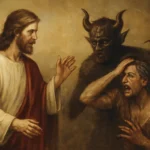
Principalities and Powers are spiritual beings mentioned in the New Testament, often interpreted as hierarchical ranks of angels or spiritual forces. They represent both divine and demonic authorities that influence the spiritual realm and, at times, human affairs. The term emphasizes a structured spiritual hierarchy that exercises authority, both good and evil. Biblically, these terms highlight the reality of unseen spiritual warfare and the authority believers have over evil forces through Christ.
The Greek term 'ἀρχαὶ καὶ ἐξουσίαι' (archai kai exousiai) is translated as 'Principalities and Powers.' 'Archai' means 'rulers' or 'primary agents,' while 'exousiai' indicates 'authorities' or 'powers.' Originally, these words described ranks within both angelic hierarchy and spiritual forces of opposition. Over time, theological interpretation has expanded their meaning to include cosmic powers influencing spiritual and earthly realms, emphasizing the structured scale of spiritual authority.
Key Bible Verses
Ephesians 6:12
For our struggle is not against flesh and blood, but against the spiritual forces of evil — against the Principalities, Powers, and other spiritual rulers of darkness.
This verse highlights the spiritual nature of the struggle believers face, underlining the existence of unseen powers like Principalities and Powers in spiritual warfare.
Colossians 1:16
All things in heaven and on earth were created through Christ and for Him, including the Principalities and Powers, which He has authority over.
This verse affirms that even spiritual authorities like Principalities and Powers were created by Christ and are subject to His sovereignty, emphasizing Christ’s supreme authority over all spiritual entities.
Romans 8:38
Neither height nor depth, nor any other created thing, can separate us from Christ's love, including spiritual authorities like Principalities and Powers.
This highlights the ultimate victory and security believers have over all spiritual powers through Christ's love and sovereignty.
Theological Significance
Theologically, Principalities and Powers represent hierarchical spiritual authorities, both divine and malevolent, influencing the spiritual and earthly realms. In the Old Testament, angels serve as messengers or agents of God's will, laying the foundation for understanding divine authorities. The New Testament develops this concept further, depicting a cosmic struggle between God's angelic hosts and demonic powers. The Apostle Paul’s writings underscore the reality of spiritual warfare and the believer’s authority in Christ over these powers. This concept underscores the spiritual dimension of salvation history, emphasizing Christ’s victory over evil and our call to spiritual perseverance.
Across Christian Traditions
Catholic tradition recognizes Principalities and Powers as part of the heavenly hierarchy, with angels serving under God's sovereignty, and interprets the term as referring to spiritual beings, both good and evil. Protestants generally view these terms as references to spiritual forces that oppose God's kingdom, emphasizing spiritual warfare and Christ’s authority over them. Orthodox Christianity also sees them as angelic beings within a divine hierarchy, but often emphasizes their role in the divine economy. Evangelical traditions typically focus on the tangible aspect of spiritual warfare, encouraging believers to actively oppose these powers through prayer and spiritual discipline, seeing them as part of the ongoing cosmic battle.
Application in Christian Life
Christians apply the understanding of Principalities and Powers by engaging in spiritual warfare through prayer, Scripture, and faith. Recognizing the influence of unseen forces encourages believers to rely on God's power to overcome temptation and evil. Christians also remind themselves of Christ’s authority over all spiritual powers, fostering confidence in spiritual battles. Practical steps include praying for spiritual protection, resisting evil influences, and standing firm in faith during challenging circumstances.
The term 'Principalities and Powers' originates from Greek philosophical ideas that later influenced New Testament language, merging concepts of divine order with spiritual authority. Historically, early Christian writers adapted these terms to describe the unseen forces in the spiritual realm, shaping theological perspectives on spiritual hierarchy and cosmic conflict.
Frequently Asked Questions
Are Principalities and Powers angels or demonic entities?
They are generally understood as spiritual beings, including both angelic forces aligned with God and malevolent powers working against His will (Ephesians 6:12).
Do Principalities and Powers still have influence today?
Yes, many believe these spiritual authorities continue to operate in the spiritual realm, influencing world events and spiritual conditions, but believers are endowed with authority through Christ to overcome them (Colossians 2:15).
How should Christians respond to these spiritual powers?
Christians are called to resist these powers through prayer, spiritual discipline, and reliance on God's victory in Christ, standing firm against evil (Ephesians 6:13-17).