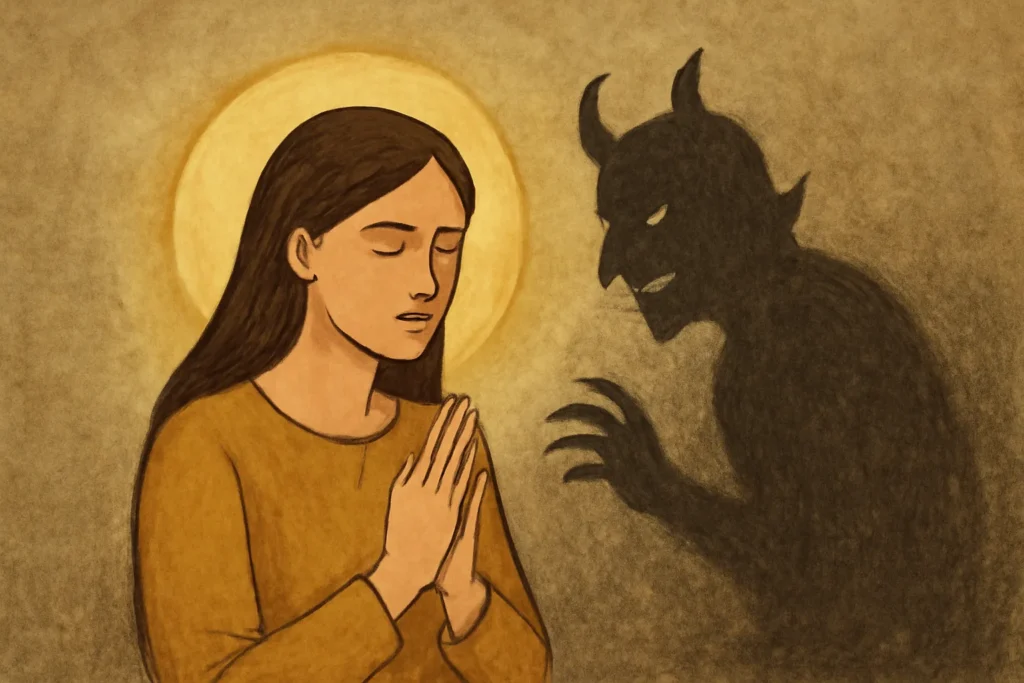
In many traditions, people turn to short prayers for protection from evil spirits as a way to anchor themselves in safety, peace, and divine presence. Short prayers are valued for their accessibility, their ease of recitation, and their capacity to calm the mind in moments of fear or unrest. This article explores the idea of protection, what makes a brief prayer powerful, and practical ways to use short prayers—across different spiritual perspectives and in a non-denominational frame. Whether you come from a faith tradition or you simply seek a moment of spiritual grounding, the following sections offer a broad and respectful guide to cultivating safety through concise, meaningful words.
Understanding the need for protection from unseen forces
Many cultures speak of spiritual dangers that can feel as real as physical threats. The language varies—evil spirits, malevolent energies, negative influences, restless spirits, or unsettled entities—but the underlying human concern is the same: fear, vulnerability, and a longing for safety. Short prayers function as a bridge between inner intention and outer reassurance. They help shift attention from alarm to trust, from chaos to order, from isolation to the sense of a protective presence nearby.
Protection prayers are not just about warding off harm; they are about inviting a sense of presence, purification, and steadiness. A well-timed short prayer can reset breathing, calm physiological stress responses, and reframe a challenging moment as one in which spiritual support is available. The power of a short prayer often lies in three elements: clear intention, focused language, and repeated practice.
What makes a short prayer for protection effective?
There is no single formula for the most effective short protection prayer, but several features commonly appear in the prayers that readers report as comforting and actionable. Consider the following principles as you explore or compose your own lines:
Clarity of intention: State exactly what you seek—safety, shelter, guidance, or release from fear.
Conciseness: Short prayers are easy to memorize and recite in moments of distress.
Imagery and symbolism: Light, shield, walls, armor, and sanctified space are common metaphors that translate well across traditions.
Invocation of a Higher Power or inner virtue: Whether naming God, a saint, a universal spirit, or inner strength, invocation reinforces courage.
Grounding: The act of praying can be paired with grounding techniques—breath, posture, or a safe physical space—to anchor the mind.
Personal resonance: The most effective prayers feel authentic to the reciter. Personal language and familiar names often carry the most power.
Bear in mind that a short prayer is not a magical guarantee but a practice that can open your inner and outer environments to protection, peace, and discernment. It can be used at moments of fear, during sleep, before entering a challenging situation, or as part of a daily routine that reinforces a sense of safety.
Ways to use short prayers for protection in daily life
Morning ritual: Begin the day with a brief affirmation of protection to set the tone for the hours ahead. A short line can serve as a shield as you step into the world.
Evening wind-down: End the day with a protection prayer to release fears of the night and invite rest in a field of safety and calm.
Before sleep: A quiet recitation can help quiet the mind and protect peaceful sleep from disruptive thoughts or nightmares.
In moments of fear: Use a concise prayer to rapidly reorient your attention toward safety and support.
In a space you feel vulnerable: A short blessing can transform a room or environment into a place of refuge.
Common motifs and themes in short protection prayers
Across traditions, several motifs recur as powerful anchors in prayers for protection from negative energies or evil influences. You can weave these themes into your own lines or choose from ready-made options:
Light and illumination: Light is a universal symbol of truth, clarity, and safety. Phrasings often center around light dispelling darkness, fear, or harm.
Shield and walls: The image of a barrier or armor conveys a sense of safe space that cannot be easily penetrated.
Sanctified space: Invoking a holy or sacred space—home, room, or heart—creates a protective field around the individual.
Breath and presence: Short prayers that connect with breathing promote grounding and a sense that protection is near in the present moment.
Peace and rest: Protection is often linked with a state of inner peace, sleep, and a lack of agitation.
Affirmations of safety: Clear declarations of safety, safety for loved ones, and safety as a divine or eternal reality.
When you craft or choose a short prayer, you can mix and match these motifs to reflect your beliefs and your needs. Short prayers benefit from flexibility—the ability to adapt language to your current situation while maintaining a sense of reverence and focus.
Variations of short prayers for protection from evil spirits
To broaden your semantic repertoire, here are variations of short prayers for protection from evil spirits, organized by broad spiritual orientation. Each section includes concise examples you can recite as they are or personalize to fit your voice and beliefs.
Non-denominational and universal protection prayers
These lines focus on universal concepts such as light, safe space, and inner strength, without specific religious language.
May I be surrounded by light. May that light dispel fear and shield me from harm.
Protect me with calm and clarity. Let peace be my shield and truth be my guide.
All fear depart. I stand in a circle of love and safety, now and always.
Guard my heart and mind. Keep me safe from any harm that does not serve my good.
Christian-inspired short prayers for protection
For many Christians, protection prayers invoke God, angels, or the power of the Holy Spirit. The prayers here are deliberately brief and focused on safety, courage, and divine guardianship.
Lord, protect me from all harm today. surround me with Your shield of peace, in Jesus’ name. Amen.
Keep me safe under Your wings. Let no evil prevail against me, and grant me courage to endure.
Jesus, be my refuge and stronghold. I trust in Your protection this day and night.
Angel of God, my guardian dear,to whom God’s love commits me here, guard me wherever I go. Amen.
Catholic and Orthodox-inspired short prayers
These brief invocations reflect a tradition of invoking saints, the Blessed Virgin Mary, or the Holy Spirit as protectors and guardians.
St. Michael, defend us in battle. Be our protection against the wickedness and snares of the devil; may God rebuke him, we humbly pray.
Mother of God, shield me from harm. Cover me with your protection and lead me toward peace.
Holy Spirit, come into my heart. Fill me with courage, safeguard my soul, and banish fear.
Islamic-inspired short prayers for protection
In Islamic practice, protection is often sought through recitation of verses or supplications (du'a). The focus is on seeking refuge in God from harm and misguidance.
Audhu bi rabbil-falaq (I seek refuge in the Lord of daybreak) from all harm, and I seek refuge in You from the whispers of the devils and their presence.
Allahumma inni a'udhu bika min sharri ma khalaq (O Allah, I seek refuge in You from the evil of what He has created).
Ya hayyu ya qayyumu bi-rahmatika astaghith (O Living, O Eternal, by Your mercy I seek relief). Grant me protection from hidden harms and fear.
Jewish and Hebrew-language protection phrases
Jewish tradition often uses concise phrases for protection and blessing, invoking God’s name and the power of righteous acts.
Adonai shomri (The Lord is my guardian)—protect me from danger today and night.
Michamot sheli lo yivdu (My refuge shall not be lost) when I sleep, and in all my ways.
May Your presence guard me wherever I go, and may I walk in safety and blessing.
Many traditions emphasize the protective power of the land, ancestors, and natural spirits. Short verses can honor those ties while offering personal safety.
Be with me, earth and sky. Let the trees stand as guardians and the wind give me courage.
May the ancestors’ watch be over me. May the earth beneath and the air around shelter me from harm.
Protective spirits of water and fire, keep me safe as I walk this day and night.
Hindu and Buddhist-inspired protection mantras
Protection in these traditions is often linked with wisdom, compassion, and inner strength as well as external safety.
Om namah śivāya—may safety and serenity fill my life as I chant for protection.
Mantra for protection:Aum warm sarva rakshanaya (may all beings be protected) in the spirit of compassion and safety.
May the protective halo of wisdom surround me, banishing fear and guiding my steps.
Sample short prayers for protection from evil spirits
Here are compact prayers you can recite as-is or adapt to your own words. Each is designed to be clear, concise, and easy to memorize while carrying deep intent.
Light surrounds me; fear dissolves now. Protect me from all harm and guide my steps in peace.
Shield of safety, rise around me. Let no malevolent presence enter this space, and grant me calm and courage.
May I be kept in peace and guarded by love. Let every echo of fear fade, and let safety be my constant companion.
Divine protection be with me today and tonight. Keep my thoughts clear, my heart steady, and my body safe.
I seek refuge in Your light. May darkness vanish before the radiance of Your protection, now and always.
Guard me as I sleep, O Source of all safety. Hold me in dreams of peace until morning light.
Remain with me, sacred presence. Banish fear, restore hope, and anchor my soul in safety.
Circle me with divine protection, a boundary no harm can cross, a shield that cannot fail.
Let every breath be a blessing. Fill me with strength, clarity, and serenity, protecting me from all harm.
May this space be sanctified and secure. No evil spirit may trespass here; may love and light prevail.
How to personalize a short protection prayer
Personalization helps a short prayer feel authentic and powerful. Consider these practical steps when crafting your own lines:
Identify your need: Decide whether you seek protection for yourself, for a loved one, for a room or space, or for a particular time (travel, sleep, work).
Choose a symbol or image: Pick a symbol that resonates with you—light, shield, circle, fire, water, or earth—and weave it into your words.
Use familiar language: Use words and phrases you naturally use in daily life so the prayer feels doable and sincere.
Ground with breath: Pair the prayer with a simple breathing cadence (inhale, exhale) to enhance focus and presence.
Make it a habit: Recite the prayer at a regular time each day to reinforce a sense of safety and belonging.
Examples of personalized short prayers
Below are sample templates you can adapt. They keep the structure concise while allowing for personal language and specific circumstances.
Template 1: “[Your name] is held safe by [your symbol]. May this space be free from harm, and may I walk in peace today.”
Template 2: “I call on [your sacred term] to shield me from fear and danger. Let light fill my mind, and let courage guide my steps.”
Template 3: “Protect me, O Spirit/Source/All-That-Is, from whatever disturbs my heart. Surround me with safety, and grant rest.”
Practical guidelines for using short prayers for protection
In addition to the words themselves, the practice around reciting a protection prayer matters. Here are practical guidelines to maximize effectiveness and maintain reverence:
Choose a quiet space: A calm environment helps you connect with intention and reduces distractions.
Speak aloud or silently with intention: Speaking aloud can intensify focus; silent recitation can be just as powerful if spoken words are difficult in the moment.
Maintain consistency: A regular practice—daily, at bedtime, or during moments of fear—builds a dependable sense of safety.
Pair with grounding: Combine prayer with a short grounding exercise, such as feeling your feet on the floor, a gentle breath cycle, or placing a comforting object nearby.
Respect diversity of belief: If you encounter others who hold different beliefs, honor their approaches while staying true to your own practice.
Frequently asked questions about short protection prayers
Below are common questions people ask about protection prayers, along with concise answers to help you understand how to use them effectively and responsibly.
Are short prayers less effective than longer prayers? Not necessarily. The effectiveness of a prayer often comes from focus, intention, and consistency rather than length. Short prayers can be powerful precisely because they are easy to repeat and embody a clear, focused request.
Can I pray for protection from both physical and spiritual harm? Yes. Many people combine petitions for safety, health, discernment, and spiritual protection in a single concise line or in a small series of lines.
What if I don’t belong to any organized religion? You can use non-denominational or universal language that resonates with you, such as “May I be surrounded by light” or “Protect me with love and courage.” The intention and sincerity matter most.
How often should I recite a protection prayer? Start with daily practice, or use it as needed in moments of fear. Over time, you may find a rhythm that suits your life.
Should I involve others in my protection prayers? You can pray for others as well, but personal protection prayers often focus on your own wellbeing. If you wish, you can include loved ones in a shared line or prayer circle.
Ethical and spiritual considerations
When engaging with prayers for protection from evil or negative energies, it is wise to hold a few ethical and spiritual considerations in mind:
Respect for all beliefs: Different traditions have distinct understandings of protection and harm. Approach other practices with respect and curiosity.
Avoid fear-based rituals: Prayers intended to induce fear or coercion can be counterproductive. Aim for steadfastness, peace, and safety.
Seek supportive guidance when needed: If fear or distress feels overwhelming, consider talking with a faith leader, counselor, or trusted friend who can offer support and perspective.
Ground your intent in love and care: Align your protective prayers with compassion for yourself and others, rather than fear alone.
Putting it all together: a guided approach to short protection prayers
If you would like a simple, repeatable framework to use whenever you need a quick protective moment, try this approach. It combines a brief invocation, a safety image, and a closing affirmation:
Invocation (1–2 lines): “[Your chosen name for the divine or universal power], please watch over me.”
Protective image (1 line): “Let light surround me as a shield.”
Affirmation of safety (1 line): “I am safe now; fear falls away; courage returns.”
Repeat this framework as needed, adjusting to your current feelings or environment. The rhythm of recitation can become a comforting anchor during uncertain times.
Conclusion: embracing short prayers as a practical tool for protection
Short prayers for protection from evil spirits—or from any form of harm—offer more than a momentary lull in fear. They provide a structured pause in which to re-center the mind, reconnect with one’s deepest values, and reestablish a sense of safety. By embracing a flexible approach—one that allows for personal language, cross-traditional motifs, and regular practice—you can cultivate a reliable method for navigating fear, uncertainty, and hardship.
Whether you draw from Christian, Jewish, Muslim, Hindu, Buddhist, Indigenous, or secular sources—or a personal blend of these traditions—these short prayers can become a durable resource in your spiritual toolbox. They remind you that you are not alone, that there is a protective field around you that can be entered through intention, and that you can choose to live with courage, clarity, and compassion even in the presence of fear.
If you are experiencing persistent distress or intrusive thoughts, remember to seek professional support. Prayers can accompany care from mental health professionals, faith leaders, or trusted communities, but they are most effective when complemented by practical resources, safe environments, and appropriate guidance.











Leave a Reply