Introduction: Why the Good Samaritan story matters today
The bible good samaritan story is more than a simple tale about helping a stranger. In its concise narrative, commonly known as the parabola of the Good Samaritan, readers encounter questions about compassion, neighborliness, and the boundaries that societies draw between people. This story, found in the Gospel of Luke, challenges readers to redefine who counts as a neighbor and what it means to act with mercy in a world full of norms, rituals, and social divisions. By exploring its context, its characters, and its enduring lessons, we can see why this biblical tale continues to be used in sermons, classrooms, and private reflection as a masterclass in ethical action and spiritual courage.
The narrative core: Luke’s parable of the Good Samaritan
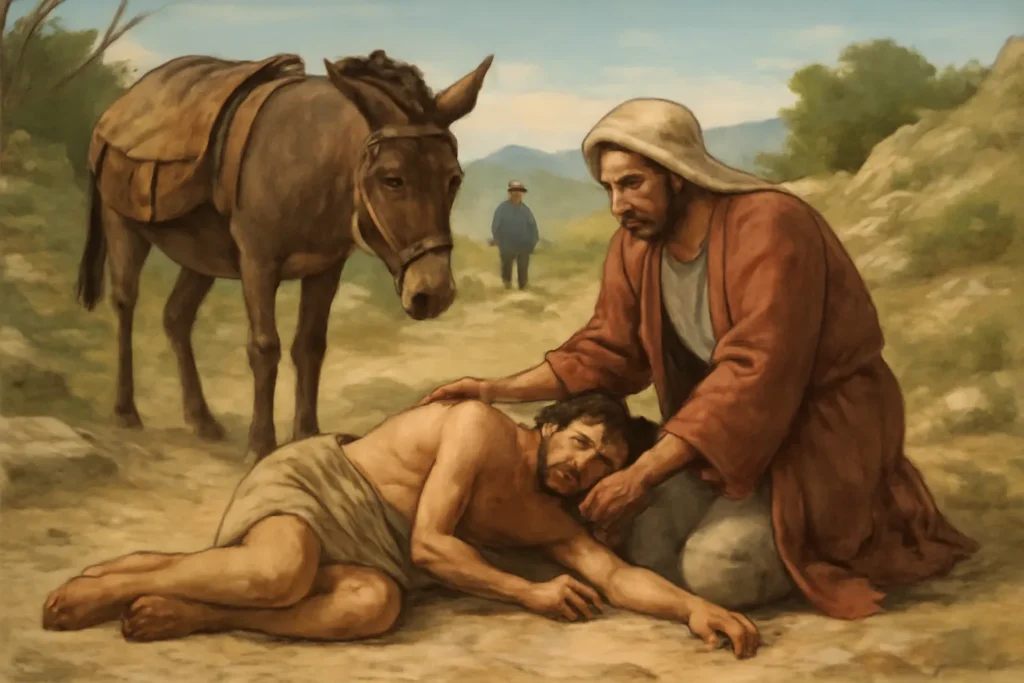
The Good Samaritan narrative sits within a larger teaching moment in Luke 10, where Jesus is asked how to inherit eternal life and what it means to love one’s neighbor. The story unfolds with a traveler who is beaten, robbed, and left by the roadside. A series of culturally expected helpers—the priest and the Levite—pass by without offering aid. Then comes the unexpected rescuer: a Samaritan, a member of a group historically viewed with suspicion by many Jews of the period. The Samaritan, moved by compassion, tends to the man’s wounds, transports him to an inn, and funds his care. The tale closes with a demand that echoes beyond its front step: “Go and do likewise.”
Characters in the story
The traveler or wounded man: a figure of vulnerability who tempts readers to imagine themselves in danger and in need of help.
The priest: a religious leader who represents ritual purity and obligation, yet he walks by on the other side.
The Levite: another temple functionary who performs religious duties but refuses practical mercy in the moment of need.
The Samaritan: the central hero for many readers, a person from a group despised by the local audience, who embodies radical hospitality and active mercy.
The innkeeper and the ongoing care recipient: figures who symbolize ongoing responsibility and care beyond a single act.
Key themes and lessons
Compassion across boundaries
One of the most powerful lessons of the bible good samaritan story is the possibility and necessity of compassion that crosses boundary lines. The Samaritan’s action defies social, ethnic, and religious divisions and centers care on a common human vulnerability. In contemporary life, this can translate into practices that bridge divides—race, class, language, faith traditions, or political beliefs—when there is a need to act with empathy and responsibility.
The contrast between the priest and Levite who pass by and the Samaritan who stops invites a sustained critique of ritualism that eclipses mercy. The text invites readers to foreground mercy and practical kindness over mere observance of rules. The question implied in the story is not which laws are violated, but whether love in action is available to those who stand in need.
Active compassion and practical help
The Good Samaritan doesn’t just feel pity; he acts. He bandages wounds, places the injured man on his animal, brings him to an inn, and pays for care. This sequence models a philosophy of care that blends emotional concern with concrete assistance. In modern life, this translates to everyday acts of generosity, rescue, advocacy, and support—things that require time, resources, and a willingness to persist beyond the initial impulse to help.
Definition of “neighbor” redefined
The parable reframes neighbor as anyone in need, regardless of social or ethnic boundaries. The question that triggered the parable—“Who is my neighbor?”—is answered in action. The Samaritan’s decision to help expands the circle of moral concern rather than shrinking it to a familiar or comfortable group.
Historical and cultural background
Samaritans and Judeans: An ancestral rift
The audience for the bible good samaritan story would have recognized the tension between Samaritans and Jews. Samaritans were historically related to Jews but had developed divergent religious practices and territorial loyalties. Tensions between the groups were deep, and stereotypes persisted. The narrative invites readers to read mercy against ingrained prejudice, suggesting that true neighborliness transcends inherited enmity. Understanding this background helps explain why the story challenged social norms so forcefully.
The role of travel, danger, and vulnerability
The roadside setting—a place of danger and exposure—accentuates the vulnerability of the traveler and the moral courage required to intervene. The motif of a journey interrupted by violence invites readers to reflect on the interruptions in their own lives—moments when time, wealth, comfort, or risk must be set aside to offer aid to someone in distress.
The Good Samaritan parable remains a touchstone for personal ethics. It asks readers to cultivate a mindset of watchful kindness—to notice someone in need, to suspend judgment, and to act with humility. In daily interactions—whether in public transportation, at work, or in a neighborhood—the underlying call is to embody compassionate responsiveness, even when it is inconvenient or costly.
Community and social responsibility
Beyond individual acts, the story has implications for institutions and communities. It encourages the creation of networks of care, such as mutual aid societies, neighborhood safety and health programs, and public policies that reduce harm and increase access to shelter, medical care, and support. The narrative invites a collective ethic of mercy that translates private acts of kindness into systemic care.
Parables in the Canon: Similar stories and contrasts
Across religious traditions, there are tales with similar concerns about mercy, obligation, and social visibility. While the exact Good Samaritan tale exists in Luke, other cultures and scriptural contexts offer analogous stories about helping strangers, showing hospitality to outsiders, or challenging insiders to expand definitions of virtue. These variations can illuminate how different communities conceive neighborliness, compassion, and moral responsibility.
Literary variations: Modern retellings and parabolic form
In contemporary literature and media, the biblical good samaritan story has inspired modern retellings that place the same ethical dilemma in new settings—urban deserts, international crises, or virtual communities. These retellings preserve the core question—“What does it mean to love your neighbor?”—while exploring the complexities of modern life: time constraints, economic pressures, inequality, and social risk.
Some readers and scholars have asked whether the parable places the burden of mercy primarily on the individual or whether it also critiques social structures. A balanced reading acknowledges both sides: individuals are called to act mercifully, and societies benefit when systems reduce barriers to care and when leaders model compassionate behavior. Critics also point out that the story does not absolve the surrounding culture from wrestling with injustice; rather, it calls readers to intervene wherever harm occurs, and to reimagine what a functioning community of care looks like.
Teaching and preaching: approaches to the Good Samaritan in education and faith communities
Discussing the terms—neighbor, mercy, compassion, forgiveness—to clarify meanings and challenge assumptions.
Role-play and scenario analysis—students or attendees act out modern equivalents of the parable: a person in distress in a busy city, an elder needing care in a care facility, a family stranded without resources and support.
Community service projects—translating the parable into action through organized volunteer work, shelter efforts, or health outreach.
Thematic journaling—reflecting on personal biases, fears, and opportunities to grow in compassion.
Conclusion: The ongoing call to compassion
The bible good samaritan story endures because it speaks to a universal call: to love one’s neighbor not only in word but in deed, to extend mercy to those who appear most unlike us, and to recognize the humanity of every person along the road of life. The parable of the Good Samaritan challenges readers to reframe who counts as a neighbor, to weigh the cost of care, and to commit to an ethic of practical kindness that persists beyond emotional reaction. It is a reminder that compassion is not simply a feeling but a sustained practice—one that asks us to act, to share, and to welcome the stranger into a circle of care.
Additional reflections and takeaways
Compassion is contagious: when one person chooses mercy, it often prompts a chain reaction of generosity and courage in others.
Mercy requires presence: real care involves time, attention, and the willingness to accompany someone through hardship.
Neighboring is proactive: being a neighbor means seeking out how you can serve, not waiting to be asked or hoping someone else will help.
Ethical humility: the Good Samaritan story teaches humility before need and a refusal to judge motives before offering aid.
Living the parable daily: practical steps for readers today include helping the vulnerable, supporting inclusive communities, and advocating for policies that ease suffering.
If you encounter the bible good samaritan story in study, worship, or personal reading, consider writing down three concrete ways you could embody its lessons this week. You might:
Notice someone in need in your daily routine and offer a tangible form of help, even if it costs you time or resources.
Reflect on any biases you hold toward people who are different from you, and ask a trusted friend to hold you accountable for acting with mercy toward them.
Support a local charity, clinic, or shelter that provides ongoing care to those who are marginalized or overlooked.
The impact of the Good Samaritan narrative is felt not only in what we do but in how we see others. By choosing to extend kindness across borders—whether real or imagined—we participate in a long tradition of compassionate action that remains deeply relevant in any era. The timeless message is clear: real neighbors are those who show up in moments of need, and true compassion changes both the recipient and the giver in enduring ways.










Leave a Reply