Bible Journaling Ideas for Beginners: Easy Projects to Start Today
Bible Journaling Ideas for Beginners: Easy Projects to Start Today
Welcome to a practical guide crafted for anyone curious about Bible journaling. If you’ve ever wanted to pair your scripture study with creative reflection, this article lays out beginner-friendly ideas and easy projects you can start today. You’ll discover a range of formats, materials, and prompts designed to build confidence while honoring the sacred text. Whether you prefer a quiet margin sketch, a color-rich page, or a tidy set of memory cards, there’s a path here that fits your style and schedule.
Bible journaling for beginners is not about mastering art or creating perfect pages. It’s about engaging with Scripture in a personal, meaningful way. The goal is to slow down, observe, reflect, and record your insights in a way that helps you remember and apply God’s Word. Below are gentle starting points to ease you into the practice.
Set a small, regular goal: commit to 5–15 minutes a day or a few times a week. Consistency matters more than length.
Choose a format you love: margins, dedicated pages, or a separate journal all work. The key is consistency and comfort.
Pick a starting point: a single verse, a short passage, or a theme you want to explore (grace, courage, promise, prayer).
Let your questions guide you: what does this verse tell you about God, about you, or about how to live today?
Keep it simple at first: you don’t need fancy supplies. A pencil, a few colored pencils, and a notebook can be enough to begin.
Essential tools for beginners
Before you jump into projects, gathering a few practical supplies will make the process smoother and more enjoyable. The goal is simplicity and ease of use, so you can focus on reflection rather than setup.
Traditional journaling supplies
A good, readable Bible in a translation you understand well
A dedicated notebook or journal for journaling pages
Comfortable pens with archival quality ink
Colored pencils or fine-tipped markers for subtle color
A small ruler or masking tape for clean margins
Optional: a soft watercolor set for light washes
Optional: sticky notes or page stickers for quick notes
Digital tools for flexible journaling
Tablet or computer with note-taking apps for typed reflections
Drawing or graphic apps for digital margins (if you enjoy a digital approach)
Cloud backups so your entries aren’t lost
Printable prompts or templates you can reuse
Easy Bible journaling projects you can start today
Here is a curated set of easy projects for beginners that cover margin art, reflective writing, and structured study. Each project includes a quick setup, simple steps, and tips to keep it approachable.
Project 1: Verse art in the margins
Turn a single verse into a small work of art that sits beside the text.
Materials: a fine pen, optional colored pencils, a ruler, and a quiet space.
Steps: choose one verse, write it in the margin in your own handwriting, and add a simple decorative border or motif related to the verse’s meaning (for example, a small dove for peace, a leaf for growth).
Why it helps: pairing visuals with Scripture strengthens recall and creates a personal cue to revisit the verse later.
Project 2: Scripture memory cards
Create portable cards that help you memorize a passage.
Materials: index cards or scrap paper, pens, a way to store cards (a small tin or a ring binder).
Steps: write the verse on one side and a short prompt or reflection on the other (e.g., “What does this require of me today?”).
Tips: review a card each day or week, and add a personal application line on the back after you memorize.
Project 3: Verse of the day reflection
A focused, daily practice that builds consistency without overwhelming your schedule.
Materials: your Bible, a notebook, a pen.
Steps: pick a verse each day, copy it into your journal, write a one-sentence reflection and one practical application.
Optional twist: add one short prayer line expressing how you want God to work through that verse.
Project 4: Verse collage page
Combine visual elements with Scripture to create a collage that communicates the verse’s mood or theme.
Materials: magazines or printed images, scissors, glue, cardstock or a page in your journal.
Steps: lay out cut images that reflect the verse’s message, write the verse at the bottom or top, and jot a brief reflection.
Note: collage can be abstract or focused on symbols that resonate with you.
Project 5: Topic study page
Study a theme present in multiple verses and create a dedicated page that maps key ideas.
Materials: a notebook, Bible, highlighter or color pencils, ruler.
Steps: choose a topic (e.g., grace, faith, courage), collect 3–6 verses related to it, write a short synthesis, and add a concluding thought or prayer.
Why it helps: topic mapping builds a deeper, integrated understanding of Scripture and can be revisited later.
Project 6: Simple prayer journal entry
Connect your study with prayer by writing a focused entry that links Scripture to your current needs.
Materials: journaling space, Bible, pen.
Steps: write the verse reference, paraphrase the verse in your own words, and compose a short prayer based on what you learned.
Tip: keep prayers concrete and specific to avoid overwhelming yourself.
Project 7: Timeline of a story or lesson
Visualize a narrative arc or teaching progression by laying out key events on a simple timeline.
Materials: ruler, pencil, page space, optional color coding.
Steps: identify the major events or turning points, label them on the timeline, add a short caption for each.
Benefit: chronological thinking helps you remember the story and its lessons more clearly.
Project 8: Nature-inspired journaling
Let creation mirror the Scripture you study, pairing verses with natural imagery.
Materials: drawing tools, coffee or tea for ambiance, a window or outdoor time if possible.
Steps: read a verse, choose a natural element that echoes the message (sunrise, tree, water), sketch or describe it, write a reflecting line about how the verse speaks to creation or daily life.
Why it works: sensory engagement strengthens memory and invites mindfulness.
Project 9: Acrostic or acronym journaling
Turn a word related to your verse into a mini acrostic that prompts reflection.
To keep your practice engaging, you can experiment with different formats that align with your personality and mood. The aim is to make journaling a joyful, sustainable habit rather than a chore.
Margin art with calligraphy
Combining simple lettering and decorative borders can elevate a small margin note into a memorable page.
Tip: start with print-friendly fonts or practice a few letters in a practice sheet before writing in your Bible margins.
Idea: write the verse in bold, then embellish with a light border or doodle that reflects the content (e.g., a shield for protection, scales for justice).
Interleaved pages for seasonal themes
Use a separate sheet between pages to add layers of journaling without crowding the text.
Materials: kraft paper or a lightweight sheet you can insert as a divider.
Steps: place a theme on the interleaved sheet, such as “patience,” and write related verses, reflections, and prayers on that sheet.
Benefit: keeps your study organized and lets you switch themes as interest shifts.
Structured Bible journaling ideas for beginners by theme
Beyond project-based ideas, consider thematic approaches that align with spiritual goals, seasons, or life events. These variations help you build a robust practice while zeroing in on what matters most to you.
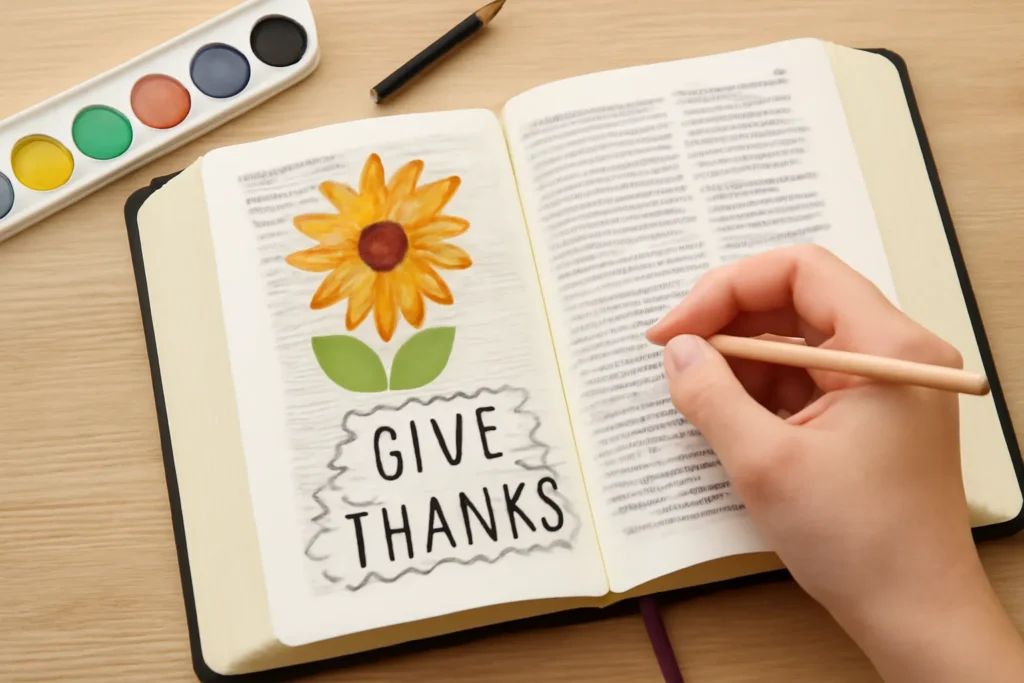
Gratitude journaling
Reflect on verses that highlight gratitude (e.g., 1 Thessalonians 5:18).
Record one verse per day and write a short note about what you’re grateful for in relation to that verse.
Include a small illustration or symbol of gratitude to reinforce the feeling.
Promises and hope
Focus on verses that reveal God’s promises (e.g., Joshua 1:9, Isaiah 41:10).
Draw a branch or a banner with the word “PROMISES” and place the verses as leaves or banners along the stem.
Note a personal reminder of how these promises apply to your daily life.
Wisdom and decision-making
Choose verses about wisdom (e.g., James 1:5) and write a short decision you’re facing.
Draw a simple flowchart or a list of pros/cons alongside the verse.
End with a short prayer seeking discernment.
Grace and forgiveness
Study verses about grace (e.g., Ephesians 2:8–9) and reflect on how grace shapes your reactions to others.
Use soft colors and gentle lines to convey the theme visually.
Document a personal instance where you extended or received grace.
Maintaining momentum and building a sustainable habit
Consistency is the heartbeat of any journaling practice. The following strategies are designed for beginners who want to keep Bible journaling ideas for beginners alive without burning out.
Schedule short sessions: set a fixed time, even if it’s 5–10 minutes.
Keep prompts handy: a small prompt list saved on your phone or in your journal helps when you’re unsure what to write.
Limit your supplies: start with a single notebook and a few colored pencils to reduce friction.
Set realistic goals: aim for one page or one card per week rather than daily perfection.
Celebrate small wins: share a sample page with a trusted friend or church group for encouragement.
Different formats for different personalities
People learn and reflect differently. Here are formats that suit various personalities while keeping the practice accessible to beginners.
Text-focused journaling for readers who love words and reflection—short verses with notes and prayers.
Art-focused journaling for visual learners—margin art, simple doodles, and color blocks.
Structure-focused journaling for those who enjoy organization—topic maps, timelines, and lists.
Hybrid journaling combines writing and art in a balanced way, offering flexibility as you grow.
Practical tips for beginners to avoid common pitfalls
Every learner faces small hurdles. Here are practical tips to keep Bible journaling ideas for beginners from turning into frustration.
Don't chase perfection; focus on honesty and personal relevance.
Don’t compare your pages to others. Your journey is unique, and your notes are for you and God.
Protect your margins if you’re using a physical Bible—start with a separate journal or use light pencil sketches in the margins.
Keep it portable—a small notebook or a travel-friendly set of supplies makes it easy to journal on the go.
Test different prompts to find what resonates; you don’t have to stick with one style forever.
Resources and communities to support beginners
Connecting with other readers and artists can energize your practice. Here are some supportive resources to explore as you develop your bible journaling ideas for beginners.
Books and workbooks that offer prompts, layouts, and examples for beginner-friendly journaling.
Online communities such as forums or social media groups where members share pages, tips, and encouragement.
Church or small-group workshops that offer a guided introduction to journaling with Scripture.
Printable templates and starter kits to jump-start your pages without needing to design from scratch.
Frequently asked questions about Bible journaling for beginners
Below are concise answers to common questions that beginners often have when starting bible journaling ideas.
Is Bible journaling only for artists? Not at all. It’s for anyone who wants to engage with Scripture creatively, whether through words, color, or simple drawings.
How much time should I devote to a journaling session? Even 5–15 minutes can be meaningful. It’s more about consistency than duration.
What if I don’t feel creative? Focus on reflection and the act of recording insights. Creativity often grows as you practice.
Can I use digital tools? Yes, many beginners enjoy digital journaling for ease of editing and sharing, then gradually transition to physical formats if desired.
Encouraging words for beginners embarking on Bible journaling
Starting a new practice can feel daunting, but remember that journaling is a dialogue with God and a personal tool for spiritual growth. Treat this time as a gift to yourself and to your relationship with Scripture.
Be patient with yourself; meaningful insights often come slowly, and consistency matters more than immediate depth.
Celebrate small steps—copy a verse you love, color a border, or write one line of reflection. Small, regular acts compound over time.
Invite grace—your journal is a space to admit questions, uncertainties, and prayers as well as insights.
Creating a personal journaling plan
To help you establish a sustainable routine, here is simple, beginner-friendly plan you can adapt:
Pick a starter format (margin art, memory cards, or a short reflection page).
Schedule a regular time (daily, every other day, or weekly).
Choose a verse or theme to focus on for the first two weeks.
Use a small prompt such as “What does this verse teach me about God?” and “What does it require of me today?”
Review and reflect after two weeks—note what you enjoyed and what you’d like to adjust.
Conclusion: The lifelong value of Bible journaling
Bible journaling ideas for beginners open the door to a disciplined, meaningful, and creative way to engage with Scripture. By starting with approachable projects, essential tools, and flexible formats, you can cultivate a habit that deepens understanding, fosters memory, and enriches prayer. The journey is personal, not a performance path. As you continue, you’ll discover what resonates most—the quiet margins that hold your reflections, the color that brings comfort, or the simple cards that carry a promise into your daily life.
Whether you call it a journaling habit, a devotional routine, or a creative faith practice, the essential point remains: invest a small amount of intentional time, use the prompts that speak to you, and let God guide your reflections. Soon, what started as beginner bible journaling ideas will expand into a rich, sustainable, and deeply personal way to encounter the Bible every day.








Leave a Reply