Bible Verse Journaling: A Complete Guide to Reflective Scripture Writing
Bible verse journaling is more than simply copying verses into a notebook. It is a practice that blends reading, reflection, and intentional writing to deepen your understanding of Scripture, shape your mindset, and invite practical change in daily life. Whether you are a lifelong student of the Bible or a newcomer seeking a meaningful way to engage with the text, this guide offers a comprehensive path to cultivate a personal, transformative habit. In this article, you’ll find practical methods, thoughtful prompts, and varied approaches—often called variations of bible verse journaling—that honor different learning styles while staying true to the core objective: to encounter God through Scripture and translate insight into action.
What is Bible Verse Journaling?
At its heart, bible verse journaling is a disciplined routine that combines reading, note-taking, and response. It asks not only, “What does this verse say?” but also, “What does this verse mean for me today?” The process typically includes:
Reading a passage in context.
Observation of literary features, themes, and key terms.
Interpretation—careful thinking about what God through the text is revealing.
Application—concrete steps you can take in your life, relationships, or work.
Prayer—bringing what you’ve learned before God and inviting His help to live it out.
The result is a personalized record that captures your journey with a passage over time. The content can take many forms—brief reflections, memorable quotes, a verse map, or a doodle that helps you remember a truth. The consistent thread is reflective practice, not merely transcription.
When readers talk about reflective scripture writing, they often emphasize two outcomes: (1) a deeper understanding of the text, and (2) a more intentional life shaped by God’s directions. This guide will present several modes you can try, so you can discover which style best fits your personality, schedule, and spiritual goals.
Different Approaches to Verse Journaling
Verse Mapping: Uncovering Meaning in Layers
Verse mapping is a popular technique that helps you see a passage in its fullness by breaking it into components. It often involves listing the verse, its context, definitions of key words (from original languages or trusted lexicons), cross-references, and a personal takeaway. The result is a visual map that anchors meaning and makes it easier to recall the passage later.
Write the verse at the top.
Note the context—chapter, book, and audience.
Identify a few key words or phrases and define them with concordances or reliable glossaries.
Record cross–references that illuminate the theme.
Conclude with a practical application and a short prayer.
SOAP Journaling: Structure for Depth
The SOAP method (Scripture, Observation, Application, Prayer) provides a simple, repeatable structure that helps you move systematically from text to life change.
Scripture: Write the passage and verse in your own words or a clean quote.
Observation: What do you notice about the passage? What themes emerge?
Application: How does this passage apply to your life right now?
Prayer: Respond to God with a prayer grounded in your observations and decisions.
Inductive Bible Journaling: Seeing with Fresh Eyes
The inductive approach emphasizes personal discovery rather than relying on commentators. It involves careful questions: What does the text say? What does it mean? How should a person respond? In journaling, you’ll record your answers alongside the verse, creating a living dialogue with the text.
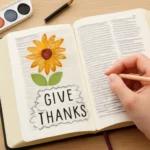
For many, art enhances memory and emotion. Verse art journaling blends handwriting, typography, symbols, and color to express insights visually. You might illustrate a favorite phrase, sketch a scene inspired by the passage, or create a decorative page that anchors a truth in your memory.
Digital vs. Paper Options: Finding Your Medium
The medium you choose can impact your rhythm and focus. Digital scripture journaling—using note apps, journaling software, or cloud notebooks—offers portability, searchability, and easy cross-referencing. Paper journaling—with notebooks, journals, or art pads—provides tactile engagement and can be more conducive to handwriting, doodling, and a slower pace. Some prefer a hybrid approach: draft in one medium and refine in another.
Regardless of format, the goal remains the same: cultivate a habit of reverent attention to God’s Word that moves from reading to living.
Step-by-Step Guide to Start Bible Verse Journaling
Whether you are new to journaling or returning after a break, this practical sequence helps you establish a sustainable routine. The steps can be adapted to your style, but the spirit remains: engage, reflect, apply, and pray.
Set a consistent time and place. Choose a quiet ritual that signals you are about to engage with Scripture. Even 10–15 minutes can be meaningful when done consistently.
Select a passage that resonates with your current season—a Psalm of lament, a promise in a Gospel, or a letter that speaks to your challenges.
Read in context. Read the surrounding verses, note historical or literary context, and consider who wrote the passage and to whom.
Observe patterns. Look for repeated words, contrasts (light/dark, strength/weakness), verbs that indicate action, and divine promises or commands.
Choose a journaling method (verse mapping, SOAP, inductive notes, or art journaling) and prepare your page accordingly.
Write a personal takeaway in your own words. What truth stands out to you today?
Apply it. Think of one concrete action you can take in the next 24–72 hours to live out the truth.
Pray. End with a prayer that expresses your dependence on God and asks for help to live by what you’ve learned.
Review periodically. Return to a previous entry after a few days or weeks to observe growth, consistency, and the ongoing impact of the truth you wrestled with.
As you grow more comfortable, you can shorten the process or expand it with additional elements—such as cross-references, memory verses, or a gratitude line. The essential objective is ongoing transformation through disciplined reflection.
Prompts and Rituals to Deepen Reflection
Prompts help jump-start your journaling session and keep you honest about how Scripture intersects your life. Below are varied prompts you can use solo, with a partner, or as part of a group study. You can mix and match prompts to create a fresh session each day or build a weekly ritual around a theme.
What does this verse reveal about God's character? List attributes such as mercy, faithfulness, justice, or love.
What is one truth I resist right now? How does the passage challenge that resistance?
What is one command or instruction I should obey? What is one concrete step you can take?
What fears or doubts arise from this text? Write a short prayer addressing them.
What promises stand out? How can you anchor your day in that promise?
What is the context telling you to avoid or flee? What positive alternative does the passage invite?
What connections do you see to your current circumstances? Identity, work, family, health, or community.
Who could benefit from this truth? Consider sharing a brief reflection or prayer with someone you know.
What does this verse reveal about humility, faith, or obedience?
How does this verse point to Jesus? Note messianic foreshadowing, fulfillment, or grace.
What is one memory verse to memorize this week? Write it in a readable format and practice reciting it daily.
Describe a moment of gratitude sparked by the passage.
In addition to prompts, consider a small ritual to anchor your practice. Examples include lighting a candle, kneeling briefly, or playing a soft instrumental in the background to create a contemplative environment. The ritual signals your brain that this is a sacred, focused time, not just a task.
Tools and Materials: What You Need to Begin
You do not need fancy equipment to start. However, having the right tools can enhance focus and consistency. Here is a practical starter kit that covers both physical journals and digital options.
Journal or notebook with a comfortable size and paper that accepts pencil or pen without bleed-through.
Writing utensils such as a pen with a fine point for neat copying, plus a pencil for rough drafts.
Ruler or grid pages to create verse maps or margins for doodles.
Colored pencils or highlighters to emphasize themes, words, or cross-references.
Sticky notes for adding quick reflections, cross-references, or future prompts without cluttering the page.
Digital Setup
Note-taking app (e.g., a cloud-based notebook, plain text, or a dedicated journaling app) for portability and searchable entries.
Bible study software or online resources for access to commentaries, lexicons, and cross-references.
Cloud backup to protect your entries and facilitate access across devices.
Optional Enhancements
Index cards or a mini-portfolio to store key phrases or memory verses you want to revisit.
Art supplies like washi tape, watercolor brushes, or stamps for verse art journaling.
Timers to structure focused journaling sessions (e.g., 15-20 minutes).
Creating a Habit: Time, Frequency, and Environment
Consistency is the cornerstone of effective journaling. A sustainable habit emerges when you align your practice with your life rhythm and create an environment conducive to contemplation.
Set a realistic pace. Decide on daily, every-other-day, or weekly journaling, depending on your schedule. It is better to start small and grow than to overextend and abandon the habit.
Build a dedicated space. A quiet corner, a chair by a window, or a small table with your journal can become a mental cue for reflection.
Hide perfection, embrace progress. Your pages do not need to be flawless. The goal is sincerity and growth, not presentation.
Pair journaling with a routine. Linking journaling to another daily practice—such as after morning prayer or after a Bible reading—helps embed it in your day.
Track your consistency. A simple habit tracker or a calendar mark can provide motivation and a sense of accomplishment.
For long-term vitality, vary your routines occasionally. Try a "Verse of the Week" focus, alternate between prose and poetry, or switch between a quiet reflection and a more intentional, cross-referenced study. The flexibility is a strength, not a weakness.
Common Challenges and How to Overcome Them
Any practice worth pursuing encounters friction. Here are common hurdles and practical antidotes to keep you moving forward in your Bible verse journaling journey.
Time pressure: Shorten sessions to a manageable length, such as 5–10 minutes, and gradually increase as you build consistency.
Writer’s block: Use prompts, switch to verse mapping, or copy a key verse verbatim and expand on its meaning in a new way.
Distractions: Create a distraction-free zone, turn off notifications, or set a timer to focus fully during the journaling window.
Finding relevance: Start with passages that address your current questions, fears, or joys. Revisit old entries later to see growth.
Balancing interpretation and obedience: Maintain humility—interpretation is guided by the broader biblical witness and the Spirit’s prompting, leading to obedient living.
Advanced Techniques for Seasoned Journalers
Once you have established a routine, you may explore advanced techniques that deepen your engagement with Scripture and sharpen your spiritual senses.
Topical Journaling: Tracing Themes Across Books
Topical journaling treats a theme (e.g., mercy, faith, justice, stewardship) across multiple passages. Collect verses that speak to the same theme, compare contexts, and note how God’s message unfolds across authors and genres. This approach helps you see the coherence of the biblical story and apply its truths in diverse life situations.
Cross-Referencing and Harmony Exercises
Practice cross-referencing by linking verses that illuminate one another. Create a cross-reference map in your journal, noting how a verse in Isaiah might illuminate a parallel passage in Romans or Galatians. The aim is to appreciate the harmony of Scripture and gain a richer comprehension of the message.
Memory Verse Projects
Commit to memorizing a handful of verses each month. Write the verse on dedicated cards, decorate them, and place them where they will be seen daily. A memory verse project reinforces truth in your heart and makes it easier to recall during trials or decisions.
Treat your journal as a space where you record your prayers in light of Scripture. Write prayers that reflect a growing understanding of God’s character and promises. Over time, you can review prayers to observe God’s faithfulness in answering them or guiding you through new challenges.
Language and Translation Variations
Some readers enjoy comparing translations or paraphrasing verses in their own words. This can sharpen understanding and encourage personal ownership of the text. When you paraphrase, aim for clarity and fidelity to the original meaning, while letting your unique voice emerge.
Conclusion: The Transformative Power of Reflective Scripture Writing
Bible Verse Journaling is not a mere intellectual exercise. It is a spiritual discipline that invites you to dwell in God’s Word, listen for His voice, and respond with obedience. The practice bridges the gap between reading and living, turning knowledge into wisdom you can apply in relationships, work, and service. Through routine, you gain not only insight but also patience, resilience, and hope as you witness how the Holy Spirit works through Scripture to shape your character.
The beauty of verse journaling lies in its adaptability. It welcomes variations of bible verse journaling—from meticulous verse maps to liberating art pages, from compact SOAP entries to expansive topical studies—so you can experiment until you discover the method that most effectively communicates truth to your heart. Whether you seek quiet contemplation or a dynamic, cross-referenced study, your journal can become a trusted companion—an ongoing conversation with God that records your honest questions, your courageous steps toward obedience, and your grateful responses to His grace.
If you are just beginning, remember this: consistency beats intensity. Start small, keep a gentle cadence, and allow your practice to deepen organically. Over months and years, you may find that your entries not only reflect what you have learned from the Bible but also reveal how the Bible has learned you—reshaping your priorities, affections, and daily decisions in light of God’s truth.







Leave a Reply