NLT Journaling Bible: A Practical Guide to Scripture Journaling
The NLT Journaling Bible has become a popular tool for readers who want to interact more deeply with Scripture. It combines the readability of the New Living Translation (NLT) with generous margins designed for notes, reflections, and creative expression. Whether you are new to journaling or a seasoned practitioner, this specialized edition offers a framework that invites you to slow down, observe, and respond to God’s Word in a personal, sustained way. In this guide, you’ll find practical insights on what the NLT journaling Bible is, how to use it effectively, and how to build a journaling habit that enriches spiritual formation.
What is the NLT Journaling Bible?
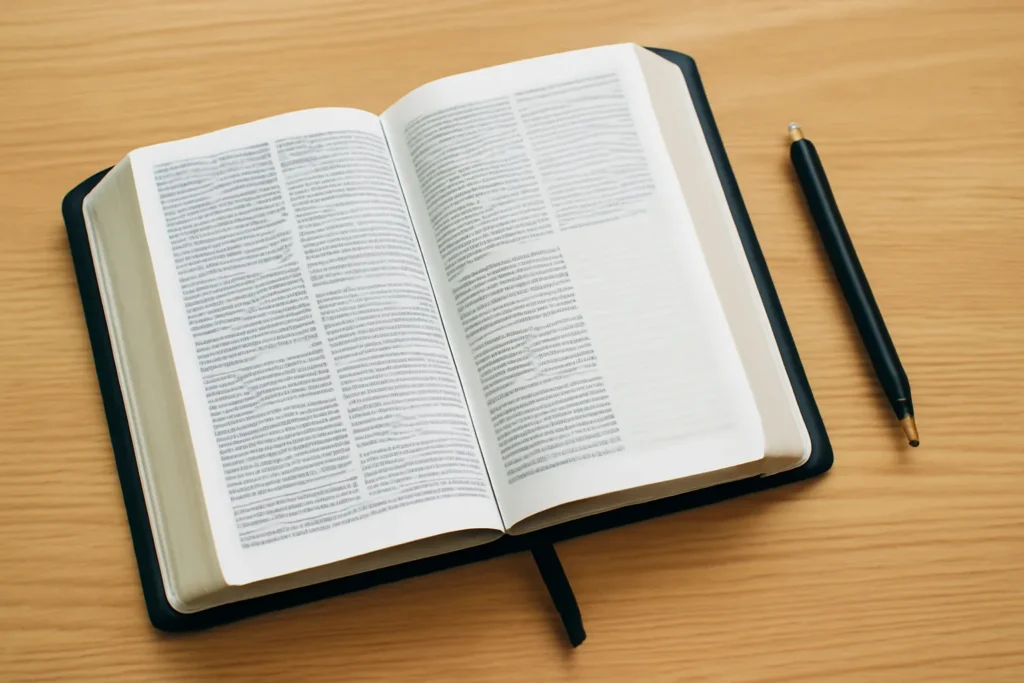
In its essence, the NLT Journaling Bible is a edition of the Bible that preserves the text of the New Living Translation while providing wide, ruled margins adjacent to the biblical text. These margins are designed for note-taking, sketching, and personal reflections. The goal is not just to read Scripture but to engage with it on a page-by-page level—to write down insights, questions, prayers, and applications as you study. You may encounter versions that feature a two-column layout, where the biblical text is paired with a spacious edge for journaling, or a single-column format with generous margins depending on the edition. Regardless of the exact layout, the core idea remains the same: create space for your voice to accompany God’s voice.
While the NLT is known for its natural, readable style, the journaling Bible adds a specific intention: to turn passive reading into a visible, ongoing conversation with the text. It is sometimes called the NLT Journal Bible or the NLT Journaling Edition, but all of these names point to the same practice of pairing Scripture with personal journaling space. Different printings may vary in features—like the size of margins, the presence of prompts, or additional study helps—but the underlying purpose remains consistent: to support meaningful engagement with God’s Word through journaling.
Why choose the NLT for journaling?
Several factors make the NLT a compelling choice for those who want to journal alongside Bible reading. Consider the following:
Natural, readable language: The NLT aims to convey meaning in contemporary English, making it accessible for readers at many levels. This clarity can reduce friction when you write reflections in the margins.
Readable flow: The translation emphasizes readability without sacrificing fidelity to the original languages, which helps you capture insights without getting lost in archaic phrasing.
Accessible journaling format: The journaling edition adapts the page layout to support writing—ample white space, lines, and sometimes prompts—so you can consistently capture thoughts without fighting against cramped space.
Encouragement of personal application: The combination of clear translation and reflective margins encourages you to translate biblical truth into everyday life statements, prayers, or commitments.
Flexibility for multiple journaling styles: Whether you prefer observation notes, devotional reflections, prayer journaling, or creative doodling, the journaling Bible format accommodates diverse approaches.
If your goal is to grow in both knowledge and practice, a journaling Bible in the NLT translation can be a powerful companion. It is especially helpful for readers who want to trace themes, memorize verses, or capture a prayerful response to Scripture over time.
Key features you’ll typically find
Though editions vary by publisher and printing, most NLT journaling Bibles share several core features that support journaling practice. Here are the elements you’re likely to encounter:
Wide margins: Outer or interleaved margins designed for writing, drawing, or color-coding notes related to the text.
Ruled or lightly ruled lines: Subtle guidelines in the margins to help keep notes neat and legible.
Two-column or single-column text layout: A layout that preserves readability while ensuring ample space for notes.
Introduction pages or book overviews (sometimes): Brief guidance on how to use the journaling Bible and what to expect from each book of the Bible.
Durable paper and binding (varies by edition): A balance between page quality and writing comfort, designed to reduce bleed-through; some editions may offer thicker paper, others thinner paper with careful pen selection recommended.
Study helps and cross-references (sometimes): Interspersed notes, maps, or concordance references in certain editions to support deeper study alongside journaling.
Prompts or reflective questions (optional): Some editions include pre-printed prompts or space for guided reflection, while others offer blank margins for more自由 writing.
Because publishers release multiple variations of the NLT journaling Bible, you’ll want to confirm features for the exact edition you choose. If you’re shopping, look for keywords like NLT Journal Bible, NLT Journaling Edition, or NLT Journaling Bible with margins to identify the journaling-focused format.
Using a journaling Bible is not about filling every margin with text or creating an elaborate art project. It’s about cultivating a steady rhythm of reading, observing, and applying. Here is a practical approach that works for many readers:
Begin with a simple reading plan
Choose a plan that suits your pace—daily readings, a weekday plan, or a thematic approach (e.g., Psalms of lament, proverbs on wisdom, or the Gospels’ narrative arc).
Start with a short passage to avoid overwhelm. Even a single verse can become the seed for thoughtful journaling.
Read slowly and aloud if possible to hear the text’s cadence and nuance.
Move from observation to interpretation
Observation: Note what stands out in the text—the key words, repeated phrases, or surprising details. You can write a brief paraphrase in your margins to anchor your understanding.
Interpretation: Ask questions like "What does this teach me about God?" "What does this reveal about human nature?" "What promises or commands appear here?"
Application: Translate insights into tangible actions: a decision, a change in attitude, or a new prayer intention.
Document insights in a consistent structure
Some readers find it helpful to adopt a simple, repeatable structure for each journaling page. If you prefer a method with a clear rhythm, consider the following framework:
Verse or passage — write the key verse(s) you studied.
What stands out — note observations, questions, or insights.
What I learned about God — reflect on attributes or actions of God revealed in the passage.
What I learned about myself — note conviction, grace, or growth areas.
Prayer or response — compose a prayer or a practical step you can take in light of the passage.
Another common approach is to use the SOAP method (Scripture, Observation, Application, Prayer), adapted for the journaling Bible format. This method provides a simple, repeatable template that fits well with margins and prompts.
Practical setup: getting your workspace ready
Setting up a comfortable, inviting space can make journaling more enjoyable and sustainable. Here are practical tips to prepare your area and supplies:
Choose the right pen set: A reliable pencil or gel pen with smooth ink helps prevent feathering and bleed-through. Many readers favor a fine liner (0.3–0.5 mm) or a gel pen for clean lines in margins.
Keep highlighters purposeful: Use a small palette of colors to code themes (e.g., blue for promises, green for actions, orange for questions) rather than decorating margins with random color blocks.
Use a margin-friendly ruler or stencil: A slim ruler can help guide your notes, while stencils enable decorative but non-distracting elements if you enjoy doodling.
Protect the Bible text: If you journal heavily, consider a protective cover or a dedicated notebook for overflow notes. Some readers prefer to keep their journaling Bible as a standalone, with a separate notebook for longer reflections.
Organize prompts and references: Create a tiny index or a digital file of prompts you like to revisit. Having ready prompts reduces friction on busy days.
Establish a routine: A consistent time and place builds habit. Even 10–15 minutes a day can yield meaningful momentum over weeks and months.
Common layouts and margins: what to expect
Layout variations across the NLT journaling Bible family influence how you interact with Scripture. Understanding common layouts can help you select the edition that matches your journaling style.
Certain editions include guided prompts or short questions on some pages to stimulate reflection.
Decorative but non-intrusive design elements can provide aesthetic joy without distracting from the text.
Journaling techniques and styles you can adopt
The practical goal of the NLT journaling Bible is to cultivate a personal dialogue with Scripture. Here are several journaling modes you can experiment with, depending on your mood, goals, or season of life.
Observational journaling
Focus on what the text says in its immediate context. Write down key words, repeated phrases, and any questions that arise.
Capture grammatical clues (verbs of action, tenses) and note how the passage fits into the broader biblical narrative.
Reflective journaling
Move beyond what the text says to what it means for you personally. Record how the passage speaks to your heart, fears, hopes, or relationships.
Ask yourself: What in this verse changes how I see God, myself, or others?
Prayer journaling
Turn insights into prayer. Write prayers that echo the language of Scripture or that address specific needs you discern while reading.
Include gratitude, confession, intercession, and requests aligned with the truth you studied.
Thematic journaling
Track recurring themes across books or a particular biblical author (promise, mercy, faith, justice, love).
Use color coding or a dedicated section in your margins to connect passages that explore the same theme.
Creative journaling
Incorporate hand lettering, doodles, or simple illustrations to express the text’s meaning visually.
Creative elements should serve clarity—let them enhance understanding, not overshadow the text.
Practical tips for staying motivated and avoiding burnout
Maintaining momentum with your NLT journaling Bible requires small, sustainable choices. Here are practical suggestions to help you stay consistent without feeling overwhelmed.
Set realistic goals: Start with 5–10 minutes daily or 3–4 sessions per week. Increase gradually as you build habit.
Keep it portable: A compact journaling Bible, a slim notebook, and a small set of pens fit easily in a bag for on-the-go journaling.
Use a prompt stash: Maintain a list of 6–10 prompts you can rotate. Prompts might include “What does this passage reveal about God’s character?” or “What is one action today that reflects this verse?”
Have a retreat plan: Periodically set aside longer time blocks for deeper reflection (monthly or quarterly) to refresh your engagement.
Review and reflect: Revisit older pages to notice growth, changes in perspective, or answers to past questions. This reflection reinforces discipline and meaning.
Choosing the right edition and setup for you
Your decision about which NLT journaling Bible to purchase should reflect how you plan to journal, how much space you want, and how you prefer to study. Consider the following factors when choosing the edition that best fits your goals:
Margin size: If you love to write long reflections or draw, go for a version with larger margins. If you prefer concise notes, a moderate margin could suffice.
Paper quality: Some editions offer thicker paper that minimizes bleed-through; others may be lighter but still perfectly usable with most pens. If you use markers or highlighters, you may want heavier stock.
Layout: Decide whether you want a two-column setup or a single-column format with margins. Your choice will influence how you journal and how easily you can locate notes later.
Additional features: Consider whether you want pre-printed prompts, study helps, or cross-references. Decide if these features will enhance or clutter your journaling.
Size and portability: A larger Bible may provide more journaling space but be less portable. A compact edition travels well but offers less room for writing.
Regardless of the edition, the core practice remains the same: use the margins as a safe place for your voice to accompany the biblical text. The NLT journaling Bible family is designed to honor that practice by making space for your reflections. As you explore this resource, you may find that different editions serve different seasons—for example, one edition during busy workdays and another during quiet weekends of study.
Creating a routine that fits your life
One of the greatest challenges in any journaling practice is making it habitual. Here are strategies to help you create a sustainable routine around your NLT Journaling Bible:
Pair journaling with a daily ritual: Tie your journaling to a consistent moment—first thing in the morning or just before bed. Consistency matters more than duration.
Integrate journaling with other disciplines: Combine your journaling with prayer, worship, or a brief Bible memory plan to reinforce the practice.
Use micro-sessions: If your day is crowded, commit to a 5-minute reflection focused on a single verse or a single observation. Short, frequent sessions compound over time.
Create a physical cue: A dedicated bookmark, a soft-lit lamp, or a comforting notebook color can become a cue to sit down and journal.
Respect your privacy: Your margins are personal. If you share the Bible with family or friends or need space for private notes, choose a setup that respects your boundaries.
Case studies and page outlines: making it concrete
To illustrate how the NLT journaling Bible works in practice, here are two sample page outlines showing how you might structure a page to capture observations, insights, and prayer. These outlines are representative and adaptable to your own voice and style.
Sample Page Outline A: Observational and practical application
Date and passage: Record the date and the verses you studied.
Verse snapshot: Copy a short paraphrase of the key verse or verses in your own words.
Observation: Note what stands out in the text (words, phrases, or motifs). Write 2–4 bullet points.
Cross-reference or context: Jot down related verses or context that deepen understanding.
Application: Create one concrete, actionable step you will take during the week (e.g., forgive first, show generosity, practice gratitude).
Prayer: End with a brief prayer asking for strength to live out the application.
Sample Page Outline B: Thematic journaling and prayer
Date and passage
Theme observed: Identify a central theme (e.g., trust, mercy, courage).
Connections: Link the theme to at least two other passages in Scripture or to life experiences.
Reflection: Write a short reflection on how the theme has shown up in your life.
Prayer: Compose a theme-centered prayer, asking for growth in that area.
Is the journaling Bible suitable for beginners? Yes. The margins and prompts (in some editions) are helpful for new journaling practitioners. Start with short entries and gradually expand as you gain comfort.
Will the margins bleed through the text? Margin bleed is possible depending on the pen and paper quality. Start with fine-line pens and test on a small area to ensure readability before committing to longer notes.
Can I journal with colored pencils or markers? Many readers enjoy colored pencils or light markers for code-coding themes. Be mindful of your edition’s paper thickness and bleed-through potential.
How often should I journal? Consistency matters more than volume. A small daily practice often yields better long-term impact than sporadic, lengthy sessions.
What if I forget a day? Pick up where you left off. Your journaling Bible is a personal journey, not a graded assignment. A gentle return to the practice is better than perfectionism.
Turning journaling into lifelong spiritual formation
Journaling Scripture in the NLT Journaling Bible is more than a habit; it can be a conduit for spiritual formation. When you consistently engage with Scripture through writing, you’re participating in a form of disciplined reflection that can nurture:
Deepened understanding: Writing helps reinforce comprehension and retention, as articulating insights often clarifies meaning.
Greater faith in practice: By articulating applications and prayers, you are more likely to live out your insights in daily life.
Authentic relationship with God: Journaling invites honesty—bringing your questions, struggles, and gratitude before God on the page.
Creative expression: The margins offer space for color, sketches, or lettering that can render Scripture more memorable and meaningful.
Legacy of wisdom: Your ongoing notes create a personal spiritual journal you can revisit and reflect on in years to come.
The broader practice: journaling Bible as a spiritual discipline
Journaling Scripture is part of the broader family of spiritual disciplines that Christians practice to grow in love of God and neighbor. The NLT Journaling Bible supports this discipline by providing a structure that fosters:
Contemplative reading: Slowing down to consider what the text says, not just what it means at a surface level.
Prayerful response: Turning insights into prayer and action helps integrate Scripture into daily life.
Scripture memory: Writing verses in your own words reinforces memorization and personal resonance with the text.
Accountability to growth: A physical record of your journey offers accountability and a tangible measure of spiritual growth over time.
Closing thoughts: making the NLT journaling Bible your own
If you are considering embarking on an extended practice of scripture journaling, the NLT journaling Bible provides a welcoming platform. The exact edition you choose may influence how you journal—from margin width to prompts—but the underlying aim remains consistent: to cultivate a living dialogue with God through Scripture. By combining the readable, expressive language of the New Living Translation with practical space for notes and reflection, the journaling Bible becomes more than a book—it becomes a companion for your devotional life.
As you begin or continue this journey, remember these guiding principles:
Start small with a single verse or a short passage and one reflective thought.
Be honest in your journaling. Your margins are a safe place to tell the truth about your questions, struggles, and joys.
Stay consistent rather than perfect. Regular, honest practice yields deeper fruits than sporadic bursts of activity.
Use the margins intentionally—let notes, prayers, and insights grow there like branches reaching toward understanding.
Review periodically to see how your reflections evolve, how prayers are answered, and how habits of faith take shape over time.
In adopting the NLT journaling Bible, you join a lineage of readers who have found a meaningful way to engage with Scripture—one that honors both the clarity of the Bible text and the authenticity of personal response. Whether you are seeking a more intimate devotional life, a tool for quiet study, or a creative outlet for God-centered reflection, this edition offers a versatile, practical path forward. May your journaling journey be fruitful as you encounter the living Word in fresh, personal ways.
Appendix: quick checklists for getting started
Choosing edition: Margin size, paper quality, layout, prompts, size, price
First week plan: 5–10 minutes per day, one verse, one observation, one application, one prayer
Long-term plan: 15–20 minutes twice a week for deeper journaling; quarterly reviews of past pages
Habit tips: Place journaling Bible in an accessible spot, pair with a consistent routine, use prompts to sustain momentum
With these ideas in hand, you’re ready to embark on a rewarding journey of NLT journaling Bible engagement—a practical, devotional practice that can transform how you read, reflect, and respond to Scripture.








Leave a Reply