Bible Rainbow Meaning: Biblical Symbolism and Its Significance
The bible rainbow meaning spans more than a single verse or a simple image. In biblical literature, the rainbow functions as a vivid emblem that carries theological weight, ethical rhythm, and pastoral reassurance. Though the rainbow is a natural phenomenon, its appearance in Scripture is saturated with covenantal memory, divine attributes, and human response. This article explores the biblical symbolism of the rainbow, tracing its origins, examining its use in various biblical books, and considering what the rainbow teaches about God, humanity, judgment, mercy, and hope. It also surveys how this symbol has been interpreted across traditions and how readers today can engage with the rainbow meaning in the Bible in a way that informs faith and practice.
The Genesis Covenant: The Rainbow as a Sign of God’s Promise
The Context in Genesis 9
The most explicit statement about the rainbow as a divine sign occurs in Genesis 9, after the floodwaters recede and life on earth begins anew. The narrative records a solemn covenant: God promises to preserve life and to never destroy the earth by flood again. The rainbow appears as the visible sign of this covenant, a perpetual reminder that the Creator’s purposes toward creation are characterized by faithfulness rather than unilateral judgment.
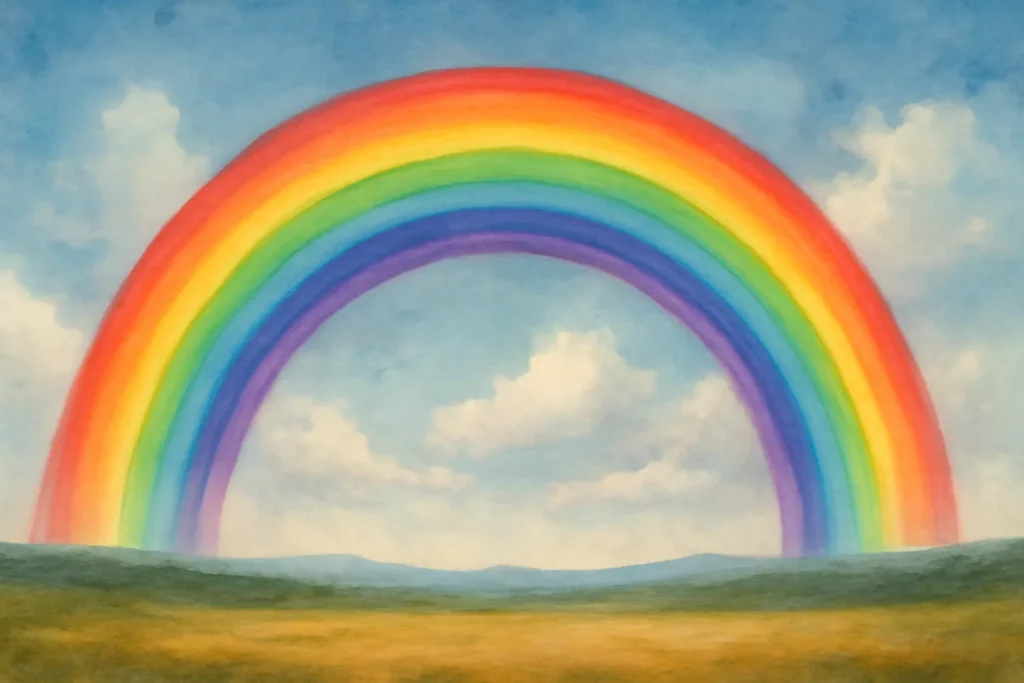
The rainbow as a sign of the covenant between God and all living creatures, including birds and beasts, and symbolically, between God and humanity.
The phrase that appears in the text—“I have set my rainbow in the cloud”—emphasizes both divine action and human perception. The rainbow becomes a divinely initiated symbol, not a human invention.
Universal scope of the covenant is stressed: it is not limited to a single nation or tribe but extends to every living being on the earth.
In the Genesis account, the rainbow is not a decorative aesthetic but a serious theological instrument. It communicates a two-fold reality: God’s mercy toward creation and God’s commitment to order in the world. It says, in effect, that judgment has a purpose—renewal and restoration—yet that God will steward mercy to prevent universal destruction. This duality—judgment rightly oriented toward restoration, mercy as a guiding horizon—frames the biblical rainbow meaning for many readers.
Rainbow as a Universal Symbol in Scripture and Tradition
In Ezekiel and Revelation: Visibility of the Divine Glory
Beyond Genesis, the rainbow recurs as a symbol associated with divine majesty, presence, and sovereignty. In Ezekiel’s visionary language, the aura of divine glory often carries rainbow-like coloration, suggesting a radiance that transcends ordinary perception. In Revelation, a concrete image appears: a rainbow around the throne—“the throne was, and Him that sat thereon, was to look upon as a jasper and a sardine stone”; surrounding the throne was a greenish rainbow that encircled the scene, coloring the eternal scene with beauty and awe.
Ezekiel 1 evokes the appearance of something “like the color of the sapphires” and includes imagery reminiscent of a rainbow’s glow around the divine presence. This calls readers to connect rainbow imagery with holiness, order, and divine radiance.
Revelation 4:3 presents an image of the throne surrounded by a rainbow, “around the throne, in appearance like an emerald.” This association with restraint, mercy, and eternity reinforces the rainbow’s role as a symbol of divine mercy within cosmic sovereignty.
In these passages, the rainbow is not simply a meteorological phenomenon; it’s a visual theology—an emblem that points to God’s glory, the harmony of creation, and the unceasing governance of the divine realm. The rainbow meaning in the biblical literature thus extends from a concrete covenant sign to a cosmic symbol of divine presence and order.
Color Symbolism in Biblical Literature: The Rainbow’s Color Palette
Common Symbolic Associations of Colors
Although the Bible does not enumerate a color-by-color allegory for the rainbow, traditional interpretations have linked certain colors with enduring themes. While these associations emerge from broader biblical aesthetics rather than a strict “color code,” they help readers understand how the rainbow’s hues fit into the biblical imagination.
Red often signals blood, life, sacrifice, or sin. In the rainbow’s arc, red might echo the costs of violence or the offering of sacrifice, but it also can signify the vitality of life under God’s watchful care.
Orange and Yellow can be associated with the brightness of the dawn or the radiance of divine revelation—but they can also remind readers of fire and purification.
Green commonly represents life, renewal, and the flourishing of the land, echoing the way a rainbow lands on the horizon after rain and signals a future of growth and blessing.
Blue is frequently connected to heaven, revelation, and divine presence—the vault of the sky and the place of God’s throne as described in prophetic and apocalyptic literature.
Purple and Gold in biblical culture denote royalty, majesty, and splendor. The rainbow’s brighter edge can evoke the royal dimension of God’s governance and the glory that attends divine acts of salvation.
Readers should note that the rainbow’s color symbolism in Scripture is often contextual and thematic rather than a strict system. The broader point remains: the rainbow’s spectrum visually embodies grace, governance, and the fidelity of God to creation. The colorful symbolism in biblical imagery helps believers meditate on how God’s promises cover the whole spectrum of existence—from judgment to mercy, from earth to heaven.
The Rainbow’s Theological Significance: Mercy, Covenant, and Redemption
Judgment, Mercy, and the Renewal of Hope
One of the most profound aspects of the bible rainbow meaning is its place within the arc of judgment and mercy. After a cataclysmic judgment—the Flood—the rainbow emerges as a guarantee of restraint: God will not again destroy the earth by flood. In this sense, the rainbow is a sign of mercy that upholds the possibility of a renewed creation. Yet it also marks a boundary and a reminder that God’s purposes include judgment when sin persists, but that such judgment is always bound to mercy and restoration.
Covenant fidelity as the rainbow’s core message: God remains faithful to the promises made to Noah, to all generations, and to every living creature on earth.
Universal scope of salvation history: the covenant includes all creation, not just a chosen people, highlighting a universal angle to God’s plan of redemption.
Ethical memory of the Flood event: the rainbow keeps the memory of a time when human violence and idolatry led to judgment, but the sign of the covenant keeps a path open toward restoration and peace.
In this way, the rainbow becomes a theological instrument: it discipines memory, reframes hope, and anchors a future orientation toward divine mercy. The rainbow meaning in Christian theology often centers on this interplay of judgment and mercy—an invitation to live in gratitude, in faithfulness, and in responsible stewardship of creation.
The Rainbow in Worship, Art, and Preaching
Aesthetic and Pedagogical Uses of Rainbow Imagery
Across centuries of Christian history, the rainbow has inspired worship, music, liturgy, and art. The visual symbol of the rainbow invites believers to reflect on God’s promises and to celebrate divine faithfulness. Churches have used rainbow iconography in stained glass, banners, and sculpture to remind congregants of God’s mercy and the hope of renewal. In preaching and catechesis, the rainbow can be a powerful mnemonic device—an accessible image that anchors complex theological ideas in a recognizable sign.
Liturgical use: rainbow imagery can accompany prayers for mercy, peace, and reconciliation, reminding the community of God’s covenant faithfulness.
Pastoral care: the rainbow can be a comforting sign to those experiencing hardship, suggesting that God’s promises still stand and that creation holds a future beyond present pain.
Public ministry: in Christian ethics and social teaching, the rainbow can symbolize unity and the calling to care for all living creatures, reflecting the universal scope of the Genesis covenant.
Readers should approach rainbow imagery with sensitivity to its symbolic weight. The bible rainbow meaning in worship invites believers to not merely admire a colorful arc but to encounter a declaration: God is faithful, creation is upheld, and there is hope for renewal even after catastrophe.
Rainbow Meaning Across Traditions and Denominations
In Jewish interpretive tradition, the rainbow is seen within the same biblical narrative as a sign of God’s covenant with Noah and by extension with all creation. The rabbinic and later medieval commentators often emphasize moral and ethical dimensions—the rainbow as a reminder of divine justice tempered by mercy, and of humanity’s responsibility to live righteously in light of divine promises.
In Christian tradition, the rainbow carries similar covenantal weight, but doctrinal nuance varies among denominations. Some streams emphasize the universal scope of the covenant and see the rainbow as a sign that God’s justice will not blaze into final catastrophe without opportunity for repentance and mercy. Other traditions highlight the rainbow as a symbol of peace and reconciliation among people, inviting human beings to imitate divine mercy in their own relationships and communities.
Orthodox perspectives often stress the sacramental sense of God’s presence in creation, with the rainbow as a visible sign of the world’s sanctity and God’s ongoing governance.
Protestant traditions frequently highlight the covenantal and redemptive dimensions, focusing on God’s faithfulness, human obedience, and the call to steward creation responsibly.
Contemporary discussions occasionally explore the rainbow’s broader cultural resonance, urging readers to distinguish biblical symbolism from modern cultural uses while affirming the core theological claims about mercy, covenant, and hope.
It is important to approach this symbol with care, recognizing that its biblical meaning precedes and informs later cultural meanings. The rainbow meaning in biblical faith remains anchored in God’s self-revelation, not in human invention or cultural appropriation. When read within Scripture, the rainbow remains a theologically charged sign that invites trust in divine faithfulness and a commitment to mercy in human affairs.
Rainbow as a Metaphor for Living Faith
Personal Application and Spiritual Growth
Beyond its doctrinal significance, the rainbow can function as a life metaphor for readers. As a spectrum that spans from red to violet, the rainbow encourages believers to embrace the fullness of God’s work in history and in the human heart. The rainbow meaning for the individual believer can be read as an invitation to cultivate certain dispositions and practices: gratitude, humility, hope, and faithful stewardship.
Gratitude for divine faithfulness across generations and in daily mercy.
Hope grounded in the stability of God’s promises, even when life experiences upheaval or judgment seems imminent.
Ethical living that reflects God’s mercy toward others, seeking peace, justice, and care for creation.
Creative imagination to perceive God’s presence in ordinary natural phenomena, including rain, clouds, and light that yield a rainbow after the storm.
In faith practice, the rainbow can become a reminder of overarching spiritual truths: God’s faithfulness does not depend on human certainty; mercy does not erase accountability; and beauty in creation can point toward the Creator. The bible rainbow meaning in personal devotion is therefore not a mere symbol, but a pathway to deeper trust in God and more generous engagement with others.
Questions People Often Ask About the Rainbow in Scripture
Common Inquiries and Clear Answers
Does the rainbow signify diversity of people? The biblical rainbow is primarily a sign of covenant and divine steadfastness. While it does not function as a theology of human diversity on its own, it can be read as a symbol that God’s promises extend to all nations and creatures, inviting inclusive care across communities.
Is the rainbow a symbol of LGBTQ+ identity? The rainbow image appears in many cultural contexts beyond Scripture. In Scripture itself, it is a covenant sign. When engaging with contemporary use, readers should differentiate the biblical meaning (covenant, mercy, divine faithfulness) from later cultural associations, while maintaining respect for people who identify with those symbols in modern society.
Why is the rainbow around the throne in Revelation? The vision emphasizes divine sovereignty and mercy encircling the throne. The rainbow here is a symbol of God’s glory and the eternal rhythm of salvation history, not a literal meteorological phenomenon but a theological emblem that communicates harmony and divine life-giving power.
What can the rainbow teach about our response to judgment? The rainbow indicates that judgment has a purpose—correction and mercy—so that creation may flourish under God’s governance. Our response should be repentance, humility, and active pursuit of justice, peace, and mercy in our communities.
The Practical Challenge: Reading the Rainbow in a Modern World
Approaches for Today’s Readers
The modern reader engages the rainbow with a careful balance of historical context, theological reflection, and pastoral application. Some practical guidelines include:
Honor Scripture in its context: Read Genesis 9 in light of the flood narrative, the post-flood world, and the broader biblical arc toward redemption.
Acknowledge multiple biblical voices: Recognize how Ezekiel, Revelation, and other books contribute to the rainbow’s symbolism without forcing a single, rigid interpretation.
Distinguish symbol from symbolisms: Distinguish the biblical signification of the rainbow (covenant and mercy) from later cultural uses of the rainbow as a social or political symbol, while still respecting people’s experiences and identities.
Integrate ethical implications: Let the rainbow’s association with mercy inspire acts of compassion, justice, and care for creation in daily life and public life alike.
In pastoral settings, the rainbow can be a gentle prompt to reflect on God’s faithfulness amid trials, as well as a call to reconcile communities, promote peace, and safeguard the integrity of creation. The breadth of biblical rainbow meaning allows believers to hold fast to hope while pursuing justice and mercy in concrete ways.
The bible rainbow meaning is not a single, isolated idea but a composite of covenantal assurance, divine sovereignty, and redemptive hope. From the Genesis covenant sign to the prophetic and apocalyptic visions that adorn Christian imagination, the rainbow stands as a robust symbol of God’s faithfulness, the mercy that redeems, and the restoration that awaits a renewed creation. It invites believers to trust the Creator’s governance, to honor the sanctity of all life, and to participate in the ongoing work of healing and reconciliation in a broken world.
Ultimately, the rainbow meaning in biblical faith is both ancient and enduring: an arc connecting history and eternity, judgment and grace, fear and hope. It calls readers to look up, to remember, and to live in the light of a God who binds the seasons with mercy and who keeps his promises to all generations. In a world that often aches for signs of hope, the rainbow remains a timeless testimony that God’s faithfulness endures, and that life, after rain, can still flourish beneath the colors of divine mercy.










Leave a Reply