Rainbow from the Bible: Meaning, Symbolism, and Biblical References
The rainbow appears in biblical narrative not primarily as a decorative arc of colors, but as a profound theological sign that binds heaven and earth, judgment and mercy, creation and covenant. In the biblical imagination, the rainbow is a visible reminder that God’s purposes for the world encompass both justice and grace, and that diversity within creation can point to a single, unchanging fidelity. This article surveys the meaning and symbolism of the rainbow in Scripture, traces its most important biblical references, and offers a sense of how readers across generations have understood this striking element of divine communication.
Throughout the Bible, the rainbow serves as a multi-layered symbol. It is not merely a natural phenomenon described in a narrative; it is a covenantal sign that God gives to humanity and to the world after a crisis. It is a reminder of God’s steadfast faithfulness, a pointer to universal mercy, and, in visionary portions of Scripture, a component of heavenly worship and cosmic order. The variations in biblical usage—from a practical sign in a flood narrative to a luminous emblem around a divine throne—reveal a consistent thread: the rainbow is a divinely appointed sign that points beyond itself to the character of God.
Meaning of the Rainbow in Scripture
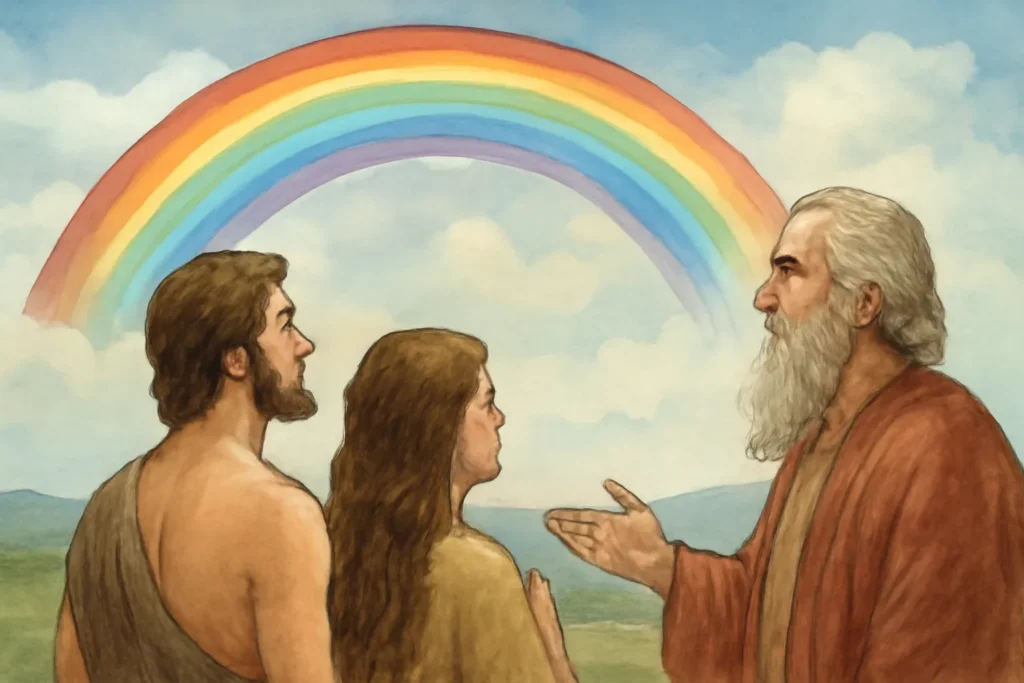
The most foundational meaning of the rainbow in the Bible centers on the covenant. After humanity’s corruption and the flood, God makes a public pledge that the earth would not be destroyed by flood again. The rainbow becomes the visible, ongoing reminder of that pledge. As the biblical text often frames it, God places the rainbow in the cloud as a sign of the everlasting covenant between God and every living creature on the earth.
The Covenant Sign
In the Noahic story, the rainbow is intimately bound to the promise of divine mercy and universal scope. It is described as a sign that spans across all flesh—humans, animals, and birds—reminding readers that God’s purposes extend beyond a single people or a single era. The rainbow signals an ongoing relationship between the Creator and the created order, one in which justice and mercy are held in tension yet reconciled by faithfulness.
Universal reach: The covenant is specified as being between God and every living creature on the earth, ensuring that the mercy of God covers the entire created order, not only a single nation or tribe.
Endurance: The rainbow is described as an everlasting sign, implying continuity across generations and through fluctuating human histories.
Memory: The sign serves as a tangible reminder that God recalls and honors the promises He makes, even when human memory fails or fear takes hold.
Judgment and Mercy Intertwined
In biblical interpretation, the rainbow embodies a paradox: despite mankind’s propensity toward violence and injustice, God remains committed to redoing creation with mercy. While the flood is a judgment on wickedness, the rainbow is the optical emblem of restraint—a reminder that God’s justice is accompanied by restraint and compassion. The sign announces to the world that even in judgment, God seeks to uphold life and to preserve the possibility of renewal.
Symbolism of the Rainbow: Covenant, Mercy, and Cosmic Order
The rainbow’s symbolism in Scripture is rich and nuanced. Different biblical authors highlight distinct facets of its meaning, but a core set of associations remains constant across biblical genres—historical narrative, prophetic visions, and apocalyptic literature.
Covenant and Faithfulness
The covenantal dimension of the rainbow is the most explicit. It marks a turning point in which God commits to a durable relationship with all of creation. This is not a temporary arrangement but an eternal sign that God will act with fidelity across generations. The rainbow thus becomes a symbol of promise—not of human achievement but of God’s resolute loyalty.
The rainbow stands at the locus of divine mercy even amid divine judgment. It communicates the idea that justice and mercy are not mutually exclusive but are part of a larger divine economy that seeks the welfare of life. In this way, the rainbow functions as a refrain of hope: even when storms rage, there is a sign that a stable order with renewed life will emerge.
Universal Scope and Diversity
While the narrative centers on a covenant with all flesh, the rainbow also embodies a vision of universal inclusion. In a text tradition that often highlights particular covenants with specific peoples, the Noahic rainbow expands the horizon to include all creation. It is a reminder that God's redemptive purposes are not limited to a single nation but engage the entire earth and its inhabitants.
Divine Presence and Worship
In visionary literature, the rainbow appears in the company of the divine throne. It becomes part of the heavenly sign system that encircles God’s throne, accompanying beings and visions that reveal the sovereignty and glory of God. This association with divine presence reinforces the idea that the rainbow is not merely a meteorological phenomenon but a liturgical symbol—an object that prompts praise and awe in response to God’s majesty.
Color as Symbol, Not as Scientific Catalog
The biblical text does not insist on a modern color theory; nonetheless, readers often anthropomorphize the rainbow by speaking of colors as a way to talk about fullness, beauty, and the richness of creation. The colors of the rainbow have entered Christian art and theology as symbols of diversity united under one covenantal purpose. Although the Bible does not assign fixed meanings to each hue, many theologians see the rainbow as a way to communicate the inclusivity of God’s plan and the beauty that emerges when differences are reconciled under divine governance.
Biblical References: Where the Rainbow Appears
The rainbow is not confined to a single verse; it shows up in several key biblical passages, each offering a lens on its meaning. Here are the major occurrences and a brief note about what they contribute to the overall understanding of the rainbow as a biblical symbol.
Genesis 9:8–17: The Covenant Sign after the Flood
In the aftermath of the flood, God speaks to Noah and his descendants, establishing a covenant that binds God to all flesh. The rainbow is introduced as the sign of the covenant between God and the entire living world. This passage anchors the rainbow in the memory of salvation history: after catastrophe, God promises renewal, mercy, and order. The text emphasizes that the sign is not only particular to Noah but extends to every generation and to every living creature.
Ezekiel 1:28 and 10:1: Visionary Appearances of the Rainbow
In prophetic and visionary literature, the rainbow is integrated into the imagery of divine glory. Ezekiel describes experiences of the divine throne that, in some readings, evoke the appearance of a rainbow surrounding the throne, a sign of beauty, mystery, and sovereignty. This inclusion helps readers see the rainbow as more than a historical sign; it is part of the celestial theater in which God’s glory shines and rules. It communicates that God’s presence is both gracious and powerful, radiating order in a cosmos that sometimes seems chaotic.
Revelation 4:3: The Rainbow Around the Throne in Heaven
The New Testament mirrors and expands the symbol in its apocalyptic vision. In Revelation, a rainbow around the throne appears as part of the heavenly court, described in language that blends the extraordinary with the familiar. The rainbow here underscores the continuity between the God of Israel and the cosmic Christ-centered vision of the end times. It is a sign of divine continuity, beauty, and radiant authority who reigns with justice and mercy.
Revelation 10:1: A Rainbow on the Head of an Angel
Another striking biblical reference occurs when a mighty angel in Revelation is described as having a rainbow upon the head. This image reinforces the idea that the rainbow remains a sign of divine presence and authority in the eschatological drama. The rainbow in this context is less about a historic covenant and more about the way God’s revelation enters the world with power, order, and purpose.
Interconnections Across Scriptures
Taken together, these passages create a holistic picture: the rainbow emerges in narrative, poetry, and visionary writing as a multi-layered symbol. It anchors memory of a worldwide covenant, it accompanies visions of God’s throne and glory, and it testifies to a future in which creation is renewed under divine governance. For readers, the rainbow thus functions as a bridge between past revelation and future hope.
How Different Traditions Read the Biblical Rainbow
Across Jewish and Christian interpretive traditions, the rainbow has been read in ways that highlight different theological emphases. While the core meaning—covenant and divine fidelity—remains consistent, various communities have drawn out related themes such as mercy, peace, and the inviolable goodness of creation.
Judaism
In Jewish interpretation, the rainbow is primarily the sign of the covenant with Noah, a reminder of God’s promise not to destroy the earth by flood again. It is a symbol of divine mercy that coexists with divine justice, inviting readers to reflect on responsibility toward creation, neighbor, and the vulnerable. Some rabbinic voices read the rainbow as a sign of a world capable of repentance and renewal every generation.
Christianity
In Christian theology, the rainbow is frequently linked to the idea of God’s sovereignty and faithfulness in history and prophecy. The refrains around God’s throne in Revelation, and the surrounding imagery in Ezekiel, amplify the sense that God governs creation with wisdom and compassion. The symbol also invites contemplation on reconciliation, peace, and the universality of God’s mercy across nations and peoples.
Beyond the historical signification, the biblical rainbow invites believers to consider how beauty and diversity in creation reflect the goodness of God. It prompts ethical reflection on care for the environment, compassion for the vulnerable, and a hopeful posture toward renewal—even after storms. In this sense, the rainbow becomes not only a sign of past fidelity but a guiding image for living faithfully in the present.
Practical Reflections: Reading the Rainbow Today
For contemporary readers, the rainbow can offer both consolation and motivation. It can be a reminder that:
God keeps promises, even when life seems uncertain or dangerous.
Mercy and justice are not opposed, but are part of a larger divine purpose that aims to preserve life and promote flourishing.
Diversity within creation is meaningful, and unity under God’s purposes can coexist with difference and variety.
Hope follows hardship, as the rainbow signals that after storms there can be renewed life and beauty.
In worship, scholars and communities often return to the rainbow as a reminder that God’s presence encircles the throne and the whole creation. The sign becomes a catalyst for liturgy, song, and prayer—a way to name God’s faithfulness and to confess trust in a future shaped by divine mercy.
Artistic and Cultural Expressions
The rainbow has inspired artists, poets, and musicians who seek to translate the biblical symbol into contemporary forms. In churches and public spaces, it may appear in stained glass, murals, or banners as a visual sermon about covenant, mercy, and human responsibility. The enduring appeal of the rainbow in Christian and Jewish art testifies to its power as a bridge between the ancient text and modern longing for peace and justice.
Conclusion: The Rainbow as a Living Sign
The rainbow from the Bible is a layered emblem that has spoken to countless generations. It is more than a meteorological phenomenon or a pretty arc of color; it is a divine sign that announces God’s unfailing faithfulness, safeguards the memory of a universal covenant, and invites humanity into a relationship of trust, care, and hope. From Genesis to Revelation, the rainbow remains a compelling image of life under God’s governance—a reminder that in the storms of history and the uncertainties of the present, God’s promise endures, and a hopeful future glimmers on the horizon.
Whether one approaches the rainbow through historical narrative, prophetic vision, or devotional reflection, the sign remains a potent invitation: to recognize God’s mercy, to honor the diversity of life, and to live in the confidence that the Creator remains committed to the flourishing of all creatures and the healing of all creation.










Leave a Reply