Bible Scriptures Meditation: How to Meditate on Scripture for Peace and Clarity
Bible Scriptures Meditation: How to Meditate on Scripture for Peace and Clarity
In a busy world where noise rarely slows down, meditation on Scripture offers a steady path to peace and clarity. This article explores what Bible scriptures meditation is, why it matters, and practical, time-tested ways to make it a regular, transformative habit. You will find a spectrum of approaches, from ancient practices like Lectio Divina to contemporary methods of reflective reading, all rooted in the idea that the Word of God has the power to reframe our thinking and anchor our souls.
Scripture meditation is more than reading verses in a hurry or reciting familiar lines from memory. It is a deliberate, receptive process that engages the mind, heart, and imagination with the living Word. The goal is not merely to know more facts about the Bible, but to encounter God through His written Word and to let that encounter shape how we think, feel, and act. Meditating on Scripture invites God to illuminate truth, to align desires with His will, and to produce fruit in daily life.
Why Meditate on Scripture for Peace and Clarity?
There are several biblically grounded reasons to practice meditating on Scripture regularly. The Bible itself invites a rhythm of stillness, listening, and contemplation that leads to peace and clarity.
Peace under pressure: When external circumstances are stressful, meditating on Scripture can calm the anxious heart and remind us of God’s sovereignty (Philippians 4:6‑7; Isaiah 26:3).
Clarity for decisions: Scripture meditation helps sift competing options through the lens of God’s truth, not merely personal preference (Romans 12:2).
Identity in Christ: Rehearsing God’s promises reshapes self-understanding away from fear toward courage and hope (2 Corinthians 3:18).
Habits of attention: A regular practice trains us to slow down, listen, and respond instead of reacting impulsively (Psalm 46:10).
In addition to these aims, contemplative Bible study can deepen prayer, sharpen discernment, and nurture a patient, persevering faith. The practice is ancient in origin and continually relevant in modern life, offering a way to encounter the divine amidst everyday routines.
Core Principles of Scripture Meditation
While there are many ways to practice meditation on the Bible, certain principles consistently support growth in peace and clarity.
Word-centered focus: Let the text itself guide your attention. Do not rush to application before you have hosted the Word in your heart.
Stillness and receptivity: Create space for God to speak. Stillness is not passivity but an intentional posture of listening.
Holy imagination: Engage with the imagery, scenes, and promises in Scripture in ways that cultivate reverence and insight, not superstition or fantasy.
Scripture-informed prayer: Allow the verses to shape your conversation with God, turning knowledge into conversation and response.
Consistency over intensity: Steady, daily practice yields deeper growth than sporadic bursts of lengthy sessions.
Scripture as compass: Let the Word guide your values, decisions, and how you treat others.
Practical Steps to Start Meditating on Scripture
Starting a habit of bible scriptures meditation can be simple and sustainable. The following steps offer a practical framework you can adapt to your schedule and temperament.
Choose a short, meaningful passage: A verse or a compact passage is easier to reflect on deeply than a long chapter. For beginners, a single verse like Psalm 46:10 or Philippians 4:7 can be a good anchor.
Prepare a quiet space: Find a place with minimal distractions. Dim the lights, silence your phone, and set a timer for 5–15 minutes initially.
Read slowly and attentively: Read the passage aloud or softly to yourself two or three times. Notice words that stand out, images that arise, and any prompts for prayer or action.
Pause and reflect: After each reading, pause. Ask simple questions: What does this verse reveal about God? What does it reveal about me? What may God be inviting me to think, feel, or do?
Personalize and apply: Turn the truth into a personal reflection. For example, if you read, “Be still, and know that I am God” (Psalm 46:10), you might reflect on what it means to be still in your current season and how God’s presence calms you.
Pray in response: Compose a short prayer based on what you learned. Thank God for the truth, confess what needs aligning, ask for help living it out, and invite His guidance for the day.
Journal briefly: Write a sentence or two about one insight, one promise to remember, or one action you want to take. Journaling helps reinforce memory and accountability.
Close with a breath-based practice: Finish with a few slow breaths, acknowledging God’s presence and committing the insight to memory and daily life.
Over time, you’ll notice that meditating on Scripture becomes less about forcing insight and more about recognizing God’s activity in ordinary moments. The practice trains the heart to be receptive, the mind to think biblically, and the will to act in alignment with God’s truth.
Different Methods for Meditating on the Bible
There is more than one path to a fruitful practice. Here are several well-established methods, each with its own tempo and emphasis. You can mix and match them or rotate them throughout the week.
Lectio Divina: A Sacred Slow Reading
Lectio Divina (divine reading) is an ancient method of meditating on Scripture that emphasizes encounter with God through the Word. It typically involves four movements: lectio (reading), meditatio (reflection), oratio (prayer), and contemplatio (contemplation). The goal is to let God’s Word transform you from the inside out.
Lectio: Read the passage slowly, listening for a word or phrase that stands out.
Meditatio: Reflect on why that word or phrase stands out and how it speaks to your life.
Oratio: Respond in prayer, asking God to apply the truth to your heart and life.
Contemplatio: Rest in God’s presence and allow the truth to reshape your affections and will.
Meditative Reading and Repetition
This approach uses repetition to embed a verse or phrase into memory and heart. Repetition can be gentle and rhythmic, helping you slow down and listen for God’s voice beneath the noise of daily life.
In this method, you turn Scripture into the language of prayer. You articulate the verses as requests, praises, confessions, or intercession. This practice aligns your speech with divine truth and fosters a sense of intimate dialogue with God.
Scripture Journaling and Reflection
Journaling combines reflection with application. You might note observations, emotional responses, questions, and commitments. A consistent journaling habit can track spiritual growth over weeks and months.
Imaginative Contemplation on Biblical Scenes
Using your imagination in a controlled, reverent way can deepen understanding of narrative passages. Consider what you would have seen, heard, or felt if you stood in the crowd at the scene. This form of meditation should remain rooted in Scripture and aligned with the truth it presents.
Not every passage is equally suited to a long meditation session. Some verses lend themselves to contemplation, while others serve better as quick reminders throughout the day. Here are guidelines for selecting texts that cultivate peace and clarity.
Short, vivid promises: Passages that declare God’s character or His promises are particularly restorative.
Clear, actionable commands: Verses that point toward a trustworthy response in daily life help translate meditation into living faith.
Comforting Psalms: Songs of trust and lament provide a language for emotional seasons while keeping faith anchored in God’s steadfast love.
Merciful narratives: Stories about God’s grace invite humility and gratitude, refreshing perspective during times of stress.
Examples of suitable passages include Psalm 1:2–3 (delight in the law of the Lord), Isaiah 40:31 (renewal of strength for those who hope in the Lord), Romans 12:2 (transformed thinking by renewing the mind), and Colossians 3:16 (let the Word dwell richly). You can also integrate a daily verse of encouragement as a practical anchor for busy days.
Creating a Routine: Space, Time, and Rhythm
Consistency is the engine of growth in Bible meditation. Establishing a sustainable routine requires deliberate choices about space, time, and rhythm.
Time of day: Many find morning or just before sleep most conducive to quiet reflection. Pick a time when you are least likely to be interrupted.
Duration: Start with 5–10 minutes and gradually lengthen to 15–20 minutes as you grow more comfortable.
Environment: A calm, uncluttered space with soft lighting, a comfortable chair, and perhaps a notebook facilitates focus.
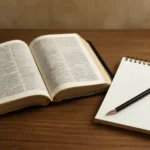
Tools: A Bible translation you trust, a notebook or journal, a pencil or pen, and a quiet timer can be helpful.
As you practice, you may notice certain times or methods work better for you. It is perfectly acceptable to adapt the routine to fit your season of life—marriage, parenting, school, or demanding work schedules.
Journaling as a Companion Practice
Journaling is not required for meditation, but it can deepen insight and create a tangible record of spiritual progress. When done well, journaling helps you articulate the truth you are learning and commit to concrete steps.
Observation: Note what stands out in the text—keywords, phrases, or images.
Reflection: Consider how the passage speaks to your current life situation.
Application: Write one or two practical actions you will take as a result of this meditation.
Prayer: Conclude with a short prayer that expresses your response to God’s Word.
Over time, journaling becomes a map of your spiritual journey, showing patterns of growth, recurring questions, and moments of grace that otherwise might be overlooked.
Overcoming Common Barriers
Many people encounter obstacles when beginning or maintaining a practice of meditating on Scripture. Here are common impediments and practical strategies to overcome them.
Distraction: Create a specific space and use a timer to train attention. Begin with short intervals and gradually extend them.
Rushing the process: Resist the urge to “finish” quickly. Slow reading, pausing, and repeated exposure to a small text yield deeper results.
Dryness or spiritual dryness: It is normal to feel distant at times. Persist in attempting to listen, and invite the Holy Spirit to awaken your heart.
Guilt about not meditating perfectly: Focus on consistency and grace. Even small, sincere efforts matter to God and contribute to growth over time.
Misuse of imagination: Use imagination as a lens to engage the text, not as a substitute for Scripture. Always test imaginative insights against biblical truth.
Scripture Meditation in Community
While personal practice is foundational, there is also value in shared disciplines that encourage accountability and mutual uplift. Community practices can include:
Group reflection: Small groups or families read a passage together, then share what stood out and how it applies to daily life.
Guided meditations: A teacher, mentor, or community leader can guide a session through Lectio Divina or other meditative methods.
Prayerful listening: In a group, members practice listening for God’s voice in silence and then share how God spoke to them, if appropriate.
Using Meditative Scripture to Cultivate Inner Peace
One of the primary fruits of Bible meditation is interior peace that remains even when life is unsettled. The following ideas illustrate how the practice can contribute to lasting calm and mental clarity.
Anchoring truth: Repeating God’s promises helps steady the mind and remind us that our worth and security come from God, not circumstances.
Reframing worry: By focusing on Scripture, you shift thoughts away from fear toward trust in God’s character and faithfulness.
Affection for God: Meditation strengthens love for God as you encounter His goodness in Scripture and allow it to shape your desires.
Discernment: A quiet heart can hear subtle prompts from the Spirit about what steps to take or to refrain from in a given situation.
Here are example verses and brief notes to illustrate how a single verse can be meditated upon in different ways. You can adapt these to your everyday routine.
Psalm 46:10 — “Be still, and know that I am God.” Reflection: What does stillness reveal about who God is in this season? How can stillness become a practiced response rather than a mere moment?
Philippians 4:6–7 — “Do not be anxious about anything, but in every situation, by prayer and petition, with thanksgiving, present your requests to God.” Reflection: How can I posture my mind toward God in the midst of stress today?
Romans 12:2 — “Do not conform to the pattern of this world, but be transformed by the renewing of your mind.” Reflection: What patterns of thought need renewal, and what habits help align me with God’s will?
Psalm 119:105 — “Your word is a lamp to my feet and a light to my path.” Reflection: Where do I need guidance right now, and how does Scripture illuminate next steps?
Isaiah 40:31 — “But those who hope in the Lord will renew their strength.” Reflection: How does hope supply endurance, and where do I need renewed strength today?
Even with a demanding schedule, you can integrate bible scriptures meditation into daily life in small, meaningful ways. Consider micro-practices that are easy to sustain:
Verse of the moment: Choose a verse to carry in your mind for the day, returning to it during brief breaks.
Prayer prompts: Use a verse as a prompt for morning or evening prayer—praise, confession, thanksgiving, and supplication.
Reflection at routine times: Tie a brief meditation to routine activities like commuting, cooking, or winding down at night.
Text-to-life prompts: After reading a verse, write one concrete action you can take this week to live out the truth.
Frequently Asked Questions about Bible Scriptures Meditation
Here are some common questions readers ask when starting or refining their practice, along with concise answers rooted in Scripture and the wisdom of practice.
Is meditation in the Bible the same as Eastern meditation? Not exactly. Biblical meditation centers on Scripture and the God of the Bible, aiming to align the mind and heart with divine truth and to cultivate a responsive life of faith, hope, and love.
Can I meditate if I’m not sure I hear God’s voice? Yes. Meditation is primarily about listening and aligning with God’s Word. Over time, you may gain greater sensitivity to God’s Spirit as you practice, but you can begin with simple reflection on truth and prayerful response.
What translations are best for meditation? Choose a translation that is readable and faithful. Many people use a combination: a modern, readable version for study and a more poetic or traditional translation for meditation and prayer.
How long should I meditate? Start with 5–10 minutes and gradually extend as you grow more comfortable. The depth of meditation is not measured by duration alone but by the quality of attention and response to God’s Word.
“Be still,” the Bible invites us repeatedly, not as a passive retreat but as an active, faithful engagement with God’s Word. Scripture meditation is a practical discipline designed to deepen peace and clarity in life by centering thinking on God’s truth and inviting His transforming work in the heart. When done with intention, humility, and regularity, it becomes a reliable compass for navigating the complexities of daily life, a source of steadiness amid storms, and a wellspring of wisdom for decisions big and small.
Whether you adopt a single method like Lectio Divina or rotate between meditation, journaling, and prayer, the underlying aim remains the same: to encounter God through the living Word and to allow that encounter to shape how you think, feel, and act. In this sense, bible scriptures meditation is not merely a technique but a path toward inner transformation that bears fruit in peace, clarity, love for others, and a more hopeful outlook on life. May your practice grow, your heart be settled, and your mind be renewed as you turn your attention toward God through His Word.









Leave a Reply