Lectio Divina, often translated as sacred reading, is a traditional
practice of contemplative prayer that invites a living encounter with the divine through Scripture,
poetry, or other sacred writings. It is not primarily a method for mastering content or for producing
insights to share, but a humble path toward attentiveness to God’s presence in the present
moment. In its most enduring form, lectio divina blends reverent reading, quiet reflection, heartfelt prayer,
and a posture of openness that culminates in a quiet, wordless awareness—often called contemplation.
Across centuries and diverse Christian traditions, this practice has gone by many names and variants: lectio divina, sacred reading, holy reading, or simply the four rounds.
What remains constant is the rhythm of stepping into Scripture with a listening heart, allowing the text
to “speak slowly” and to become a means by which God can shape the reader from the inside out.
In this guide, you will find a practical, step-by-step approach that preserves the contemplative spirit
of lectio divina while offering concrete practices you can adapt to your context—whether you are praying
alone, with a small group, or as part of a daily spiritual routine. The aim is less about proving a point
and more about opening a space for grace to touch your life through words on a page.
A Brief History and Context for the Practice
The roots of sacred reading reach into early Christian communities that learned to pray with Scripture as
a living Word. Over centuries, monastic life, especially in Western Christianity, gave form to a discipline
that prized stillness, regular rhythms, and a patient reading of spiritual texts. The Benedictine and
Carthusian traditions, among others, helped crystallize lectio divina into a discipline that could be practiced
in daily life as well as within the liturgy.
In modern times, lectio divina has traveled beyond monastery walls into parish life, retreat centers,
and personal prayer corners. It is embraced by Christians across continents, and many people in non-Catholic
settings also find it a meaningful way to engage Scripture and other sacred writings. The practice is
adaptable, compatible with various scriptural traditions, and open to spiritual perspectives that emphasize
listening, discernment, and interior freedom.
While the structure is recognizable, the practice invites personal adaptation. A reading might be drawn from
a psalm, a Gospel passage, a parable, or even a contemporary spiritual text that resonates with a
given moment. The goal remains the same: to let words re-sound in the heart and to let the Spirit
guide attention beyond the surface meaning toward a deeper encounter.
Why Practice Lectio Divina?
Inner listening that goes beyond intellectual understanding to encounter.
Calming the mind and cultivating focus in a world full of distractions.
Conversion of heart through the gentle prompting of Scripture and reflective prayer.
Integration of faith and life as insights from the text translate into daily choices and actions.
Access to grace through openness, surrender, and silence, which can soften resistance and ego.
The practice is not a guarantee of dramatic experiences, but a reliable channel for spiritual formation.
It invites patience, humility, and trust that God’s presence can be found in ordinary moments as well as in
moments of heightened grace. In the trajectory of contemplative prayer, lectio divina is less about
achieving a peak experience and more about sustained attentiveness to the (often subtle) movement of God
in daily life.
Preparing for Lectio Divina
Before you begin, set an intention to approach the sacred reading with reverence and openness. Create
a simple, undistracted space where you can read, reflect, and listen. The preparation is as important
as the reading itself because it shapes the interior atmosphere in which the text might speak.
Choose a quiet place where you are unlikely to be interrupted for at least 15–30 minutes.
Have a comfortable seating arrangement and a posture that supports alert ease—upright but not rigid.
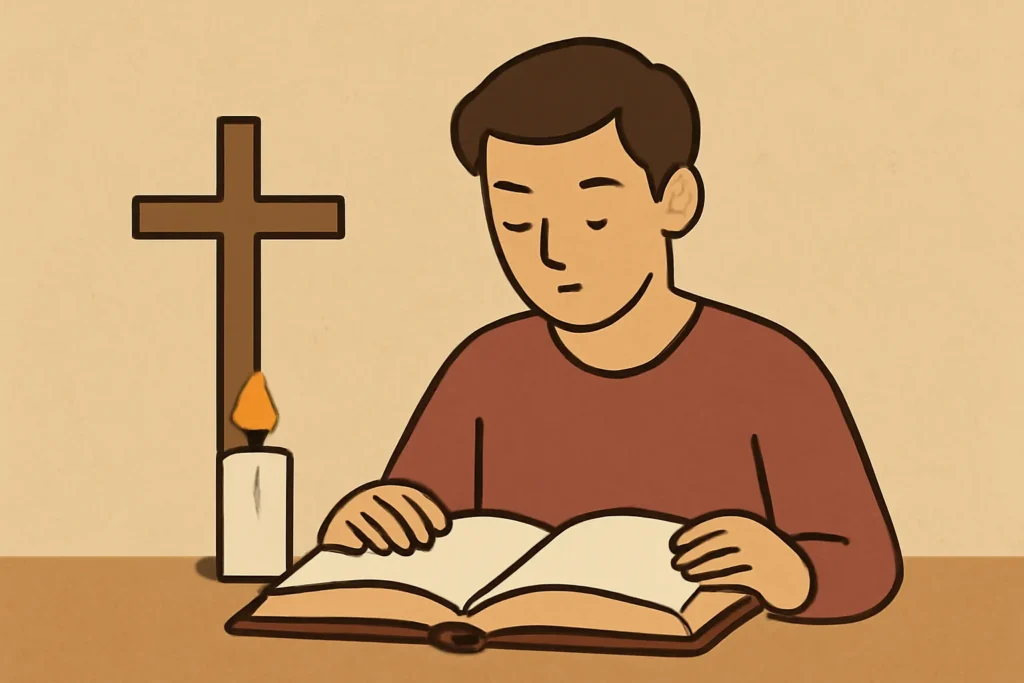
Keep a small object that helps you focus, such as a light, a candle, or a simple cross or icon.
Choosing Texts
Select a brief passage or a short poem. The length is typically a few verses or a paragraph.
Offer a variety of sources in different seasons of your life—Gospels, Psalms, wisdom literature, or a spiritual text.
Consider cyclical readings that you return to every few weeks to notice new layers of meaning.
Time and Rhythm
Decide on a practical time frame—many practitioners begin with 20–30 minutes.
Set a gentle timer or use the natural pace of the rounds to guide the flow.
Begin with a short grounding breath or brief centering practice if you need to calm the mind first.
Attitude and Openness
Enter with humility, acknowledging that you do not control the encounter—God does.
Accept distraction as part of the process and gently return your attention to the text.
Resist turning the practice into a performance; the aim is presence rather than production.
Materials
Bible or sacred texts, prayer journal, pencil or pen, and a comfortable chair.
Optional: a bookmark or a small index card to note a word or phrase that stands out.
The Four Rounds: Lectio, Meditatio, Oratio, Contemplatio
A single lectio divina session is built around four interwoven moments. Each round serves a distinct
purpose, yet all four collaborate to move the practitioner from reading to intimate communion with God.
Lectio (Reading): Hearing the Text
The first movement is a careful, slow reading of a short passage. Read aloud or softly to engage more senses;
read it two or three times, allowing the words to surface gradually. The goal here is not analysis but
receptivity. As you read, pay attention to a phrase, a word, or a feeling that seems to linger.
Practical steps for this stage:
Read the passage once in a straightforward way to hear the natural rhythm of the words.
Read again, this time listening for a particular word or image that resonates.
Highlight or note the phrase that feels most alive as a doorway into meaning.
Meditatio (Meditation): Reflecting on Meaning
In the second stage, you explore what the text might be saying to your life right now. This is not
primarily intellectual analysis but intimate reflection. You might ask what the passage reveals about your
heart, your fears, your hopes, and your relationships. The aim is to dwell with the text until insight
emerges or until the sense of resonance fades and you simply become present to the Word.
Suggestions for this stage include:
Let a chosen phrase guide your reflection. What does it reveal about your needs or your longing?
Consider the passage from multiple angles—personal, communal, global—and notice which stance you are drawn to.
Use a simple question to deepen reflection, such as: "What is this teaching asking of me today?"
Oratio (Prayer): Responding to God
Oratio invites an active response—speaking to God in prayer, expressing gratitude, questions, lament, praise,
or trust. This stage is where the heart turns from listening to conversing, letting the conversation with God
illuminate ways to live more fully in grace.
Ask God to illuminate the meaning you discovered during the meditation.
Speak from your honesty; you may use your own words, a journal prompt, or a traditional prayer.
End this stage with a simple affirmation of trust, such as “Your will be done in my day.”
Contemplatio (Contemplation): Resting in God
The final stage is quiet, receptive rest in God’s presence. Contemplation shifts from effort to surrender.
It is not a thinking task, but a loving attentiveness that seeks to become still and receptive to divine
love and guidance. Some practitioners experience a sense of peace, warmth, or a silent awareness that
God is near.
Relax the mind and let go of striving for results. Simply be.
If thoughts arise, acknowledge them briefly and return to nonjudgmental presence.
Conclude with a short blessing or a phrase of gratitude for the time spent.
A complete session may be repeated with a different text or with the same passage at a later moment.
The goal is consistency and openness, not rigid outcomes. Over time, the four rounds
create a rhythm through which reading becomes a living encounter rather than an exercise in interpretation.
While the traditional four-round structure provides a reliable skeleton, many people adapt the practice
to suit personal temperament, group dynamics, or different spiritual communities. Below are several
thoughtful variations that preserve the core principle: allowing text to shape attentiveness and to invite
a transformed way of living.
Text-Centered Variations
Two-step lectio: Focus on a short passage, then recite an extended paraphrase to hear it in new ways.
Poetic lectio: Use Psalms, canticles, or devotional poems to emphasize rhythm, imagery, and mood.
Narrative lectio: Read a parable or story and follow its movement through a personal reflection into action.
Group or Community Lectio
In a small group, participants share a word or phrase that stood out, then listen for common themes.
Assign roles: one reader, one time-keeper, one note-taker, and one facilitator who helps keep the space safe and respectful.
Group practice can end with a shared silence or a short communal blessing.
Lectio with Journaling
Keep a dedicated journal for phrases, insights, and questions that arise during each round.
Use prompts like “What word called to me?” or “What does this passage ask of me?”
Review entries later to notice patterns, growth, or new questions.
Non-Biblical Texts
In times of secular or interfaith exploration, sacred texts from other traditions or poetic writings can be used thoughtfully to illuminate universal themes like compassion, justice, or mercy.
Always approach non-biblical texts with reverence and an intention to discern wisdom that resonates with your spiritual life.
A Practical Routine: A 20–30 Minute Session
If you are new to lectio divina, begin with a brief, regular routine that fits your daily life. A simple
20–30 minute session can feel deeply transformative when held with consistency.
Opening breath and grounding (2–3 minutes): Center yourself with slow breathing, noticing sensations of the body, and inviting God’s presence.
Lectio (5–7 minutes): Read the chosen text slowly, listening for a word or image that stands out.
Meditatio (5–7 minutes): Reflect on the significance of the highlighted word or phrase for your life today.
Oratio (5–7 minutes): Offer a prayer in response to God, naming needs, gratitude, and intentions.
Contemplatio (3–5 minutes): Rest in God’s presence in silence, allowing space for grace to move.
Closing reflection (1–2 minutes): Briefly jot down a takeaway or a promise to carry into the day.
This routine can be adapted to shorter sessions on busy days or extended for deeper immersion on weekends.
The key is consistency and a gentle shift from accomplishing something to inviting someone—God—
into the inner life.
Common Challenges and How to Navigate Them
Even seasoned practitioners encounter obstacles. Here are common experiences and practical strategies to
keep lectio divina fruitful and sustainable.
Distraction
It is natural for the mind to wander. Treat distraction as an invitation to return to the text with kindness.
Use a gentle gesture, like placing a hand over your heart, and re-read the phrase that first drew your attention.
Lack of Insight
If no “insight” arises, stay with the question of presence itself. Sometimes the fruit of contemplation is a
quiet assurance rather than a cognitive breakthrough. The practice is as much about becoming present to God
as about extracting meaning from the text.
Rushing through the Rounds
It can be tempting to rush to conclusions or prayer. Slow down. The aim is quality of attention,
not speed. You can extend a round by a minute or revisit a phrase more deeply before moving to the next stage.
Spiritual Dryness
Dryness is common in contemplative practice. In such times, maintain a simple, faithful routine, perhaps with
a shorter text and a longer period of silence. Trust that patience itself is part of the work of grace.
The value of this ancient practice is not limited to a single moment of prayer. Its effects can ripple into
daily life as the heart becomes more attentive, compassionate, and discerning.
Personal Rhythm
Begin with a daily commitment, even if brief, and gradually extend as it feels natural.
Pair lectio with another spiritual discipline you practice, such as breath prayers or examen.
Family and Home
Occasionally share a short passage and invite every member to reflect briefly on a chosen phrase.
Keep a family journal of insights or moments of grace that emerge from the practice.
Work and Community
Use lectio divina to frame a daily or weekly meeting by choosing a text that speaks to the group’s mission.
In times of conflict, re-center the group with a moment of shared silence and a prayer for wisdom.
Common Texts and Selections for Lectio Divina
The source of the text can shape the tone and focus of the practice. Below are categories and examples you might use,
along with brief ideas for approaching them in the rounds.
Biblical Passages
Psalms that invite lament, praise, or trust (e.g., Psalm 23, Psalm 51, Psalm 139).
Gospel passages that reveal Jesus’s parables or miracles and invite reflection on the Kingdom of God.
Wisdom literature (Proverbs, James) that prompts practical discernment for daily life.
Parables and Teachings
Parables about mercy, forgiveness, and faith can open space for personal transformation.
Teachings about love, neighbor, and justice can invite contemplation of ethical living.
Poetic and Spiritual Texts
Poems or devotional writings from saints and mystics that resonate with contemplative themes.
Contemporary spiritual essays that articulate the experience of God in ordinary life.
Non-Textual Meditations
Seasonal or nature-inspired readings that connect the sacred text with creation and wonder.
Iconographic descriptions or liturgical prayers that provide a sensory or symbolic entry point.
Resources and Guidance for Deepening Practice
Whether you are starting out or seeking to deepen a long-standing practice, a few reliable resources can
support you. Below are categories of materials and some example options that are well-regarded in many Christian spiritual
communities. Use them as encouragement rather than rules—the aim is personal encounter and growth.
Books on Lectio Divina and Contemplative Prayer
The Practice of the Presence of God (Brother Lawrence) — a classic expressed through daily simplicity.
Into the Silent Land (Exum, Foster, etc.) — reflections on Christian contemplative growth.
Opening to God (James) — practical insights for Christian prayer and contemplation.
Guides for Group Practice
Resources that offer facilitation tips, prompts for sharing, and options for diverse gatherings.
Online and Audio Resources
Lectio divina podcasts, guided meditations, and prayer apps can provide beginners with gentle introductions.
Online communities often share seasonal prompts, which can be particularly helpful for group practice.
Academic and Historical Context
Historical analyses of monastic prayer practices provide insight into how lectio divina evolved and how it can be applied today.
In the journey of contemplative prayer, lectio divina functions as a spiritual training ground for noticing God
in the texture of daily life. It invites the heart to slow down, to listen, and to become receptive to what
the sacred text reveals about who God is, who we are, and how we live in relation to others.
The practice does not replace communal worship or doctrinal study but can complement them by providing a spacious
interior life in which all other spiritual practices can be grounded. Whether you are a beginner or a seasoned
practitioner, the path of sacred reading can still surprise you with a quiet grace that gently redirects
your attention toward what matters most.










Leave a Reply