Berean Standard Bible: An Overview of the Translation and Its Purpose
The Berean Standard Bible, often abbreviated as the BSB, is a modern English translation created to
balance accuracy with readability for a broad audience. This article serves as a comprehensive guide to the translation's
philosophy, textual basis, distinctive features, and practical uses. Whether you are a pastor preparing a sermon, a student studying the New Testament in detail, or a devotional reader seeking clearer language, understanding the aims and methods of the Berean Standard Bible will help you
navigate its text with confidence.
Throughout this guide, you will encounter variations of the translation’s name—Berean Standard Bible, BSB, or simply Berean Bible in reference to the same work. These terms are used interchangeably in scholarly and enthusiast discussions, and they point to a single, coherent effort to produce a trustworthy, accessible English rendering of the biblical texts.
Foundations: Translation Philosophy and Goals
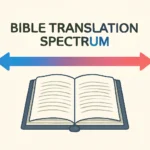
A central question for any Bible translation is how to navigate the tension between formal equivalence (word-for-word rendering) and dynamic equivalence (thought-for-thought rendering). The BSB places itself in the middle of this spectrum, aiming to preserve the nuance of the original languages while presenting the text in clear, natural English. The translation team describes their aim as:
Faithfulness to the source textos while avoiding archaic diction that can obscure meaning.
Maintaining consistency in terminology to reduce confusion across books and testaments.
Providing readable syntax and smooth flow for contemporary readers without sacrificing precision.
Offering helpful explanatory notes and cross-references that illuminate tricky passages.
In practice, this means that the BSB often renders idioms and phrases in contemporary English, but preserves clear links to the underlying Greek and Hebrew terms when those terms carry particular theological or lexical significance. For scholars and serious students, the translation is accompanied by notes or references that explain the rationale behind certain choices, making the work a valuable tool for study as well as devotional reading.
Audience considerations are another important part of the translation philosophy. The Bible is used by a diverse readership—ranging from individuals seeking spiritual nourishment to students and teachers in churches and classrooms. The BSB aims to serve this broad audience by delivering a text that is both accessible to new readers and robust enough for in-depth study.
Textual Basis: How the BSB Handles Source Texts
No Bible translation exists in a vacuum. Every English rendering depends on a careful selection of source manuscripts and an informed editorial approach. The Berean Standard Bible relies on established critical editions of the Greek and Hebrew texts, while also considering the weight of traditional readings where appropriate. The translators seek to:
Reference leading Greek manuscripts and Hebrew source texts to determine original wording when possible.
Address textual variants with clear notes that explain the reasoning behind a given choice.
Acknowledge the limitations of manuscripts and provide alternatives when needed, without cluttering the main text.
Preserve essential doctrinal and theological meanings while avoiding misinterpretation due to ambiguous phrases.
The result, in practical terms, is a translation that respects the historical-critical scholarship behind the texts while remaining readable for modern audiences. Readers can expect a rendering that reflects the editors’ judgments about the most plausible original wording, paired with transparent editorial observations where the text is uncertain or debated among scholars.
The BSB includes several distinguishing features designed to aid memorization, study, and worship. The following elements are commonly highlighted by readers and reviewers:
Clear typography and consistent formatting throughout the text, which supports ease of reading and cross-referencing.
Standardized terminology across the entire Bible to reduce ambiguity (for example, the consistent rendering of divine titles and key theological terms).
Helpful footnotes and cross-references that point readers to related passages, terms, or important textual variants.
Study aids such as glossaries, concordance-ready indexing, and occasionally introductory notes for books or sections.
Poised reverence for sacred names and titles, balanced with contemporary readability in everyday speech.
Editorial consistency in punctuation, capitalization, and rhythm of sentences, which improves readability for long narrative sections and dense argumentation alike.
In addition to the main text, many editions of the Berean Standard Bible provide supplementary materials, including maps, timelines, and introductions to biblical books. These resources support a more immersive understanding of biblical history and literary structure.
Notable Translational Choices and Rationale
While every translation will make some decisions that stand apart from others, the BSB highlights several areas where readers may notice distinctive renderings. The following examples illustrate the sorts of choices translators commonly explain in notes:
Names and titles are rendered with a balance between familiarity and reverence, enabling readers to recognize characters while maintaining the dignity of divine and royal terms.
Key theological terms such as faith, grace, righteousness, and salvation are treated with consistent definitions to aid long-term study and word-searchability.
Hebraic and Grecian idioms are sometimes translated into contemporary idioms that preserve the intended impact without sacrificing precision.
Divine attributes are approached with care to communicate the character of God while avoiding over- or under-emphasis in a given context.
Style and Readability: How the BSB Reads in English
The BSB style is designed to be natural and fluent in modern English. It avoids outdated phrasing and strives for sentences that are neither overly rigid nor sloppily colloquial. Readers often note:
Natural sentence flow that makes long passages easier to follow without losing nuance.
Balanced sentence length and rhythm that suit both public reading and private study.
Consistent pronoun usage and subject-verb agreement to reduce potential confusion, especially for readers new to biblical syntax.
Subtle emphasis on proper nouns and key theological terms to support memory and cross-reference work.
The design choices emphasize comprehension while staying faithful to the original languages, so that a reader can grasp the message of the text without extensive specialization in biblical languages. This makes the BSB a practical option for personal devotion, classroom teaching, and sermon preparation alike.
Comparisons: How the Berean Standard Bible Relates to Other Translations
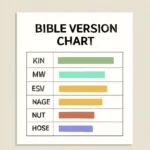
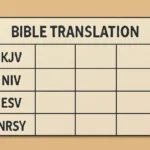
For readers familiar with other English translations, the BSB presents a thoughtful alternative that sits near the center of the translation spectrum. Consider these common reference points:
Compared to literal translations like the NASB, the Berean Standard Bible often prioritizes readability while maintaining a careful attention to lexical precision.
Compared to dynamic-equivalence translations like the NLT, the BSB tends to retain more of the grammatical structure of the original languages where it enhances clarity and accuracy.
Compared to traditional versions like the KJV, the BSB offers modern English phrasing and up-to-date scholarship, making it accessible to today’s readers.
Compared to other contemporary Bibles such as the ESV or NIV, the Berean Standard Bible emphasizes a consistent lexical approach across books, aiding cross-referencing and thematic study.
In practice, readers who appreciate a translation that straddles accuracy and readability may find the BSB to be a particularly useful bridge between older, more formal texts and newer, highly contemporary translations.
Using the Berean Standard Bible for Study and Devotion
The BSB is well-suited to multiple modes of engagement with Scripture. Here are common use cases and practical tips:
Personal devotions: Read in small passages with focus questions and a note-taking habit. The clear language supports meditation and prayerful reflection.
Group Bible study: Use cross-references and study notes to guide discussion, with a shared text that is easy for everyone to follow.
Sermon preparation: Leverage the translation’s balance of form and meaning to present a message that is faithful to the text while accessible to listeners.
Word studies: Look up key terms in the glossary or lexical notes to understand how the same Greek or Hebrew words are treated across books.
Literary analysis: Observe how narrative voice, poetry, and prophetic rhetoric are rendered, and compare with other translations for depth of understanding.
An effective approach is to pair the BSB with a concordance or lexicon to track semantic ranges of important terms. Additionally, reading selected passages in parallel with another translation can illuminate different angles of meaning and nuance.
Accessibility: Formats, Availability, and Digital Tools
The Berean Standard Bible is distributed in multiple formats to meet diverse needs. Depending on your location and preferred platform, you may encounter:
Print editions including compact and full-size formats suitable for personal use, devotional reading, or study groups.
Digital editions for e-readers, tablets, and smartphones, enabling search, highlighting, and note-taking.
Online access through official websites or licensed distributors, with options for reading online, audio, or interactive study aids.
Study tools such as word lookup, cross-references, and glossary functions in digital platforms to facilitate deeper research.
If you are evaluating a new edition or translation for your library or ministry, a practical step is to sample a few chapters in both print and digital forms to determine which format best supports your intended use.
Strengths and Limitations: A Balanced View
No translation is without strengths or limitations. The Berean Standard Bible offers several clear advantages:
Clarity and readability for contemporary readers without sacrificing essential accuracy.
Consistency in rendering which helps with memorization and cross-book study.
Accessible scholarly notes and references that support further inquiry.
Wide availability across print and digital formats, making the text easy to obtain for churches and individuals alike.
On the other hand, some readers may wish for more extensive textual apparatus or more aggressive dynamic equivalence in particular passages. Those who prefer very literal renderings or who rely heavily on textual variants may want to compare the BSB with other literal translations or with critical editions. Engaged readers are encouraged to use the BSB as one resource among a broader library of translations to gain a well-rounded understanding.
This section addresses common inquiries readers have when exploring the BSB. If you have a question not covered here, consult the publisher’s notes or contact an authorized distributor for clarification.
What makes the BSB unique among modern English translations?
The BSB emphasizes a deliberate balance between precise word rendering and natural English readability, with consistent terminology and robust study aids to support both devotion and scholarly study.
Is the Berean Standard Bible suitable for preaching?
Yes. Its clear language, consistent terminology, and available study notes make it a practical option for sermon preparation and public reading.
Does the BSB include commentary or notes?
Many editions include footnotes and cross-references rather than extensive commentary within the text, enabling readers to engage with observations without detracting from the main reading experience.
Where can I access the BSB online?
You can often find the Berean Standard Bible through the official website or licensed providers, with options for reading, searching, and reference tools.
Conclusion: The Berean Standard Bible as a Resource for Learning and Worship
The Berean Standard Bible presents a thoughtful English rendering of Scripture that aspires to be both trustworthy and approachable. By combining solid scholarly underpinnings with a focus on practical readability, it offers a versatile resource for individuals, study groups, and ministry settings. Its commitment to consistency of terms, careful handling of textual variants, and a rich array of study aids makes it a compelling choice for those seeking a modern translation that respects the integrity of the original languages while inviting readers into clear, meaningful engagement with the biblical text.
Whether you are evaluating the Berean Standard Bible for personal use, for classroom instruction, or for congregational reading, take advantage of its multi-format availability and educational features to deepen understanding and nurture a disciplined approach to Scripture. As with any translation, pairing the BSB with broader study and comparison will enrich your grasp of biblical passages and help you appreciate the richness of the biblical narrative across its diverse books and genres.









Leave a Reply