Introduction to a Practical Guide: What this Book About Romans Aims to Do
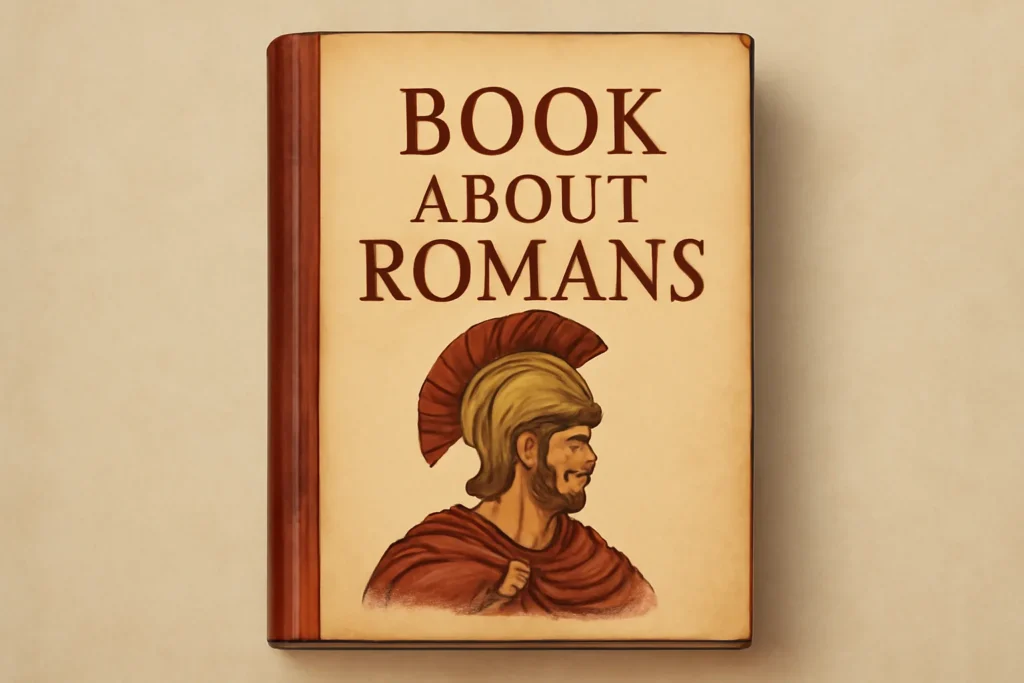
A Book About Romans: A Practical Guide to Roman History stands at the intersection of accessible storytelling and careful scholarship. It is designed for readers who want more than a date-and-dynasty chronology; it offers a framework for understanding how the Roman world functioned, from street-level life to imperial policy. In focusing on practical methods—how to read sources, how to weigh conflicting accounts, and how to think chronologically and culturally about events—the book becomes a usable companion for students, teachers, travelers, and curious readers. Variations of this title—sometimes called a book about the Romans, sometimes a volume on Roman history, or a handbook of the Roman past—all point to the same core goal: to illuminate the complexities of Rome without sacrificing clarity.
This article provides an extended overview of A Book About Romans as a work intended for both classroom use and independent study. It explains the book’s structure, its guiding questions, the kinds of evidence it prioritizes, and the practical steps a reader can take to master the material. Whether you encounter this title as a guide to Roman history, a text on the Roman world, or a reference work, you will find recurring themes: continuity and change, power and everyday life, and the ways in which Romans understood themselves and their neighbors.
What this book covers: scope and aims
The central aim of A Book About Romans: A Practical Guide to Roman History is not only to recount events but to cultivate a method for thinking about Rome across eras. The book treats Rome as a longue durée phenomenon—from its mythic origins to late antiquity—while paying attention to how different groups inside the Roman society experienced political power, social norms, religious practices, and economic pressures.
Chronological clarity: the book helps readers anchor events in a timeline that makes sense across the Republic, the Empire, and the transformation of late antiquity.
Cultural context: an emphasis on languages, art, religion, education, and daily life so that history is not reduced to wars and decrees.
Source literacy: guidance on how to read authors like Livy, Tacitus, Polybius, Suetonius, and Plutarch, as well as inscriptions, coins, and architectural remains.
Analytical tools: methods for comparing sources, assessing bias, and tracing cause-and-effect relationships.
Cross-disciplinary connections: insights from archaeology, epigraphy, numismatics, and linguistics that enrich historical interpretation.
Structure and approach: how the book is organized
The design of this book about Romans emphasizes accessibility without sacrificing rigor. It uses a layered structure that makes it easy to navigate for different purposes—self-study, guided coursework, or quick reference. The overall approach blends narrative sections with analytical prompts, and it frequently invites readers to test their own interpretations against primary and secondary sources.
Foundational chapters establish place and purpose: what is meant by the Roman state, how identity formed around citizenship, and what counts as a meaningful historical question.
Era-by-era chapters trace Rome’s development from monarchy through Republic, to Empire, and finally to the transformations of late antiquity.
Thematic chapters explore society, economy, religion, law, military, and culture to complement the chronological narrative.
Source and methodology chapters guide readers in evaluating evidence, distinguishing myth from record, and understanding historiography.
Practical study aids include glossaries, annotated bibliographies, maps, timelines, and discussion prompts useful for instructors and independent learners alike.
Key eras in Roman history: a guided tour
The founding era to the Monarchy
The early chapters situate Rome within the broader Mediterranean world, illustrating how myth and memory shape political self-conception. While the founding myths provide a compelling narrative, the book stresses the importance of distinguishing legendary material from the earliest historical traces. For readers, this means learning to recognize when a story is serving a moral or political purpose and when it signals genuine archival or material evidence.
In this section, you will encounter:
Debates about Roman kingship and the political transition from monarchy to republic.
Evidence from tanto legend and archaeology that sheds light on early urban development and social organization.
Concepts like citizenship, patronage, and religious ritual that continue to influence later centuries.
The Republic: expansion, conflict, and political innovation
The Roman Republic is presented as a living laboratory of political ideas and pragmatic governance. This period is not merely about wars and consuls; it examines the offices that structured power, the political factions that formed around them, and the social conflicts that drove constitutional changes.
How senatorial authority interacted with the popular assemblies and the emergent demand for broader political participation.
The role of citizenship, plebeian rights, and the evolving concept of legal equality in Roman political theory.
Military reforms, expansion, and the economic consequences of imperial ambitions.
The Empire: governance, culture, and administrative complexity
In the Empire, Rome’s power is vast, but it is also intimate in terms of daily life: the streets, water systems, postal routes, and provincial administration. The transition from a city-centered polity to a truly imperial framework raises questions about leadership, legitimacy, and the interplay between central authority and local realities.
The book emphasizes:
How emperor-centered politics coexisted with local autonomy, provincial governance, and military loyalties.
Administrative innovations such as bureaucracy, taxation systems, and legal reforms that enabled scale without sacrificing function.
Patronage networks, social mobility, and the cultural production of the imperial age—art, literature, religion, and public spectacle.
Late antiquity: transformation and continuity
The closing chapters assess how the Roman Empire adapted in the face of external pressure, internal change, and evolving religious landscapes. This section explores how Roman identity persisted even as political structures shifted, and how new frameworks of power emerged in Constantinople, the Latin West, and the surrounding regions.
Interactions between Roman institutions and incoming peoples.
The shifting centers of gravity—from Rome to Constantinople—and what that meant for governance.
Religious transformation and its impact on law, education, and cultural memory.
Practical use for readers: how to study and engage with the material
This text on Roman history is designed to be actively used. It invites readers to move beyond passive reading into an engagement that mirrors how historians actually work: formulating questions, testing hypotheses, and building a coherent narrative from diverse sources.
Active reading strategies: pause to map timelines, identify the protagonist political actors, and annotate biases in primary accounts.
Source triangulation: compare literary sources with inscriptions, coins, and archaeological remnants to form a balanced view of events.
Thematic syntheses: connect political episodes with cultural shifts, economic pressures, and social change.
Note-taking templates: leverage pre-formatted frames for agendas, questions, and takeaways from each chapter.
For instructors adopting this guide to Roman antiquity, there are ready-made discussion prompts that align with learning objectives, and assessment ideas that emphasize analytical thinking, source evaluation, and historical writing.
Cross-cutting themes: seeing Rome through multiple lenses
Power, legitimacy, and institutions
A central concern of the narrative is how Romans conceived legitimacy and how institutions—whether the Senate, the magistracies, or the imperial bureaucracy—shaped political reality. The book treats power as a living practice, not merely a set of rules, illustrating how rhetoric, law, and custom interacted to produce governance that could endure or fail.
Society and daily life
The everyday is not a footnote in Rome’s history; it is a lens through which larger processes become visible. By foregrounding ordinary routines—markets, schooling, marriage, family roles—the book shows how social norms both constrained and enabled political action. This approach helps readers recognize the human dimension behind grand narratives.
Religion in Rome intertwines with politics, law, and culture in a way that makes it essential for understanding the public sphere. The book treats religious practice as both a source of social cohesion and a site of political negotiation, including imperial cults, local rites, and the transformation of religious landscapes across centuries.
The Roman society: daily life, class, gender, and education
A sound understanding of Roman society requires attention to class structure, gender roles, and the education system. The book engages with discussions about patricians vs. plebeians, slaves and freedpeople, and the ways in which citizenship and legal status intersect with personal identity.
Patronage networks that shaped career paths, permissions, and social capital.
Roles within the domus (the household) and the public sphere, including the expected duties of women, men, and slaves within a household economy.
Educational practices, from basic literacy to rhetorical training, that prepared elites to participate in governance and diplomacy.
Military minds: legions, campaigns, and strategic thought
Organization of the legions
The Roman military machine is one of the most studied aspects of ancient history. This volume on Roman warfare explains how legions were organized, rotated, equipped, and commanded. It also discusses auxiliary forces, logistics, and the relationship between military success and political stability.
How discipline and structure supported long campaigns and rapid mobilization.
The role of centurions and cohorts in the battlefield ecology and command dynamics.
Strategies, sieges, and field tactics that shaped campaigns across different theaters.
Roman warfare and strategy in practice
Strategy in Rome was as much about logistics and supply lines as it was about battlefield maneuver. The book highlights how leadership balanced conquest with control, how provinces contributed to or undermined security, and how military outcomes fed back into political legitimacy.
Economy and trade: the wealth behind Rome’s power
The economic dimension of Roman history is presented as a network that connected farmers, artisans, traders, and state officials. The book emphasizes patterns such as urbanization, monetary circulation, taxation, and public works as engines of growth and potential sources of tension.
Financial instruments, tax systems, and the role of the state revenue in maintaining imperial projects.
Trade routes and the movement of goods across the empire, including grain supplies and luxury goods.
Infrastructure investments—roads, aqueducts, harbors—that enabled political power to project itself over vast distances.
Culture, education, and public life: learning from Rome’s intellectual milieu
Cultural life in Rome was diverse and dynamic. The book surveys literature, philosophy, art, architecture, public festivals, and urban planning as expressions of a society constantly negotiating tradition and innovation. This section invites readers to consider how cultural production reinforced or challenged political norms.
Literary genres that reflect political realities and social values.
Architectural forms and public spaces—the forum, basilicas, amphitheaters—as stages for civic identity.
Education and rhetoric as tools of influence, especially for aspiring elites who might become magistrates or generals.
Historiography and sources: how we know what we know
A distinctive strength of A Book About Romans is its frank discussion of how historians reconstruct the past. It does not pretend that the evidence tells a single story; instead, it equips readers with a range of interpretive strategies to handle uncertain or contested material.
The book covers a broad spectrum of sources, including:
Literary sources such as Livy, Polybius, Tacitus, Suetonius, and Plutarch, with notes on their biases and contexts.
Epigraphic evidence—inscriptions that reveal social structures, public administration, and daily transactions.
Numismatic material—coins that illuminate economic conditions, propaganda, and royal or senatorial agendas.
Archaeological remains—buildings, roads, urban plans, and artifacts that offer tangible windows into life in different eras.
Modern scholarship and synthetic histories that help readers compare perspectives and identify enduring questions.
The book also explains common historiographical pitfalls, such as conflating literary rhetoric with factual accuracy, assuming a linear progression of events, or overemphasizing grand narratives at the expense of local or minority voices. Readers are encouraged to adopt a historian’s skepticism without losing sight of coherent, evidence-based storytelling.
How this book supports classroom learning and independent study
For educators, this handbook of Roman history offers a flexible toolkit. The structure supports modular teaching: you can assign chapters in sequence, pick thematic units, or design comparative modules with other ancient civilizations. For learners studying on their own, the book provides a path from introductory concepts to advanced analysis.
Chapter-by-chapter summaries to review core arguments quickly.
Discussion questions designed to stimulate critical thinking about sources, context, and interpretation.
Glossaries and maps that reinforce geographic literacy and terminology.
Suggestions for short writing assignments and longer research projects that cultivate evidence-based argumentation.
Additional resources and reading suggestions
While A Book About Romans stands as a comprehensive introduction and reference, it also points readers toward further exploration. The combination of core chapters and curated readings helps students and enthusiasts deepen their knowledge beyond the pages of the main text.
Introductory companions that cover Roman politics, military history, and daily life.
Monographs focused on Rome’s economy, religion, or specific periods like the late Republic or the early Empire.
Additional databases and digital resources for epigraphy and archaeology that offer up-to-date discoveries.
The author also highlights classic and contemporary voices that readers may wish to consult to gain broader perspectives on the Roman world. By presenting a curated, varied set of sources, the book encourages readers to pursue their own reading list with confidence.
How to approach the material: practical tips for readers
To maximize engagement with A Book About Romans: A Practical Guide to Roman History, readers can adopt a few practical habits that mirror scholarly work. The following suggestions help convert reading into meaningful understanding.
Begin with a timeline map that charts major political transitions and pivotal events across centuries.
Create a glossary of terms for words that repeatedly appear, such as senatus, juris, provincia, and praetor.
Practice source comparison by pairing a literary account with an inscription or coin evidence to see how different kinds of data tell complementary stories.
Use the thematic chapters as jumping-off points for short essays that connect political developments to cultural or social change.
Variations of the title and semantic breadth
Throughout scholarly and popular discourse, this kind of work appears under several semantic variations. Readers should recognize that terms like book about the Romans, Roman history guide, volume on the Roman world, and manual of imperial Rome are all ranges of a single genre. Each variation signals a slightly different emphasis—some foreground historiography, others foreground cultural life, still others emphasize practical study strategies. In this article, we have used these variants to highlight how a single project can serve multiple audiences without altering the core content.
Conclusion: why a practical guide to Roman history matters
A Book About Romans: A Practical Guide to Roman History offers more than a chronology. It provides a disciplined way to think about a civilization that shaped law, governance, urban life, and cultural memory across two millennia. By foregrounding source literacy, analytical methods, and contextual understanding, the book equips readers to engage with the Roman past in a way that is thoughtful, rigorous, and, importantly, enjoyable.
Whether you are approaching the Romans for the first time, seeking a dependable reference for coursework, or looking to deepen an already established interest, this work—through its careful structure, its emphasis on practical study, and its rich, layered treatment of topics—serves as a reliable compass. It helps you move from memorizing names and dates to grasping how Rome functioned as a political system, a cultural force, and a social organism. In short, this is a text about the Roman world that invites you to read actively, question persistently, and think historically.









Leave a Reply