Baptism Roman Catholic: A Complete Guide to the Sacrament
Baptism is one of the oldest and most central rites in the Roman Catholic Church. It is a primary way that a person is introduced into the life of the Church and into the life in Christ. In Catholic theology, baptism is a sacrament and a source of grace that transforms a person, cleanses from original sin, and marks the beginning of a lifelong journey of faith. This guide explains what Catholic baptism means, how it is celebrated, who can administer it, and what to expect whether you are preparing for an infant baptism, an adult baptism, or an ongoing journey through the Catholic faith.
The meaning and purpose of baptism in Catholic teaching
In Catholic understanding, baptism is the first of the seven sacraments and the foundational entry point into the Church. It signifies the death to sin and the new life in Christ that believers receive by grace. Through the rite, a person is united with Christ, becomes a member of the communion of believers, and receives the permanent mark or character that signifies belonging to Christ for ever. The Catholic Catechism teaches that baptism makes a person a child of God, a member of the Body of Christ, and a temple of the Holy Spirit.
The practice of washing with water as a sign of purification and initiation has ancient roots in the Christian tradition. By the first centuries, baptism was already understood as more than a mere cleansing; it was a sacramental rite that conferred grace and joined the believer to the Church. Over the centuries, the Roman rite developed a standardized form, with the Trinity formula and the ceremonial acts that accompany the water, the oil, the candle, and the white garment. The Catholic Church continues to teach that baptism is not simply a symbol but an actual means by which God’s grace enters the soul.
What makes Catholic baptism distinctive
Matter and form
In Catholic theology, the matter of baptism is water, used in a way that expresses cleansing and new life—either by immersion or by pouring water over the head. The form consists of the Trinitarian words: “I baptize you in the name of the Father, and of the Son, and of the Holy Spirit.” These words are essential to a valid baptism in the Catholic Church. The sacrament is never simply a cultural rite; it is an action through which God communicates grace to the soul.
Minister and community
In ordinary practice, the minister of baptism is a bishop or priest, though a deacon can also validly administer the sacrament. In exceptional cases, such as danger of death, any validly intentioned person can baptize with the correct matter and form, provided they intend what the Church intends to do. The role of the community is also important: baptism places the believer into the Church community, making the local parish a spiritual family where faith is nurtured and lived out.
Effects and permanence
The effects of baptism are transformative but not a one-time achievement of human effort. They include the remission of original sin and any personal sins, the abolition of the former separation from God, the adoption as children of God, and entrance into the Church as a citizen of the Kingdom. Importantly, the baptismal seal is indelible, a spiritual mark that cannot be repeated or erased, even if someone later falls into sin or leaves the Church.
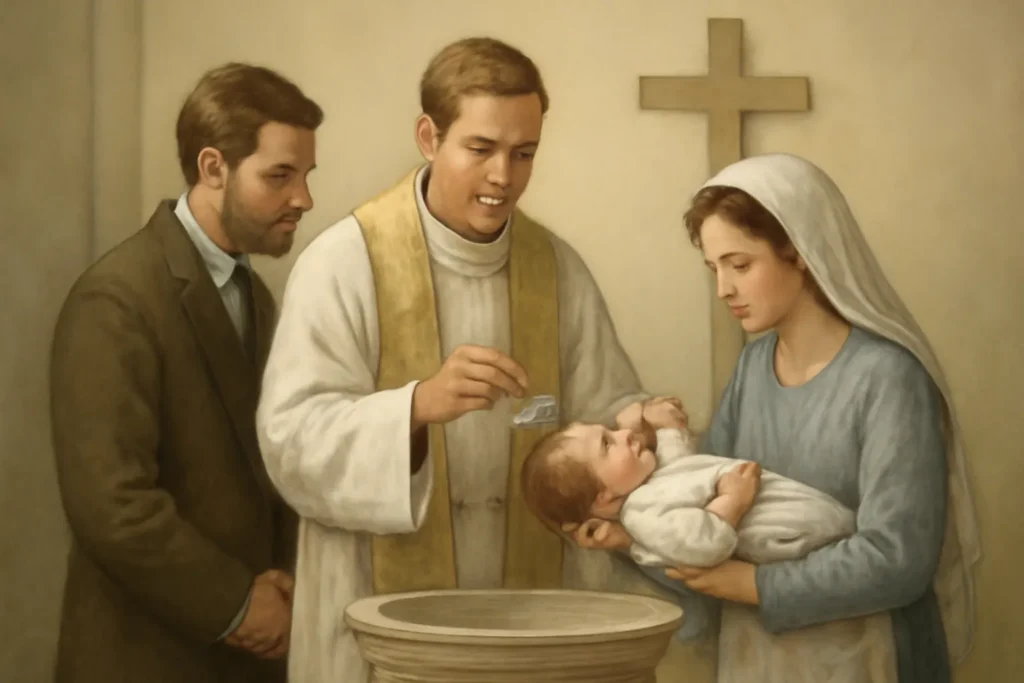
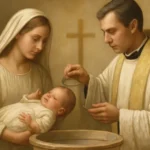
In most parishes, infant baptism is common and highly valued in Catholic life. The ceremony usually takes place on a Sunday or a scheduled weekday. The rite emphasizes the faith of the parents and the obligation of the Church to support them in raising their child in the Catholic faith. Elements typically include a profession of faith by the parents and godparents, renunciation of sin and the profession of faith on behalf of the child, the water baptism, the anointing with the Sacred Chrism, and the giving of a White Garment and a Baptismal Candle.
Preparation often involves a briefing for parents and chosen godparents, sometimes known as the “baptismal preparation class.”
Godparents are to be practicing Catholics who are prepared to assist in the spiritual formation of the child; typically, at least one godparent Catholic is required, with the possibility of a second sponsor who may be a Christian witness or a Catholic in good standing.
The ceremony itself includes prayers for the child, profession of faith by the parents and sponsors, the baptism with water, and a post-baptismal anointing with chrism, followed by the white garment and the lit candle given to symbolize new life in Christ.
The Rite for Adults (Baptism for the Unbaptized)
Adults seeking baptism participate in the Rite of Christian Initiation of Adults (RCIA). This process is an extended period of catechesis, formation, and discernment, leading to full communion with the Catholic Church. The RCIA culminates in the baptism, followed by the reception of the Sacrament of Confirmation and the Eucharist as part of the annual Easter celebration or at the appropriate time in the liturgical year.
For adult baptism, the rites involve: the catechumenate (the period of formation), the Liturgy of the Word, the exorcisms and the profession of faith, the prayer of the church, and, finally, the sacramental immersion or pouring with the Trinitarian formula. After baptism, the candidate is anointed with the Sacred Chrism, clothed with a white garment, and given the Paschal candle and the Eucharist for the first time in the Catholic faith.
Roles and responsibilities: godparents and sponsors
Godparents support the spiritual formation of the baptized person. In the Catholic Church, they are expected to model a life of faith and to assist the family in raising the child in the Catholic faith. The Code of Canon Law outlines qualifications for godparents, including:
Being a Catholic who has been confirmed and who leads a life in harmony with the faith and the duties of a sponsor.
Being at least 16 years old (with some exceptions for age and maturity).
Not being bound by any impediment that would disqualify them from performing the role.
For adults entering the Church, sponsors are often called “mentors” or simply “assistants” in RCIA. They accompany the catechumen through the journey, witness the vows, and stand with the person at the rite of baptism, the receipt of the chrism, and the first reception of the Eucharist.
Symbols and signs accompanying baptism
The Catholic baptismal rite is rich with meaningful signs that connect the candidate with the broader story of salvation. These include:
Water as the cleansing symbol and sign of new life, whether poured, sprinkled, or, in some rites, immersed.
Oil of Catechumens on the chest (for those who are preparing for baptism) and the subsequent Sacred Chrism used to anoint the crown of the head after baptism.
White Garment symbolizing purity and new life in Christ.
Paschal Candle representing the light of Christ that the baptized now bears in the world.
Prayer of Exorcism and the breaking of bonds with sin as part of the baptismal rite.
Theological significance and lifelong effects
Catholic theology teaches that baptism not only cleanses from sin but also incorporates the believer into the mystical body of Christ and marks a lasting interior change. The sacramental character that baptism imprints on the soul is described as a permanent seal that orients the person toward a life of faith and worship. This means that baptism is not simply a one-time personal decision but a lifelong invitation to participate in the life of the Church, to receive the other sacraments, and to live according to the gospel.
Practical considerations for families preparing for baptism
Preparing for infant baptism
Parents and godparents typically undertake a preparation process with their local parish. The steps may include filling out registration forms, presenting the child’s birth certificate, and attending a short session on the significance of the sacrament. Parishes may also offer a short catechesis for families about the responsibilities of raising a child in the Catholic faith.
Preparing for adult baptism
Adults seeking baptism participate in RCIA, which involves regular meetings, catechesis, and periods of inquiry. The journey culminates in the baptism, confirmation, and first reception of the Eucharist, often at the Easter Vigil. Practical steps include meeting with a sponsor, choosing a sacramental name if desired, and preparing for the profession of faith that accompanies the rite.
Documentation and scheduling
Most parishes require a baptismal certificate from a previous parish if the person is re-baptized or moving to a new parish. For infants, baptism is often scheduled after a parent’s or guardian’s first appointment with the parish priest or the coordinator of sacraments. It is common to coordinate with the church calendar, avoid major liturgical seasons where possible, and plan for a small reception after the ceremony.
Baptismal practice: immersion vs. pouring
The Catholic Church allows both immersion and the pouring (affusion) of water as valid modes of baptism. The choice often depends on the local tradition, the health and mobility of the child, and the pastoral judgment of the priest. The important thing is the formula of the Trinity and the intention of the minister to do what the Church does when baptizing. In recent decades, many parishes have adopted a mixed approach that respects the preference of families and the needs of the celebration.
Baptism and the broader life of the Catholic faithful
Baptism is the gateway to the rest of the sacraments. It prepares the faithful to receive the Eucharist, to grow in virtue, and to participate actively in parish life. Baptized Catholics are called to ongoing catechesis, involvement in parish ministries, regular reception of the other sacraments, and a life of prayer and service. The Catholic tradition emphasizes that baptism is not merely a personal turning point but a call to participate in the mission of the Church in the world.
In danger of death, the Church permits any person to baptize, provided they have the intent to do what the Church does, and they use water with the Trinitarian formula. This is an important pastoral response to immediate danger, ensuring that even in life-and-death circumstances, the grace of baptism can be conferred. If time allows, the parish should arrange for the person to receive the sacraments of Eucharist and Confirmation as soon as possible after baptism.
Baptism, baptismal vows, and the language of faith
In the baptismal rite, the vows and renunciations express commitment to the Catholic faith: renouncing sin and professing belief in God the Father, Jesus Christ, and the Holy Spirit. For infants, the vows are spoken by the parents and Godparents on behalf of the child, reflecting the communal nature of Catholic faith formation. For adults, the vows are spoken by the person being baptized or by the catechumen during the RCIA process, signifying a personal commitment to Christ and the Church.
Frequently asked questions and common concerns
Is baptism required for salvation in Catholic teaching?
The Catholic Church teaches that baptism is the ordinary means by which one enters into the life of grace. The Church also recognizes that there is the possibility of “baptism of desire” for those who long to be baptized but cannot receive the sacrament. In addition, martyrdom for the faith—known as “baptism of blood”—is also recognized as a means of grace for those who suffer death for Christ before being baptized.
Can someone be baptized more than once?
No. The Catholic Church teaches that baptism imprints an indelible seal on the soul. If someone was baptized with water in the name of the Trinity in a valid form, that baptism is never repeated.
What about baptism in other Christian traditions?
The Catholic Church recognizes most Christian baptisms performed with water and in the Trinity formula as valid, provided the correct form and intention were present. Catholics are encouraged to explore the shared elements of faith with other Christian communities while remaining faithful to Catholic doctrine and the fullness of the sacramental life.
What is the relationship between baptism and the other sacraments?
Baptism is the entry point to the sacramental life of the Church. After baptism, a Catholic is prepared to receive confirmation and the Eucharist, and later can participate in the sacrament of reconciliation, the anointing of the sick, Matrimony, and Holy Orders, as part of a lifelong journey of faith.
A practical checklist for families and individuals
Choose a parish and contact the baptism coordinator or priest to learn about local requirements.
Submit the required documents, such as birth certificates or proof of catechesis (for adults).
Attend the baptismal preparation session if offered by the parish.
Decide on godparents or sponsors who meet the church’s qualifications.
Prepare for the ceremony by choosing readings or a saint’s name (for those who wish).
Plan for a small family gathering after the rite, if desired, with mindful attention to liturgical propriety.
In conclusion of this guide
While not every tradition uses the exact same wording or rite, the core meaning of baptism in the Roman Catholic Church remains the same: it is the entry into Christ’s life and the beginning of membership in the Catholic faith. It binds a person to Christ, makes him or her a living member of the Church, and initiates a lifelong journey of faith, worship, and service. Whether you are preparing for infant baptism, joining the Church as an adult, or supporting a family through a child’s baptism, this sacrament remains a cornerstone of Catholic life—a source of grace that invites the faithful to grow in holiness and to participate fully in the mission of Christ the Savior.






Leave a Reply