Overview: What a Bible Timeline Book Is and Why It Matters
A Bible timeline book is a reference work designed to organize the events, characters, and eras of Scripture into a single, coherent biblical chronology. Its goal is not merely to list dates but to illuminate how the narratives fit together across both testaments. When you encounter a timeline Bible book, you’re looking at a resource that blends biblical text with historical anchors, genealogies, reigns, invasions, exiles, and prophetic movements into a navigable sequence. This approach can transform a reading plan into a structured journey through salvation history.
In this article, we use several variations of the term to reflect how readers describe the same type of resource: a timeline Bible book, a bible chronology book, a biblical timeline guide, a chronology of Scripture, or simply a bible timeline. Despite the different labels, the core purpose remains: to help learners see when events occurred, how they relate to one another, and what the timeline reveals about the overarching story of the Bible.
A well-crafted Bible timeline book can be especially helpful for students, teachers, pastors, and lay readers who want to:
Contextualize individual passages within larger blocks of time.
Identify chronological patterns—for example, how years of exile or reigns of kings align with major prophetic activities.
Cross-reference geographical movement with historical events from neighboring civilizations.
Enhance memorization and recall by associating names and dates with visual blocks and links to sacred narratives.
Defining the Bible Timeline Book: Scope and Boundaries
A typical Bible timeline book aims to cover the narrative arc from Creation (or the earliest biblical genealogies, depending on the author's scope) through the New Testament and into the early church period. It often emphasizes:
Chronological anchors such as dynastic reigns, jubilees, exoduses, exiles, and major ecumenical councils in the later centuries.
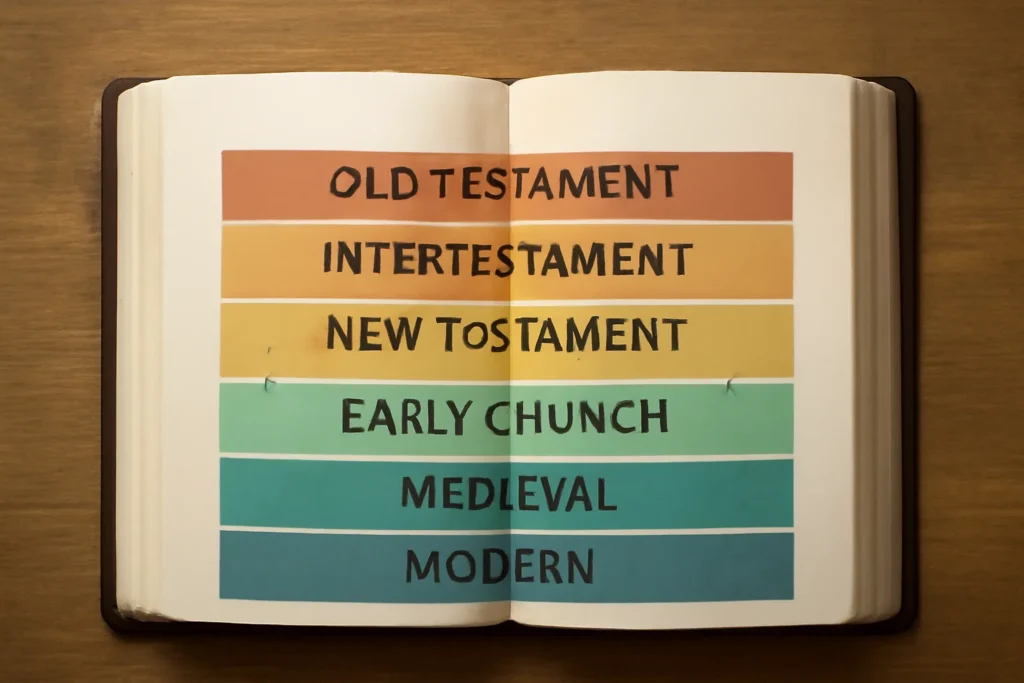
Key eras like the Patriarchs, the Exodus, the Conquest, the Period of the Judges, the United Monarchy, the Divided Kingdom, the Exile, the Return, and the Intertestamental and New Testament periods.
Distinctive features such as genealogies, covenants, kingship cycles, prophetic institutions, and creative literary frames (poetry, wisdom literature, gospels, letters).
Readers should expect a balance between historical reconstruction (what scholars debate and how they approximate dates) and theological interpretation (what the text intends to communicate within its own arc). Because biblical authors wrote across different centuries and cultures, a good Bible timeline book will acknowledge uncertainties while presenting a usable framework for study.
Why Use a Bible Timeline Book?
A bible timeline guide can change how you read Scripture by offering a scaffold for understanding. The benefits include:
Clarity about how episodes relate to each other across time.
Retention of dates and names through visual associations and cross-references.
Connection of biblical events to broader ancient Near Eastern history, helping readers appreciate context.
Teaching utility for sermons, Sunday school lessons, or campus theology discussions that demand a chronological spine.
Terms like biblical chronology and timeline interpretation become practical tools rather than abstract concepts. For students preparing for exams, pastors crafting coherent sermons, or curious readers exploring the Bible in a structured way, a reliable Bible timeline book serves as a trusted companion.
Key Features You Should Expect in a Comprehensive Timeline Resource
When evaluating a timeline Bible book, look for features that support a robust study. The following elements commonly appear and contribute to its usefulness:
Chronological charts or tables that place events in sequence with approximate dates.
Era color-coding to distinguish major periods such as patriarchal times, the wilderness, the monarchy, the exile, and the New Testament era.
Genealogical summaries showing lineages that connect generations and highlight pivotal transitions.
Reigns and lifespans for kings and notable leaders, enabling quick cross-referencing with prophetic timings.
Maps and geography that illustrate travel routes, conquest campaigns, and diaspora movements.
Notes on dating methods such as Ussher-like calculations, Assyrian and Egyptian chronicles, and critical scholarship where dates are debated.
Cross-references to specific verses, chapters, or pericopes to anchor the timeline in Scripture.
Glossary and index for quick lookup of key terms, places, and people.
Suggested reading plans to guide users through a chronological journey in a manageable pace.
A strong Bible timeline book will also provide interpretive notes that explain why certain dates are approximate or contested and how different scholarly traditions approach the material. This transparency helps readers assess reliability and form their own informed judgments.
How a Bible Timeline Book Is Structured: Common Formats
While formats vary, most reputable bible chronology books share a few structural patterns. Understanding these can help you pick a resource that suits your goals:
Sequential narrative format that tracks events from creation (or patriarchal beginnings) through the return from exile and into the early church.
Period-based structure dividing the Bible into eras, with each era explored in depth before moving to the next.
Event-by-event layout where the timeline lists major events (e.g., exodus, conquest, exilic years) with dates and short explanations.
Genealogy-first approach grouping related lineages to reveal how families shape history and theology.
Hybrid approach combining chronological charts, map overlays, and narrative commentary for a multi-modal study experience.
Some guides emphasize a devotional thread, weaving daily readings with the timeline to reinforce memory and spiritual reflection. Other guides lean toward academic rigor, offering source citations, textual variants, and scholarly debates. Your preference will influence which Bible chronology book you choose.
Foundations: Dating Methods and Their Implications
A central topic in any biblical timeline resource is dating. Readers should understand that dating in ancient texts is not always precise by modern standards. The following points are commonly addressed in a complete guide to biblical chronology:
BCE/CE vs AD/BC: Most modern timeline resources switch to BCE/CE to avoid religious connotations, but some publications still use BC/AD conventions. The choice affects how dates appear on charts, not the historical events themselves.
Approximate dates and ranges: For many events, authors offer estimated windows (e.g., circa 1250–1200 BCE for a particular conquest) rather than a single date.
Synchronisms with neighboring civilizations: When possible, timelines align biblical events with known dynasties and events from Egypt, Assyria, Babylon, and Persia to provide external anchors.
Regnal years and lifespans: Using kings’ reigns as anchor points helps place other events in context, though regnal lengths can vary among traditions and manuscripts.
Chronological harmonization: Some books attempt to harmonize numbers between genealogies and narrative sequences, while others caution that harmonization may mask textual tensions.
Understanding these methods helps readers evaluate the confidence level of a given date and appreciate the ongoing scholarly conversation surrounding biblical chronology.
Using a Bible Timeline Book: A Practical Guide
If you’re new to the concept of a Bible timeline book, here are practical approaches to get the most from this kind of resource:
Choose a format that matches your learning style: a visual chart-heavy volume, a text-dense narrative with sidebars, or a digital timeline with interactive features.
Start with an overview to grasp the major eras and their approximate dates before diving into smaller sections.
Use color-coding to follow the transitions between eras—this helps you quickly identify, for example, the shift from the United Monarchy to the Divided Kingdom.
Cross-reference to the biblical text: whenever the timeline mentions an event, look up the relevant passages to see how the narrative unfolds in Scripture.
Annotate and build your own notes: write down dates you accept, alternative estimates, and questions you want to explore further.
Integrate maps with timeline entries: geographical movement often clarifies why certain events occurred and how prophets responded to changing political landscapes.
Apply the material to sermons, lessons, or personal study: a timeline is a memory aid that can anchor themes such as faithfulness, obedience, and judgment.
A well-rounded approach combines textual study with historical context. When you use a Bible chronology book as a study aid, you’ll find it easier to see the continuity from Genesis to Revelation and to appreciate how the biblical narrative speaks to readers across time.
No resource is perfect, and a thoughtful timeline of Scripture will acknowledge its limitations. When engaging with a chronology of the Bible, you may encounter:
Dispersion of sources across multiple manuscripts and translations, which can yield variant numbers for the same event.
Contradictions or tensions between genealogies, reign lengths, and external historical records that scholars debate.
Symbolic or theological dating in prophetic literature, which may not align neatly with historical calendars.
Different interpretive frameworks that emphasize literal vs. symbolic timelines, or that harmonizeScripture with theological goals.
A responsible Bible timeline book often includes clear caveats, citations to primary sources, and notes on alternate dating schemes. As a reader, you should approach the material with critical thinking and a willingness to examine multiple perspectives.
Historical Context: The Evolution of Bible Timeline Literature
The idea of presenting Scripture in a chronological format has a long history. Early attempts often relied on single-author chronologies that reflected particular theological agendas or scholarly traditions. Over time, more comprehensive bible timeline resources emerged, incorporating:
Cross-disciplinary research from archaeology, ancient Near Eastern studies, and biblical linguistics.
Digital enhancements, enabling readers to zoom in on a specific reign, zoom out for broad epochs, and overlay maps with events.
Interdenominational and ecumenical perspectives that aim to serve a broad audience, from scholars to lay readers.
Whether you choose a traditional print edition or a modern digital timeline book, you’ll discover how the interplay of history, theology, and narrative structure shapes our reading of the Bible as a coherent, ongoing story.
How to Create Your Own Bible Timeline: A Do-It-Yourself Guide
For some readers, building a personalized timeline Bible book is the most effective way to internalize biblical chronology. Here are practical steps to assemble your own chronology of Scripture:
Define the scope: Decide whether you’ll cover the entire Bible, a specific era, or a thematic arc (e.g., covenants, prophets, or exile and restoration).
Choose a dating framework: Select BCE/CE or other conventions, and decide how you’ll handle uncertain dates.
Collect core events: List the major episodes and their approximate dates, drawing from your preferred Bible translation and scholarly sources.
Incorporate genealogies: Map key lineages that influence historical transitions and political power shifts.
Integrate geography: Add maps and travel routes to connect events with places and peoples.
Design the layout: Use a timeline header, era blocks, and cross-references to keep information legible and navigable.
Annotate: Write brief notes explaining dating choices, textual variants, and interpretive considerations.
If you prefer digital tools, you can use timeline software, spreadsheet templates, or interactive web platforms to create a dynamic Bible chronology that can be updated as new scholarship emerges.
Frequently Asked Questions About Bible Timeline Books
Here are common questions readers ask about these resources, with concise answers to help you decide how to engage with a bible timeline book:
Is there a single canonical chronology? No. Biblical chronology is a field of study with multiple scholarly traditions. A solid timeline book presents a well-supported framework while noting where opinions diverge.
How precise can the dates be? In many cases, dates are best understood as approximate ranges rather than exact numbers, particularly for events in the early biblical period.
Does a timeline affect theological interpretation? Yes, it can. A timeline provides a framework to examine patterns like covenant faithfulness, prophetic fulfillment, and the movement toward redemption, but readers should distinguish descriptive chronology from prescriptive theology.
Can I rely on a Bible timeline book for academic study? Many such books are excellent starting points, but in-depth academic work often requires consulting primary sources, scholarly journals, and multiple chronology studies to form a well-grounded view.
Recommended Approaches to Studying with a Bible Timeline Book
Whether you’re using a timeline Bible book for personal study, group teaching, or classroom instruction, consider these practical approaches to maximize learning:
Pair the timeline with the biblical text by reading the corresponding verses while you study each era or event.
Cross-check with secondary sources to understand different dating schemes and to see how other scholars interpret the same data.
Create study prompts such as “What does this reign reveal about leadership?” or “How did geography influence this prophetic message?”
Incorporate questions and discussion points for study groups to explore how chronology intersects with theology, ethics, and social history.
A thoughtful study routine with a Bible timeline book helps you build a durable mental model of biblical history while allowing room for nuanced discussion and personal reflection.
Concluding Reflections: The Value of a Complete Guide to Biblical Chronology
A Bible timeline book—whether you call it a biblical chronology guide, a bible history timeline, or a chronology of Scripture—offers a powerful method for integrating the narrative of the Bible into a comprehensible sequence. It helps readers appreciate the interdependence of events across centuries, understand how redemptive themes unfold through time, and connect doctrinal points to historical developments. When you approach a timeline resource with critical thinking, curiosity, and a clear sense of purpose, you gain a tool that can deepen both knowledge and faith.
In pursuing comprehensive biblical chronology, remember that the journey is as important as the destination. Be willing to compare multiple perspectives, recognize where evidence is strong, and acknowledge where uncertainty remains. A robust Bible timeline book invites ongoing exploration rather than a final, unambiguous verdict. With this mindset, you’ll find that the study of biblical chronology becomes a living conversation about how Scripture speaks to readers today and across generations.







Leave a Reply