Introduction: Carols for Christmas and the art of holiday sing-alongs
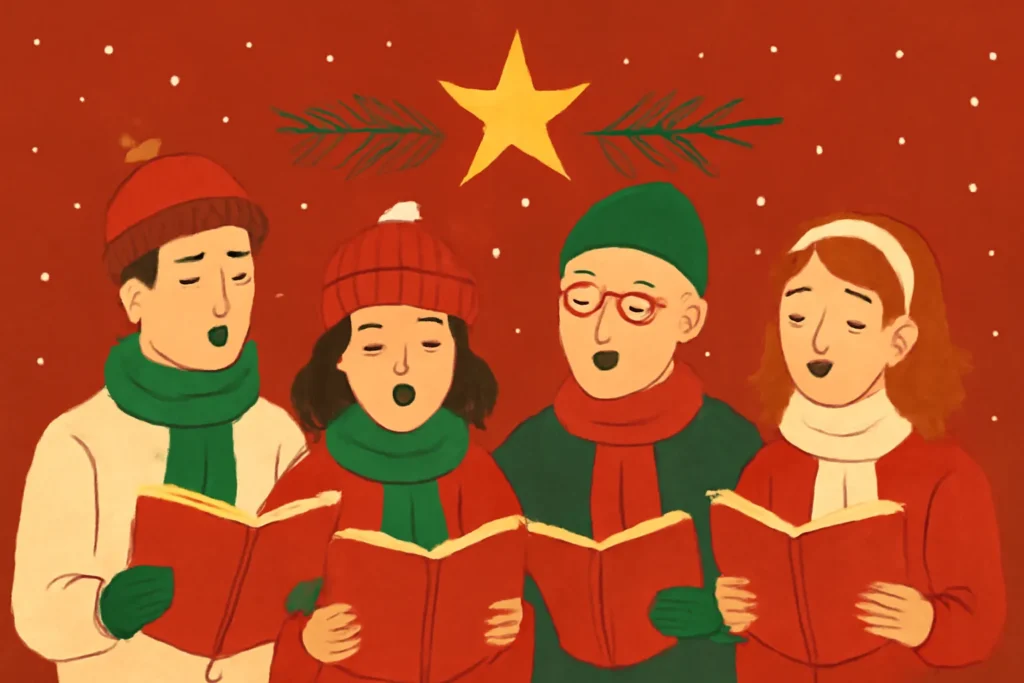
Carols for Christmas are among the most recognizable and beloved soundtracks of the winter season. They travel across generations, cultures, and languages, evolving with each new arrangement while preserving a sense of shared memory. Whether you call them Christmas carols, Yuletide songs, or simply holiday sing-alongs, these tunes invite people to join their voices in moments of reflection, celebration, and community. This guide offers a comprehensive look at the history, diversity, and everyday use of these timeless tunes, with practical tips for families, schools, churches, and community groups who want to explore or expand their repertoire.
In many places, the carol season spans Advent through Epiphany, creating a natural rhythm for gatherings, services, school concerts, and informal evenings with friends and neighbors. What makes a carol distinctive is not only its melody or lyrics, but its social function: a shared experience that builds togetherness, whether sung in a quiet chapel, around a living-room piano, or in a bustling town-square during a festival night. This article surveys the wide spectrum of carols for Christmas and offers guidance on choosing songs, understanding their origins, and presenting them in ways that engage both beginner singers and seasoned ensembles.
What counts as a carol for Christmas?
At its broadest, a carol is a song written to celebrate a Christmas or winter season theme. In its historical sense, a carol could be sacred or secular, seasonal or celebratory, and it often featured a memorable chorus or refrain that invited communal participation. The term carol has roots in medieval Europe and originally denoted a lively song that accompanied dancing or processions. Today, the range of carols for Christmas includes:
Sacred carols that tell the nativity story or express devotion and awe.
Secular carols that focus on winter scenes, gift-giving, and festive merriment.
Regional and multilingual carols that reflect local languages, melodies, and performance traditions.
Contemporary carols or nuevo arrangements written in the 20th and 21st centuries for modern choirs, schools, and community groups.
The essential characteristic of a carol is its sing-along quality—a tune that is inviting to audiences, with a melody in a comfortable range, clear cadences, and a chorus that listeners can easily echo. In practice, many carols straddle sacred and secular worlds, allowing families and churches to share in a multifaceted holiday experience.
A brief history of Christmas carols
The earliest carols emerged in medieval Europe as communal songs performed during religious celebrations, processions, and seasonal dances. They were often sung in the vernacular rather than Latin, which helped in spreading literacy and participation beyond a strictly liturgical setting. Over centuries, carols evolved in rhythm, harmony, and form, absorbing local tunes and languages while preserving a chorus-driven structure that encouraged group singing.
In the late 18th and 19th centuries, a revival of traditional carols took hold in many English-speaking countries. This period also saw the creation of new carols that captured Romantic-era sensibilities and newly accessible musical notation. The 20th century brought further diversification: carols were arranged for choirs, orchestras, and popular recordings; their repertoire expanded to include bilingual pieces and songs inspired by global Christmas traditions.
Today, the canon of carols for Christmas includes ancient tunes that have traveled through time and modern compositions that reflect contemporary life. This blend of old and new ensures that caroling remains a living practice—one that can be adapted to different spaces, audiences, and cultural backgrounds, while keeping the core feeling of communal exchange at its heart.
Global perspectives: how different traditions shape carols
Christmas carols are performed around the world, and many regions contribute unique melodies, languages, and performance rituals. In Europe, traditional nativity carols often retain a narrative arc—birth, angels, shepherds, and the divine child—while regional tunes add distinctive flavor through modal scales, instrumentation, or dance-like rhythms. In the Americas and beyond, carols may blend indigenous or Afro-diasporic influences with European melodies, producing hybrid forms that still invite participation.
The multilingual nature of carols for Christmas invites listeners to experience the season through different soundscapes. Spanish, French, German, Italian, Welsh, and Afrikaans versions of familiar songs are common, and new arrangements frequently appear in school programs and community events. Regardless of language, the goal remains the same: to unite voices in a shared, joyous expression of the season.
Categories and variations within carols for Christmas
For practical planning, it helps to think in terms of categories that reflect mood, purpose, and setting. Below are two broad groupings with representative examples.
Sacred nativity and devotion carols
Timeless pieces that recount the nativity, the angels’ message, and adoration of the Christ child.
Examples include classic lullaby-like melodies and reverent, prayerful lyrics.
Secular and festive carols
Happier, dance-like tunes that celebrate winter, family gatherings, and communal cheer.
Examples include cushions of merriment, playful refrains, and catchy choruses that invite audience participation.
Regional and multilingual carols
Carols that originate from a particular country or language, or that have adapted local musical idioms.
These often include bilingual or multilingual versions that help diverse audiences sing together.
Notable Christmas carols: profiles and insights
The following profiles provide concise histories, typical musical characteristics, and practical notes for performance. They are not the only versions that exist, but they offer a solid starting point for building a diverse and engaging carol program.
Lyrics by Joseph Mohr, melody by Franz Xaver Gruber. A gentle, tranquil lullaby-like piece in most arrangements, often performed in 3/4 time. It is widely associated with late-night worship and candlelight services. In performance, singers frequently opt for a warm, legato line and a melodic range that stays comfortably within first and second tenor for adult choirs.
O Holy Night (Cantique de Noël, 1847)
Written by Adolphe Adam, with English translation by John Sullivan Dwight. This carol is known for its soaring melodic phrases and emotive climaxes. Arrangements vary from intimate solo or quartet verses to full choir passages with lush harmony. Practice breath control and dynamic contrast to convey the song’s sense of reverence and awe.
Hark! The Herald Angels Sing (1840)
Lyrics by Charles Wesley; music adapted by Felix Mendelssohn. A triumphant, hymn-like carol that often sits in a bright major key with energetic, uplifting lines. It works well in choral settings with balanced tenor and alto lines, and it is durable in both formal church services and community concerts.
Joy to the World (early 18th century text; melody by George Frideric Handel, arranged by Lowell Mason)
A jubilant procession-like carol commonly sung in bright tempos and spacious cadences. The familiar tune comes from Handel’s Messiah, adapted for Christmas singing. It’s effective for sing-alongs because its chorus is easy to pick up and repeat, inviting audience participation.
O Come, All Ye Faithful (Adeste Fideles)
A medieval Latin hymn whose current English version invites all to adore the newborn King. The refrain invites a call-and-response feel, making it excellent for congregational singing. Musically, it benefits from a sturdy, hymn-like setting that allows voices to unite in the chorus.
It Came Upon the Midnight Clear (1849)
Lyrics by Edmund H. Sears; melody by Richard S. Willis. A reflective, contemplative carol with a gentle flow and a sense of hush that gradually opens into a broader, hopeful chorus. It pairs well with smaller groups that want to emphasize text and atmosphere.
A Nativity story carol with antiquated charm and a simple, singable melody. Because of its older origin, it is often performed with a straightforward, modal flavor that underscores its timeless quality. It translates well to both organ accompaniment and a capella ensemble.
Angels We Have Heard on High (Les Ange dans nos campagnes)
Based on the French carol "Anges du Ciel" and characterized by its soaring "Gloria" refrain. It invites a powerful, echoing chorus when performed with festive organ or brass sections. It works nicely as a centerpiece in a concert program.
We Wish You a Merry Christmas (traditional)
A cheerful, often cumulative tune that starts with a simple verse and invites generous rounds. It’s a staple for school concerts and community gatherings because of its universal, friendly message and easy learning curve.
Based on a traditional Welsh melody with a lively, repetitive refrain. This carol is particularly effective for festive atmospheres, using rhythmic clapping and upbeat tempo to energize a crowd. It also serves as a practical teaching piece for rhythm and call-and-response singing.
O Tannenbaum (O Christmas Tree)
The German origin celebrates the evergreen tree as a symbol of steadfastness and life. The tune is flexible for both serious concert use and more lighthearted programming. It is especially suitable for languages and audiences who enjoy a heritage-backed piece with clear, memorable lines.
Lyrics by Noël Regney; melody arranged by Gloria Shay Brown. A narrative carol with a gentle storytelling arc and a pop-influenced accessibility that makes it appealing to mixed-age choirs and contemporary ensembles alike.
Carol of the Bells (Shchedryk; Ukrainian origins; arranged widely)
A striking, percussive tune originally about a swallow that foretells of good fortune. The famous English arrangement emphasizes a ringing, choral texture that culminates in dramatic glockenspiel-like flourishes. It is ideal for late-evening concerts or dramatic church services.
Feliz Navidad (Jose Feliciano; 1968)
A bilingual, upbeat staple that blends Spanish and English verses. Its simplicity—two-chord structure in many arrangements—makes it especially approachable for school choirs and family gatherings, creating an inclusive atmosphere across generations and language backgrounds.
Practical guidance: selecting carols for different contexts
Choosing the right carols for Christmas depends on the audience, space, and the goals of the gathering. Here are some practical frameworks to help you plan a meaningful program.
Family carol night: Focus on familiar tunes in comfortable keys, with a few gentle ballads and maybe one or two lighthearted pieces like We Wish You a Merry Christmas or Deck the Halls. Keep tempos moderate to encourage participation from listeners of all ages.
Church service: Include a balance of sacred carols with liturgical pacing. Allow room for moments of quiet reflection (e.g., Silent Night) and the occasional rousing hymn-like piece for communal response (e.g., Joy to the World).
School concert: A curated mix of secular and sacred tunes, with 2–3 easy rounds or a short medley. Emphasize clarity of diction, precise rhythm, and teamwork in choral sections. Consider including bilingual options if your community is multilingual.
Community sing: Prioritize highly singable tunes, call-and-response formats, and a simple lead sheet for participants who may not read music. A short set of 5–6 carols with clear endings can be especially effective.
Virtual or hybrid events: Use shorter segments and provide downloadable sheets with simple chord charts. Encourage participants to join in with a computer or mobile device by keeping tempo steady and avoiding overly rapid sections.
Tips for teaching and performing carols
Whether you direct a choir, lead a family sing, or host a community event, the following practices help maximize engagement and musical quality.
Choose keys with singable ranges. For mixed-age groups, stay within comfortable mid ranges rather than extreme highs or lows. When necessary, transpose to a more forgiving key for the ensemble.
Provide clear pronunciation and diction. Clear consonants help the audience follow along and keeps the text meaningful, especially for unfamiliar languages.
Use dynamic contrasts. Carols often carry sacred or festive content; shaping phrases with crescendos and decrescendos can highlight text and mood.
Balance repertoire with accessibility. Include a mix of unison, two-part, and three- to four-part pieces to accommodate different abilities and to foster a sense of accomplishment for everyone involved.
Involve the audience. Plan moments where listeners can join in the chorus or repeat a refrain, creating a communal sense of participation and celebration.
Respect cultural contexts. When presenting multilingual carols, provide brief context for the text and origin, and invite listeners to share in the meaning beyond language barriers.
Finding and using carol resources: where to look
A wide range of materials exists to support carols for Christmas across settings. Here are common sources to consider.
Public-domain carols allow for free performance and adaptation. Older tunes often fall into this category, simplifying rehearsal and distribution of materials.
Hymnals and choral collections provide organized arrangements for voices and piano or organ accompaniment, suitable for church and school use.
Online archives and libraries such as music databases and choral wikis host sheet music, searchable by carol title, language, or difficulty level. They are useful for educators and conductors planning programs.
Educational and community platforms offer beginner-friendly tutorials, practice tracks, and sing-along videos that help families and groups learn new pieces at home.
Translations and language resources help broaden participation. When presenting multilingual carols, consider providing glossaries or brief pronunciations to aid pronunciation and understanding.
Cultural sensitivity and inclusive programming
A modern carol repertoire often reflects diverse communities and languages. When assembling a program, be mindful of:
Respect for religious traditions and the intentions of sacred carols.
Thoughtful inclusion of secular pieces that celebrate the season without implying a single cultural narrative.
Opportunities for participants from different backgrounds to contribute, such as bilingual performances or solo opportunities in a carol or a small set of carols from different regions.
Accessibility considerations, including clearly marked keys, tempo choices appropriate for the audience, and options for accompaniment or a cappella singing where possible.
Conclusion: keeping the flame alive in the age of many carols
The enduring appeal of carols for Christmas lies in their ability to unite people through melody, text, and shared memory. They travel through time—from medieval processions to modern living rooms—and across borders—from English-speaking communities to multilingual ensembles around the globe. By exploring a broad spectrum of carols, explaining their origins, and thoughtfully tailoring presentations to your audience, you can help preserve a cherished tradition while inviting new generations to participate in the season’s celebration.
Whether you are building a family song list for a quiet evening at home, coordinating a church service, or guiding a school or community choir, your goal remains the same: to create moments of connection through music. In those moments, the timeless songs of the season come alive again, carried by voices old and young in a shared chorus that says, in every language, that the spirit of Christmas is best expressed together.





Leave a Reply