Christmas Hymns Songs: A Classic Collection of Carols
Christmas Hymns Songs: A Classic Collection of Carols
Christmas hymns and carols have carried the stories, prayers, and melodies of the Christmas season for centuries. They are more than songs; they are living artifacts of faith, culture, and communal celebration. This article explores Christmas hymns songs as a classic collection of carols, tracing their origins, examining their themes, and highlighting the ways they shape worship, concerts, and home singing during the darkest days of winter and the brightest moments of Christmas joy.
The tradition of Christmas hymns and carols stretches from medieval Europe to the present day. Early carols were often seasonal songs associated with community celebrations rather than strictly liturgical texts. Over time, many hymns were woven into church services around the Nativity and Epiphany, becoming staple repertoire for choirs, organists, and congregations alike. The evolution of Christmas hymnody reflects shifts in language, musical style, and the relationship between sacred text and popular culture.
Early Beginnings
In the earliest centuries, sacred music tended to be related to liturgical chants and mass settings. As communities gathered for Christmas festivities, singers would improvise or compose short, catchy tunes to accompany readings and processions. These early pieces often featured refrains or repeated phrases and were designed to be sung by laypeople and clergy alike. The oral tradition ensured that melodies could travel across villages and kingdoms, mutating with each new singer’s voice and local instruments.
Medieval to Early Modern Carols
By the 14th and 15th centuries, carols began to codify into more formal songs with distinct meters, rhymes, and refrains. They frequently used vernacular languages, enabling broader participation beyond Latin-liturgical settings. The medieval carol tradition included narrative pieces about shepherds, the Magi, and the Holy Family, often with a playful or communal character—echoing the social nature of Christmas celebrations in towns and countryside gatherings. As printing emerged and literacy spread, carols entered printed songbooks, making the melodies more widely available and standardized.
Themes That Shape Christmas Hymns
Across centuries, Christmas hymns have tended to cluster around several core themes. Understanding these motifs helps readers appreciate the texture and emotional arc of the repertoire, whether you are a singer, a conductor, or a curious listener.
Nativity and incarnation — The central narrative of the birth of Jesus and the mystery of God becoming human is a driving force behind many carols.
Divine light and guidance — Imagery of light in the darkness is a recurring motif that consoles, uplifts, and invites praise.
Praise and worship — Gloria, hymnic refrain, and doxology frames that exalt the divine child and his meaning for creation.
Pastoral scenes — Shepherds, angels, the manger, and rustic imagery offer accessible storytelling and a sense of immediacy.
Hope and promise — The season is seen as a time of expectation, fulfillment, and renewed faith for the coming year.
Unity and communal singing — Carols invite congregational participation, turning worship into shared experience.
Liturgical vs. Secular Carols
Some carols are deeply rooted in the Christian liturgical calendar, while others have become beloved in secular settings or secular-adjacent holiday celebrations. Liturgical carols may appear in Advent or Christmas services with clear doctrinal or scriptural references, whereas secular carols often emphasize seasonal joy, family gatherings, and the festive mood of winter. Yet even secular-adjacent songs often borrow the same melodic shapes, rhythmic energy, and communal spirit that characterize traditional hymnody.
Among the vast repertory, a handful of Christmas hymns songs have become enduring standards. Their melodies are instantly recognizable, their texts deeply meaningful, and their musical settings adaptable for choirs, orchestras, and intimate home singing. Here are some well-known examples, with brief sketches of their origins and significance.
Silent Night (Stille Nacht) — A serene, candlelit lullaby of the Nativity that originated in 1818 in Austria. The song’s simple five-note phrases and gentle harmony have made it a staple of Christmas Eve services worldwide. Its message of peace resonates in both sacred and secular contexts.
O Holy Night (Cantique de Noël) — Originally written in the 19th century by Adolphe Adam, this hymn’s towering melodic lines and luminous climaxes invite a sense of awe at the mystery of the Incarnation.
O Come, All Ye Faithful — A stirring call to worship that invites the faithful to approach the manger with joy. Its Latin roots—in some traditions traced to the 18th or 19th centuries—have helped it cross linguistic boundaries.
Joy to the World — A festive anthem drawn from Psalm 98 that celebrates Christ’s coming with jubilant celebration, often performed with bright brass and percussion in concert contexts.
Hark! The Herald Angels Sing — A hymn that blends regal imagery with tender praise, written in its modern form by Charles Wesley and later revised by others, making it a favorite in both choirs and congregations.
The First Noel — A traditional carol that evokes the shepherds and the Magi, with a gentle narrative arc and a memorable refrain that invites communal sing-along.
God Rest Ye Merry, Gentlemen — A carol that blends a Christmas blessing with a lively, martial rhythm, often interpreted with warm harmonies and a touch of medieval revival in arrangements.
Good King Wenceslas — A story-song of charity and perseverance, rooted in a legend of Saint Wenceslas and his pious kingly example, sung with a strong duo-pulse and clear meter.
Beyond these evergreen titles, the repertoire includes countless regional carols, translated hymns, and seasonal odes that reveal the local color of Christmas worship around the world. In each culture, carols become a way to pass on stories, memories, and faith through melody and text.
Musical Characteristics of Christmas Hymns
Musically, Christmas hymns and carols share common characteristics that lend themselves to group singing and emotional expression. They combine narrative text with memorable melodies and practical musical structures that accommodate congregational participation.
Modal scales and pentatonic tendencies — Some traditional carols use modal melodies (Dorian, Mixolydian, Aeolian) that impart an ancient or timeless feel, while others rely on pentatonic patterns that are easy to sing and harmonize.
Accessible rhythmic structures — Common-time or simple triple meters enable steady pulsing at choirs and congregations, creating a sense of communal momentum.
Refrains and verse-chorus forms — Many carols feature a repeated refrain that invites congregational singing, interwoven with narrative or descriptive verses.
Modest vocal ranges — The melodies are typically crafted to be sung by mixed voices with a comfortable range, often featuring steps and small leaps for ease of learning.
Ornamentation in arrangements — In concert or choir settings, arrangements may add organ, brass, and strings, or introduce polyphony and harmonization that elevate the original simplicity.
Text and Music Synergy
The strongest Christmas hymns demonstrate a powerful synergy between the words and the music. The text’s imagery—manger, angels, star, light, salvation—aligns with musical devices such as crescendos, gentle decrescendos, and bell-like tones to reinforce meaning. This synergy helps listeners remember the core message of Christmas: hope, reverence, and joy in the divine gift of Jesus Christ.
Carols in Use Today: Liturgy, Concerts, and Home Singing
Today’s Christmas hymns serve multiple purposes. They appear in church liturgy, in concert programs, and in family or community homes as part of seasonal rituals. Each context highlights different aspects of the music—devotional, cultural, or celebratory—while preserving the central sense of reverence and unity.
Liturgy — In Advent and Christmas worship, hymns frame readings about the Nativity, the angels’ proclamation, and the incarnation. They serve as meditative preludes or climactic responses within the service, guiding the congregation through the liturgical arc.
Concerts — Choirs and orchestras explore the dramatic, lyrical, and virtuosic possibilities of Christmas hymns. Concert programming often juxtaposes traditional carols with modern arrangements, inviting audiences to hear familiar tunes in new textures.
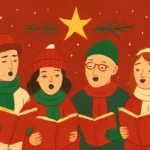
Home caroling and personal devotion — Families and groups gather to sing around a piano or a living room, creating shared memories and spiritual warmth during long winter evenings. The simplicity and immediacy of many carols make them ideal for group singing without requiring professional training.
Liturgical Roles and Seasonal Placement
Different carols suit various moments in the liturgical year. Some are more appropriate for Advent, preparing the heart for Christmas with themes of expectation; others celebrate the Nativity itself and the revelation of Christ to the world. The seasonal placement of a carol is often as important as the text, guiding the musical mood and the congregation’s emotion at that point in worship.
Collecting, Arranging, and Performing Christmas Hymns
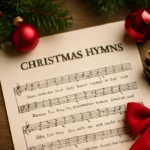
For musicians, choirs, and music lovers, collecting and arranging Christmas hymns is a rewarding practice. Several well-known anthologies have guided generations of singers, helping to preserve the repertoire while offering fresh perspectives for performance.
Anthologies and songbooks — Collections such as The Oxford Book of Carols and Carols for Choirs have served as foundational references for choirs. They gather carols from various periods, languages, and styles, providing editor notes on origins, keys, and recommended voicings.
Translations and language variants — Many carols exist in multiple languages or have alternate English translations. This diversity allows choirs to connect with local communities and reflect their cultural heritage.
Arrangements for different forces — Christmas carols can be performed in unison, a cappella, with SATB choirs, or with full orchestral accompaniment. Arrangers often explore organ transcriptions, brass chorales, or string textures to match the performance venue.
Copyright considerations — A large portion of traditional carols are in the public domain, making them accessible to churches and schools. Modern arrangements may require licensing, especially for published editions and recordings.
Educational Perspectives: Why These Hymns Matter
From an educational perspective, Christmas hymns are valuable for their linguistic, musical, and historical dimensions. They offer a living portal into language development, musical theory, and social history. Students of music theory can analyze their modal or tonal choices, while language learners can study poetic imagery and syntax in translation. History enthusiasts can trace how political upheavals, printing, and religious reform shaped the carol repertoire.
Linguistic richness — Many carols preserve older forms of the English language and other languages, offering a historical soundscape that enriches our understanding of past eras.
Musical pedagogy — The accessible textures of carols make them ideal teaching material for voice ranges, articulation, phrasing, and ensemble coordination.
Cultural empathy — By singing carols from different traditions, communities gain appreciation for diverse spiritual expressions and local customs surrounding Christmas.
Global Traditions: Christmas Hymns Across Cultures
While many readers associate Christmas songs with Western traditions, the practice of singing sacred songs during the Christmas season exists globally. In each culture, local melodies, languages, and performance styles shape how Christmas hymns are heard and sung. This global dimension enriches the broader story of carols and demonstrates how faith communities translate the Christmas narrative into music that resonates locally.
Latin and Iberian traditions — In parts of Europe and the Americas with strong Catholic or Latin-based heritage, Christmas hymns often weave Latin tropes, Marian imagery, and festive processional forms into vernacular translations.
Anglophone carols — The English-speaking world produced a vast corpus of carols that became standard in churches and schools, often reflecting Protestant hymn-writing conventions alongside medieval and Victorian influences.
Eastern Christian expressions — In Orthodox and other Christian communities, Christmas hymns may feature distinct liturgical languages, parallel long-standing tonal practices, and choir-driven textures that emphasize liturgical chanting and antiphonal singing.
Indigenous and regional adaptations — In many countries, traditional melodies are adapted to local instruments, languages, and storytelling conventions, creating unique Christmas soundscapes that honor both global themes and local heritage.
Practical Tips for Singers, Conductors, and Teachers
Whether you lead a choir, teach music in a classroom, or simply enjoy singing at home, practical strategies can enhance your experience with Christmas hymns. The following tips aim to help performers, educators, and congregants engage more deeply with the repertoire.
Choose a well-rounded program — Include a mix of well-known carols, a couple of more intricate pieces, and perhaps a regional treasure. This balance helps audiences engage emotionally while challenging performers.
Emphasize text clarity — In carols with narrative content, ensure vowels are clear and consonants are properly enunciated so the story comes through even in large spaces.
Balance voice parts — For choirs, programmed unity between soprano, alto, tenor, and bass ensures full, even sound. Avoid overpowering the texture with the same vocal color.
Use ornaments judiciously — In religious settings, sparing use of ornamentation can preserve reverence; in concert contexts, tasteful vibrato, phrasing, and dynamic shaping can enhance impact.
Engage the audience — For congregational singing, choose tunes with memorable refrains and provide brief, clear cues. Encourage confident participation by repeating the refrain and providing pronunciation guidance for foreign lyrics when appropriate.
Historical Highlights: Notable Composers and Collectors
While many Christmas hymns emerged from anonymous tradition or communal singing, several composers and editors left lasting marks on the genre. Their work helped preserve, refine, and distribute carols for generations to come. Here are some key figures and their contributions.
Traditional editors and compilers — Figures such as those behind the Oxford Book of Carols and Carols for Choirs curated a canon of carols that balanced authenticity with accessibility, guiding choirs and churches in repertoire selection.
19th-century hymn writers — Poets and hymn writers of the Victorian era helped standardize verse forms, translate texts, and polish the moral and devotional content of many carols that remain in use today.
Contemporary arrangers — Modern authors and conductors create fresh arrangements that respect the original character while bringing new color to performance, allowing the carols to evolve without losing their essence.
Anyone interested in cultivating a personal or institutional library of Christmas hymns can follow a thoughtful approach. The goal is not just to assemble songs but to create a coherent, teachable, and emotionally resonant experience for listeners and performers alike.
Start with a core set — Begin with a small group of universally beloved carols and two or three that reflect your local choir’s strengths or language needs. This creates a reliable foundation for study and performance.
Mix experience levels — Include some straightforward congregational pieces alongside a few more challenging arrangements to foster growth and variety.
Incorporate language diversity — If your community is multilingual, include carols from different linguistic backgrounds to reflect your audience and to broaden musical horizons.
Document program notes — Provide performers and listeners with brief notes about each carol’s history, text meaning, and musical features. This enhances understanding and appreciation.
Across centuries, Christmas hymns have served as a bridge between liturgical devotion, familial warmth, and community celebration. They invite people to pause, reflect on the Nativity, and share in a collective musical experience. The collective singing of carols creates a sense of unity, social connection, and shared memory that many people carry with them well beyond the Christmas season.
In a rapidly changing world, these timeless melodies offer continuity. They connect generations—grandparents teaching grandchildren a familiar tune, choirs handing down a tradition of careful singing, and communities gathering to mark the birth of Christ through song. The classic collection of carols remains a living archive that continues to grow through new arrangements, new translations, and new voices while preserving its core messages of hope, light, and peace.
Whether you are a seasoned musician or a casual listener, engaging with Christmas hymns can be an accessible and enriching experience. Choose pieces whose texts you can connect with, whose melodies you can sing with confidence, and whose musical textures you can appreciate. You may discover a favorite carol you never knew you loved, or you may rediscover a familiar tune with fresh meaning. The beauty of this repertoire lies in its adaptability: it can be performed with minimal resources in a church chapel, or expanded into a grand concert with a symphony orchestra and professional soloists.
As you plan your own season of singing or listening, consider how a well-curated selection of Christmas hymns songs can illuminate the miracle and wonder of the Christmas narrative. Let the stories of angels, shepherds, wise men, and the nativity breathe again through voices and instruments, and allow the sense of peace and joy to fill the room as you sing together.
In sum, Christmas hymnody—the enduring classic collection of carols—is more than a repertoire. It is a shared cultural and spiritual experience that invites [everyone] to participate in a century-old tradition of praise, storytelling, and communal celebration. By exploring its origins, themes, and musical structures, you gain not only a deeper appreciation for the music but also a richer sense of how Christmas hymns have shaped, and continue to shape, the way people experience the season around the world.






Leave a Reply