Catholic Prayer for Someone Who Just Died: Comfort and Remembrance
Catholic Prayer for Someone Who Just Died: Comfort and Remembrance
In the Catholic tradition, the moment a person dies is a time when family, friends, and the whole faith community are invited to unite in prayer. The church teaches that prayer can bring comfort to the living, honor the memory of the dead, and support the soul on its journey toward God. Catholic prayer for someone who just died encompasses a spectrum of practices—from the personal, intimate petitions offered at a bedside to the liturgical richness of Masses, vigils, and prayers for the repose of the soul. This article provides an educational overview of those prayers, their theological foundations, and practical guidance for families and communities who wish to accompany a loved one and each other with faith, hope, and love.
In Catholic teaching, death is not the final word for the believer. It marks a passage into the definitively spiritual life for which God's grace has prepared us. The communion of saints—the unity of all the faithful, living and deceased—binds us together across time and space. Prayers for the dying and the deceased flow from this belief: when we petition God on behalf of one who has just died, we participate in the mercy and steadfast love that flow from Christ himself.
Two essential ideas frame Catholic prayers for someone who has just died: comfort for the bereaved and salvation for the departed. Comfort comes through the hope of eternal life, the presence of Christ, and the memory of love sanctified by prayer. Remembrance is not merely sentimental; it is a living act that joins the living with the Church triumphant and sanctifies the present moment with meaning. In addition, Catholics may recognize the possibility of purification after death through purgatorial purification, which can be aided by the suffrages of the faithful.
Prayers Commonly Used at the Moment of Death and Immediately After
Several established Catholic prayers and rites are commonly used when someone has just died or when families gather in the hours and days after death. The exact practices may vary by community, but all share a common aim: to plead for God’s mercy, to entrust the soul to divine care, and to sustain the bereaved with grace and hope.
Viaticum and the Last Rites
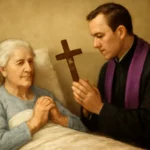
Viaticum is the Eucharist given to a person who is dying as food for the journey to eternal life. It expresses the dying person’s union with Christ and the Church and is often accompanied by prayers for a peaceful departure.
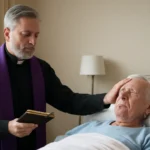
The Last Rites (often referred to in contemporary practice as the Anointing of the Sick, Penance, and Holy Communion if possible) are meant to purify, heal, and strengthen the soul for its final journey. These rites emphasize mercy, forgiveness, and the grace of God at the threshold of life and death.
Prayers associated with this time are offered both by the priest and by family members, and they may include private acts of devotion as long as they are in harmony with the liturgical norms of the Church.
Anointing of the Sick and Penance
Anointing of the Sick is a sacramental that brings grace to someone who is seriously ill or near death. It emphasizes healing, courage, and trust in God’s mercy.
Penance or confession, when possible, offers forgiveness and spiritual purification. It is not only for the dying but for any believer seeking reconciliation with God.
When timing or circumstances allow, receiving these sacraments together with the Eucharist (the Holy Communion) can provide deep consolation for the dying and for their loved ones.
Prayers for the Deceased: Eternal Rest and Sacred Remembrance
Prayers for the dead emphasize two related, but distinct, aims: commending the soul to God and comforting the bereaved by uniting them with the Church’s two-thousand-year tradition of prayer for mercy and mercy’s fruition in heaven. The following are representative forms used in Catholic life, along with guidance on how to adapt them to different situations.
Prayers for the Departed
Eternal rest grant unto them, O Lord, and let perpetual light shine upon them. May they rest in peace. This is a traditional short prayer that is recited or invoked at the end of readings, Masses for the dead, or personal times of remembrance.
May the perpetual light shine upon them is a companion phrase to the eternal rest prayer. It expresses the hope that the soul now enjoys the full light of God’s presence.
May their soul and all the souls of the faithful departed through the mercy of God rest in peace communicates a universal petition for all the faithful departed, often used in communal prayers and at funeral services.
These prayers can be used in many contexts: at the wake, during a funeral Mass, in the cemetery, or in the family home. They can be spoken aloud by a priest, family members, or friends, or prayed silently as a personal intention.
Other important Catholic prayers for the dead include these variations and their customary contexts:
Litany for the Dead or Litany of the Saints is a form in which the faithful call upon saints and the angels to intercede for the departed person. A short version can be prayed at a vigil or a private moment.
Prayer to Mary, Mother of Mercy invites the Virgin Mary to accompany the soul of the deceased with maternal compassion, reflecting the belief in the communion of saints and the care of the Mother of God for all souls.
Prayer to the Sacred Heart of Jesus and devotion to the Sacred Heart is often invoked for mercy, consolation, and trust in Christ’s love even in sorrowful moments.
Prayer to St. Joseph for the Dead reflects the Church’s praise of St. Joseph’s care for Jesus and Mary, and asks his intercession for the departed.
Common Prayer Formats for the Dead
Rosary for the Dead—The rosary is a classical Catholic devotion that can be offered for the soul of the departed, often with intentions for peace, mercy, and purification.
Mass for the Dead (Masses of Requiem) is a central liturgical act where the community asks God to grant eternal rest to the deceased and to commend them to divine mercy.
Office or Liturgy of the Hours for the Dead—In Catholic religious communities, the divine office can include memorial prayers for those who have died, sung or prayed in community, often within a vigil or memorial service.
Prayers for Comfort for the Bereaved
For those who remain, prayer is often a source of comfort, hope, and a path toward healing. While prayers for the dead focus on the departed, Catholic practice also invites prayers that accompany the living through grief, time, and memory.
Psalm 23 (The Lord is my shepherd) is a biblical prayer of trust that can be prayed aloud or spoken in silence to remind mourners that God shepherds his people even through dark valleys.
Litany of Peace or short petitions for consolation can help the family express grief while placing it in the larger context of God’s mercy.
Prayer for Comfort—A personal, sincere prayer asking God to ease sorrow, to give strength, and to support the family with grace and remembrance.
In addition to formal prayers, Catholic bereavement practice often includes simple rituals that carry spiritual weight, such as lighting candles in memory of the deceased, sharing stories of the departed, and gathering for a meal that commemorates the life lived. These acts, though ordinary, become meaningful expressions of faith and community.
Variations of Catholic Prayer for Someone Who Just Died
To address various relationships, contexts, and moments, priests, families, and parishes use a spectrum of phrasing and forms. Here are commonly used variations of Catholic prayer for someone who just died, described so that readers can adapt them to their own situation:
Prayer for the dying (at bedside): brief, tender invocations that express peace, trust in God, and the hope of eternal life. These may be spoken by a family member, friend, or priest, often accompanied by the reception of viaticum if applicable.
Prayer after death (immediately after the funeral or wake): prayers that entrust the soul to God’s mercy and invite the community to continue praying for the deceased’s repose.
Mass intentions for the departed: arranging Masses in memory of the deceased, with the intention that the sacred rites benefit the soul of the deceased and bring grace to the faithful who attend.
Rosary and Divine Mercy prayers for the dead: invoking Mary and Jesus through the rosary or the Divine Mercy devotion as expressions of mercy and consolation for the bereaved and the dead alike.
Prayers at the cemetery or during a vigil: short, poignant prayers offered at graveside services that acknowledge the sorrow of loss while affirming faith in Christ’s victory over death.
In all these variations, the key themes remain recognition of God’s mercy, hope in heavenly life, and solidarity with the bereaved. The precise language can be adapted to reflect personal devotion, familial culture, and parish traditions, as long as it aligns with Catholic doctrine and liturgical norms.
Practical Guide: When and How to Pray
Families often wonder about the best timing and methods for prayer after a death. The following practical notes aim to help readers approach prayer in a way that is respectful, meaningful, and spiritually fruitful.
At the bedside: If a loved one is dying, prayers such as the Viaticum, short invocations, and comfort-directed prayers can be shared. If a priest is available, allow him to administer the sacraments; if not, quietly read a few lines of scripture and offer a simple, sincere petition for mercy and peace.
During wake and funeral planning: The family may choose specific prayers, Mass intentions, or a rosary schedule. Consider posting a brief guide for attendees describing how prayers will proceed and what is expected during the liturgy.
In the days and weeks after death: Regular remembrance, especially through Masses for the dead, novenas, and the recitation of the rosary, helps maintain a rhythm of prayer and keeps the deceased in the memory of the Church and family.
Within the home: Create a small chapel or a quiet corner, with a crucifix, a candle, and a Bible or Missal. Simple daily prayers—such as reciting the Eternal Rest at the end of the day—can become a comforting routine for the household.
In parish life: Encourage the parish to offer Masses for the dead, prayers at the gravesite, and communal acts of remembrance that bring the wider community into contact with the suffering and hope of those who mourn.
In-practice guidance: use language that reflects your relationship with the deceased. For a parent, grandparent, spouse, or child, personalize prayers with names and specific memories. The essential aim is truthful, humble, and heartfelt prayer that expresses faith amid sorrow.
Liturgy and Community: Requiem Mass and Prayers in Gatherings
The Catholic Mass is the central worship of the Church and the most powerful way to commend a soul to God. A Requiem Mass or Mass for the Dead emphasizes the hope of resurrection and the mercy of God. The structure of the Mass for the dead follows the general layout of the Mass but includes prayers and hymns that particularly honor the departed.
Introductory Rites: the community gathers, the priest leads prayers, and the remembrance of the deceased begins with a solemn welcome and readings from scripture.
Liturgy of the Word: selections from Sacred Scripture speak of life beyond death, God’s faithfulness, and the hope of salvation.
Liturgy of the Eucharist: the offering of the Eucharist expresses the unity of the living and the dead, and the faithful are invited to share in the Body and Blood of Christ for the good of all souls.
Communion and Absolution: prayers for mercy and union with Christ strengthen the living and honor the deceased.
Concluding Rites: the final blessing and sending forth, with prayers invoked for the repose of the departed and comfort for those who mourn.
Beyond the Mass, the Vigil (the wake) and the Funeral Liturgy (Mass) are complementary ways the church supports the bereaved. A Vigil often includes Scripture readings, a homily focusing on eternal life, and opportunities for attendees to offer prayers for the deceased. Memorial prayers at the cemetery or at home can supplement the liturgical life of the parish community, ensuring that remembrance continues long after the funeral day.
Remembrance Through Masses, Offerings, and Memorials
Remembrance is a living act in Catholic spirituality. It is not merely a ritual; it is a way to participate in the mercy of God for the departed and to sustain the faith of the living. Several practical avenues support ongoing remembrance and prayer after someone dies:
Masses for the Dead (Mass intentions): Families or friends may request Masses to be offered for the soul of the deceased. These masses are believed to benefit the departed and to be a source of grace for the living who participate or attend.
Anniversaries and Memorial Masses: On the anniversary of a death or on All Souls’ Day, special Masses reflect ongoing remembrance and pray for the repose of the soul.
Almsgiving and Offerings in memory of the departed: Acts of charity and service can be offered as spiritual fruits of the deceased’s life and as an extension of their legacy in the world.
Prayer Cards and Memorials: Family and parish communities may create prayer cards or have memorial plaques with a favored prayer or scripture verse to keep the memory of the deceased present in daily life.
Novenas and Devotions for the dead: While not mandatory, certain devotions can be adopted in continuity with diocesan guidelines and local parish customs to sustain prayer long after the funeral day.
These practices reinforce the Catholic conviction that memory is a vocation — to remember with faith and to translate memory into ongoing acts of love and prayer. They also reflect the Church’s belief that mercy endures and that the community acts as a conduit for God’s grace to reach the dead and the living alike.
How to Cultivate a Lifelong Practice of Prayer for the Dead
For families and individuals who wish to cultivate a sustained practice of prayer for those who have died, the following guidance can be helpful:
Establish a regular rhythm of remembrance, such as a monthly Mass for the deceased or a weekly rosary dedicated to a specific person or intention.
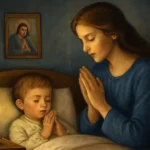
Include the deceased in daily prayer whenever possible, naming them and recalling a virtue or memory that invites gratitude and hope.
Participate in parish life by attending Masses for the dead, praying the Rosary, and supporting parish memorial programs that care for the souls of the departed.
Engage the family in acts of charity that honor the died’s values or passions, linking memory with meaningful acts of service.
Learn the relevant liturgical language and, when appropriate, invite a priest to explain the rites and their significance so that family members can participate with understanding and reverence.
By weaving together personal prayer, liturgical acts, and communal memory, Catholic families can sustain the spiritual bond that binds the living to the dead, and they can transform sorrow into a hopeful, faithful form of remembrance.
Reinforcing Faith through Texts and Practices
Various texts can be used to reinforce faith in God’s mercy and the hope of life beyond death. Among these, the Eternal Rest prayer remains a cornerstone, as does the practice of praying the Rosary for the dead or offering a Mass intention. Parishes often provide booklets or leaflets with suggested prayers and rites for the bereaved, which can help individuals participate more fully in the church’s liturgical life.
It is normal to experience a spectrum of emotions after a death: sorrow, confusion, gratitude, and sometimes anger. In Catholic spirituality, all these emotions can be brought before God in prayer. The Church teaches that God is near to the brokenhearted and that prayer can be a healing balm that gradually forms a new rhythm of life in the wake of loss.
Prayer for someone who has just died is both an intimate act of faith and a public witness to the belief in eternal life. Through the Eternal Rest, the Vigil, the Mass for the Dead, and the daily prayers of the faithful, Catholics remember their loved ones with a sense of hope and trust in God’s mercy. These prayers serve not only to comfort the bereaved but also to sustain the deceased on their journey toward the Father’s house, where there is a place for every soul who seeks God with a pure heart.
Whether you are at a family bedside, participating in a parish vigil, or designing a memorial plan for your community, the core message remains: prayer unites us, memory sustains faith, and God’s mercy endures forever. By embracing a broad range of Catholic prayers for someone who just died—ranging from personal supplications to official liturgical rites—you can offer deep comfort, honor, and lasting remembrance that aligns with the Church’s ancient wisdom and living tradition.






Leave a Reply